The Software-Defined Sky: XTEND Plants Its Sovereign AI Flag in the UK With XFAB Swindon

The convergence of artificial intelligence and battlefield hardware is no longer a future-tense proposition for the British military. In a major operational shift reported by MarketScreener, NASDAQ-listed JFB Construction Holdings announced that its strategic merger partner, XTEND, has officially opened a localized "XFAB" production hub in Swindon, England. The facility's ribbon-cutting comes on the heels of an initial £1.93 million defense order and a striking series of live operational trials, cementing the firm's role in the UK Ministry of Defence’s push to radically modernize its frontline tech.
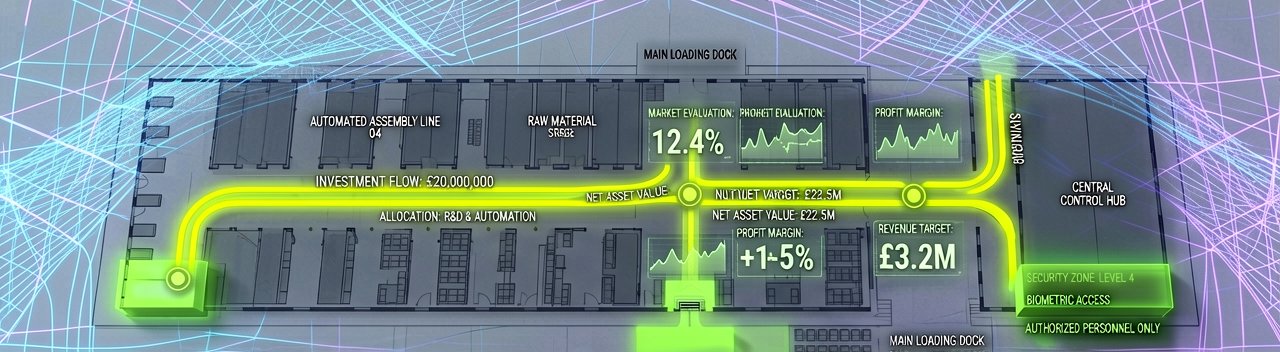
XTEND isn't merely establishing a standard distribution storefront; they are building out sovereign UK manufacturing capacity tailored to the requirements of British national defense and NATO allies. This new base operates on a localized template validated by the U.S. Department of War, allowing for rapid deployment cycles and secure hardware assembly away from vulnerable global supply chains. Looking ahead, the robotics innovator plans to pour up to £20 million into the Swindon facility over time, turning the Wiltshire town into an unexpected focal point for next-generation European military robotics.
From Salisbury Plain to the Production Line
The commercial push follows intense real-world validation. During multi-phase field trials on Salisbury Plain with the 2nd Battalion, Parachute Regiment, XTEND hardware successfully executed the first live-fire demonstration of an uncrewed aerial system by UK forces on British soil. The exercise showed that a single soldier could guide complex systems with minimal operational overhead, drawing immense interest from multiple branches within the UK defense ecosystem and the 16 Air Assault Brigade.
At the heart of the hardware is XOS, XTEND's proprietary operating system. Instead of relying on traditional, clumsy manual piloting schemes that demand hundreds of hours of simulation, XOS relies on human-guided autonomy. It provides a software-defined architecture capable of linking disparate aerial and ground assets into a unified, resilient mission network. This native intelligence allows systems to operate seamlessly through heavy electronic warfare, navigating dense indoor spaces and GNSS-denied environments where traditional GPS-dependent drones fall out of the sky.

What Most Reports Miss: The $1.5 Billion Chess Move Behind the Swindon Hub
Behind the Scenes: While most industry coverage frames this purely as a localized aerospace deal, the Swindon expansion is the opening salvo of a broader, high-stakes corporate consolidation. As tracked via Yahoo Finance, JFB Construction Holdings and XTEND entered into a definitive agreement earlier this year to combine in an all-stock transaction valued at an estimated $1.5 billion. Once the ink dries and the registration statements clear the SEC, the combined entity will pivot away from its legacy construction identity entirely, rebranding as XTEND AI Robotics under the ticker symbol "XTND".
The financial backing behind this move reads like a rolodex of heavy-hitting venture capital and political influence, including strategic investments from Eric Trump, Unusual Machines, American Ventures, and Aliya Capital. By deploying the Swindon XFAB before the corporate ticker change even takes place, management is aggressively signaling to Wall Street that their software-first defense network is ready to scale globally right now. This structural agility allows them to outpace lumbering, traditional defense primes who are still struggling to integrate flexible AI layers into legacy hardware frameworks.
This aggressive expansion matches the strict timeline of British military planners. The Ministry of Defence has laid down unambiguous mandates to double its operational lethality by 2027 and triple it by 2030. Achieving those numbers is mathematically impossible using traditional procurement pipelines that spend a decade building a single platform. Frontline forces require rapidly deployable systems that are intuitive enough to be operated with minimal training, shifting the operational burden from human muscle to algorithmic speed.
By anchoring production inside UK borders, XTEND satisfies the political requirement for "sovereign capability" while providing a flexible, regulatory-aligned gateway to European NATO partners. The company's recent track record—including an $8.8 million contract for precision strike programs with the U.S. military and localized partnerships in India—suggests that Swindon is merely the latest node in a rapidly expanding global footprint. For Western militaries trying to navigate a contested geopolitical landscape, the software-defined sky has arrived.
Reading Between the Lines: The Friction of Frictionless Autonomy
Reading Between the Lines: The corporate narrative surrounding the Swindon expansion paints a picture of effortless integration, but executing this strategy requires navigating severe defense procurement bottlenecks. While the £1.93 million initial order signals strong interest, it is a drop in the ocean compared to the massive budgets allocated to traditional, heavy-metal defense programs. The primary obstacle for XTEND lies not in its software architecture, but in a deeply entrenched Whitehall acquisition culture that remains stubbornly hardwired for multi-decade procurement cycles rather than rapid, iterative software deployments.
Furthermore, a glaring operational contradiction sits at the center of the "frictionless autonomous drone" promise. The Ministry of Defence's ambitious goal to double lethality by 2027 relies heavily on low-cost, expendable mass. Yet, XTEND is introducing highly sophisticated, premium AI platforms integrated with complex operating systems. If these systems are treated as consumable frontline assets, the financial math of attrition warfare breaks down rapidly. If they are instead hoarded as high-value, exquisite tech to protect the budget, the operational promise of deploying scalable autonomous swarms on the modern battlefield remains unfulfilled.
The dependency on a NASDAQ blank-check shell merger adds an extra layer of market volatility to a critical national security supply chain. Transitioning from a construction holdings company to a $1.5 billion AI robotics pure-play requires maintaining the frantic pace of venture-capital hype while simultaneously meeting the rigid, slow-moving compliance standards of military regulators. Swindon military planners must now rely on a corporate entity whose valuation is tied to the unpredictable swings of public equity markets and high-profile political backing, a reality that rarely aligns with long-term strategic stability.
Ultimately, the true test for XFAB Swindon will be its ability to scale beyond symbolic trial runs on Salisbury Plain and secure long-term, multi-year programmatic funding. If XTEND can successfully navigate the bureaucratic chasm between experimental tech demonstrations and formal programs of record, they will establish the blueprint for modern, software-first defense contracting in Europe. If they get bogged down in committee-led evaluation phases, the facility risks becoming a highly advanced, under-utilized monument to Western defense procurement inertia.
"We have spent decades demanding military tech that is smart enough to outthink the enemy, only to discover that the hardest part is finding an acquisition department smart enough to buy it before it becomes obsolete."
Artūras Malašauskas is an AI Systems Integrator with 20+ years of production-grade web engineering experience. He has designed, shipped, and scaled enterprise Python/PHP systems for logistics, SaaS, and public-sector clients. For the past year, he has focused exclusively on AI integrations: deploying open-source LLMs, building generative media pipelines (image, audio, video), and engineering multi-agent workflows for real production environments. His standard: reproducibility, security, cost-efficient inference—no vaporware. He documents and evaluates emerging AI tooling, separating verified capabilities from marketing noise. Technical editor at: muza-ai.eu, ai-verslas.lt, ai-naujinos.lt Connect on LinkedIn
Comments