The Ad Billboard Just Grew Legs: Why Robot.com's New Network Changes the Unit Economics of Hardware
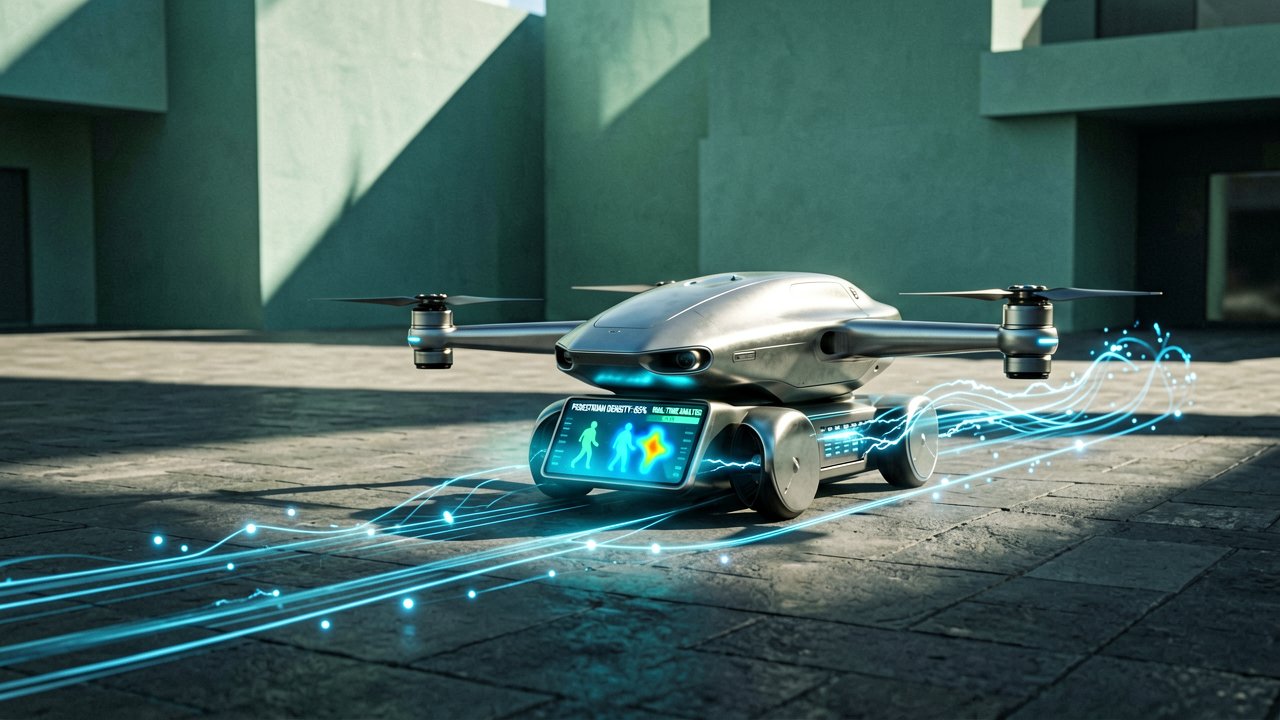
For years, out-of-home advertising has felt remarkably stuck in place. We transitioned from paper billboards to digital screens, but the fundamental mechanics remained unchanged: an ad waits statically for a human to walk past it. San Francisco-based robotics pioneer Robot.com is entirely flipping that script. The company announced the launch of R-ads, a unified, self-serve advertising suite that officially turns its fleet of Level 4 autonomous mobile robots into a rolling, data-capturing media network, according to a press release published on PR Newswire.
This isn't just about sticking a logo on a sidewalk rover and calling it a day. The R-ads suite blends three distinct formats into a single campaign tool: moving robots (Robot Digital Out-of-Home, or RDOOH), vehicle wraps (MOOH), and traditional digital screens (DOOH). What makes this a massive leap forward for the advertising industry is the transition from guesswork to real-time precision. Traditionally, mapping an outdoor campaign takes weeks of planning, relying heavily on historical foot traffic estimates. Robot.com's new platform allows brands to launch campaigns in minutes, backing them up with AI-powered impression tracking, demographic breakdowns, and attribution analytics generated on the fly.
The tech under the hood turns each robot into an active data node. Armed with integrated displays, QR-enabled engagement layers, and sensor suites, these machines convert real-world physical interactions into crisp, first-party insights. If a specific neighborhood or venue has tight restrictions against physical branding wraps, the system adapts instantly, serving the campaign strictly through the robot’s built-in digital screens. A recent 15-day heatstroke prevention pilot with the Ad Council in Miami proved the efficacy of this high-visibility approach, racking up more than 147,000 impressions in its first four days alone.
A Lifeline for Hardware Unit Economics
While advertisers will focus heavily on the real-time targeting metrics, the real genius of this launch lies in how it reshapes the notoriously brutal economics of building and deploying hardware. Silicon Valley is littered with the graves of robotics startups that couldn't survive the steep capital expenditure required to scale a physical fleet. By introducing R-ads, Robot.com ensures that every machine in its ecosystem pulls double duty, generating a dual stream of revenue from its baseline operational tasks—like campus delivery, warehouse logistics, or infrastructure inspection—alongside high-margin advertising dollars.
This ad revenue fundamentally subsidizes the physical deployment costs, offering a massive structural advantage that scales as the fleet grows. It allows the company to offer highly competitive pricing to its core enterprise partners, such as food service giant Sodexo, while aggressively expanding its footprint. To date, the company's global fleet of over 500 active robots has completed more than 2.5 million commercial tasks across the United States, Canada, Dubai, and the broader MENA region. By pairing practical utility with a programmatic media network, Robot.com may have just cracked the code for sustainable, enterprise-scale automation.
What Most Reports Miss: The Spatial Arbitrage of Pedestrian Crowds
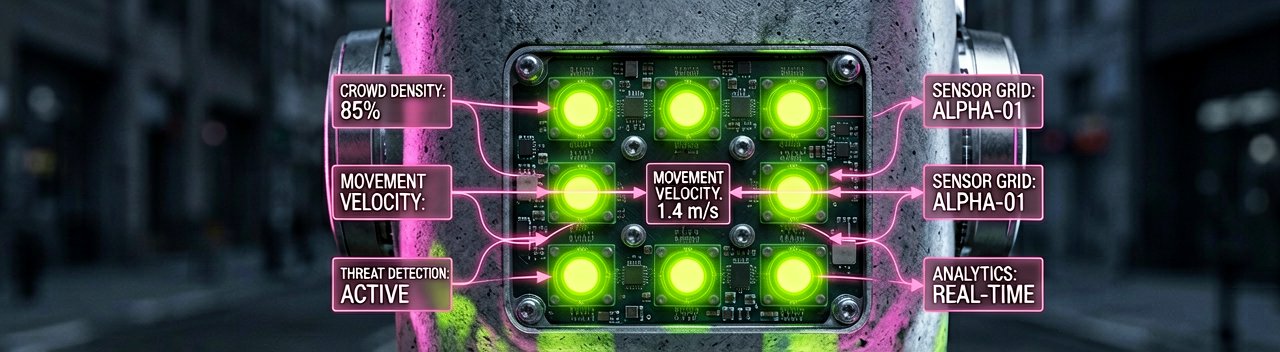
The standard industry narrative paints this launch as a simple upgrade to digital signage, but the real breakthrough lies in a concept best described as spatial arbitrage. Unlike fixed billboards that command premium rates based on historical peak traffic times, these autonomous robots optimize for real-time human density. Software algorithms constantly recalibrate the robot's physical position, shifting its path away from empty plazas and pushing it directly toward active, organic gathering spots like food truck lines or delayed transit gates. It represents a fundamental shift from buying a static geographic location to buying dynamic, guaranteed physical attention.
This agility creates a completely new playbook for contextual hyper-targeting. A traditional digital display near a sports stadium can only show a pre-scheduled rotation of ads. An R-ads mobile node, however, can track the shifting crowd dynamics as a game lets out, positioning itself at the exact intersections where foot traffic slows to a crawl. Furthermore, the integration of QR codes and interactive touchpoints turns passive viewing into an immediate conversion funnel. Passersby are no longer just looking at an image; they are actively scanning the robot to claim a localized discount or order a product on the spot.
However, navigating the complex web of municipal regulations presents a significant hurdle that fixed signage never had to face. City planners are notoriously protective of public sidewalks, and the introduction of moving commercial billboards introduces tricky legal questions regarding public space commercialization. Robot.com has cleverly bypassed much of this friction by prioritizing private-public partnerships and campus-style environments. By deploying initial fleets across university campuses, airports, and corporate parks, the company establishes a proven track record of safe operation and high utility before tackling the bureaucratic red tape of major city sidewalks.

From an advertiser's perspective, the ultimate appeal of this platform is the closing of the attribution loop in physical space. For decades, out-of-home advertising relied on the "John Wanamaker" principle—knowing half the ad spend is wasted, but not knowing which half. By utilizing sensor suites that measure dwell time and audience engagement without compromising individual privacy, R-ads provides the same granular analytics marketers expect from digital platforms like Meta or Google. This data-driven approach elevates physical advertising from a speculative branding exercise into a highly predictable, performance-based marketing channel.
Reading Between the Lines: The Friction Between Public Utility and Private Monetization
The glossy corporate promise of R-ads relies entirely on the premise that everyday citizens will willingly accept the further commercialization of their daily paths. While tech enthusiasts marvel at the logistical efficiency of a rolling, self-funding hardware network, the everyday pedestrian may view these machines as little more than intrusive, motorized spam bots invading already crowded sidewalks. There is an inherent contradiction in using public space to capture private biometric and behavioral data for advertising metrics. If a robot blocks a crosswalk or slows down a commuter just to maximize its on-screen ad impressions, the public goodwill that autonomous tech desperately needs could quickly evaporate.
Moreover, the claim that this platform provides anonymous, privacy-safe analytics ignores the growing consumer weariness toward real-world data collection. Even if individual identities are stripped away, the act of tracking human gaze, dwell times, and demographic categories via public sensors pushes the boundaries of acceptable tracking. As municipal governments catch up to the technical realities of autonomous ad fleets, we are highly likely to see aggressive regulatory pushback. Cities that already ban digital billboards to prevent visual pollution, like São Paulo or parts of Vermont, will almost certainly look at these roving screens with an incredibly critical eye.
There is also the question of diminishing returns once the novelty wears off. Right now, a sidewalk robot draws eyeballs because it looks like a prop from a science fiction movie; people stop, stare, and scan QR codes out of sheer curiosity. Once thousands of these machines saturate urban environments, they will inevitably blend into the background noise of modern city life, suffering from the exact same "banner blindness" that plagues the internet. Marketers paying premium rates today for high engagement might find that tomorrow's distracted pedestrian simply walks right past the mechanical billboard without a second glance.
Financially, relying on ad revenue to subsidize hardware deployments is a brilliant short-term survival strategy, but it introduces a volatile dependency for an engineering company. Advertising budgets are notoriously cyclical and are often the very first things slashed during an economic downturn. If Robot.com begins prioritizing ad-friendly routes over optimized utility delivery routes just to satisfy marketing KPIs, the core operational value of the robots will suffer. Balancing the demands of a high-margin advertising network with the gritty, low-margin reality of physical logistics is a tightrope walk that few hardware startups are truly equipped to handle.
"We’ve officially reached the point in human history where you can be cut off on the sidewalk by a vending machine on wheels that refuses to let you pass until it finishes pitching you a premium streaming subscription."
Artūras Malašauskas is an AI Systems Integrator with 20+ years of production-grade web engineering experience. He has designed, shipped, and scaled enterprise Python/PHP systems for logistics, SaaS, and public-sector clients. For the past year, he has focused exclusively on AI integrations: deploying open-source LLMs, building generative media pipelines (image, audio, video), and engineering multi-agent workflows for real production environments. His standard: reproducibility, security, cost-efficient inference—no vaporware. He documents and evaluates emerging AI tooling, separating verified capabilities from marketing noise. Technical editor at: muza-ai.eu, ai-verslas.lt, ai-naujinos.lt Connect on LinkedIn
Comments