Shock and Awe in Barcelona: Platinum Technologies Drops a Quadruple Threat at Fespa
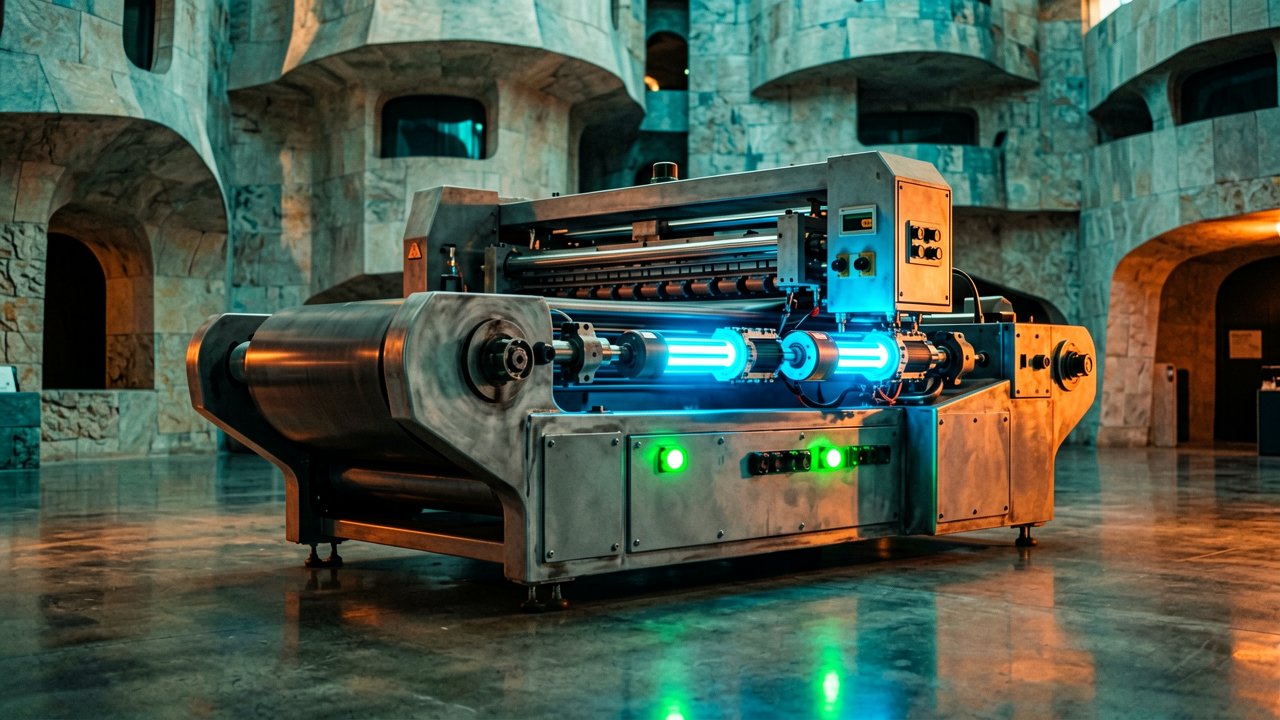
If anyone thought the wide-format print industry was ready to coast on incremental updates this year, Platinum Technologies just shatterproofed that illusion. Taking the floor at the Fespa Global Print Expo in Barcelona, the manufacturer didn’t just show up; they completely hijacked the conversation by rolling out four heavy-hitting systems simultaneously. It is a bold, maximalist strategy designed to complete their Signature Series portfolio, effectively signaling that the company is no longer content with just participating in the industrial print race—they want to dictate its pace.
The headline-grabbing drop includes a massive 5.3-meter roll-to-roll machine engineered for relentless industrial productivity, a pair of high-performance flatbed printers, and a sophisticated injection of robotic automation. By combining raw hardware muscle with automated handling, they are tackling the industry’s twin headaches: bottlenecked workflows and spiraling labor pressures. Industry watchers tracking the trade floor updates via Printweek are calling it a definitive turning point for the brand’s European footprint.
Muscling Into Ultra-Wide Territory
The sheer scale of the new 5.3-meter Signature Series roll-to-roll beast shows exactly where Platinum Technologies is placing its bets. Ultra-wide printing used to be a niche reserved for a handful of specialized shops, but demand for seamless, gargantuan graphics is booming. This machine isn’t just wide for the sake of the spec sheet; it is built to maintain tight dot precision across massive widths without sacrificing the linear speed required by high-volume operations.
Robotics Take Center Stage
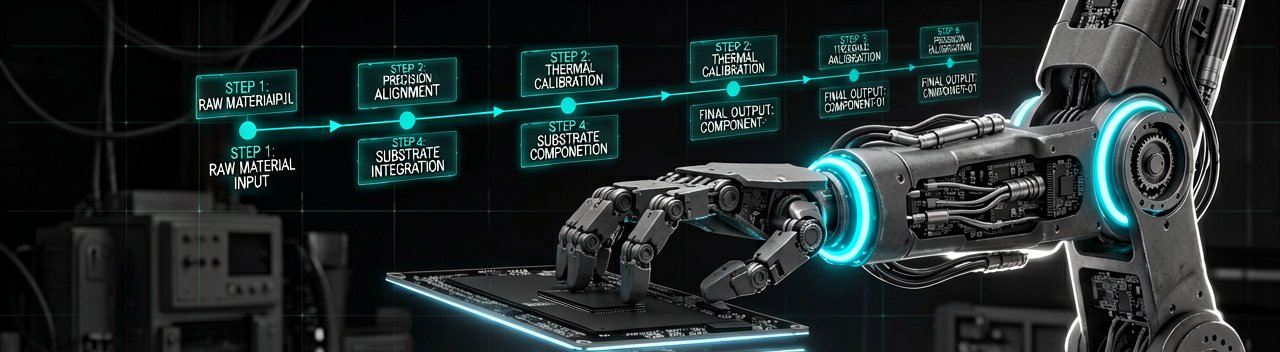
Hardware is nothing without a smart workflow, and that is where the newly unveiled robotic automation comes into play. Platinum Technologies integrated an anthropomorphic robotic arm designed to handle loading and unloading tasks in tandem with their printing and cutting systems. It is a slick, hands-free ecosystem that bridges the gap between raw print speed and practical, real-world finishing. By removing human error and downtime from the material handling equation, they are targeting true continuous production.
The Packaging Push and Beyond
Rounding out the quadruple reveal is a dedicated nod to the booming corrugated market with the Q Pack board printing solution. This system targets the high-volume packaging sector, a space where speed, ink adhesion, and cost-per-copy mean everything. Developed out of their Düsseldorf R&D facility, these platforms altogether prove that the brand is aggressively diversifying. They aren’t just selling printers anymore; they are selling comprehensive, automated industrial architecture.
Beneath the Brass Tacks: Why This Quadruple Rollout Signals an Industrial Sea Change
What Most Reports Miss: This isn't just a story about four flashy new machines occupying prime real estate on a convention floor; it is a calculated gamble on the shifting economics of the global supply chain. For years, the wider-format print sector operated on a predictable hardware lifecycle where manufacturers would slowly drip-feed single-product updates over multiple exhibition cycles. By forcing four distinct, highly advanced production platforms into the market simultaneously, Platinum Technologies is deliberately compressing that timeline. This aggressive strategy forces competitors to react to an entirely rewritten playbook while giving print service providers a single, unified roadmap for their next decade of capital expenditure.
The decision to anchor this massive launch around a 5.3-meter ultra-wide footprint reflects a profound shift in consumer and corporate demand. Veteran print operators know that managing tension and tracking across a web that wide is a mechanical nightmare, yet the industry is seeing an unprecedented surge in requests for seamless, grand-format architectural textiles and building wraps. By embedding advanced linear motor drives and real-world temperature stabilization into the chassis, the engineering team has addressed the historical Achilles' heel of ultra-wide systems: catastrophic registration drift during long, uninterrupted print runs.
Beyond the sheer physics of the hardware, the integration of an anthropomorphic robotic arm reveals the true strategic direction of the brand. The printing industry is currently wrestling with a devastating skilled labor shortage, leaving expensive, high-speed machines sitting idle because shops simply cannot find operators to load boards fast enough. Platinum's automation play subtly shifts the value proposition from raw engine speed to overall equipment effectiveness. It transforms the printer from a piece of machinery that requires constant human babysitting into an autonomous manufacturing cell capable of running late-night "lights-out" shifts without intervention.
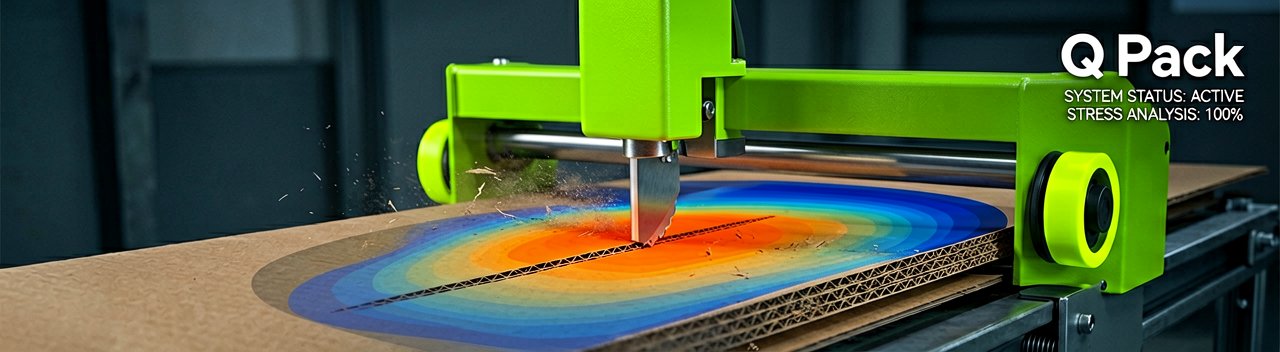
This holistic ecosystem approach marks a maturation for Platinum Technologies, which was historically viewed as a fast-following component manufacturer rather than a tier-one system integrator. By linking the Q Pack board printing system directly with automated handling and advanced cutting workflows, they are actively encroaching on turf traditionally dominated by legacy European giants. It is a disruption aimed squarely at the high-margin packaging and industrial display markets, signaling that the company is fully prepared to back its engineering ambitions with serious industrial muscle.
The Technical Toll: Assessing the True Cost of Automation
Reading Between the Lines: While the collective gasp on the Fespa show floor was undeniably real, a cold analysis of Platinum Technologies' aggressive rollout reveals a complex web of operational friction that marketing gloss completely ignores. The industry has been conditioned to celebrate high-throughput milestones, yet the immediate introduction of four disparate, highly advanced systems places an immense burden on the manufacturer's field engineering and support infrastructure. Rolling out a single industrial printer requires months of technician training and spare-parts pipeline positioning; deploying an entire interconnected ecosystem of ultra-wide rollers, flatbeds, and robotic arms simultaneously risks stretching their technical support teams to a dangerous breaking point across the European theater.
Furthermore, the heavy emphasis on anthropomorphic robotics introduces a glaring paradox into the typical print shop environment. Automation is frequently pitched as a magic bullet for the current labor crisis, but replacing a forklift operator with a multi-axis robotic arm merely trades one personnel headache for another, far more expensive one. Print shops will no longer just need operators who understand ink adhesion and substrate behavior; they will now require specialized automation engineers capable of troubleshooting complex PLC logic and robotic calibration routines when the system inevitably faults at two o'clock in the morning.
The financial math underlying the 5.3-meter grand-format system also deserves a healthy dose of skepticism from savvy print service providers. The capital expenditure for a machine of this magnitude is astronomical, and its economic viability hinges entirely on maintaining an unbroken, high-volume queue of specialized work. In a fluctuating economic landscape where corporate ad spend can dry up overnight, smaller, more agile 3.2-meter machines running in tandem often offer a far safer redundancy model than putting all of a facility's production eggs into one massive, ultra-wide basket.
Ultimately, Platinum's grand Barcelona reveal is a high-stakes stress test disguised as a victory lap. If the software integration between the Q Pack corrugated systems and the automated material handlers fails to deliver the promised "lights-out" reliability in real-world, dusty warehouse conditions, the narrative will quickly shift from a revolutionary leap to an over-engineered gamble. The coming months will prove whether this quadruple threat is a genuine blueprint for the future of print manufacturing, or simply a brilliant piece of trade-show theater designed to crowd out competitors in a crowded media landscape.
"We are rapidly approaching a future where a print shop owner needs a degree in advanced robotics just to change a roll of vinyl—proving once again that nothing is quite as expensive as the labor you save."
Artūras Malašauskas is an AI Systems Integrator with 20+ years of production-grade web engineering experience. He has designed, shipped, and scaled enterprise Python/PHP systems for logistics, SaaS, and public-sector clients. For the past year, he has focused exclusively on AI integrations: deploying open-source LLMs, building generative media pipelines (image, audio, video), and engineering multi-agent workflows for real production environments. His standard: reproducibility, security, cost-efficient inference—no vaporware. He documents and evaluates emerging AI tooling, separating verified capabilities from marketing noise. Technical editor at: muza-ai.eu, ai-verslas.lt, ai-naujinos.lt Connect on LinkedIn
Comments