Keymakr Bets Big on the "Hollywood for AI" to Solve the Robotics Bottleneck
For years, the hurdle for Physical AI hasn't just been the hardware—it's been the lack of a "first-person" soul. On May 19, 2026, data training giant Keymakr officially threw its hat into the ring with a new suite of egocentric and robotics training data solutions designed to fix this exact blind spot. By capturing the world through a wearer’s perspective, these datasets aim to teach robots not just to "see" but to understand the nuance of human manipulation, from a chef plating a dish to a factory worker threading a needle.
The industry is currently hitting what experts call the physical AI bottleneck. While large language models have the entire internet to read, robots have lacked a similar, high-fidelity library of real-world actions. Keymakr’s Inna Nomerovska famously called this approach "Hollywood for AI," a nod to the cinematic level of detail required to film, structure, and enrich data that captures the physical laws of gravity, friction, and intent. This isn't just about raw footage; it's about providing the structured "perception-to-action" loop that current research, such as that found at EIN Presswire, suggests is vital for the next generation of humanoid and industrial machines.
Closing the Sim-to-Real Gap
One of the biggest headaches in robotics is the "sim-to-real" gap, where a bot that performs flawlessly in a digital simulation trips over its own feet in a real kitchen. Keymakr’s solutions lean heavily on human-in-the-loop validation to ensure that the egocentric data—captured from head-mounted cameras and wearable sensors—actually reflects the messy reality of physical work. This movement toward specialized, high-fidelity datasets is already showing massive returns in the field. For instance, Humanoids Daily has noted that scaling egocentric video can double task completion rates for robot dexterity. By offering pixel-perfect scenario annotations and 3D data solutions, Keymakr is essentially giving roboticists the "ground truth" they need to move intelligence from the screen to the shop floor.
A Shift Toward Embodied Intelligence
The timing couldn't be better. As industrial giants like NVIDIA and Google DeepMind push toward general-purpose robots, the demand for multimodal data—combining video, gaze tracking, and motion streams—is skyrocketing. Analysts from Innovation & Tech Today point out that the hardware ceiling has effectively vanished, replaced by a desperate need for the training data that teaches a robot what to do when things stop matching the lab. Keymakr’s entry into egocentric solutions signals a pivot in the data economy, where the "passive data bank" of human life becomes the primary textbook for the machines of tomorrow.
What Most Reports Miss: The Invisible Choreography of Real-World Dexterity
Behind the Scenes: While the tech world obsessed over the "brain" of AI via massive neural networks, the "limbs" were left to starve on a diet of static images. The genius of Keymakr’s egocentric pivot isn't just the camera angle; it’s the capture of human intent through micro-movements. When a human reaches for a glass, their hand pre-shapes for the grip seconds before contact—a nuance that traditional third-person cameras, mounted on a ceiling or a tripod, almost always overlook. By strapping sensors onto the humans performing these tasks, Keymakr is essentially recording the biological software of physical labor, translating the "feel" of a task into a mathematical gradient a robot can actually digest.
This shift represents a historical departure from the "hard-coded" era of robotics, where engineers spent months writing specific lines of code just to help a robotic arm avoid a collision. Stakeholders in the manufacturing sector are particularly bullish on this because it bypasses the need for costly, sterile lab environments. Instead of building a fake warehouse to train a bot, developers can now record an actual worker in a high-traffic, chaotic logistics center. This "in-the-wild" data is the secret sauce for Physical AI; it teaches systems how to handle the unexpected, like a box being slightly torn or a coworker walking into the frame unexpectedly.
There is also a significant psychological layer to this data collection that seasoned field reporters are starting to highlight. Egocentric data provides a "gaze-contingent" view, showing exactly where a person looks before they commit to an action. This reveals the hierarchy of importance in a physical environment. If a robot knows that a human welder checks the integrity of a seam three times from a specific angle, the AI learns to prioritize that quality control check. It’s less about mimicking a silhouette and more about adopting a professional’s "mindset" through their field of vision.
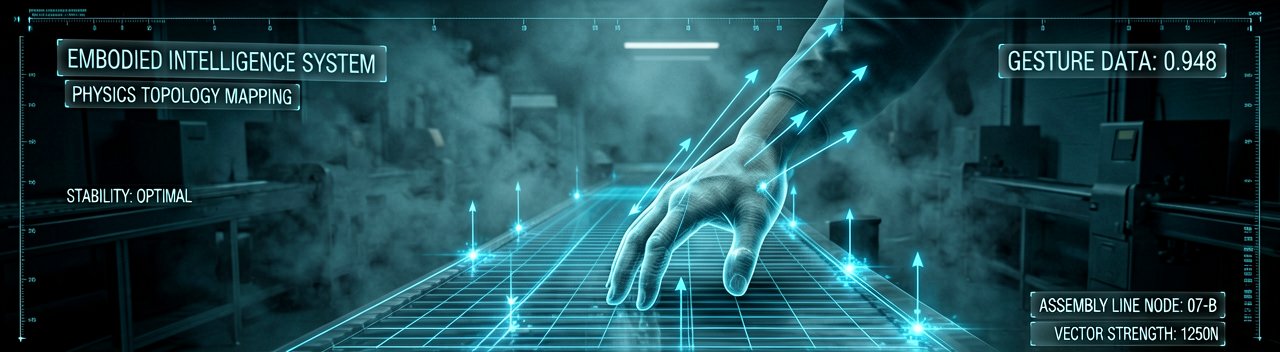
Furthermore, the push for egocentric data is a direct response to the massive data-privacy hurdles that have slowed robotics in public spaces. Traditional surveillance-style datasets often capture uninvolved bystanders, leading to regulatory red tape. However, first-person data is inherently more contained and focused on the task at hand, allowing for cleaner, more ethical data pipelines. Keymakr’s focus on high-fidelity annotation means they aren't just dumping raw footage into a model; they are meticulously labeling the friction points, the points of contact, and the force vectors that are invisible to the naked eye but essential for a humanoid's balance.
Ultimately, we are seeing the birth of a new "Physical Commons." Just as Wikipedia served as the foundational text for LLMs, these egocentric libraries will become the baseline for any machine that interacts with the physical world. The long-term play here isn't just better factory bots; it’s the eventual deployment of home assistants that can fold laundry or prepare a meal without a manual. By capturing the messy, tactile reality of human life from the inside out, the industry is finally moving past the uncanny valley and toward a functional, embodied intelligence that feels at home in our world.
Reading Between the Lines: The Cost of Teaching Machines to Play Human
Reading Between the Lines: There is a seductive narrative in the industry that more data inevitably equals a more "human" machine, but this assumes that human movement is always the gold standard. In reality, much of our physical behavior is inefficient, idiosyncratic, or outright lazy. By training Physical AI on egocentric data captured from human workers, we risk hard-coding biological limitations into digital systems. If a robot learns to lift a box by mimicking a tired warehouse worker’s poor posture, we aren't just transferring skill; we are digitizing fatigue and human error. The challenge for Keymakr and its peers isn't just gathering data, but filtering out the "noise" of human imperfection to find the optimized path.
There is also a glaring contradiction in the promise of "universal" robotics data. While Keymakr’s "Hollywood for AI" approach provides cinematic detail, the physical world is notoriously un-standardized. A robot trained on high-fidelity data from a high-tech kitchen in San Francisco may still find itself utterly baffled by the lighting and layout of a suburban diner in Ohio. The industry is currently betting that sheer volume will overcome these edge cases, yet history suggests that AI has a habit of failing most spectacularly when it encounters the mundane. This suggests that "embodied intelligence" might remain a boutique luxury for controlled environments far longer than the hype cycles care to admit.
Furthermore, the move toward egocentric data raises a cynical question about the labor economy of the future. We are effectively asking today’s manual laborers to wear cameras and sensors so they can train their own digital replacements. While the technical achievement of mapping human dexterity is undeniable, the social friction of this data collection remains a footnote in most press releases. There is a palpable irony in the fact that the most sophisticated AI systems on the planet are currently dependent on the muscle memory of the very blue-collar workers they are often designed to "augment" or displace.
Looking ahead, the success of these physical AI systems hinges on whether we can move past the "mimicry" phase. Real intelligence isn't just doing what a human does; it's understanding the underlying physics well enough to perform the task better. If these datasets only produce robots that act like awkward puppets of their human trainers, the massive investment in "perception-to-action" loops will have yielded little more than an expensive mirrors. The real breakthrough will come when a system uses Keymakr’s data as a starting point, then discards human-like movement entirely in favor of something more structurally sound and computationally efficient.
We’ve spent decades trying to teach robots how to think like us, only to realize the hard part was actually teaching them how to pick up a coffee cup without treating it like a physics exam—turns out, the "soul in the machine" is mostly just a really good sense of grip.
Artūras Malašauskas is an AI Systems Integrator with 20+ years of production-grade web engineering experience. He has designed, shipped, and scaled enterprise Python/PHP systems for logistics, SaaS, and public-sector clients. For the past year, he has focused exclusively on AI integrations: deploying open-source LLMs, building generative media pipelines (image, audio, video), and engineering multi-agent workflows for real production environments. His standard: reproducibility, security, cost-efficient inference—no vaporware. He documents and evaluates emerging AI tooling, separating verified capabilities from marketing noise. Technical editor at: muza-ai.eu, ai-verslas.lt, ai-naujinos.lt Connect on LinkedIn
Comments