Hubei’s New Robot Registry: Why China is Giving Droids Their Own Digital IDs
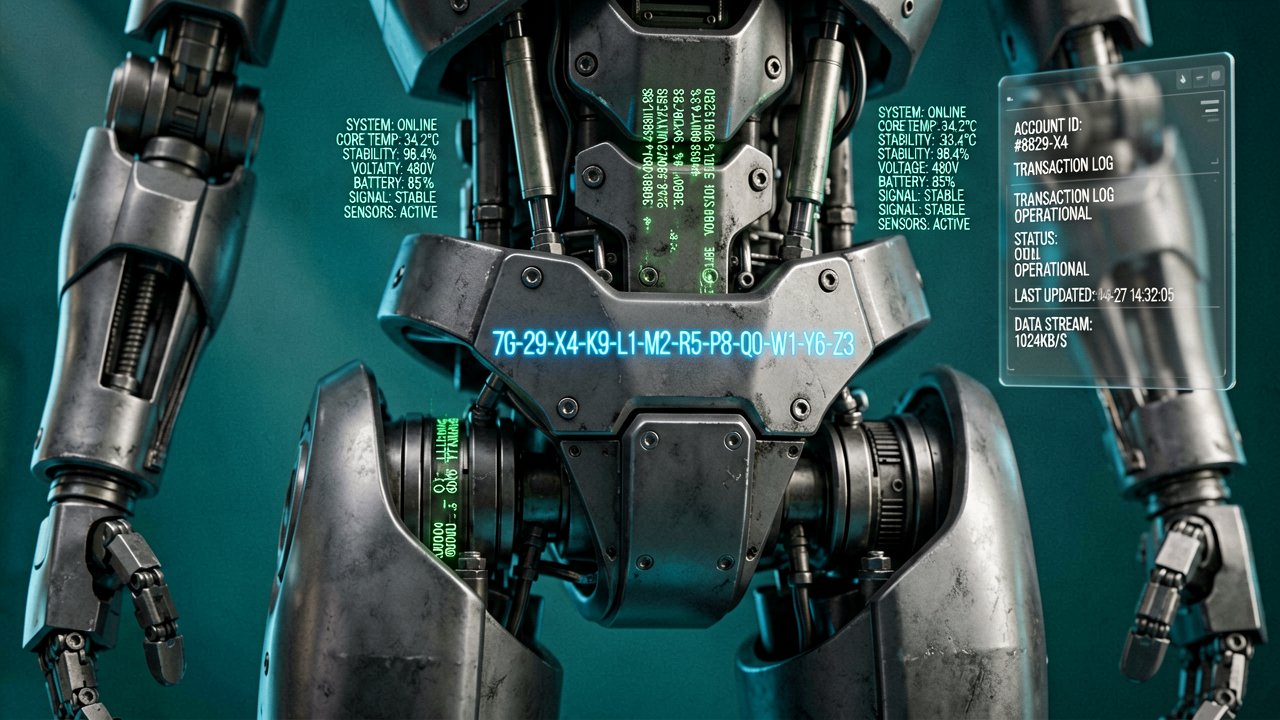
China just crossed a sci-fi threshold that feels like it’s straight out of an Isaac Asimov novel. Hubei province has officially become the first region in the country to issue "digital ID cards" to humanoid robots, a move that treats these high-tech machines less like kitchen appliances and more like regulated entities. This isn't just a fancy serial number slapped on a chassis; it’s a 29-character alphanumeric code—eleven characters longer than the IDs carried by Chinese citizens—designed to track a robot's entire existence from the factory floor to the scrapyard. According to reports from TV BRICS and local officials, the pilot program is being spearheaded by the Hubei Humanoid Robot Innovation Center in Wuhan to bring some much-needed order to a sector that’s currently expanding at breakneck speed.
The logic behind the registry is as much about accountability as it is about organization. Each unique ID contains a wealth of data, including the robot's brand nationality, manufacturer, hardware specs, and even its "intelligence level." By linking these codes to a digital management platform, authorities can monitor real-time telemetry like joint wear and tear, battery health, and operational accuracy. As highlighted by China Daily, this level of granularity is intended to settle the messy question of liability. If a robot malfunctions or causes an accident, the ID allows investigators to instantly trace its maintenance history and usage logs, effectively ending the "who's to blame" guessing game that often haunts emerging tech.
Setting the Global Standard for Embodied AI
It’s no surprise that China is the one pulling the trigger on this. The country already dominates the global humanoid market, reportedly accounting for over 80 percent of shipments in 2025. But with that dominance comes a fragmentation problem: dozens of manufacturers are currently operating in silos with incompatible technical standards and safety protocols. Hubei's initiative, backed by the Ministry of Industry and Information Technology, serves as a blueprint for a national standard that could eventually dictate how the rest of the world manages "embodied AI." By turning every robot into a traceable "digital citizen," the government isn't just keeping tabs on the hardware; it’s building the institutional foundation needed for robots to safely integrate into homes, hospitals, and factories at a massive scale.
Beyond the Serial Number: A Life-Cycle Record
What makes this system genuinely transformative is the "life-cycle" aspect. Most traditional manufacturing registries end once a product leaves the warehouse, but these digital IDs are persistent. They facilitate a secondary market where buyers can verify a machine’s performance history without redundant testing, much like a Carfax report for bipedal bots. Analysts from Interesting Engineering note that as humanoid robots transition from curiosity to utility, having a standardized way to manage repairs, resale, and even ethical compliance will be the difference between a chaotic rollout and a functional industry. It's a clear signal that in the eyes of Hubei regulators, the era of the anonymous machine is officially over.

The Hidden Architecture of Accountability
Behind the Silicon Curtain: While the headlines focus on the novelty of robots carrying "papers," the true significance of Hubei’s initiative lies in the invisible data infrastructure supporting it. This isn't just a ledger of serial numbers; it is a sophisticated attempt to solve the "black box" problem of autonomous systems. By mandating a 29-character digital identity, regulators are creating a real-time link between a robot’s physical actions and its underlying neural weights. For seasoned industry observers, this represents the first major government-led effort to bridge the gap between hardware manufacturing and algorithmic accountability.
The role of the Hubei Humanoid Robot Innovation Center extends far beyond simple registration. Insiders suggest that the "intelligence level" metric embedded in the ID is actually a dynamic rating based on the robot's ability to navigate unstructured environments without human intervention. This ranking effectively segments the market, determining which robots are cleared for high-risk industrial zones versus those permitted to interact with the public in service roles. This tiered system mimics the way commercial pilots are rated for different aircraft, ensuring that a "low-intelligence" unit isn't accidentally deployed in a complex hospital environment where it might cause harm.
Stakeholders within China’s "Robotics Valley" in Wuhan view this as a double-edged sword. On one hand, manufacturers welcome the standardization because it clears the path for insurance companies to finally offer comprehensive coverage for humanoid fleets—a major hurdle for commercial adoption. Without a verifiable maintenance and "health" record tied to a unique ID, premiums were prohibitively high or simply non-existent. On the other hand, the requirement for real-time telemetry sharing raises significant concerns regarding trade secrets. Companies are now forced to find a middle ground between regulatory transparency and protecting their proprietary motion-control algorithms.
Looking at the historical context, this move echoes China’s earlier strategy with electric vehicles. By standardizing charging interfaces and battery tracking early on, the government was able to rapidly scale the industry while weeding out sub-par manufacturers. Hubei is applying that same playbook to robotics. The digital ID acts as a filter; companies that cannot meet the rigorous data-reporting standards will likely find themselves locked out of government contracts and key economic zones. It is a survival-of-the-fittest mechanism designed to consolidate a fragmented market into a few world-class champions.

Furthermore, the implications for the global supply chain are massive. As these "digital citizens" begin to be exported, the Hubei standard could become a de facto international benchmark. If a Chinese-made humanoid arrives at a European port with a pre-existing, blockchain-verified history of its "birth" and testing phases, it sets a level of trust that uncertified competitors will struggle to match. This move isn't just about domestic management; it is about establishing the rules of engagement for the global robotics age long before other nations have even drafted their first white papers.
Finally, the psychological impact on the workforce cannot be ignored. In factories where these robots are deployed, the ID card serves as a reminder that these machines are regulated entities with "responsibilities." This administrative framing helps de-escalate the "uncanny valley" anxiety often felt by human coworkers. By treating the robot as a tracked piece of industrial equipment rather than an autonomous interloper, the registry facilitates a smoother social integration, turning a sci-fi fear into a manageable logistical reality.
The Friction Between Innovation and Oversight
The Regulatory Paradox: While Hubei’s digital ID system is being marketed as a lubricant for the robotics industry, there is a legitimate concern that it may eventually act as a chokehold. The assumption that more data equals more safety is a common bureaucratic fallacy. By tethering every humanoid to a central monitoring platform, the government is essentially creating a massive, centralized point of failure. If the management system itself is compromised or suffers from a catastrophic lag, an entire fleet of "intelligent" workers could find their operational clearances revoked in an instant, turning high-tech factories into expensive sculpture galleries.
There is also a glaring contradiction in the push for "intelligence levels" within the registry. AI development is notoriously fluid; a robot’s capabilities can change overnight with a simple firmware update or the integration of a new large language model. This makes a static 29-character ID code feel somewhat archaic—a 20th-century solution for a 21st-century problem. If a robot’s "IQ" jumps five points on a Tuesday, the administrative lag required to update its digital passport could stifle the very agility that makes humanoid robots desirable in the first place. This creates a scenario where the cutting edge of tech is constantly waiting for the dull edge of paperwork to catch up.
Skepticism is also warranted regarding the "liability" narrative. While having a digital paper trail is great for forensic investigators after an accident, it doesn't necessarily solve the legal headache of who pays the bill. If a robot malfunctions because of a conflict between its proprietary motion-control software and a mandated government monitoring patch, the resulting litigation will likely be a nightmare of finger-pointing between state labs and private manufacturers. The ID card tells us which robot did it, but in the complex ecosystem of embodied AI, it rarely explains why it happened or whose insurance carrier should take the hit.
Moreover, the focus on "brand nationality" within the ID code hints at a deeper, more protectionist agenda. By baking origin data directly into the hardware’s digital DNA, Hubei is preparing for a world where robotic "citizenship" becomes a geopolitical bargaining chip. This could lead to a fragmented global market where "ID-compatible" robots are the only ones allowed to cross borders, effectively creating a "Digital Great Wall" for automation. Instead of a global standard, we may be witnessing the birth of localized robotic ecosystems that are technically incompatible and ideologically siloed.
Finally, we must consider the environmental cost of this total surveillance. Maintaining a real-time, life-cycle database for millions of bipedal machines requires a staggering amount of server power and cooling. There is a certain irony in deploying robots to improve industrial efficiency while simultaneously building a massive, energy-hungry data apparatus just to watch them work. If the goal is a sustainable future, the overhead of "watching the watchers" might just eat the productivity gains that these humanoid workers were supposed to provide.
“We’ve finally reached the point where a robot’s most human-like quality isn't its gait or its speech, but the fact that it can’t get a job without first spending three weeks navigating a government database and waiting for its paperwork to clear.”
Artūras Malašauskas is an AI Systems Integrator with 20+ years of production-grade web engineering experience. He has designed, shipped, and scaled enterprise Python/PHP systems for logistics, SaaS, and public-sector clients. For the past year, he has focused exclusively on AI integrations: deploying open-source LLMs, building generative media pipelines (image, audio, video), and engineering multi-agent workflows for real production environments. His standard: reproducibility, security, cost-efficient inference—no vaporware. He documents and evaluates emerging AI tooling, separating verified capabilities from marketing noise. Technical editor at: muza-ai.eu, ai-verslas.lt, ai-naujinos.lt Connect on LinkedIn
Comments