UBTECH Goes Mainstream: Meet UWORLD, the Brand Bringing Humanoids to Your Living Room
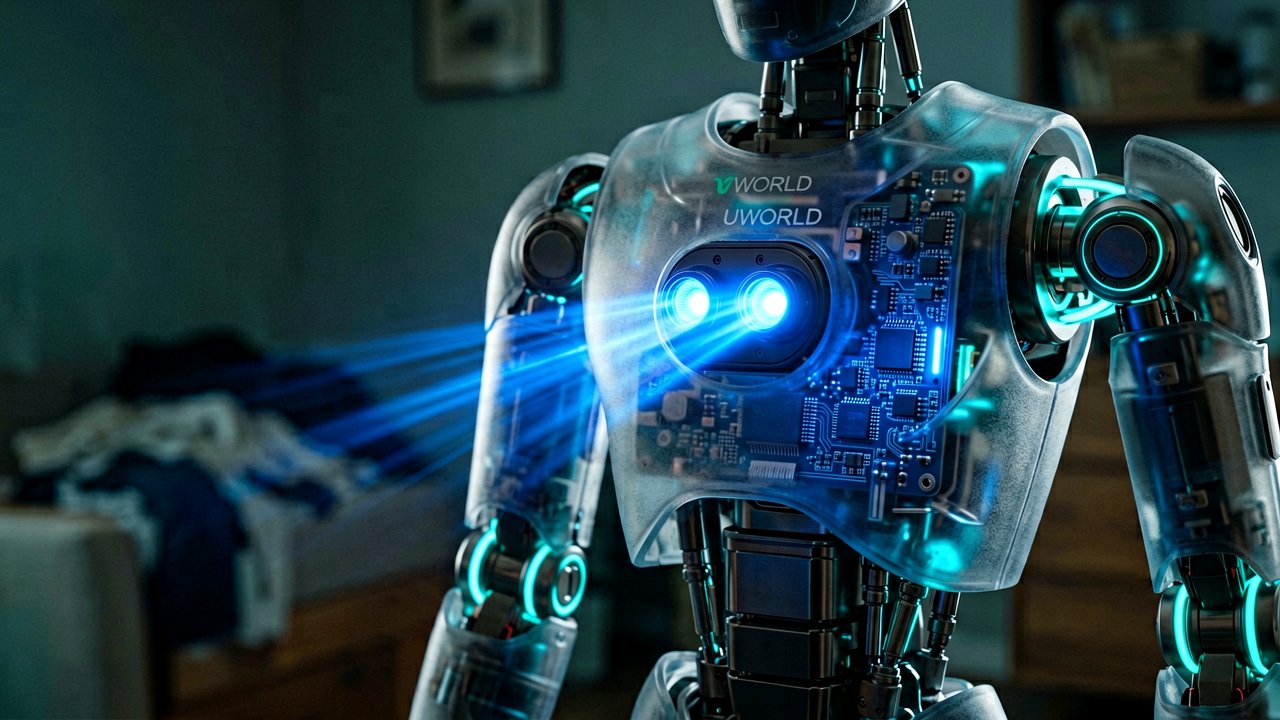
For years, the dream of having a robot butler has been stuck in a perpetual loop of "coming soon" tech demos and overpriced industrial prototypes. But UBTECH, a long-time heavyweight in the robotics space, is finally ready to bridge that uncanny valley for the average consumer. With the launch of their new brand, UWORLD, the company isn’t just selling hardware; they’re betting on a future where humanoid assistants are as common as the smartphone in your pocket. It’s a bold move that signals the shift from robots being high-tech novelties to actual household staples.
The UWORLD lineup is designed to shed the intimidating, cold aesthetic of its predecessors in favor of something far more approachable. Leveraging UBTECH’s massive patent portfolio in motion control and AI, these robots are built to navigate the messy reality of a modern home—dodging stray toys and pets while performing tasks that go beyond just vacuuming the floor. By spinning this off into a dedicated consumer brand, UBTECH is clearly trying to distance itself from the "industrial" tag and lean into the lifestyle market, as reported by UBTECH Robotics.
The Strategy Behind the Pivot
While competitors like Tesla are still busy tweaking their prototypes behind closed doors, UBTECH is leveraging its established supply chain to get ahead of the curve. UWORLD represents a calculated gamble on mass-market adoption, focusing on "emotional intelligence" and seamless integration with existing smart home ecosystems. It’s not just about the servos and sensors anymore; it’s about whether a machine can feel like a member of the family. If they pull this off, the tech landscape will look fundamentally different by the end of the decade.
Behind the Scenes: The $100,000 Bridge to Your Front Door
What most reports miss is that the UWORLD launch isn’t just a brand expansion; it is the culmination of a massive financial and technical pivot that saved UBTECH’s bottom line. In 2025, the company saw a staggering 2,203% surge in revenue from its full-size humanoid segment, as reported by Gasgoo. This sudden windfall, driven by the Walker S series in industrial plants, provided the necessary "war chest" to finally gamble on the home market. By moving from technical validation in factories to the mass delivery of over 1,000 units, UBTECH proved it could manufacture complex bipedal machines at scale—a feat that has eluded even the most well-funded Silicon Valley startups.

Historically, UBTECH’s path has been one of extreme iteration. They’ve spent over a decade perfecting the "cerebellum" of their robots—the proprietary motion control algorithms that keep a 150-pound machine from toppling over a rug. While early consumer robots like the Alpha series were little more than high-end toys, the UWORLD line benefits from "trickle-down" tech from the industrial Walker S2. This means consumers are getting the same high-torque servo joints and dual-eye vision systems used on EV assembly lines, but wrapped in a package that looks less like a factory worker and more like a helpful companion.
Industry insiders point out that the real challenge for UWORLD isn't the hardware, but the "emotional intelligence" layer. According to Humanoid Guide, the company’s new BrainNet 2.0 architecture is designed to handle "unstructured tasks," which in journalist-speak means the robot shouldn't have a meltdown if you move your coffee table. By establishing data centers to collect millions of "industry-specific" data points, UBTECH is training its robots to understand human intent before the user even speaks a command. This transition from reactive machines to proactive assistants is the "secret sauce" UWORLD is banking on to justify its place in a modern living room.
The price point remains the elephant in the room, however. While industrial units have commanded prices north of $100,000, UBTECH's long-term strategy involves aggressive cost-cutting through 100x scale-ups in production. Stakeholders are watching closely to see if UWORLD can leverage its Shenzhen-based supply chain to bring unit costs down to a level comparable to a high-end car. If they can hit that "sweet spot" of affordability, they won't just be selling a gadget; they’ll be leading a societal shift where the "robot helper" finally moves from the silver screen to the suburban home.
Reading Between the Lines: The Friction of Domestic Reality
Reading Between the Lines: The flashy marketing of UWORLD suggests a seamless handoff from the factory floor to the foyer, but this ignores the chaotic unpredictability of a home compared to an assembly line. In a factory, every variable is controlled; in a living room, a robot faces the "toddler and ottoman" gauntlet. While UBTECH’s surging revenue proves industrial viability, there is a massive leap between a robot that can install a car door and one that can delicately navigate a pile of laundry without becoming an expensive, bipedal tripping hazard. We’ve seen this hype cycle before with smart home tech that promised much but delivered little more than voice-activated light switches.
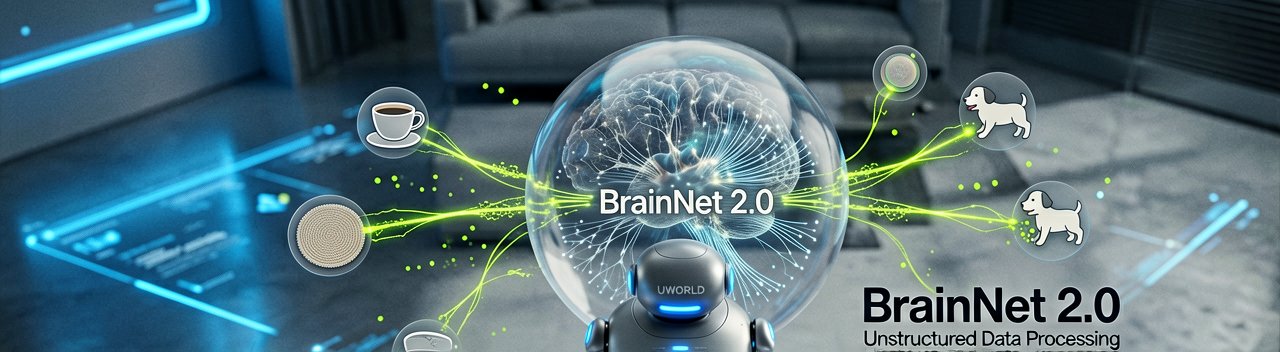
There is also a glaring contradiction in the push for "emotional intelligence." Industry leaders like UBTECH Robotics are leaning heavily into AI that learns from human intent, yet the more a robot observes to "help," the more it becomes a walking surveillance node. For UWORLD to succeed, it must convince a privacy-conscious public that its data centers aren't just harvesting the intimate details of their private lives to fuel the next iteration of the algorithm. Skepticism remains high regarding whether consumers actually want a machine that "knows" them, or if they simply want a tool that stays out of the way until it's time to do the dishes.
Furthermore, the economic narrative of "mass-market affordability" feels like a stretch when the underlying tech remains prohibitively expensive. Even with a 100x scale-up in production, the sheer complexity of bipedal locomotion ensures these machines will remain luxury items for the foreseeable future. By branding UWORLD as a consumer-facing entity now, UBTECH is likely staking a claim in the public consciousness rather than expecting a robot in every garage by next Christmas. It is a long-game branding exercise designed to normalize the presence of humanoids before the price tag actually drops to a reasonable level.
Ultimately, the success of UWORLD will hinge on its ability to move past the "uncanny valley" of utility—where a machine is too smart to be a toy but too clumsy to be an employee. Until these robots can handle a wet floor or a sudden power outage without a catastrophic failure, they risk becoming the ultimate status symbol for tech enthusiasts rather than the revolutionary labor-saving devices promised in the brochures. The transition from industrial powerhouse to household name is paved with the remains of ambitious gadgets that were too smart for their own good and too expensive for everyone else’s wallet.
The future of domestic bliss apparently involves a six-figure machine that can theoretically fold your shirts, though for that price, one might hope it also has the decency to pretend it didn't see you eating leftover pizza over the sink at 3:00 AM.
Artūras Malašauskas is an AI Systems Integrator with 20+ years of production-grade web engineering experience. He has designed, shipped, and scaled enterprise Python/PHP systems for logistics, SaaS, and public-sector clients. For the past year, he has focused exclusively on AI integrations: deploying open-source LLMs, building generative media pipelines (image, audio, video), and engineering multi-agent workflows for real production environments. His standard: reproducibility, security, cost-efficient inference—no vaporware. He documents and evaluates emerging AI tooling, separating verified capabilities from marketing noise. Technical editor at: muza-ai.eu, ai-verslas.lt, ai-naujinos.lt Connect on LinkedIn
Comments