MONSGA’s MR7 PRO Is the Pet-Friendly Cleanup Hero We’ve Been Waiting For
There is a specific kind of frustration reserved for coming home to find your expensive robot vacuum dead in the middle of the hallway, having surrendered to a single strand of hair or failing to find its own "house" to charge. MONSGA seems to have taken those grievances personally with the launch of the MR7 PRO. As reported by Morningstar, this new flagship isn’t just another incremental update; it’s a direct assault on the "docking failure" epidemic that has plagued the industry for years.
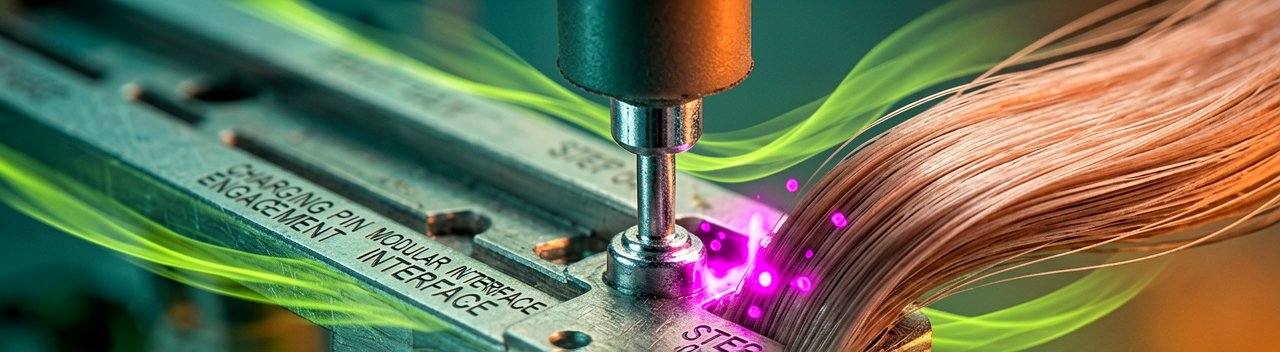
The standout feature here is what MONSGA calls "Advanced Base Plate" technology. It’s a bit of structural engineering that does double duty: it keeps moisture from mopping away from your precious hardwood floors and, more importantly, provides a physical guide to ensure the robot actually makes contact with its charging pins every single time. It’s the kind of practical fix that makes you wonder why everyone else is still relying on shaky infrared signals alone. Combined with a massive 8,000Pa suction—a figure that comfortably sits at the top end of the market—the MR7 PRO is clearly built to handle the heavy-duty chaos of a home with shedding pets and busy humans.
Solving the "Hair-Pocalypse" and Mapping the Maze
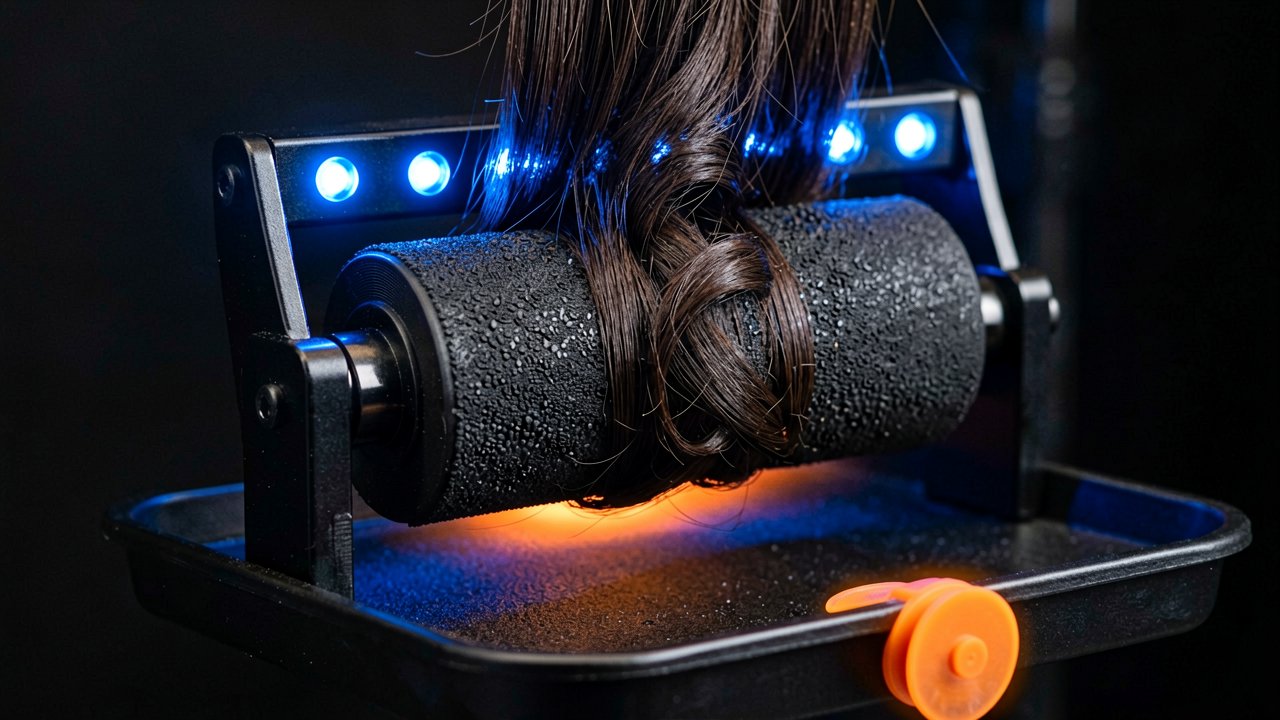
If you have pets, you know that "tangle-free" is usually a marketing myth. However, the MR7 PRO utilizes a dual anti-tangle system that pairs an arc-shaped side brush with an all-rubber main roller. This setup is specifically designed to prevent long fur from wrapping into those tight, motor-killing knots. According to specs detailed by Yahoo Finance, the vacuum doesn't just suck up hair; it manages it through the system without forcing you to reach for the scissors every weekend.
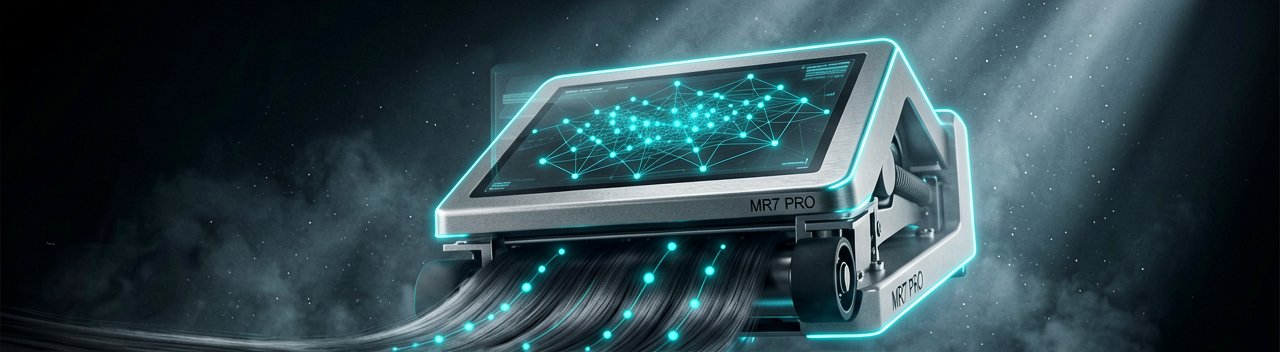
On the intelligence front, the unit uses LiDAR Smart Mapping to navigate. It’s capable of juggling up to five different floor plans, which is a godsend for anyone living in a multi-story home. The software side is equally robust, offering integration with the Smart Life and Tuya apps, alongside voice control via Alexa and Google Assistant. It even has a 160-minute runtime, covering roughly 2,690 square feet on a single charge. If the battery does dip low mid-job, it calculates exactly how much juice it needs to finish the task, recharges just that amount, and gets right back to work.
Autonomy That Actually Lasts
Maintenance is the final frontier for robot vacuums, and MONSGA is pushing for a "set it and forget it" lifestyle. The MR7 PRO features a self-emptying base with a 4L sealed dust bag that can hold up to 90 days’ worth of debris. The sealing structure is a nice touch for the allergy-prone among us, as it keeps dust clouds from escaping during disposal. At a suggested retail price of $299.99, it’s positioning itself as an aggressive competitor to the high-priced legacy brands by offering premium-tier suction and navigation without the four-figure price tag.
What Most Reports Miss: The Structural Shift in Budget Flagships
The Engineering of Reliability: While the headline-grabbing 8,000Pa suction power makes for a great spec sheet, the real story for long-term owners lies in the MR7 PRO’s departure from purely optical docking. Most manufacturers have spent the last decade trying to solve docking failures with better software and infrared sensors, yet robots still "get lost" inches away from home. MONSGA’s decision to implement a physical Base Plate reflects a shift toward mechanical reliability over digital guesswork. By creating a literal track for the robot to follow, they’ve addressed the most common reason these devices eventually become expensive paperweights: the failure to charge.
For pet-owning families, the "hair tangle" problem has historically been a war of attrition. Traditional bristle brushes act like Velcro for golden retriever fur, leading to friction-induced motor burnout. The move to an all-rubber main roller in the MR7 PRO isn't just about easier cleaning; it’s about maintaining consistent suction over time. When hair wraps around a bristle brush, the vacuum's efficiency drops significantly long before the robot actually stops moving. By prioritizing a rubberized system, MONSGA ensures the 8,000Pa of pressure is actually hitting the floor rather than being throttled by a clogged roller.
From a stakeholder perspective, the MR7 PRO represents a strategic move to democratize high-end features that were previously locked behind a $1,000 paywall. A few years ago, LiDAR mapping and multi-floor memory were "premium" luxuries. Now, by integrating these into a $299.99 package, MONSGA is putting immense pressure on legacy brands to justify their markups. This aggressive pricing strategy suggests a shift in the market where "good enough" is no longer the baseline; instead, "fully autonomous" is becoming the expected entry point for the average household.
The choice of the Tuya and Smart Life ecosystems is another calculated move for the seasoned tech observer. Rather than forcing users into a proprietary, often buggy, siloed app, MONSGA is tapping into a massive, battle-tested IoT infrastructure. This allows for seamless integration with broader smart home scenes—like having the vacuum start the moment the smart lock registers the family leaving for school—without the developer overhead of building a platform from scratch. It’s a pragmatic approach that favors user stability over brand ego.
Historical context tells us that "all-in-one" hybrids often master neither vacuuming nor mopping. However, the MR7 PRO attempts to break this cycle with its intelligent water control. Instead of a passive gravity-fed tank that leaves puddles, the electronic control system mimics a more methodical "human" pressure. For families with sensitive flooring, this distinction is critical. It moves the conversation from "can this machine do both?" to "can this machine do both safely?" and the MR7 PRO’s hardware suggests the answer is a firm yes.
Ultimately, the MR7 PRO is a reflection of a maturing industry. We are moving past the era of "novelty" robots that require constant babysitting and into the era of true household appliances. The focus has shifted from "can it see the room?" to "can it survive the room?" By doubling down on anti-tangle mechanics and a fail-safe docking station, MONSGA is betting that consumers value five minutes of saved maintenance time just as much as they value a clean floor.
Reading Between the Lines: The Friction of Total Autonomy
The High-Suction Paradox: While the 8,000Pa suction rating on the MR7 PRO is an impressive technical achievement on paper, it brings a set of physical challenges that manufacturers rarely discuss in marketing copy. In the world of fluid dynamics, high suction often translates to high noise and rapid battery depletion. While MONSGA claims a 160-minute runtime, that figure almost certainly applies to the "Quiet" or "Standard" modes. For a pet owner dealing with thick carpets and stubborn fur, the "Max" mode required to utilize that 8,000Pa will likely slash that window significantly. This creates a trade-off where the machine’s greatest strength might only be usable in short, loud bursts rather than the marathon cleaning sessions promised.
Then there is the industry-wide obsession with "90-day" maintenance-free living. This figure relies on a vacuum being the only thing standing between your home and a dust storm. In reality, the environment of a "pet-owning family" is far more chaotic. A 4L dust bag is generous, but pet hair is notoriously voluminous; it’s fluffy and doesn’t compress as easily as fine dust. For a household with two shedding Labradors, that 90-day window might look closer to 30. There is a inherent contradiction in promising months of neglect while the machine itself is constantly battling the high-volume debris that pet ownership entails.
We also have to look at the LiDAR "smart" navigation with a critical eye toward the modern home's obstacle course. LiDAR is exceptional at mapping walls and heavy furniture, but its Achilles' heel remains the low-profile objects—cables, flat toys, and the dreaded "pet accidents." While the MR7 PRO’s anti-tangle brush handles the hair that reaches it, the sensors still require a certain level of floor hygiene from the humans. The implication that a robot can "end docking failures" is a bold claim that assumes the base remains perfectly stationary and the floor remains free of the very clutter that pet-owning families are famous for generating.
The aggressive $299.99 price point also raises questions about long-term software support. In the tech world, hardware is often sold at thin margins with the expectation that the user stays within a specific ecosystem. By leveraging Tuya’s platform, MONSGA offloads the development cost, but it also means the user experience is tied to a third-party's update cycle. While this is a win for affordability today, the long-term viability of these "budget flagships" often depends on whether the cloud servers and app integrations remain as snappy three years down the road as they are on launch day.
Furthermore, the physical Base Plate, while brilliant in its simplicity, adds a footprint to the room that some might find intrusive. It is a pragmatic, mechanical solution to a digital problem, but it serves as a reminder that we haven't quite perfected the "invisible" robot. We are still at a stage where we must adapt our physical environment to accommodate our "automated" helpers. The MR7 PRO is a workhorse, certainly, but it is one that requires its own stable and a specific set of conditions to thrive, challenging the notion that we have reached a state of true, hands-off domestic bliss.
Having a robot vacuum that actually finds its charger is a revolutionary concept, though it’s a bit humbling to realize we’ve spent billions on AI just to conclude that a plastic ramp is still the most reliable way to park a car.
Artūras Malašauskas is an AI Systems Integrator with 20+ years of production-grade web engineering experience. He has designed, shipped, and scaled enterprise Python/PHP systems for logistics, SaaS, and public-sector clients. For the past year, he has focused exclusively on AI integrations: deploying open-source LLMs, building generative media pipelines (image, audio, video), and engineering multi-agent workflows for real production environments. His standard: reproducibility, security, cost-efficient inference—no vaporware. He documents and evaluates emerging AI tooling, separating verified capabilities from marketing noise. Technical editor at: muza-ai.eu, ai-verslas.lt, ai-naujinos.lt Connect on LinkedIn
Comments