Dell’s Infrastructure Blitz: Rethinking Storage and Compute for the Parabolic AI Era
Artificial intelligence is scaling far faster than standard enterprise data centers were ever built to handle, leaving infrastructure managers to wrestle with a brutal reality. They can’t just ditch their legacy business applications overnight to make room for power-hungry large language models. Recognizing this squeeze, Dell Technologies used its flagship event to roll out a comprehensive overhaul of its storage, compute, and cyber recovery portfolios designed to bridge the gap between what is running now and what is coming next.
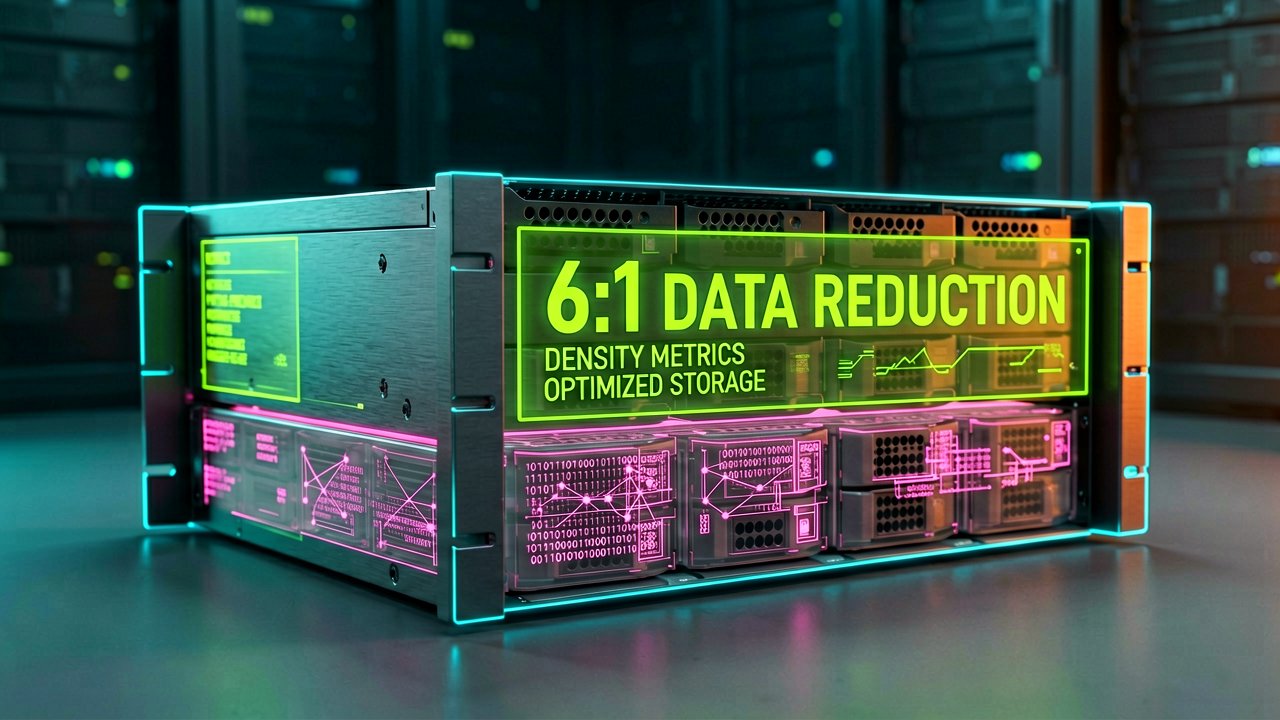
The centerpiece of the announcement is the brand-new PowerStore Elite premium storage tier. Rather than forcing enterprises into disruptive, rip-and-replace migrations, this platform layers AI-driven software optimizations over a modular hardware refresh. Dell claims it can push up to three times the performance and throughput of previous PowerStore systems, packing a massive 5.8 petabytes of effective capacity into a single 3U appliance. That density is backed by an aggressive 6:1 data reduction guarantee, showing that Dell is banking on high-efficiency silicon to keep data center floors from literally running out of space.
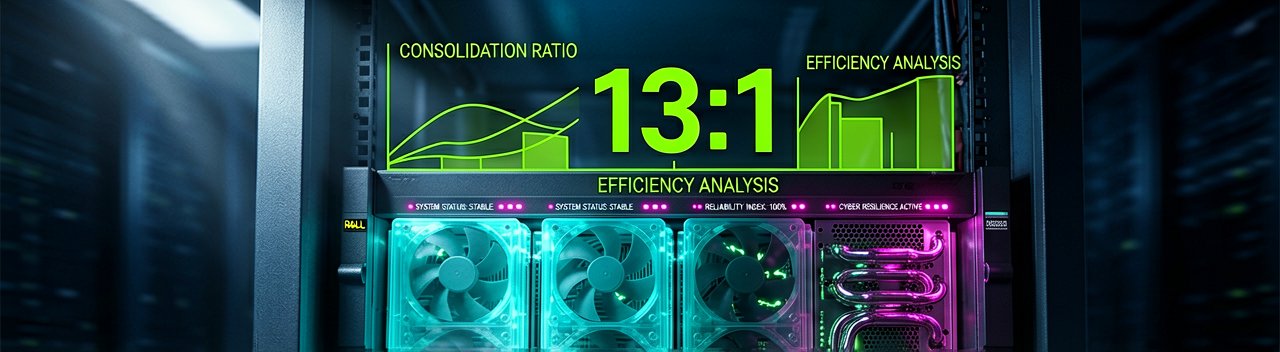
But storage is only half the battle when agentic AI applications demand immense compute resources. Dell also introduced its 18th-generation PowerEdge server portfolio, adding 11 new systems tailored for heavy consolidation and accelerated workloads. Among them is the dense PowerEdge M9825, engineered to slip into specialized high-density racks that can handle extreme power loads. According to coverage from SiliconANGLE, these new servers offer up to a 13-to-1 consolidation ratio compared to older hardware, allowing businesses to drastically shrink their physical footprints while boosting raw processing power.
Byte-Level Defense and Unified Cyber Resilience
As data environments become more distributed and complex, they inevitably attract sophisticated ransomware threats. Dell's response to this is PowerProtect One, a unified cyber resilience platform that merges protection management and backup storage under a single control plane. By combining orchestration and recovery into one interface, it aims to eliminate the messy, fragmented multi-vendor setups that security teams usually have to piece together during a crisis.
To stop attacks before they compromise entire backups, Dell is also extending its Cyber Detect software directly to its primary PowerStore and PowerMax arrays. This tool scans data at the byte level to pinpoint precisely when and where ransomware corruption occurred, allowing administrators to find and restore the last known clean copy of their data. In an era where AI tools are being used to automate cyberattacks, integrating this level of defensive intelligence directly into the storage hardware itself feels less like a luxury and more like a baseline requirement for survival.
The Edge of Tomorrow: Quantum Readiness
Looking further down the horizon, Dell is quietly preparing for the next massive cryptographic shift. The new PowerEdge servers ship with quantum-safe firmware and secure boot capabilities. This design choice prepares enterprises for strict post-quantum cryptography mandates that regulated industries and federal buyers are expected to face by 2027. It is a clear nod to the fact that while AI is driving infrastructure decisions today, the underlying hardware needs to be secure enough to withstand the code-breaking capabilities of tomorrow.
Behind the Scenes: The Invisible Engineering War for Data Center Density
The glossy press releases surrounding Dell’s latest infrastructure blitz inevitably focus on raw performance metrics and jaw-dropping petabyte counts. However, enterprise architects working on the data center floor know the real battle isn't just about faster chips; it is about thermodynamics and power distribution. The modern data center is hitting a physical wall where traditional air-cooling methods can no longer keep up with the intense heat generated by high-density AI clusters. Dell’s massive consolidation ratios are a direct response to this bottleneck, shifting the conversation from how many servers a business can buy to how much compute they can realistically squeeze into a fixed power envelope.
By engineering systems that squeeze a 13-to-1 consolidation ratio out of legacy hardware, Dell is throwing a lifeline to CIOs who are blocked from expanding their physical footprints. Building a new data center from scratch can take years and cost hundreds of millions of dollars, while securing additional megawatts from local power grids has become a bureaucratic nightmare in major tech hubs. Consequently, the ability to upgrade existing racks with high-efficiency silicon like the PowerStore Elite and dense PowerEdge systems is a tactical maneuver to buy time. It allows enterprises to deploy next-generation AI workloads today without waiting for utility companies to upgrade the local power infrastructure.
This architectural shift also reveals a deeper strategic rivalry between traditional enterprise hardware giants and hyperscale cloud providers. For years, the prevailing industry narrative insisted that all corporate workloads would eventually migrate to public clouds. Yet, the massive data ingestion requirements and soaring egress fees associated with training and running proprietary AI models have triggered a repatriation wave. Companies are realizing that keeping their core intellectual property on-premises or in hybrid colocation facilities is often more cost-effective and secure. Dell is capitalizing on this sentiment by embedding premium features, like byte-level cyber detection and quantum-safe firmware, directly into the hardware to offer a cloud-like experience without the cloud-like vulnerabilities.
Furthermore, stakeholder perspectives highlight that the real challenge of this transition lies in the human element of IT operations. Storage administrators who spent decades mastering siloed, specialized systems are suddenly being asked to act as data engineers and cybersecurity first responders. The introduction of unified platforms like PowerProtect One is an attempt to mitigate this skills gap by hiding immense backend complexity behind a single, automated dashboard. As automated, AI-driven cyber threats become more prevalent, the window for human intervention during a ransomware attack has shrunk from days to minutes, forcing hardware vendors to build self-healing capabilities directly into the storage microcode.
Ultimately, Dell's holistic refresh signals that the infrastructure market has moved past the experimental phase of the AI boom. The initial rush to buy any available GPU at any cost is giving way to a more disciplined, mature phase of enterprise deployment where reliability, security, and power efficiency dictate the return on investment. The organizations that successfully navigate this transition will not necessarily be those with the largest AI budgets, but those that successfully modernize their foundational storage and compute layers to handle the relentless, shifting demands of the data era.
Reading Between the Lines: The Frictionless AI Myth Meets Legacy Reality
The enterprise tech industry loves a neat narrative, and the current marketing consensus insists that a simple hardware upgrade can seamlessly transform a legacy enterprise into an agile, AI-first powerhouse. Dell’s promised 6:1 data reduction ratios and massive server consolidation metrics look phenomenal on a slide deck, but they gloss over the messy data fragmentation plaguing most corporate networks. High-density servers and ultra-fast storage arrays do absolutely nothing to clean up decades of unstructured, duplicate, or poorly categorized data. Deploying cutting-edge AI infrastructure on top of a disorganized data swamp simply allows enterprises to generate flawed insights at a much faster rate than before.
There is also an inherent contradiction in selling massive data center consolidation as a green, power-saving initiative while simultaneously packing racks with hardware designed for the most power-hungry workloads in human history. While removing thirteen older servers in favor of one modern PowerEdge system technically shrinks the physical footprint, the actual power draw per square foot is skyrocketing. Many legacy enterprise data centers were designed for an average of 5 to 10 kilowatts per rack, but modern AI-optimized setups can easily demand 40 to 100 kilowatts per rack. This reality forces a skeptical look at the true total cost of ownership, as businesses will inevitably have to reinvest their hardware savings directly into retrofitting their facilities with expensive liquid cooling infrastructure.
Dell's aggressive pivot toward built-in cyber resilience and quantum-safe firmware also exposes a cynical truth about the current state of enterprise security. By embedding byte-level ransomware detection directly into the primary storage arrays, the hardware vendor is essentially acknowledging that traditional perimeter defenses and endpoint security software are no longer sufficient. It shifts the defensive strategy from prevention to damage control, operating under the assumption that a breach is not a possibility, but an absolute mathematical certainty. While this pragmatic approach is necessary, it risks creating a false sense of complacency where organizations rely on automated recovery systems rather than addressing fundamental flaws in their overall security architecture.
Furthermore, the long-term implications of locking into a single vendor's comprehensive ecosystem deserve measured skepticism. As Dell tightly integrates storage, compute, and cyber recovery under unified control planes like PowerProtect One, the friction required to migrate away from their ecosystem increases exponentially. This strategy brilliantly secures predictable, long-term enterprise revenue for Dell, but it leaves IT departments highly vulnerable to future price hikes and feature stagnation. In a technology landscape where AI models and data frameworks are changing completely every six months, tying a company’s long-term digital strategy to rigid, proprietary hardware layers might ultimately restrict the very agility these systems claim to provide.
"We are told the modern data center is a sleek, self-healing oasis of pure intelligence, but a peek behind the server rack usually reveals an exhausted IT team praying the legacy databases don't collapse before the next funding round. Upgrading your hardware to fix a broken data strategy is a bit like buying a Formula 1 car to sit in gridlocked morning traffic—you will certainly look much more sophisticated while standing completely still."
Artūras Malašauskas is an AI Systems Integrator with 20+ years of production-grade web engineering experience. He has designed, shipped, and scaled enterprise Python/PHP systems for logistics, SaaS, and public-sector clients. For the past year, he has focused exclusively on AI integrations: deploying open-source LLMs, building generative media pipelines (image, audio, video), and engineering multi-agent workflows for real production environments. His standard: reproducibility, security, cost-efficient inference—no vaporware. He documents and evaluates emerging AI tooling, separating verified capabilities from marketing noise. Technical editor at: muza-ai.eu, ai-verslas.lt, ai-naujinos.lt Connect on LinkedIn
Comments