MONSGA Launches the MR7 PRO: The Robot Vacuum That Finally Fixes Pet Hair and Docking Headaches
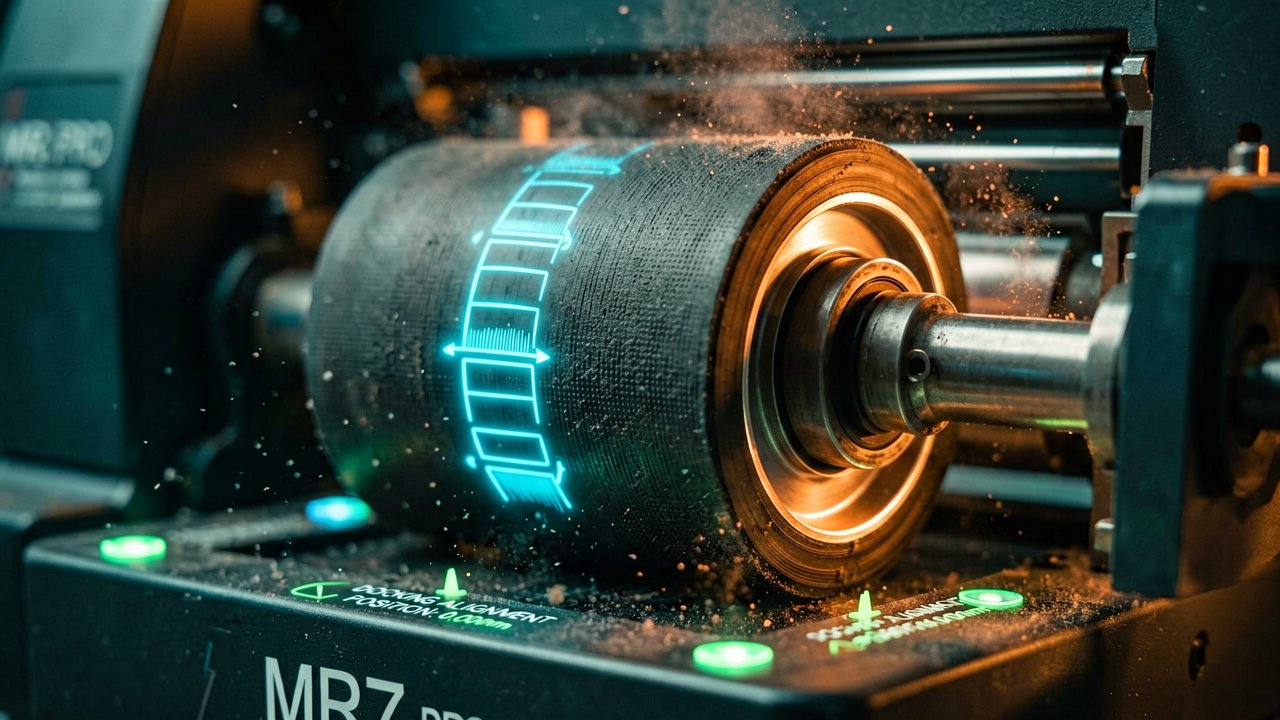
Anyone who lives with pets knows the bitter irony of the standard robot vacuum. You buy it to save time, but you spend half your week flipping the machine over to slice away tightly wound webs of golden retriever fur. Worse, you come home expecting spotless floors, only to find the robot stranded three inches from its base station, battery dead, because it failed to dock correctly. MONSGA is aiming to put an end to that specific brand of domestic frustration with its latest release, the MR7 PRO robot vacuum and mop combo.
The newly unveiled MONSGA MR7 PRO isn't just another incremental spec bump in a crowded market. It behaves like a true household workhorse, packing a massive 8,000Pa of raw suction power designed to pull deeply embedded dander and heavy debris right out of thick carpets. But raw power means nothing if the intake gets choked on day one. To prevent this, MONSGA deployed a dual anti-tangle system pairing an arc-shaped side brush with an all-rubber main roller, allowing long pet hairs to slide effortlessly into the dustbin instead of wrapping around the machinery like a vice.
Intelligent Docking and a Sealed Base Station
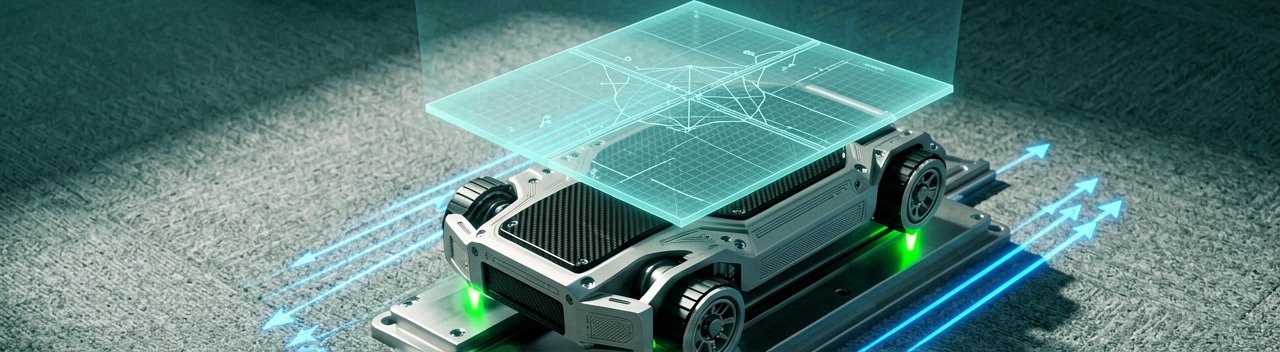
Beyond hair tangles, the engineering team tackled the second most common headache in automated floor care: the dreaded docking failure. Many standard robots misalign or lose their connection to charging pins, completely derailing their scheduled maintenance routines. The MR7 PRO counteracts this with an "Advanced Base Plate" design that ensures a flawless physical connection every single time the unit returns home. This reliable alignment is critical because the base station pulls double duty as a self-emptying hub, sucking dirt out of the robot and into a massive 4L sealed dust bag that provides up to 90 days of completely hands-free cleaning.
Precision Navigation and Smart Power Calculation
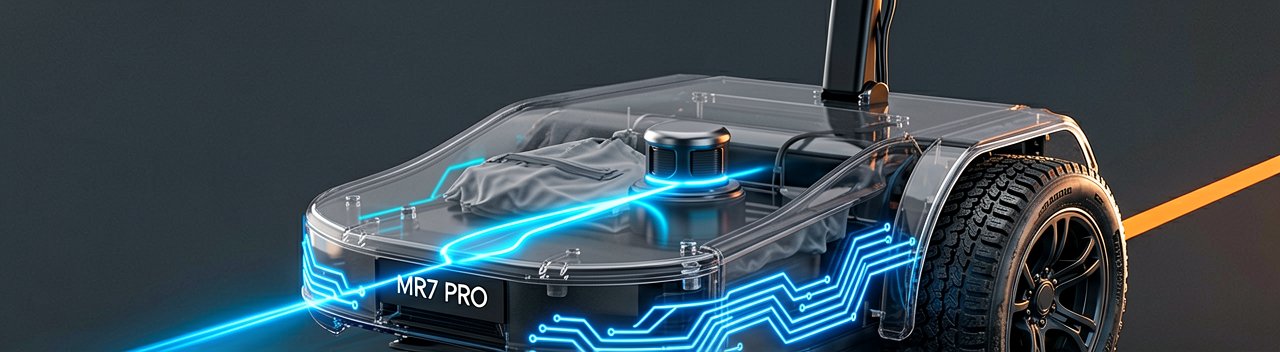
On the software side, the MR7 PRO relies on high-precision LiDAR Smart Mapping to analyze its surroundings in real-time. Instead of bumping aimlessly into furniture, it charts systematic, row-by-row cleaning paths and can store up to five separate floor plans for multi-story homes. It features a continuous 160-minute runtime, but if it does run out of juice halfway through a sprawling floor plan, it won't just sit on the charger for hours. The machine calculates the exact amount of power required to finish the remaining zones, recharges just enough to complete the task, and resumes work precisely where it left off.
Behind the Scenes: The Engineering Battle Against Micro-Friction
To truly understand why the MR7 PRO represents a shift in product philosophy, one must look at the historical trajectory of the robot vacuum industry. For the past decade, manufacturers have engaged in a fierce numbers race, aggressively scaling up Pascal ratings to boast about raw suction power. Yet, tech journalists and consumer testing labs consistently observed a frustrating reality: a robot with 10,000Pa of suction could still be rendered completely useless by a single gram of tightly wound nylon thread or long pet hair. The issue was never a lack of airflow; it was a fundamental misunderstanding of micro-friction and mechanical resistance inside the brush roller housing.
MONSGA’s engineering team approached the MR7 PRO not as a vacuum problem, but as a material sciences challenge. By ditching traditional bristled rollers—which act as a hook-and-loop fastener for fur—and adopting a specialized all-rubber compound, they minimized the surface area to which hair could adhere. The arc-shaped side brush complements this by continuously throwing debris into the direct path of the high-velocity airflow before it can migrate into the wheel axles. Industry insiders note that this shift from brute force to friction mitigation is where the market is heading, as savvy consumers demand machines that require less manual upkeep than the manual vacuums they replaced.
The second engineering hurdles involved re-evaluating the physical geometry of the charging dock. Traditional docks rely heavily on the robot aligning its underside contacts with small metal plates on the floor, a system highly vulnerable to slight floor slopes, thick rugs, or accumulated grime on the sensors. By introducing the Advanced Base Plate, MONSGA effectively created a physical guide rail system. When the robot approaches, the base plate mechanically locks the chassis into perfect alignment, guaranteeing that the high-voltage self-emptying sequence initiates without losing suction pressure at the junction point.
From a household economics perspective, this level of automation shifts the robot vacuum from a novelty gadget to a critical appliance. Early adopters often complained of "automation anxiety"—the nagging feeling that they needed to vacuum the house before running the robot vacuum to prevent it from getting stuck. By stabilizing the navigation algorithm and fortifying the physical docking mechanism, the MR7 PRO targets that psychological friction point, allowing busy families to genuinely delegate their floor maintenance for months at a time.
Reading Between the Lines: The Reality of the Maintenance-Free Promise
While an 8,000Pa suction rating and a 90-day dustbag sound impressive on a spec sheet, seasoned product testers know that the robot vacuum industry loves to conflate laboratory conditions with actual household chaos. The promise of completely hands-free cleaning for three months assumes a level of environmental predictability that rarely exists in a home with multiple pets. In reality, a heavy-shedding Great Dane or a pair of long-haired cats can fill a 4L bag much faster than a marketing brochure suggests, forcing users to confront the ongoing cost of proprietary replacement bags far sooner than anticipated.
Furthermore, the focus on eliminating hair tangles on the main roller often ignores the secondary choke points of automated vacuums. Fur has an uncanny ability to migrate into the smallest crevices, including the front caster wheel housing and the tiny gaps around the drive wheels. While MONSGA’s arc-shaped side brush and rubber roller handle the main intake path brilliantly, the true test of the MR7 PRO's longevity will be how well its internal seals protect its bearings from the microscopic dander and fine dust that inevitably bypass standard filtration over hundreds of cleaning cycles.
There is also a fascinating paradox in the software logic of modern smart vacuums. The MR7 PRO’s ability to calculate exact power requirements for mid-cycle top-ups is a clever engineering feat, but it highlights a broader industry compromise. As suction power climbs to industrial levels, battery drain accelerates dramatically. This means consumers are trading continuous, single-pass cleaning for a machine that may need to take a calculated nap halfway through the living room just to finish the job, making the overall cleaning process take longer in exchange for deeper carpet penetration.
"We have officially reached the era of peak domestic luxury when we require our floor-cleaning robots to possess advanced spatial awareness and mathematical forecasting just to navigate around a discarded dog toy, proving that while we can successfully automate the chore of vacuuming, we still haven't figured out how to automate the picking up of our own socks."
Artūras Malašauskas is an AI Systems Integrator with 20+ years of production-grade web engineering experience. He has designed, shipped, and scaled enterprise Python/PHP systems for logistics, SaaS, and public-sector clients. For the past year, he has focused exclusively on AI integrations: deploying open-source LLMs, building generative media pipelines (image, audio, video), and engineering multi-agent workflows for real production environments. His standard: reproducibility, security, cost-efficient inference—no vaporware. He documents and evaluates emerging AI tooling, separating verified capabilities from marketing noise. Technical editor at: muza-ai.eu, ai-verslas.lt, ai-naujinos.lt Connect on LinkedIn
Comments