The Ink Flows Into the Machine: Japan’s DIC Chooses Zurich to Anchor a Physical AI Empire
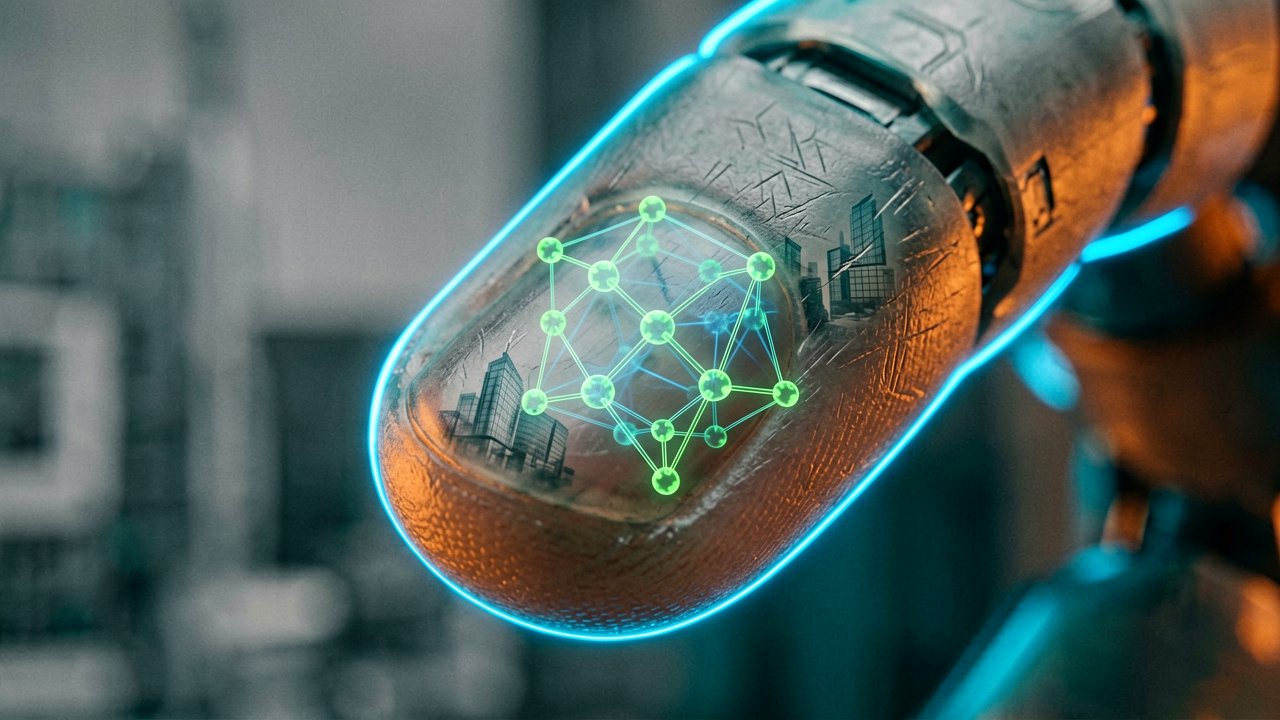
For a century, Tokyo-based giant DIC Corporation made its billions by perfecting the physical—dominating the global markets for printing inks, organic pigments, and synthetic resins. But in a world where software is rapidly trying to grow hands, the chemical titan is making a sharp pivot toward the hardware-heavy frontier of artificial intelligence. By launching DIC D2S Ventures AG in Zurich, Switzerland, the industrial powerhouse is planting its flag directly in Europe's most fertile deep-tech soil. Backed by a fresh $62 million investment platform, this isn't just a passive corporate venture play; it is a calculated land grab for the underlying interfaces where advanced algorithms meet physical machinery.
The choice of Zurich as the corporate venture capital hub isn't accidental. Rather than fighting for overhyped, purely digital large language models in Silicon Valley, DIC is hunting for what it terms next-generation "Physical AI." We are talking about the real-world grit of tactile sensing for autonomous robots, advanced wearables, and smart automation systems that actually interact with human spaces. According to a detailed breakdown by Global Venturing, the new Swiss subsidiary will serve as the strategic launchpad to scout, fund, and eventually commercialize deep-tech startups across both Europe and North America.
To pull this off without stumbling into the typical bureaucratic traps that plague old-school conglomerates, DIC has wisely brought in local muscle. The firm has entered into a deep strategic partnership with Zurich-based venture capital pioneer Emerald Technology Ventures, an outfit that has spent over two decades navigating the complexities of industrial technology. According to an official release sourced via IBTimes, the collaboration is explicitly designed to accelerate corporate decision-making and build an immediate pipeline for future commercialization under DIC’s "Direct to Society" framework.
Bridging the Gap Between Materials and Autonomy
It's easy to look at a $62 million fund and think it's pocket change compared to the multi-billion-dollar rounds raised by foundational AI labs. But that misses the point entirely. Physical AI is notoriously difficult to scale because software brilliant enough to navigate a room still relies on imperfect, rigid hardware. Startups building things like soft robotics or complex biomimetic sensors frequently hit a wall at the material and interface layers. They know the math, but they don't know the chemistry. That's exactly where a parent company with a massive $7 billion revenue base and unmatched material science expertise can step in to offer more than just cash.
This European push is part of a much broader, highly aggressive trend of Japanese corporations exporting capital to solve domestic anxieties. Facing a shrinking native workforce and an aging demographic back home, Japanese industry is betting heavily on automated infrastructure to keep the wheels turning. DIC isn't alone in this thesis either; other corporate peers like Ricoh and Japanet have similarly beefed up their European tech-scouting budgets recently. To build local goodwill and kickstart its ecosystem, DIC is already planning a major collaborative innovation event in Zurich for July 2026, bringing together localized research institutions and deep-tech founders under one roof.
Behind the Scenes: The corporate marriage between Tokyo’s chemical establishment and Zurich’s high-tech ecosystem exposes a deeper, structural shift in how global conglomerates view the next decade of automation. For years, massive material sciences firms operated on a linear model: invent a compound, patent it, and sell it in bulk to manufacturing clients. However, the rise of specialized algorithms capable of real-time physical feedback loops has disrupted this traditional pipeline. DIC Corporation is realizing that its legendary expertise in fine chemicals, organic pigments, and advanced synthetic resins is no longer just a catalog of raw products; it is a critical toolkit for solving the foundational bottlenecks of modern automation.
Historically, corporate venture capital from East Asian industrial titans leaned heavily toward domestic market expansion or safe, late-stage equity positions in North American IT infrastructure. The pivot to Europe, specifically anchoring within the Greater Zurich Area, represents a deliberate rejection of that playbbook. European deep-tech innovation hubs are structurally distinct from their Silicon Valley counterparts, focusing less on hyper-scalable consumer applications and far more on capital-intensive engineering, localized academic research, and complex robotic ecosystems. By choosing Switzerland as its strategic beachhead, DIC is explicitly aiming its $62 million platform at a region that treats hardware development as an intricate material science challenge rather than a mere vessel for software.
The Structural Friction of Materials in an Algorithmic Era
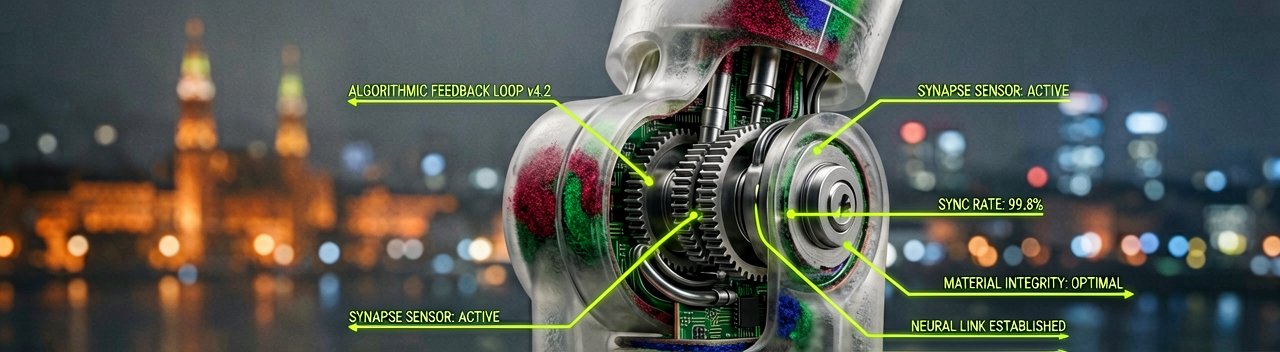
From the perspective of a deep-tech founder, the primary hurdle of building viable physical AI isn't the software complexity—it is the reality of physical degradation, latency, and sensor inaccuracy. A robot operating on a factory floor can possess a brilliant digital brain, yet remain functionally limited by rigid actuators, brittle sensors, or insensitive synthetic skins. By embedding its new venture wing, DIC D2S Ventures AG, alongside local heavyweights like Startupticker.ch partner Emerald Technology Ventures, DIC is offering these young startups a rare pipeline. This setup provides early-stage operations with immediate access to advanced chemical engineering resources that can fundamentally re-engineer how a wearable device or tactile robot interacts with its environment.
This deployment framework also serves as a defensive hedge against the macroeconomic pressures brewing back in Tokyo. Japan’s domestic economy faces a steep demographic squeeze characterized by a shrinking labor force, making advanced automation a matter of national economic survival. However, relying purely on domestic invention is no longer fast enough for conglomerates looking to maintain global dominance. By outsourcing its tech-scouting apparatus to Zurich, DIC is implementing its "Direct to Society" framework to capture foreign innovation early, refine it using Japanese chemical superiority, and instantly deploy the finalized systems back into global industrial supply chains.
Reading Between the Lines: The romantic narrative of a material science giant swooping in to rescue struggling physical AI startups with cash and chemistry ignores a messy corporate contradiction. Historically, traditional chemical conglomerates move at a geologic pace, bound by multi-year R&D cycles, strict regulatory compliance, and rigid manufacturing pipelines. Conversely, early-stage tech ventures operate in chaotic, iterative bursts where a week without a software pivot feels like stagnation. Dropping a $62 million fund into Zurich does not automatically erase this friction; it merely builds a very expensive bridge over an operational chasm that has swallowed plenty of corporate venture experiments before.
Furthermore, the true motivation behind DIC’s migration to Europe likely has less to do with benevolent ecosystem building and far more to do with securing a proprietary pipeline. By locking arms with localized venture outfits, the chemical titan ensures it gets an exclusive look at defensive hardware intellectual property before it ever hits the open market. This dynamic creates a complex web of interests for young startups. A injection of cash from an industrial heavyweight is undeniably attractive, but it frequently comes with heavy strings attached—namely, restrictive commercialization agreements that can alienate other potential manufacturing partners globally.
The Realities of Scaling Hardware in a Software World
We must also look with measured skepticism at the sudden market obsession with "Physical AI" as a distinct investment category. For all the excitement surrounding tactile sensors and smart automation, hardware remains notoriously difficult to scale profitably. Software algorithms can be duplicated instantly for a fraction of a cent, but physical components require factories, supply chains, raw minerals, and shipping logistics. While DIC’s corporate muscle can alleviate some material bottlenecks, it cannot insulate these startups from the brutal reality of hardware margins, which rarely match the explosive, venture-scale returns that tech investors traditionally crave.
Ultimately, this Swiss venture will serve as a critical case study in whether old-world industrial capital can truly adapt to the hyper-speed demands of modern automation. If DIC can maintain a hands-off approach and let its Zurich team operate with genuine autonomy, it might just secure the material foundations for the next generation of robotics. But if Tokyo's corporate bureaucracy begins micromanaging the pipeline, the fund risks becoming just another defensive ledger entry—a wealthy conglomerate buying a front-row seat to an innovation party it doesn't quite know how to dance at.
"Investing in physical AI is the ultimate corporate test of patience; it requires funding a software brain while waiting years for the mechanical body to stop tripping over its own feet on the factory floor."
Artūras Malašauskas is an AI Systems Integrator with 20+ years of production-grade web engineering experience. He has designed, shipped, and scaled enterprise Python/PHP systems for logistics, SaaS, and public-sector clients. For the past year, he has focused exclusively on AI integrations: deploying open-source LLMs, building generative media pipelines (image, audio, video), and engineering multi-agent workflows for real production environments. His standard: reproducibility, security, cost-efficient inference—no vaporware. He documents and evaluates emerging AI tooling, separating verified capabilities from marketing noise. Technical editor at: muza-ai.eu, ai-verslas.lt, ai-naujinos.lt Connect on LinkedIn
Comments