Magilan’s Layer-Guard Robot 7: The Future of Poultry Farming Just Got a Major Upgrade
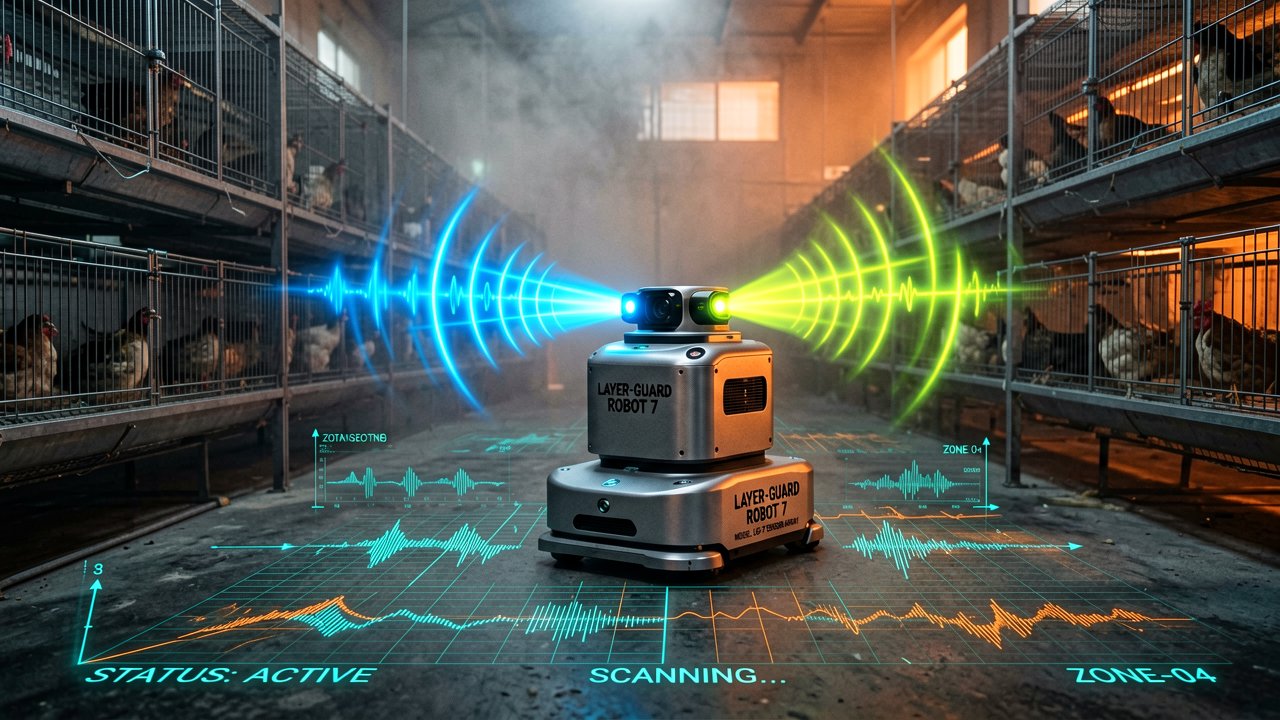
The China Animal Husbandry Expo (CAHE) is rarely a place for subtle shifts, and this year’s show in Chengdu was no exception. Magilan Intelligent Technology took the stage to pull the curtain back on the Layer-Guard Robot 7, a machine that looks more like a high-tech sentinel than a farm tool. It’s a significant leap from the "Magilan 4" that first hit the market in 2021, and it’s clearly designed to handle the gritty, high-stakes reality of modern poultry houses where human labor often struggles to keep up with the sheer scale of the operation.
What makes the Robot 7 stand out isn’t just its sleek autonomous platform; it’s the sheer intelligence baked into its multi-sensor array. We’re talking about a machine that boasts a ≥99% detection rate for deceased or weak birds, identifying them with a level of precision that would make a veteran farmhand jealous. Beyond just spotting trouble, the robot tracks laying rates, flagging underperforming hens that dip below the 50% mark. By removing these non-productive birds quickly, Magilan is effectively helping farmers cut feed waste and—perhaps more importantly—snap potential infection chains before they can spiral into a full-blown biosecurity crisis. It’s a proactive approach to flock management that feels less like "checking the boxes" and more like a tactical defense system for the farm.
Mobility and Endurance for the Modern Enterprise
If you've ever stepped inside a multi-tier poultry facility, you know it’s a logistical nightmare for a robot. Magilan seems to have anticipated this, equipping the Robot 7 with LiDAR-based navigation and a chassis that’s surprisingly nimble. It can hop over 3 cm obstacles and bridge gaps as wide as 10 cm, all while maintaining a steady patrol speed of up to 30 cm/s. Most impressive is its ability to handle verticality; the system integrates seamlessly with automated security doors and elevators to patrol across different floors and buildings autonomously. With over 12 hours of battery life on a single charge, it’s built for the long haul, ensuring that 24/7 monitoring is a reality rather than a marketing bullet point.
A Global Footprint for Smart Ag
While the reveal took place in China, Magilan's ambitions are clearly global. According to reports from Yahoo Finance, the company has already deployed over 220 robots across more than 100 large-scale enterprises in markets like Japan and Malaysia. This isn't just a prototype being paraded around an expo floor; it’s a proven tool that’s actively digitizing the poultry industry. By combining acoustic recognition to monitor stress-induced squawking with thermal and visual sensors for health checks, the Layer-Guard Robot 7 is setting a new bar for what we should expect from smart agriculture in 2026.
Magilan is proving that the intersection of AI vision and rugged robotics isn't just about efficiency—it's about survival in an industry where margins are thin and biosecurity is everything.
The Hidden Architecture: How Robotics is Re-Engineering the Farm Hand
Behind the Scenes: The real story of the Layer-Guard Robot 7 isn't just about the sensors on its chassis, but about a fundamental shift in the global labor economy of agriculture. For decades, poultry farming has relied on a "quantity over quality" labor model, where low-wage workers performed the grueling, repetitive task of manually inspecting thousands of cages for signs of disease or mortality. As Magilan scales its technology, we are witnessing the sunset of this high-intensity manual era. Experts from groups like QH Agritech suggest that robots are no longer just optional gadgets but essential infrastructure for a workforce that is rapidly aging and shrinking in key markets like China and Japan.
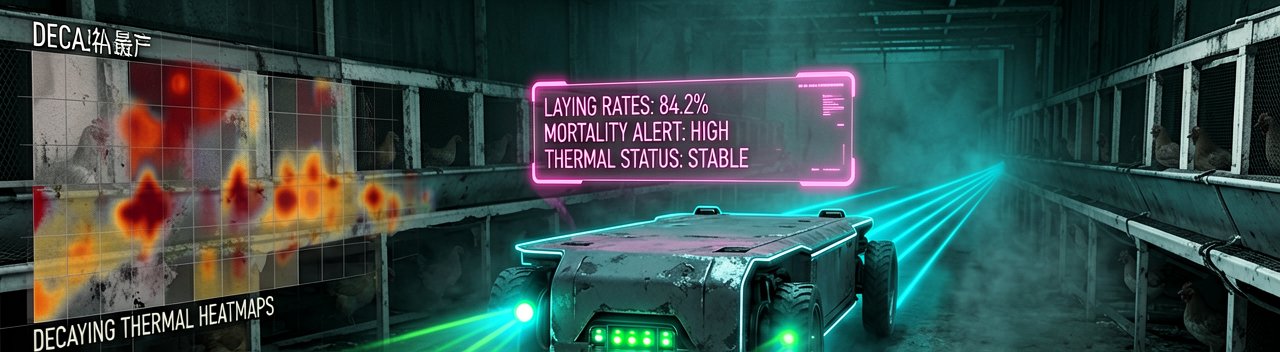
This transition isn't merely about replacement; it’s about a radical "skill-up" for the industry. Historically, farm managers spent 60% of their time on basic oversight; now, they are being refashioned into data analysts who interpret the heatmaps and acoustic stress reports generated by these autonomous units. Historical context from Wikipedia’s poultry farming records shows that while mechanization in the 20th century focused on hardware like feeders, the 21st-century pivot is entirely digital. Stakeholders in Southeast Asia, such as Malaysia’s QL Resources Berhad, have already begun integrating these robots to bridge the gap between traditional husbandry and the "Precision Poultry Farming" (PPF) standard required for modern biosecurity compliance.
The economic ripple effect is profound. While some fear an unemployment crisis, a systematic review published via ResearchGate indicates that robotics in farming actually addresses "jobs that human labor does not want to do," such as handling hazardous waste or working in pathogen-heavy environments. By offloading these high-risk duties to the Robot 7, enterprises can reduce their insurance premiums and turnover rates, which have plagued the sector for years. The five-year outlook suggests that rather than empty farmhouses, we will see facilities operated by smaller, more specialized teams who manage fleets of robots as their primary "employees," effectively turning a poultry house into a high-tech data center.
Ultimately, the deployment of over 220 units across 100 enterprises is the opening salvo in a broader race for agricultural sovereignty. As labor costs rise and food security becomes a national priority, the ability to maintain a 99% detection rate without human fatigue becomes a competitive necessity. For the seasoned reporter, the focus isn't just on the machine’s 12-hour battery life, but on how that battery life translates into a more resilient, pathogen-resistant supply chain that no longer breaks when the labor market tightens. This isn't the future of farming—it's the new baseline for survival in a world that demands both efficiency and absolute transparency.
The Silicon Ceiling: Where Automation Meets Biological Reality
Reading Between the Lines: For all the gloss of the Layer-Guard Robot 7’s marketing materials, there is a persistent friction between digital precision and the chaotic, biological reality of a poultry barn. We often assume that better data automatically leads to better outcomes, but the industry is currently grappling with a "data glut." A robot that identifies underperforming hens with 99% accuracy is only as effective as the human crew available to act on that information. If a farm’s logistics can’t keep pace with the robot’s real-time alerts, the machine becomes little more than a very expensive witness to inefficiency, highlighting problems that the infrastructure isn't yet nimble enough to solve.
There is also a notable contradiction in the push for total autonomy: the more we remove humans to ensure biosecurity, the more we centralize risk into the hands of a few technical systems. While Magilan’s LiDAR and multi-sensor arrays are impressive, they introduce a new type of vulnerability—cyber and technical downtime. If a fleet’s navigation software glitches during a critical disease outbreak, the "safety net" vanishes instantly. Industry skepticism remains regarding whether these machines can truly adapt to the unpredictable nature of animal behavior over a multi-year lifespan, or if they will eventually succumb to the corrosive, ammonia-heavy atmosphere that has claimed many "next-gen" gadgets before them.
Furthermore, the projection of a "labor-free" farm ignores the massive shift in capital expenditure. Transitioning from variable labor costs to fixed, high-cost robotic assets requires a level of financial liquidity that small to mid-sized operations simply don't possess. This risks creating a two-tier food system: a high-tech, hyper-efficient layer dominated by massive corporations, and a traditional layer that is increasingly priced out of the market. While Magilan celebrates its 220 units deployed, the real test isn't whether the robot can find a dead bird, but whether the average farmer can find the return on investment before the technology becomes obsolete in another three-year cycle.
"We’ve reached a point where the robots are finally smart enough to tell us exactly how we’re failing, which is a significant technological achievement—though one suspects the chickens would prefer a machine that simply figured out how to open the windows."
Artūras Malašauskas is an AI Systems Integrator with 20+ years of production-grade web engineering experience. He has designed, shipped, and scaled enterprise Python/PHP systems for logistics, SaaS, and public-sector clients. For the past year, he has focused exclusively on AI integrations: deploying open-source LLMs, building generative media pipelines (image, audio, video), and engineering multi-agent workflows for real production environments. His standard: reproducibility, security, cost-efficient inference—no vaporware. He documents and evaluates emerging AI tooling, separating verified capabilities from marketing noise. Technical editor at: muza-ai.eu, ai-verslas.lt, ai-naujinos.lt Connect on LinkedIn
Comments