The Coop’s New Cop: Magilan’s Layer-Guard Robot 7 Takes the Floor in Chengdu
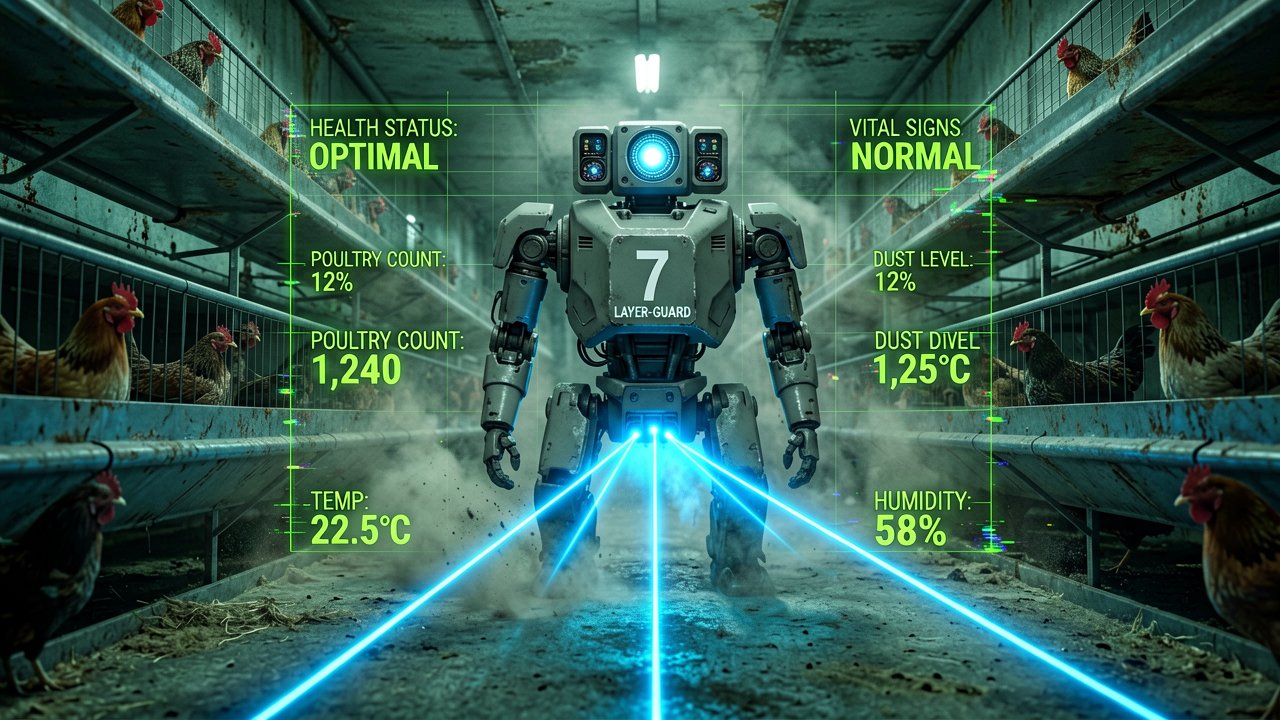
If you thought the future of robotics was all about sleek humanoid assistants or autonomous city taxis, the China Animal Husbandry Expo (CAHE) just served up a feathered reality check. Magilan, a name that’s becoming synonymous with high-tech poultry management, officially pulled the curtain back on its Layer-Guard Robot 7 this week. This isn't just a minor iteration of their previous tech; it’s a high-precision sentinel designed to do the dirty work of 24/7 flock monitoring with a level of scrutiny that would make even the most diligent farmhand blink. By combining autonomous mobile platforms with an array of sensors, Magilan is betting that the key to modern biosecurity isn't just better fences, but smarter eyes on the ground.
What makes the Layer-Guard 7 stand out in the crowded aisles of the Expo is its uncanny ability to spot the "needle in the haystack"—or rather, the sick hen in a sea of thousands. According to reports from the The Globe and Mail , the robot boasts a staggering 99% detection rate for deceased or weak birds. It doesn't stop at the obvious, though; it leverages AI vision to flag underperforming hens whose laying rates have dipped below the 50% mark. In an industry where feed waste and disease transmission can gut margins overnight, having a LiDAR-equipped unit that can navigate 10cm gaps and 3cm obstacles while sniffing out trouble is a legitimate game-changer for large-scale operations.
A Multi-Tiered Approach to Biosecurity
The technical specs suggest this machine was built for the grind. We’re looking at a 12-hour battery life and an autonomous navigation system that handles elevators and security doors like a seasoned pro. Beyond simple movement, the "7" integrates acoustic recognition to listen for stress-induced squawks and multi-dimensional sensors to track humidity and temperature in real-time. It’s clear that Magilan is aiming to replace high-intensity manual labor with a digitized management layer that simply doesn't get tired. With over 220 units already deployed across China, Japan, and Malaysia, the debut of the Layer-Guard Robot 7 signals that the transition from traditional farming to "Fujian intelligence" is moving full steam ahead, as detailed by Newsfile.
The Digital Sentry: Why the Robot 7 is a Watershed Moment for Poultry
The Real Ground Game: While the headlines focus on the shiny hardware, the true narrative lies in how the Layer-Guard Robot 7 addresses the invisible pressures of the modern protein supply chain. For years, the poultry industry has wrestled with a paradox: as facilities grow larger to meet global demand, the ability of a human manager to monitor individual bird health effectively shrinks. In a typical high-density layer house, a single worker might be responsible for tens of thousands of birds, making it physically impossible to catch early-onset respiratory symptoms or behavioral shifts before they snowball into a full-blown biosecurity crisis.

Magilan’s latest entry bridges this gap by acting as a persistent, unbiased data collector. Unlike human staff who might inadvertently skip a row or overlook a quiet bird due to fatigue, the Robot 7 maintains a clinical level of focus across its entire 12-hour shift. This consistency is vital for "precision culling"—the somewhat grim but necessary practice of removing non-productive or sick individuals to preserve the health of the collective flock. By identifying hens with a laying rate under 50%, the machine transforms a general livestock operation into a data-driven manufacturing floor where every "unit" is optimized for output and health.
Historically, the introduction of robotics in agriculture was met with skepticism due to the "clunky factor"—machines often struggled with the uneven floors, feathers, and dust-heavy air typical of a chicken house. Magilan has navigated these hurdles by refining its LiDAR and obstacle-negotiation tech to handle 3cm height variances. This mechanical agility allows the robot to integrate into existing barn layouts without requiring a multi-million dollar architectural overhaul, lowering the barrier to entry for mid-sized producers who are feeling the squeeze of rising labor costs and stricter animal welfare regulations.
From a stakeholder perspective, the push toward autonomous monitoring is as much about labor as it is about health. In many regions, finding staff willing to work in the demanding, high-odor environment of a poultry barn is becoming increasingly difficult. The Robot 7 essentially absorbs the most repetitive and physically taxing aspects of the job, allowing human managers to pivot toward high-level strategy and veterinary intervention. This shift from "labor-intensive" to "management-intensive" farming is a cornerstone of the broader "Smart Ag" movement currently sweeping through East Asian markets.
Furthermore, the environmental sensing capabilities—tracking temperature, humidity, and CO2—serve a dual purpose. While these metrics are essential for bird comfort, they also provide a digital trail for food safety audits. In an era where consumers and regulators are demanding more transparency about where their food comes from, having a timestamped, autonomous record of a bird's living conditions is a powerful asset for any producer. Magilan isn't just selling a robot; they are selling a verifiable standard of care that can be exported globally.
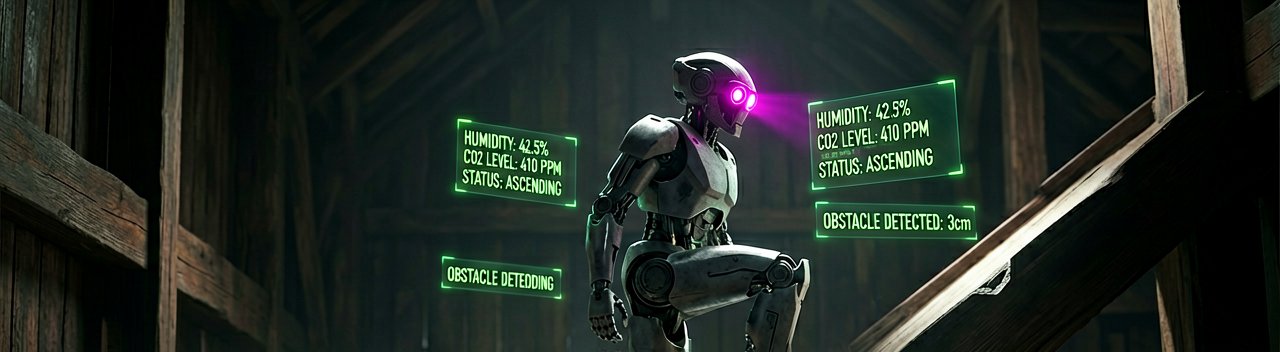
Ultimately, the Layer-Guard Robot 7 represents the maturation of "Internet of Things" (IoT) technology in the barnyard. By syncing its acoustic and visual data with cloud-based management platforms, it creates a feedback loop that informs feeding schedules, lighting, and ventilation. As this tech continues to iterate, the sight of a robotic sentinel gliding through rows of layers will likely move from an expo curiosity to a standard operational requirement for any facility aiming to survive the next decade of agricultural evolution.
The Automation Paradox: Efficiency vs. The Biological Variable
Reading Between the Lines: The industry’s rush toward Magilan’s "Fujian intelligence" frames a 99% detection rate as a total victory for biosecurity, but this statistical prowess masks a deeper tension in the transition from human to machine oversight. While the Layer-Guard Robot 7 can identify a non-laying hen with surgical precision, it lacks the intuitive "stockmanship" that seasoned farmers use to smell a change in the air or sense a shift in flock temperament before the sensors even trigger. There is a risk that by outsourcing the sensory experience of farming to LiDAR and acoustic algorithms, we are trading a holistic understanding of animal behavior for a narrow, data-driven efficiency that may miss the subtle, non-quantifiable precursors to a system-wide failure.
Furthermore, the economic narrative of "saving labor" often ignores the hidden costs of maintaining a high-tech fleet in a caustic environment. Chicken houses are notoriously hostile to electronics; the combination of ammonia, fine dander, and high humidity acts as a slow-motion wrecking ball for sensitive sensors and circuit boards. While the Robot 7 is touted for its ability to navigate 10cm gaps and handle elevators, the long-term durability of these units under 24/7 exposure to avian waste remains the real question. If the cost of specialized technical maintenance for a robot eventually rivals the wages of the manual labor it replaced, the promised ROI becomes a moving target that only the largest industrial titans can hit.
There is also the matter of "data obesity" in the agricultural sector. Magilan’s platform generates a torrential stream of multi-dimensional data—CO2 levels, acoustic stress patterns, and humidity fluctuations—but the industry has yet to prove it can turn that data into a better life for the bird rather than just a more crowded barn. If the technology is used primarily to squeeze a few more points of productivity out of an already stressed biological system, the risk of burnout—both for the birds and the machinery—increases exponentially. The true test of the Layer-Guard 7 won't be its performance on a pristine Expo floor in Chengdu, but its ability to survive three years in a high-intensity barn without becoming an expensive, feathered paperweight.
It turns out the future of farming isn’t a guy in overalls, but a very expensive Roomba with a PhD in poultry science; let’s just hope the birds don't figure out that if they all squawk at once, they can probably crash the server and stage a coup.
Artūras Malašauskas is an AI Systems Integrator with 20+ years of production-grade web engineering experience. He has designed, shipped, and scaled enterprise Python/PHP systems for logistics, SaaS, and public-sector clients. For the past year, he has focused exclusively on AI integrations: deploying open-source LLMs, building generative media pipelines (image, audio, video), and engineering multi-agent workflows for real production environments. His standard: reproducibility, security, cost-efficient inference—no vaporware. He documents and evaluates emerging AI tooling, separating verified capabilities from marketing noise. Technical editor at: muza-ai.eu, ai-verslas.lt, ai-naujinos.lt Connect on LinkedIn
Comments