Singapore’s Punggol Digital District Just Became the Ultimate Playground for AI Robots
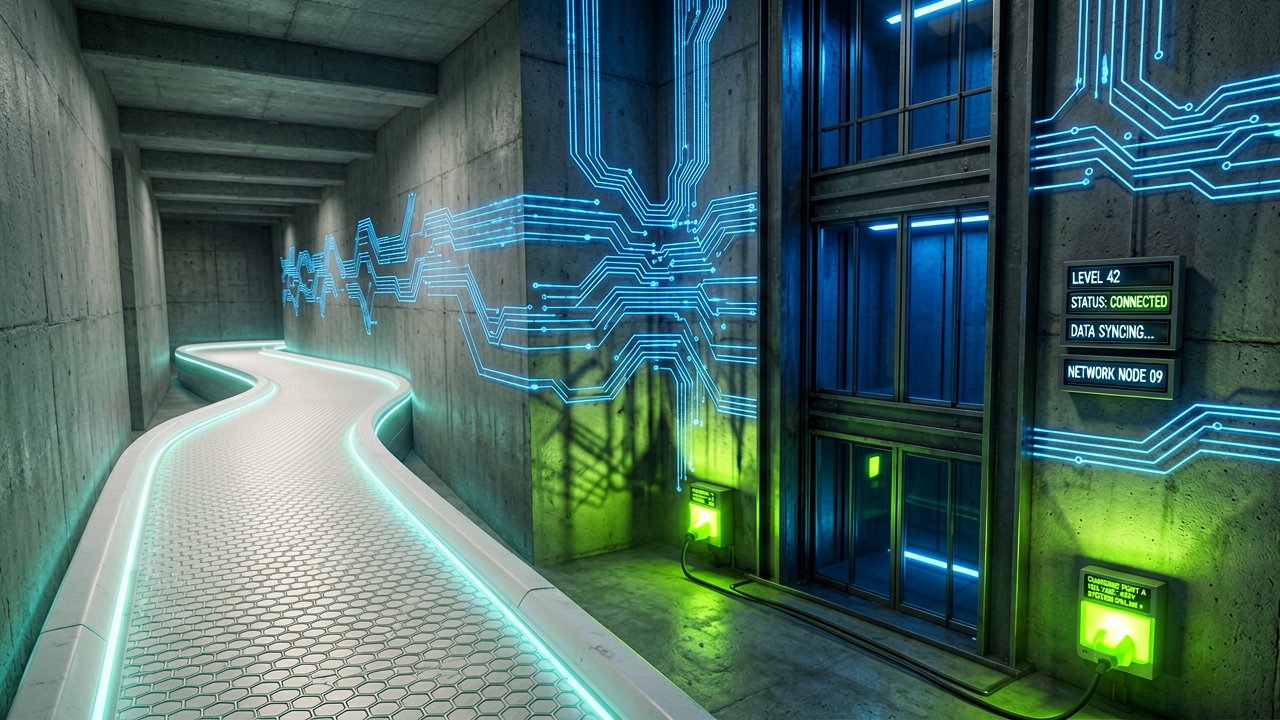
Singapore’s Punggol Digital District (PDD) isn't just a shiny new tech hub; it’s officially become the frontline for the next generation of autonomous machinery. Announced at the ATxSummit 2026, the Infocomm Media Development Authority (IMDA) and JTC have greenlit a massive AI robotics testbed that feels less like a lab and more like a live rehearsal for a sci-fi future. We’re talking about a multi-operator environment where delivery bots, security patrols, and cleaning droids from different companies will have to learn how to share the sidewalk without causing a digital traffic jam. According to reporting from The Straits Times , this initiative is a serious push to move beyond isolated trials and see how these machines handle the unpredictable chaos of a real urban precinct.
What makes this Punggol setup different from your run-of-the-mill pilot is the integration. Most robot trials are "siloed"—one company’s bot in one specific corner of a mall. Here, the district’s Open Digital Platform (ODP) acts as a sort of "operating system" for the entire neighborhood, allowing robots to communicate with lifts, gantries, and security doors. Industry heavyweights like Grab, DHL, and Certis are already on board to test everything from last-mile food delivery to autonomous surveillance. It’s a classic Singapore move: build the high-tech sandbox first, then invite the world’s biggest players to come and break things (safely, of course) so they can write the rulebook for everyone else.
The Rise of "Embodied AI" and Global Players
The buzzword of the hour is "embodied AI"—the idea that artificial intelligence shouldn't just live in a server, but should actually perceive and interact with the physical world. To back this up, NVIDIA is stepping into the ring with a new AI research lab in Singapore specifically focused on this tech. As noted by The Edge Singapore, the lab will work closely with local researchers to refine how robots "reason" in crowded spaces. It’s a win-win for the local ecosystem; startups get access to world-class compute power, while giants like NVIDIA get a living laboratory to perfect their hardware in one of the most connected cities on the planet.
Safety First in a Post-Regulation World
Of course, nobody wants to be mowed down by a rogue cleaning bot while walking to the MRT. To prevent that, the Singapore Institute of Technology (SIT) is heading up the development of safety standards and common operating rules. These aren't just suggestions; they’re the foundation for how these machines will be regulated as they eventually roll out across the rest of the island. By testing safety measures in Punggol’s controlled but public environment, the government is essentially "de-risking" the tech for the public, ensuring that when these bots finally show up in your neighborhood, they’ll be more like helpful neighbors than intrusive obstacles.

The Hidden Architecture of Autonomy
Beyond the Buzzwords: While the flashy visual of a robot delivering a laksa order grabs the headlines, the real story in Punggol is the invisible "digital twin" infrastructure hums beneath the pavement. For years, the challenge for mobile robotics hasn't just been the hardware, but the "walled garden" problem where a robot from Company A is essentially blind to a robot from Company B. The Punggol Digital District (PDD) is effectively the first large-scale attempt to break these silos. By forcing diverse systems to communicate through a unified middleware, Singapore is moving away from bespoke, one-off trials and toward a standardized ecosystem that treats robotic traffic with the same regulatory rigor as civil aviation.
From the perspective of stakeholders like JTC and IMDA, this isn't just a tech experiment; it is an essential response to the city-state's looming demographic crunch. With a rapidly aging workforce and a tightening labor market in the logistics and facilities management sectors, these robots are being groomed to fill a structural void. Historically, Singapore has used its compact geography as a strategic advantage to pilot "Smart Nation" initiatives, and PDD represents the culmination of a decade of groundwork in sensor deployment and fiber-optic density. It’s a calculated bet that the future of urban productivity relies on machines that can navigate the "last 100 meters" of a delivery route without human intervention.
What seasoned observers find most compelling is how the district’s physical design was reverse-engineered to accommodate these machines. Unlike older precincts where robots struggle with high curbs and narrow doorways, PDD was built with "robot-friendly" blueprints from the start. This includes dedicated charging bays hidden in plain sight and elevators that are natively networked to receive commands from a robot's cloud server. This level of vertical integration is what attracts firms like NVIDIA; they aren't just testing software, they are testing how that software interacts with a "smart" building that talks back. This symbiotic relationship between the built environment and the machine is a nuance often lost in the broader AI hype cycle.
There is also a significant, albeit quiet, shift in how public-private partnerships are being structured here. In traditional tech hubs, the government typically provides the land and gets out of the way. In Punggol, the government is acting as the lead systems integrator. By setting the interoperability standards via the Open Digital Platform, the state ensures that no single private entity can monopolize the robotic infrastructure of the district. This prevents a "vendor lock-in" scenario where a neighborhood becomes dependent on one specific company’s proprietary software to keep its streets clean or its packages moving.
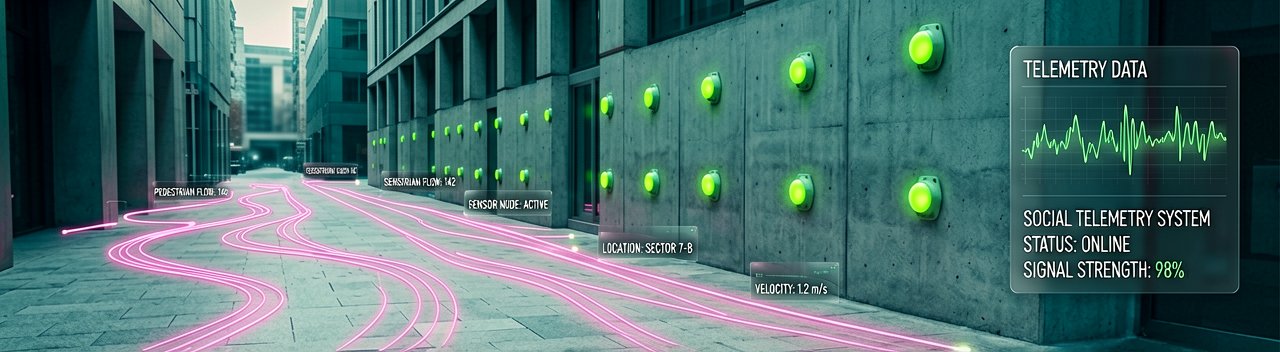
The role of the Singapore Institute of Technology (SIT) adds another layer of depth to the project. By embedding a university campus directly within the testbed, the initiative creates a feedback loop where students and researchers are constantly auditing the robots' performance in real-time. This isn't just academic curiosity; it's a living sandbox for social acceptance. The data being gathered includes how pedestrians react to these machines and where the friction points occur in human-robot interaction. This "social telemetry" is arguably more valuable to regulators than the technical specs of the robots themselves, as it will dictate the speed of adoption across the rest of the island.
Ultimately, the Punggol testbed is a blueprint for the "de-skilling" of robot deployment. Currently, launching a fleet of autonomous bots requires a team of engineers on-site; the goal here is to reach a point where a local business owner can "plug and play" a delivery bot as easily as they would a new printer. By ironed out the kinks in a high-density, high-stakes environment like PDD, Singapore is establishing itself as the global certifier for urban robotics. Success here means that the standards written in this Punggol lab will likely be the same ones exported to smart cities from London to Tokyo over the next decade.
The Friction Between Automation and Reality
Reading Between the Lines: For all the talk of seamless integration, the Punggol testbed faces a hurdle that code cannot easily solve: the inherent messiness of human behavior. While the Open Digital Platform can synchronize a robot with an elevator, it cannot prevent a delivery bot from being blocked by a misplaced bicycle or confused by a group of toddlers. There is a persistent technocratic assumption that urban environments can be optimized like a warehouse floor, yet the Punggol experiment may inadvertently prove that the "last mile" is less about logistical efficiency and more about navigating the social chaos of a living, breathing city. The contradiction lies in trying to build a perfectly predictable system in a space defined by its unpredictability.
Furthermore, there is a looming question regarding the economic sustainability of these high-tech fleets. While big-name players like Grab and DHL are eager to participate in subsidized trials, the unit economics of autonomous delivery remain notoriously stubborn. Maintaining a fleet of complex, sensor-laden machines in Singapore’s punishing humidity and tropical downpours requires a level of CAPEX that might make a human courier look affordable for years to come. We must look skeptically at whether this is a scalable solution for the "heartlands" or merely a gilded feature of premium digital districts that requires a constant tether to government-backed infrastructure to remain viable.
The geopolitical angle also introduces a layer of complexity that often goes unmentioned in press releases. By inviting a giant like NVIDIA to anchor the research side, Singapore is positioning itself as a neutral ground for AI development, but this reliance on foreign silicon and proprietary stacks could lead to a new form of digital dependency. If the goal is sovereign technological resilience, the district's "operating system" must be robust enough to withstand the shifting sands of global trade tensions and hardware export controls. The success of the PDD testbed isn't just a matter of robotics; it’s a test of how a small nation-state manages the gravity of global tech titans within its own borders.
Finally, we have to consider the psychological shift for the residents of Punggol. There is a fine line between a neighborhood that feels "smart" and one that feels like a panopticon. As security robots from Certis begin to patrol alongside delivery droids, the density of sensors per square meter will skyrocket. The challenge for authorities will be ensuring that the convenience of a robot-delivered coffee doesn't come at the cost of a sterilized urban experience where every movement is logged by the district's middleware. The long-term implication is a transformation of public space into a managed utility, where the "right to roam" is increasingly shared with—and monitored by—autonomous agents.
The real test of the Punggol robotics initiative won't be whether a droid can navigate a lift, but whether it can survive the ultimate urban obstacle: a Singaporean rainy season and a distracted pedestrian who refuses to yield the right of way to a machine, no matter how many sensors it has.
Artūras Malašauskas is an AI Systems Integrator with 20+ years of production-grade web engineering experience. He has designed, shipped, and scaled enterprise Python/PHP systems for logistics, SaaS, and public-sector clients. For the past year, he has focused exclusively on AI integrations: deploying open-source LLMs, building generative media pipelines (image, audio, video), and engineering multi-agent workflows for real production environments. His standard: reproducibility, security, cost-efficient inference—no vaporware. He documents and evaluates emerging AI tooling, separating verified capabilities from marketing noise. Technical editor at: muza-ai.eu, ai-verslas.lt, ai-naujinos.lt Connect on LinkedIn
Comments