Amazon’s Half-Hour Flex: Why 30-Minute Delivery is the New Logistics War
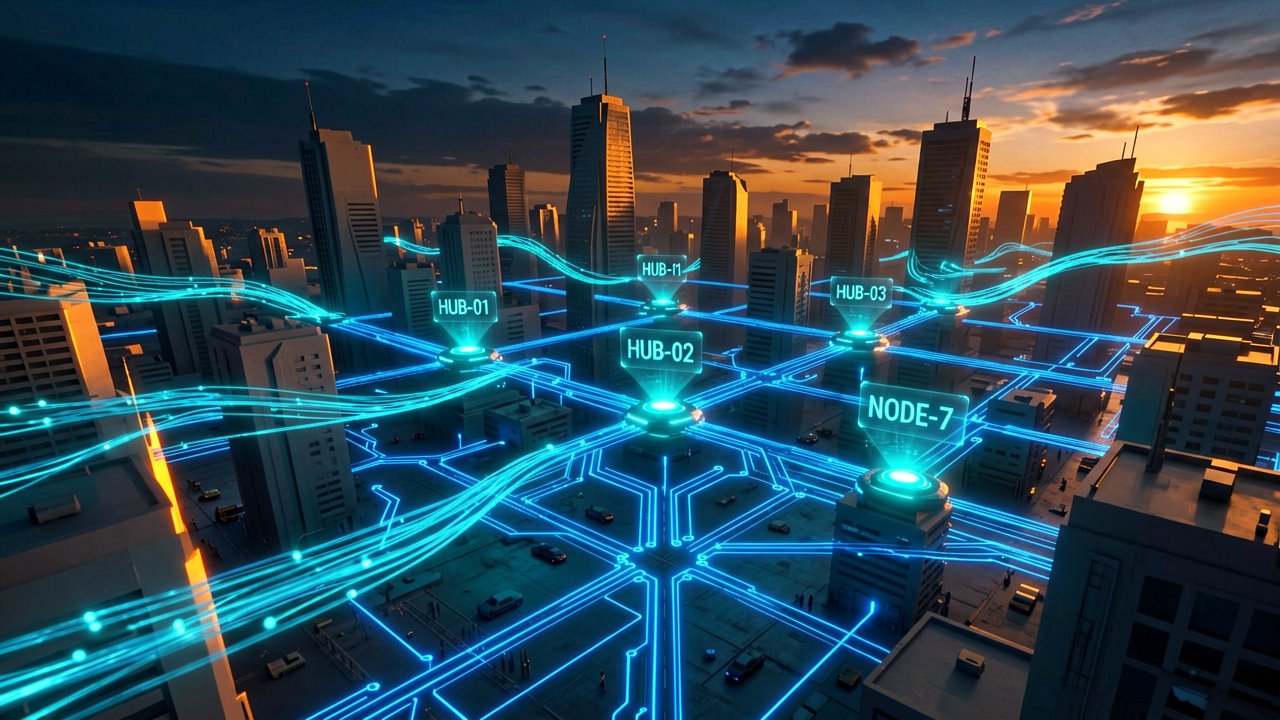
Amazon is raising the stakes in the delivery arms race, rolling out 30-minute shipping across dozens of major U.S. cities. It’s a bold play that shifts the "need it now" convenience from a luxury niche to a standard expectation. By leveraging a denser network of "Same-Day Site" mini-hubs and refined robotics, the retail giant is cutting down the window between a frantic thumb-tap and a package hitting the porch. This isn't just about speed; it's a calculated move to box out competitors like Walmart and Target who’ve been gaining ground with their own localized fulfillment strategies.
The Infrastructure Behind the Sprint
Pulling off a 30-minute turnaround requires more than just fast drivers. Amazon has overhauled its "middle-mile" logistics, placing inventory closer to metropolitan centers than ever before. These specialized fulfillment centers are smaller, leaner, and packed with high-demand essentials—think diapers, charging cables, and last-minute dinner ingredients. By shaving minutes off the sorting process through advanced AI-driven sequencing, the company is proving that the traditional 24-hour waiting period is becoming a relic of the past. It’s a logistical flex that shows Amazon is willing to burn capital to maintain its crown as the king of frictionless commerce.
Market Pressure and the Prime Moat
This expansion serves as a powerful retention tool for Prime members who might otherwise wander toward instant-delivery apps like DoorDash or GoPuff. When you can get a replacement toothbrush in less time than it takes to watch a sitcom episode, the value proposition of a yearly subscription becomes hard to ignore. As reported by CNBC, Amazon’s focus on regionalizing its network has already significantly lowered costs while boosting delivery speeds, signaling that this 30-minute push is the logical conclusion of a multi-year infrastructure overhaul. The message to the rest of the retail world is loud and clear: fast is no longer enough.
Beyond the Logistics: Amazon’s High-Stakes Gamble on Instant Gratification
What Most Reports Miss: This 30-minute blitz isn't just about outrunning local couriers; it's a fundamental pivot toward "situational commerce." By shrinking the delivery window to less than half an hour, Amazon is training consumers to stop planning and start reacting. Historically, the retail giant focused on vast selection and reliable two-day shipping, but the launch of Amazon Now targets the high-margin "panic buy"—the sudden realization that you’re out of infant formula or that your phone charger just frayed. This strategy relies on a sophisticated "regionalization" of its network, which, according to insights from Supply Chain Dive, has already led to a 70% year-over-year jump in same-day items delivered, as customers flock to essentials in health, beauty, and grocery categories.
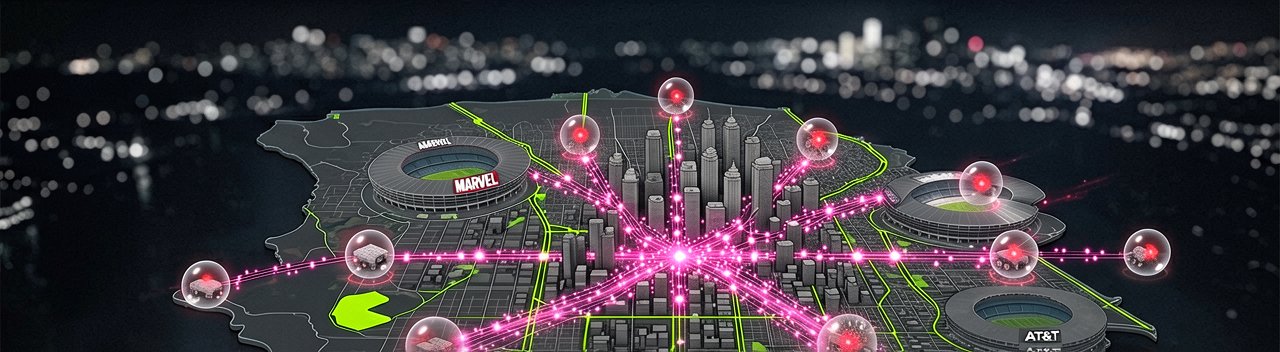
The operational backbone of this sprint is a swarm of micro-fulfillment sites that act more like automated vending machines than traditional warehouses. These sites are strategically tucked into dense metropolitan pockets like Atlanta, Dallas-Fort Worth, and Seattle. Unlike the massive suburban fulfillment centers that house millions of SKUs, these hubs carry a curated selection of thousands of high-velocity items. This physical proximity allows Amazon to slash the average delivery distance to roughly eight miles, a stark contrast to the 35-mile average seen among many national competitors. It is a expensive, capital-intensive moat that effectively replicates the convenience of a corner store without the overhead of maintaining thousands of retail storefronts.
Stakeholders and industry analysts view this move as a direct strike against the "immediacy advantage" held by physical retailers like Walmart and Target. By charging a $3.99 fee for Prime members and $13.99 for non-members—detailed by CNBC—Amazon is testing the price elasticity of convenience. The goal isn't necessarily profit on every $15 basket of groceries, but rather a lock-in effect where Prime becomes an indispensable utility for urban living. Data shows that members who utilize these ultra-fast tiers shop up to three times more frequently, effectively subsidizing the breakneck logistics costs through sheer volume and increased visibility for Amazon’s highly profitable advertising business.
However, the expansion into "instant commerce" brings fresh challenges to the surface, particularly regarding labor and sustainability. The relentless pressure to shave seconds off the "click-to-door" time requires a level of human and robotic synchronization that has drawn scrutiny from labor advocates. Furthermore, the environmental impact of individualized, sub-30-minute deliveries in gasoline-powered vans remains a point of contention for eco-conscious consumers. Amazon's counter-narrative focuses on its shift toward electric delivery fleets and vision-assisted retrieval tech, aiming to prove that lightning speed doesn't have to come at the cost of its long-term climate pledges or employee safety.
Looking ahead, the 30-minute standard is poised to merge with Amazon’s deepening healthcare ambitions. The company has already begun laying the groundwork to expand Amazon Pharmacy, with plans to bring same-day medication delivery to nearly 4,500 cities by the end of 2026. As reported by Reuters, this integration of health services and ultra-fast logistics positions Amazon as a primary provider for urgent needs like antibiotics or glucose monitors. By bridging the gap between digital scripts and physical delivery in minutes, the company is moving beyond being just a store and becoming an essential layer of urban infrastructure.

The Hidden Cost of the Sub-30-Minute Standard
Reading Between the Lines: The industry’s fixation on pure speed often ignores the diminishing returns of shaved seconds. While Amazon’s 30-minute delivery is a marvel of engineering, it exposes a glaring contradiction in the company’s corporate identity. Amazon publicly champions a "Climate Pledge" and a path to net-zero, yet the physics of instant delivery are inherently inefficient. Shifting from consolidated truckloads to "point-to-point" sprints for a single bottle of aspirin or a pack of AA batteries creates a logistical fragmentation that is difficult to greenwash, even with an electric fleet. We are witnessing a transition from a centralized delivery model to a chaotic, high-energy swarm that prioritizes consumer impatience over environmental optimization.
There is also the question of whether this level of speed is solving a genuine consumer pain point or simply manufacturing a new one. By subsidizing these lightning-fast windows, Amazon is effectively devaluing the labor and complexity involved in the "last mile." Industry analysts at Bloomberg suggest that while this infrastructure creates a formidable barrier to entry for smaller retailers, it also creates an "immediacy trap." Once a customer expects a 20-minute turnaround for a trivial purchase, any delay—regardless of weather or traffic—is viewed as a systemic failure. This puts immense psychological and physical pressure on the delivery workforce, who must navigate increasingly congested urban corridors under the shadow of a ticking clock.
Furthermore, the financial sustainability of this model remains shrouded in the opacity of Amazon’s "Services" accounting. Even with a $3.99 per-order fee, the math on a single-item delivery via a $40,000 electric van driven by a gig-economy worker rarely pencils out to a direct profit. Instead, this speed is a loss-leader designed to starve the competition. By making "fast" synonymous with "Amazon," the company forces rivals like Walmart to pour billions into matching a service tier that may never be profitable on its own. It’s a game of capital endurance where the winner is the one who can afford to lose money on a toothbrush delivery for the longest period of time.
Ultimately, the 30-minute benchmark might represent the peak of the "convenience curve" before the reality of urban density pushes back. Cities are not designed for thousands of individual delivery vans to make 20-minute laps simultaneously. As municipal governments begin to push back with congestion pricing and curb-space regulations, Amazon’s sprint might eventually be slowed down by the very urban infrastructure it relies upon. The technical achievement is undeniable, but the long-term viability of a society that treats every minor domestic inconvenience as an emergency remains the most significant variable in the equation.
In the future, we’ll probably receive our orders five minutes before we even realize we need them, though we’ll still find a reason to complain that the drone didn't offer to stick the milk in the fridge for us.
Artūras Malašauskas is an AI Systems Integrator with 20+ years of production-grade web engineering experience. He has designed, shipped, and scaled enterprise Python/PHP systems for logistics, SaaS, and public-sector clients. For the past year, he has focused exclusively on AI integrations: deploying open-source LLMs, building generative media pipelines (image, audio, video), and engineering multi-agent workflows for real production environments. His standard: reproducibility, security, cost-efficient inference—no vaporware. He documents and evaluates emerging AI tooling, separating verified capabilities from marketing noise. Technical editor at: muza-ai.eu, ai-verslas.lt, ai-naujinos.lt Connect on LinkedIn
Comments