The Gavel Drops on Expensive Legal Tech: OpenSpecter Goes Open Source
For years, the legal tech world has been a walled garden where "enterprise-grade" analysis usually came with a $1,200-per-seat shackle. But that gate just got kicked open. OpenSpecter, a new self-hosted legal AI platform developed by the folks at Quantera, has officially launched as a free, source-available alternative. It’s a bold move that essentially tells the industry that the "plumbing" of law—things like document parsing and contract review—should be shared and invisible rather than a luxury line item.
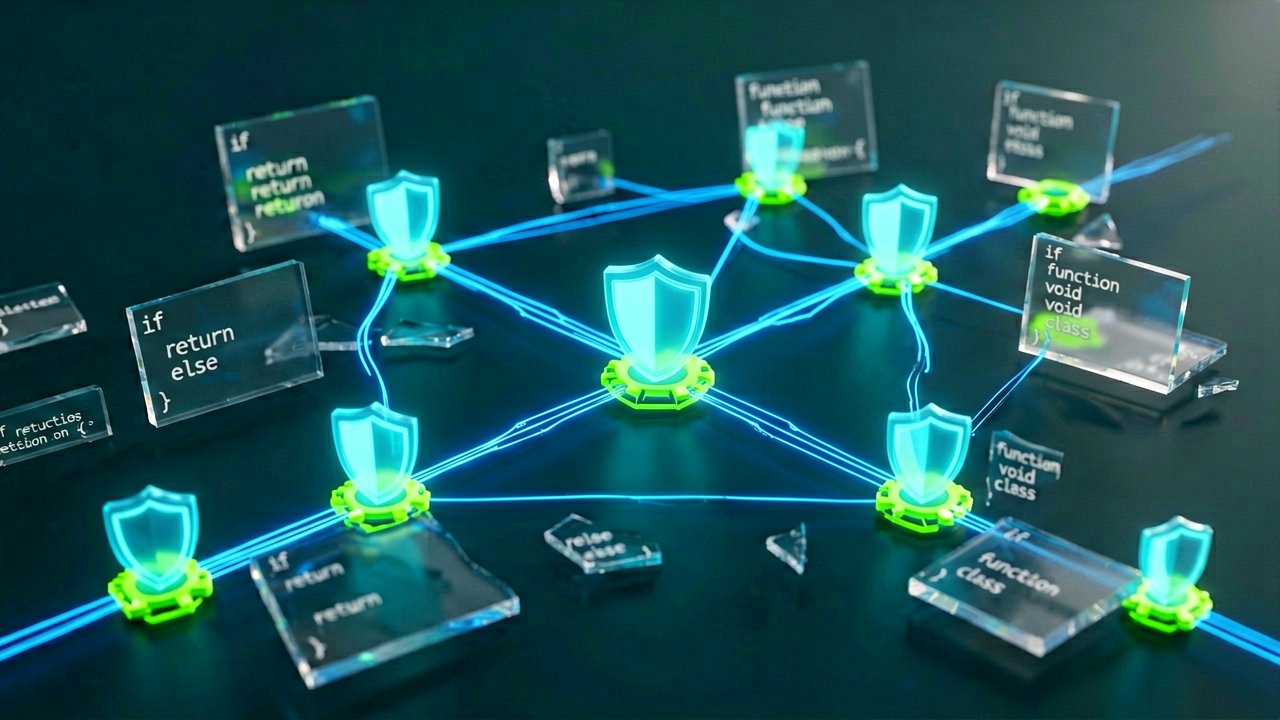
What makes OpenSpecter particularly interesting isn't just the price tag (or lack thereof), but the privacy-first architecture. By allowing law firms to self-host the entire stack, it bypasses the "data leakage" jitters that have kept many conservative practices from touching cloud-based AI with a ten-foot pole. You get the heavy-hitting features—verified legal research across 178 jurisdictions and 31 million documents—without ever having to worry about your client's sensitive data taking a trip to a third-party cloud.
Enterprise Power Without the Enterprise Toll
The platform isn't just a bare-bones wrapper for a chatbot. It’s built to handle serious workflows like conditions precedent checklists, credit agreement summaries, and change-of-control reviews. Since it's grounded in "good law" from a massive dataset, users can actually verify citations rather than just hoping the AI didn't hallucinate a non-existent precedent. It’s a significant shift in a market where specialized tools are often cost-prohibitive for smaller firms or independent practitioners who need the same analytical muscle as Big Law.
A Shift Toward Sovereign AI in Law
We’re seeing a growing appetite for what experts call "sovereign AI"—systems where the user maintains absolute control over the model, the data, and the infrastructure. As noted by analysts at Lawra, this trend is liberating for firms with the IT chops to run their own systems. OpenSpecter leverages tools like Ollama and Open WebUI to make this tech accessible, proving that the real value in law doesn't live in the software itself, but in the human judgment and expertise that the software is finally cheap enough to support.

What Most Reports Miss: The Quiet Death of the Legal Black Box
Behind the Scenes: While the headline focuses on the "free" aspect of OpenSpecter, the real tectonic shift is the dismantling of the proprietary "black box" that has dominated legal tech for a decade. Historically, legal AI vendors have guarded their document-parsing logic like a state secret, forcing firms to trust results they couldn't audit. OpenSpecter flips this by letting developers see exactly how the sausage is made. This transparency isn't just for tech geeks; it’s a compliance necessity for firms that must answer to rigorous professional indemnity insurers about how they use automated tools to draft binding agreements.
The decision to utilize a source-available model reflects a hard-learned lesson from the broader software industry. Much like how Linux eventually ate the server market, there is a growing consensus that basic legal infrastructure shouldn't be a subscription service. By building on the backbone of the Quantera GitHub repository, the developers are betting that they can build a community-driven ecosystem. This approach shifts the competition away from who has the best "secret sauce" and toward who can provide the best implementation and custom integration services.
Veteran practitioners will remember the "cloud-phobia" that gripped the legal industry in the early 2010s, a sentiment that has evolved but never truly vanished. OpenSpecter addresses this historical baggage by making the cloud optional. By supporting local deployment via Docker and Ollama, it allows a firm to run a "lawyer in a box" on a secure server disconnected from the public internet. This satisfies the "air-gap" security requirements of high-stakes litigation and government contracts that previously made most modern AI tools non-starters.
From a stakeholder perspective, this launch puts immense pressure on mid-tier legal tech vendors who have built businesses around simple RAG (Retrieval-Augmented Generation) wrappers. When a sophisticated, open-source alternative can perform document analysis across millions of case files for the cost of electricity, the "wrapper" business model begins to evaporate. We are likely entering a period of consolidation where paid platforms will have to justify their premiums through hyper-specialized datasets or white-glove user experiences that an open-source project can't easily replicate.
Moreover, the integration with Open WebUI signals a move toward a unified interface for the modern lawyer. Instead of jumping between five different tabs for research, drafting, and proofing, OpenSpecter aims to be the singular dashboard where these tasks converge. This isn't just about efficiency; it's about reducing the cognitive load on associates who are increasingly burnt out by the "fragmentation tax" of using too many disconnected professional tools. The goal here is a seamless, localized workflow that keeps the focus on the law rather than the software.
Finally, the broader implication for the access-to-justice gap cannot be overstated. For legal aid clinics and solo practitioners in emerging markets, a $15,000 annual software license is an impossible barrier. OpenSpecter effectively democratizes the same high-level research capabilities used by Magic Circle firms, providing a leveling of the playing field that was previously unthinkable. It transforms high-end legal intelligence from a capital expense into a public utility, fundamentally changing how legal services can be delivered to the underserved.
Reading Between the Lines: The Hidden Costs of "Free" Infrastructure
The Skeptical Take: While the "free as in beer" nature of OpenSpecter is an easy win for headlines, any seasoned IT director at a law firm knows that "open source" is often "free as in a puppy." The burden of maintenance, hardware provisioning, and the technical debt of self-hosting is far from zero. There is a palpable tension between the desire for data sovereignty and the reality of technical overhead; a firm saving $50,000 on licensing fees might easily find themselves spending twice that on specialized DevOps talent to keep a self-hosted LLM stack from falling over during a critical discovery phase.
There is also the matter of "ground truth" and the reliability of a distributed dataset. OpenSpecter claims a massive library of 31 million documents, but in the legal world, volume is often the enemy of precision. The industry has yet to see how an open-source community will handle the grueling, unglamorous work of updating jurisdictions in real-time. Proprietary giants like LexisNexis charge a premium precisely because they provide a "throat to choke" when a citation is outdated—a safety net that a self-hosted GitHub repo simply cannot offer by design.
Furthermore, the shift toward local models creates a performance contradiction. Most law firms aren't exactly stocked with NVIDIA H100 clusters. Running a sophisticated legal model locally often means sacrificing the sheer "intelligence" and reasoning capabilities found in the massive, power-hungry models of the cloud titans. Lawyers might find themselves choosing between a secure, private system that struggles with complex nuance and a "leaky" cloud system that actually understands the subtext of a nuanced shareholder agreement. It is a trade-off that many firms are likely to miscalculate in their rush to avoid the cloud.
We must also consider the "accountability gap" inherent in sovereign AI. When a proprietary AI hallucinations a fake case, the firm has a vendor to blame and a potential path for litigation. When a self-hosted, open-source model does the same, the responsibility falls squarely and solely on the partner who signed off on the brief. This psychological barrier might be more significant than the financial one, potentially relegating OpenSpecter to a "second-check" tool rather than the primary engine for legal production.
Projecting forward, the real implication isn't the death of Big Legal Tech, but the forced evolution of it. If OpenSpecter proves stable, the incumbents will likely pivot toward "hyper-curation"—selling the quality of the data rather than the convenience of the software. We are moving toward a bifurcated market where you pay for the "official" version of the truth, while the open-source community handles the mundane heavy lifting of document processing. It’s a messy, transition-heavy future that prizes those who can bridge the gap between code and courtroom.
The legal profession’s transition to open-source AI is a bit like a partner deciding to fix their own plumbing: it sounds wonderfully cost-effective and empowering until the basement is three feet deep in hallucinations and your local server starts smoking during a cross-examination.
Artūras Malašauskas is an AI Systems Integrator with 20+ years of production-grade web engineering experience. He has designed, shipped, and scaled enterprise Python/PHP systems for logistics, SaaS, and public-sector clients. For the past year, he has focused exclusively on AI integrations: deploying open-source LLMs, building generative media pipelines (image, audio, video), and engineering multi-agent workflows for real production environments. His standard: reproducibility, security, cost-efficient inference—no vaporware. He documents and evaluates emerging AI tooling, separating verified capabilities from marketing noise. Technical editor at: muza-ai.eu, ai-verslas.lt, ai-naujinos.lt Connect on LinkedIn
Comments