The Steel-and-Circuits Gamble: Hyundai’s Bold Pivot to Industrial Humanoids
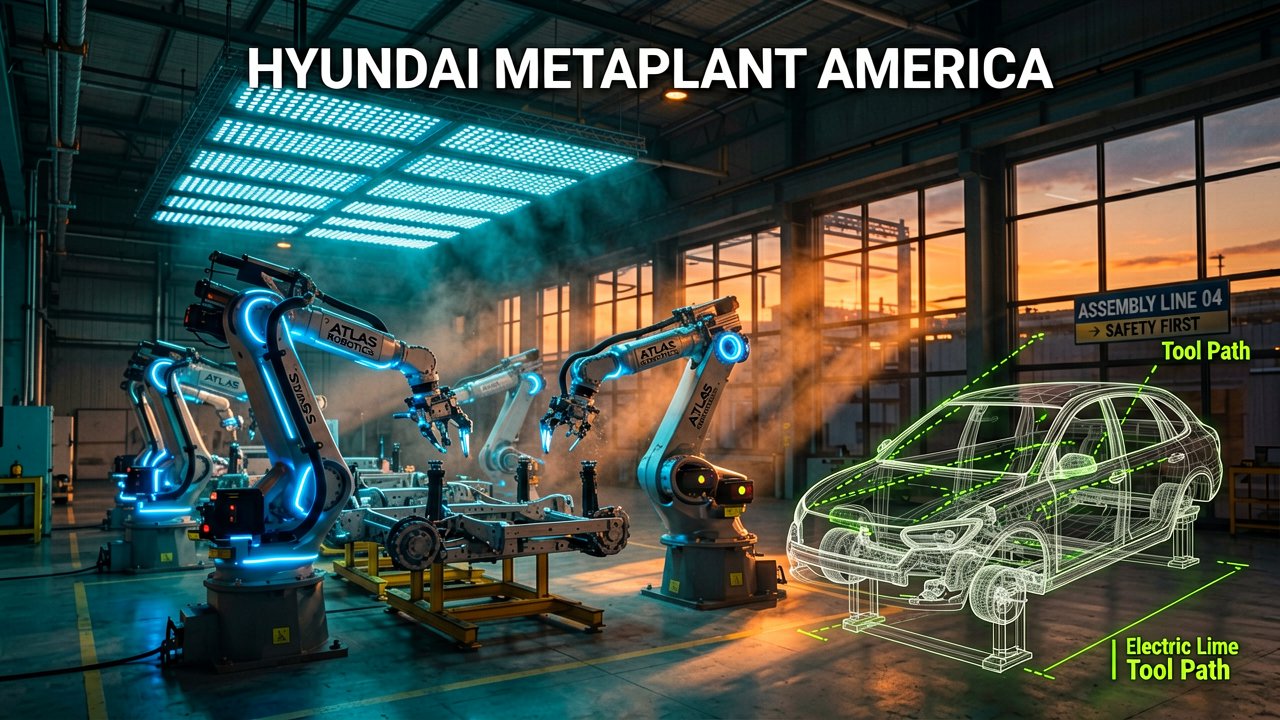
For years, Hyundai Motor Group has been teasing us with high-production-value YouTube clips of Atlas doing parkour and Spot trotting through construction sites. It was great entertainment, but the skeptic in me always wondered when the parlor tricks would turn into a paycheck. Well, we finally have our answer. Hyundai is officially going "all-in" on a massive robotics manufacturing push that isn't just about showing off; it's about fundamentally rewriting how things are made. According to recent disclosures from KED Global, the Group plans to deploy a staggering 25,000 Atlas humanoid robots across its global manufacturing network, signaling a shift from experimental R&D to hard-nosed industrial scale.
This isn't some tentative pilot program. Hyundai is building a dedicated ecosystem that bridges its automotive muscle with Boston Dynamics' silicon brains. They’re targeting an annual production capacity of 30,000 Atlas units by 2028, with the first wave slated to hit the floor at the Hyundai Motor Group Metaplant America in Georgia. It’s a classic Hyundai move: take a cutting-edge technology, verticalize the supply chain, and scale it until the unit costs drop through the floor. Early Atlas units might carry a hefty six-figure price tag, but the roadmap suggests that once they hit the 50,000-unit milestone, costs could plummet to around $30,000—roughly the price of a mid-sized sedan.
Building the Muscle: Actuators and the U.S. Hub
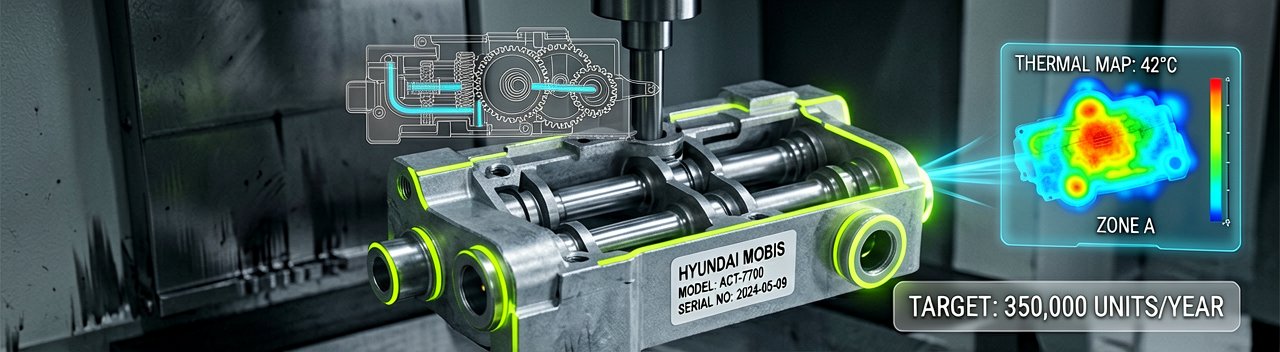
The real secret sauce isn't just the robot's ability to balance on one leg; it’s the mechanical "muscles" known as actuators. Hyundai Mobis is spearheading this side of the house, aiming to churn out over 350,000 actuator units annually in the U.S. by 2028. Since actuators account for roughly 60% of a humanoid’s manufacturing cost, bringing this production in-house is a calculated strike at the supply chain bottlenecks that usually kill emerging tech. As reported by Seoul Economic Daily, this vertical integration is designed to insulate the Group from global logistics volatility while ensuring that their "Robot by Robot" production strategy—where robots literally help build the next generation—remains viable.
The AI Brain and the "Robot Metaplant"
Hardware is only half the battle, and Hyundai knows it. To make these machines actually useful in a messy, unpredictable factory environment, the Group is leaning heavily on "Physical AI." This is where their partnership with NVIDIA and Google DeepMind comes into play. They are establishing the Robot Metaplant Application Center (RMAC), which will serve as a high-tech finishing school where robots learn to navigate complex assembly tasks using real-world manufacturing data. Instead of just following a pre-programmed path, these bots are being trained to reason through unexpected hitches on the line. It's a high-stakes bet that the future of mobility isn't just about the cars we drive, but the autonomous hands that put them together.
The Architectural Shift: From Novelty to Necessity
The Real Story: While the flashy headlines focus on the visual spectacle of humanoid robots walking the factory floor, the true tectonic shift is happening in the underlying unit economics of the automotive industry. For decades, the "holy grail" of manufacturing was fixed automation—heavy, orange robotic arms bolted to the floor, performing a single task for years. Hyundai’s pivot to the mobile, humanoid Atlas platform represents a radical bet on flexibility. By decoupling the robot from the floor, Hyundai is essentially building a workforce that can be "reprogrammed" by physically moving them to a different station, a capability that traditional assembly lines have never possessed.
Industry insiders suggest that this move is a direct response to the shrinking labor pool in high-tech manufacturing hubs. In South Korea and the United States, finding skilled labor for the grueling "3D" jobs—dirty, dangerous, and difficult—has become a persistent bottleneck. Euisun Chung’s vision for the Group isn't just about replacing people; it's about future-proofing the company against a demographic collapse. By internalizing the production of actuators through Hyundai Mobis, the Group is effectively insulating itself from the same supply chain shocks that crippled the semiconductor industry during the pandemic. They aren't just buying robots; they are becoming the world’s primary foundry for synthetic labor.
Historical context is vital here. In the 1980s, General Motors spent billions on automation in a bid to leapfrog Toyota, only to find that inflexible machines couldn't handle the nuances of a complex assembly line. Hyundai is clearly determined not to repeat those mistakes. The focus on "Physical AI" and the establishment of the Robot Metaplant Application Center suggests they understand that hardware without adaptive intelligence is just expensive scrap metal. They are treating the robot as a software platform that happens to have legs, allowing for over-the-air updates that can improve a robot’s dexterity across the entire fleet overnight.
From a stakeholder perspective, the "Robot by Robot" strategy is the ultimate test of circular manufacturing. If Atlas can successfully assemble its own successors, Hyundai achieves a level of scaling efficiency that was previously confined to the realm of science fiction. The goal of bringing the cost of a humanoid down to $30,000 is the magic number; at that price point, the return on investment (ROI) compared to human labor becomes undeniable within a 24-month window. This creates a compelling financial narrative for shareholders who have been wary of the high R&D burn rates associated with Boston Dynamics since the 2021 acquisition.
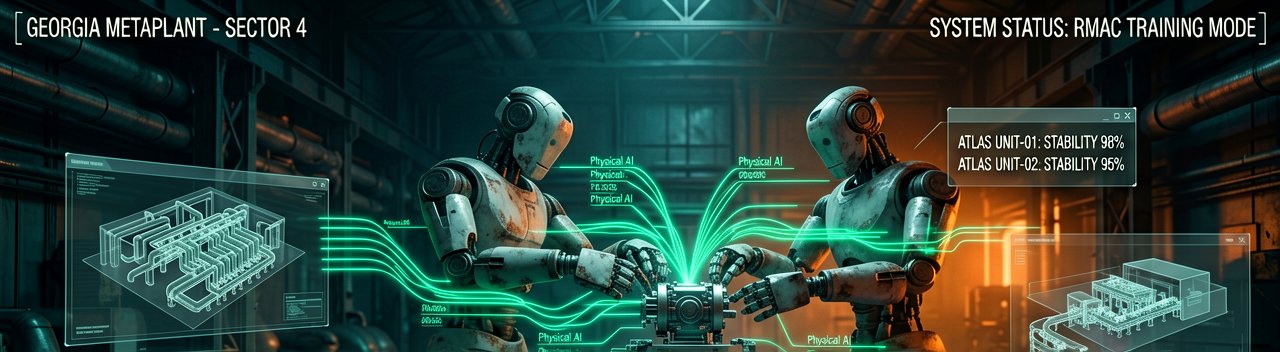
However, this transition isn't without its cultural friction. Integrating high-speed, autonomous humanoids into a workforce that still relies on human oversight requires a massive overhaul of safety protocols and shop-floor psychology. The RMAC in Georgia isn't just testing if the robots can turn a wrench; it’s testing how they coexist with the remaining human specialists. Hyundai is betting that the factory of the future is a hybrid ecosystem where the heavy lifting is done by silicon and steel, while the creative problem-solving remains firmly in human hands. This manufacturing push is the first real-world stress test of that theory on a global scale.
Reading Between the Lines: The Friction of the Future
The Reality Check: Despite the glossy optimism of a "lights-out" factory, the jump from 25,000 robots to a functioning ecosystem is littered with logistical landmines that the marketing department rarely mentions. The biggest assumption being challenged here is that a humanoid form is actually the most efficient tool for a factory floor. For a century, industrial design has optimized environments for humans; now, Hyundai is spending billions to make robots that mimic those humans, rather than simply redesigning the environment for more efficient, non-humanoid automation. It is a curiously circular logic—building a complex machine to navigate a space that was only built that way because of our own biological limitations.
There is also a glaring contradiction in the projected "affordable" $30,000 price tag. In the world of high-precision robotics, "cheap" often translates to "fragile." Maintaining a fleet of 25,000 hydraulic and electric bipeds, each subject to the grueling vibrations and dust of a chassis line, will likely require a secondary army of human technicians just to keep the silicon one upright. We have to wonder if the overhead of a massive maintenance department might quietly eat the savings gained from eliminating traditional labor costs. Hyundai isn't just swapping paychecks for power bills; they are swapping a flexible human workforce for a rigid, high-maintenance capital expense that doesn't appreciate in value.
Furthermore, the reliance on "Physical AI" assumes that edge cases on the assembly line—the slightly bent bracket or the misaligned screw—can be solved by a neural network as intuitively as a human worker with a rubber mallet. While Google DeepMind’s involvement adds serious intellectual weight, there is a massive gap between a robot learning to sort colorful blocks in a lab and a robot making a split-second judgment on a moving line at the Georgia Metaplant. If the AI hallucinates on the factory floor, the result isn't a funny chat-bot typo; it’s a multimillion-dollar pileup of twisted steel and stalled production.
Beyond the technical hurdles, the geopolitical implications are equally messy. By positioning this robotic revolution in the U.S. South, Hyundai is navigating a complex social landscape where the "job-creating" narrative of a new plant meets the "job-replacing" reality of 25,000 autonomous workers. There is a certain irony in building a massive manufacturing hub in a region known for its labor availability, only to fill it with machines that don't need health insurance or lunch breaks. The political blowback from local communities expecting thousands of human-centric roles could eventually force Hyundai to temper its automation enthusiasm with "human-in-the-loop" compromises that slow down the very efficiency they are chasing.
Ultimately, this push is as much about branding as it is about brawn. By becoming the first "Robot-First" automaker, Hyundai is signaling to Silicon Valley and Wall Street that it is no longer a "legacy" manufacturer but a tech titan that happens to sell mobility. It’s a high-stakes play for a higher valuation multiple, betting that investors will forgive the massive R&D burn if they believe the company owns the future of labor. Whether Atlas becomes a reliable workhorse or remains an expensive, staggering mascot is a question that only the first 100,000 hours of runtime will answer.
Building a robot that can dance is a feat of engineering; building one that can survive a double-shift in a Georgia summer without a mechanical nervous breakdown is a feat of optimism. In the end, we may find that the hardest part of the robotic revolution isn't teaching the machines to walk, but teaching them to care about the quarterly production targets.
Artūras Malašauskas is an AI Systems Integrator with 20+ years of production-grade web engineering experience. He has designed, shipped, and scaled enterprise Python/PHP systems for logistics, SaaS, and public-sector clients. For the past year, he has focused exclusively on AI integrations: deploying open-source LLMs, building generative media pipelines (image, audio, video), and engineering multi-agent workflows for real production environments. His standard: reproducibility, security, cost-efficient inference—no vaporware. He documents and evaluates emerging AI tooling, separating verified capabilities from marketing noise. Technical editor at: muza-ai.eu, ai-verslas.lt, ai-naujinos.lt Connect on LinkedIn
Comments