The End of ‘Vibe-Coding’: Harvey’s LAB and the New Accountability in Legal AI
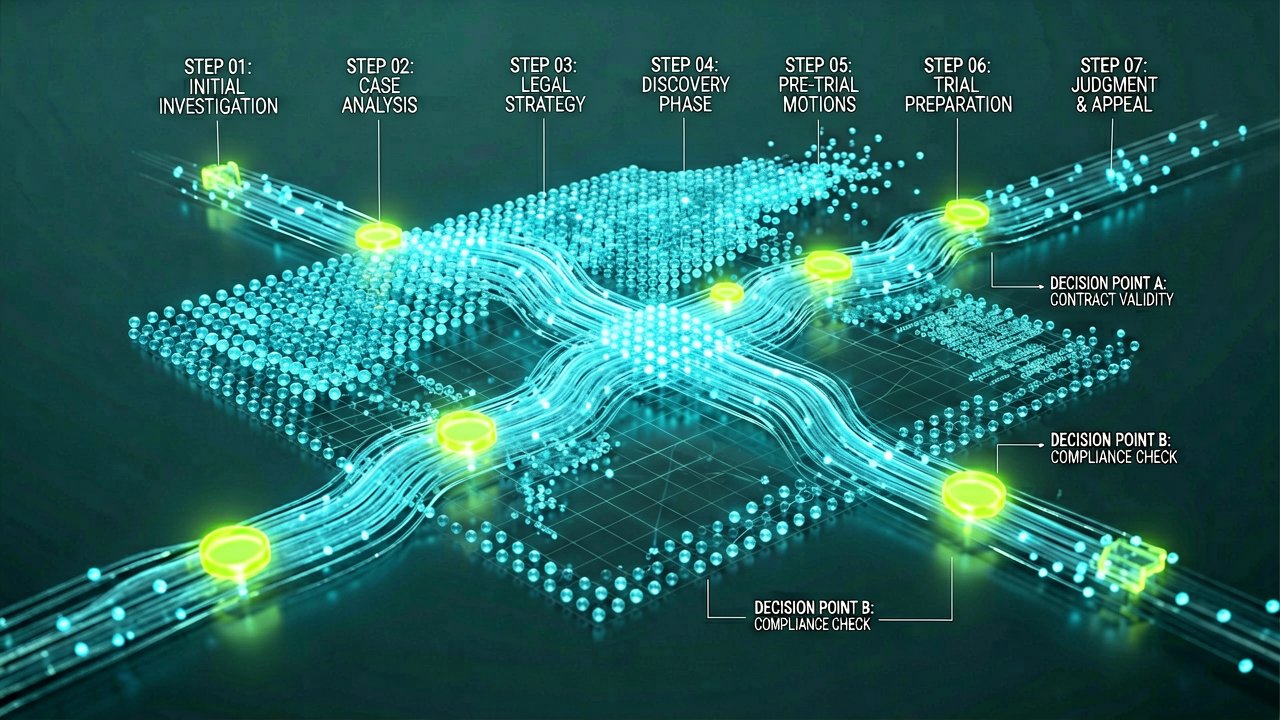
For a while now, legal tech has been operating on a “trust me, it works” basis that would make any self-respecting litigator break out in hives. We’ve seen flashy demos and bold claims about AI "replacing" associates, yet there’s been a distinct lack of a rigorous, common yardstick to prove it. That changed this month when LawNext reported on Harvey’s launch of LAB (Legal Agent Benchmark). It’s an open-source, long-horizon evaluation framework that finally treats AI agents like the junior associates they’re supposed to be, moving past simple chat prompts into the messy reality of multi-step, complex legal workflows.
What makes LAB actually interesting isn't just that it’s open-source—though the GitHub repository is a goldmine for the curious—it’s the sheer scale of the thing. We’re talking over 1,200 tasks across 24 practice areas, backed by 75,000 expert-written rubric criteria. This isn't just checking if a model knows the definition of force majeure; it’s testing whether an agent can handle an M&A data-room assignment from start to finish, synthesizing risk assessments and drafting memos that don't just sound right but actually are right according to Big Law standards.
Moving Beyond Short-Horizon Reasoning
Most AI benchmarks to date have been the digital equivalent of flashcards—short-horizon tasks that test discrete reasoning or rote knowledge. But real legal work is a marathon, not a sprint. LAB focuses on what researchers call "long-horizon" tasks, mimicking the week-long projects that usually land on an associate's desk. According to Artificial Lawyer, the framework has already garnered support from heavy hitters like OpenAI, Anthropic, and Nvidia, signaling that the industry is hungry for a standardized way to move past "vibe-based" evaluations.
The "Judge and Jury" Problem
Of course, there’s a healthy dose of skepticism whenever a market leader builds the yardstick used to measure its own industry. Critics have pointed out that Harvey is effectively acting as both the architect and the lead competitor in this new arena. However, by open-sourcing the code and the evaluation harness, they’ve at least invited the rest of the class to check their math. The goal isn't just a leaderboard—which, notably, hasn't been released yet—but a "legibility layer" that helps firms decide where they can actually delegate work to an agent and where a human still needs to hold the pen.
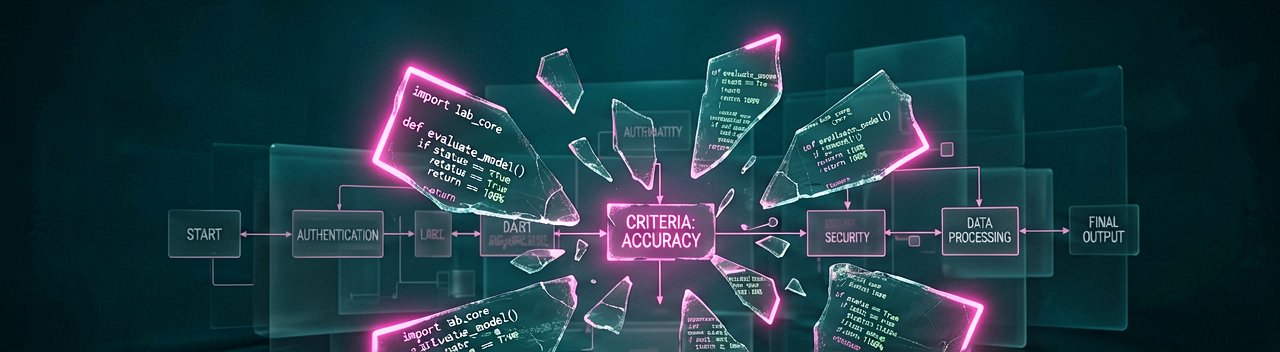
Ultimately, LAB is a push toward a more professional grade of AI. It acknowledges that for AI to be useful in a regulated, high-stakes field, it has to do more than just generate text; it has to execute plans, verify citations, and survive the kind of scrutiny that would happen during a partner’s Friday afternoon review. Whether the rest of the legal tech world adopts LAB as the definitive standard remains to be seen, but the era of the "black box" legal assistant is clearly drawing to a close.
Deep Dive: The Architecture of Accountability
The Reality Under the Hood: While the tech world loves to obsess over "emergent capabilities," Harvey’s LAB is actually a sobering look at how far current LLMs are from true legal autonomy. By breaking tasks down into "long-horizon" trajectories, LAB exposes the brittle nature of AI reasoning when a workflow stretches beyond a few minutes of processing. It isn't just a test of the model's intelligence, but a test of its stamina—specifically, how well it maintains context and follows instructions over dozens of iterative steps without "hallucinating" a procedural shortcut or losing track of the original client mandate.
From a historical perspective, the legal industry has always been a fortress of proprietary knowledge, which makes the decision to open-source this benchmark particularly strategic. In years past, firms like Kirkland & Ellis or Latham & Watkins relied on internal training protocols and "the way we do things" to ensure quality. By commoditizing the evaluation of these tasks, Harvey is attempting to create a universal language for legal quality. This forces other developers to move away from generic performance metrics, like those found on the MMLU, and toward the hyper-specific, high-stakes rubrics that senior partners actually care about.
Stakeholders at major foundation model labs, including OpenAI and Anthropic, are paying close attention because legal work represents the ultimate "stress test" for agentic behavior. Unlike creative writing or basic coding, legal agents must operate within a rigid framework of statutes and precedents where there is often only one correct path through a complex filing. The 75,000 rubric points within LAB act as a digital gauntlet, highlighting exactly where a model’s logic breaks down during a multi-day simulated project, such as a cross-border regulatory compliance check.
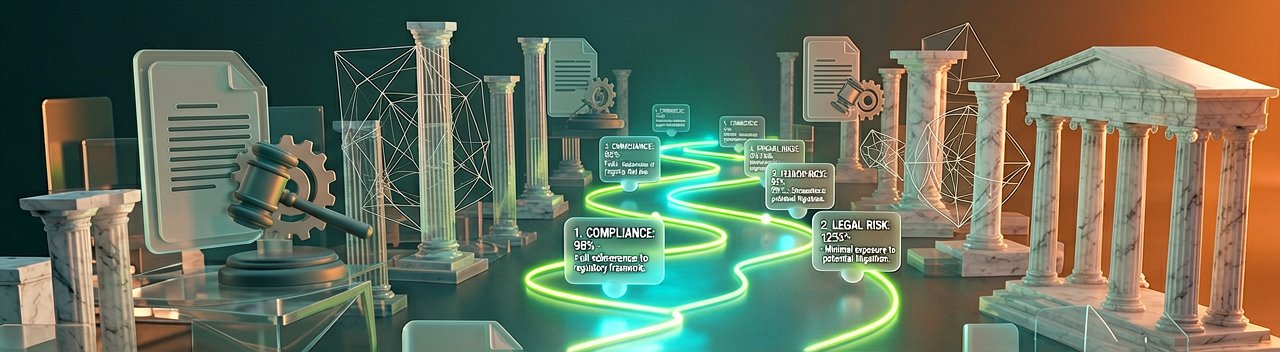
The inclusion of 24 distinct practice areas also signals a shift away from the "one size fits all" approach of early generative AI applications. A bankruptcy litigator requires a fundamentally different reasoning chain than a patent prosecutor, yet most AI tools have treated them as the same "legal" user persona. LAB’s granular structure forces developers to account for these nuances, effectively demanding that AI agents specialize rather than just generalize. This development suggests a future where law firms might deploy a "fleet" of specialized agents, each validated by LAB scores in their specific domain.
However, the transition from benchmark to billable work remains the industry's biggest hurdle. Even with high scores on LAB, the liability shift—from the firm to the software provider—is a bridge many insurers are not yet ready to cross. For now, LAB serves as a sophisticated sandbox for the world's most advanced models to prove they can handle the drudgery of document review and due diligence without human intervention. It provides the data necessary to move the conversation from "AI is coming" to "AI is here and it passed the test."
Ultimately, this move reflects a broader trend toward transparency in an industry traditionally defined by its billable-hour opacity. By exposing the criteria for what constitutes a "good" legal work product in an open-source format, Harvey is inviting a level of scrutiny that could backfire if their own models fail to dominate the leaderboard. It is a high-stakes gamble that assumes the path to market dominance isn't just through better algorithms, but through being the one who defines the standard of excellence for the entire ecosystem.
The Paradox of Open-Source Litigation Bots
The Skeptic’s Ledger: While Harvey’s decision to open-source LAB is being hailed as a win for transparency, there is a fundamental contradiction in building a public benchmark for a field that thrives on private, proprietary edge cases. The law is rarely a series of objective check-boxes; it is an interpretive dance performed in the gray areas of language. By distilling legal expertise into 75,000 rubric points, we risk creating a generation of AI agents that are world-class at passing "the test" while remaining dangerously inept at the creative, high-stakes pivoting that defines elite lawyering.
There is also the looming "gaming the system" problem that haunts every benchmark from academia to search engine optimization. If LAB becomes the industry standard, model providers like OpenAI and Anthropic will inevitably begin optimizing their training data to specifically ace these tasks. This creates a circular logic where an AI's high score doesn't necessarily prove it is a better lawyer—it just proves it is better at being Harvey’s version of a lawyer. We may find ourselves in a situation where "benchmarked excellence" masks a decline in the nuanced, divergent thinking that humans bring to a courtroom.
Furthermore, the "long-horizon" promise remains a technical mountain yet to be fully scaled. Even with advanced memory architectures, LLMs still suffer from a cumulative error rate; a 1% mistake in step one of a fifty-step legal plan can lead to a catastrophic hallucination by step forty. LAB identifies these failures, but it doesn't solve them. Projecting this forward, we might see a market bifurcate into "safe" tasks that agents can benchmark their way through—like routine contract audits—and "human-only" zones where the stakes are too high to trust a model that might have just hallucinated a favorable precedent to satisfy its internal scoring rubric.
The economic implications for the billable hour are equally messy. If an agent can perform a week’s worth of associate work in ten minutes with a 99% LAB score, the traditional law firm revenue model doesn't just bend—it snaps. However, firms are unlikely to pass those savings directly to clients until they are forced to by a competitor who isn't afraid to cannibalize their own margins. The irony is that the most sophisticated AI might end up being used not to save clients money, but to allow firms to do five times the work with the same headcount, effectively turning the "long-horizon" agent into a high-speed billable-hour factory.
Ultimately, LAB is a necessary but insufficient step toward digital maturity. It provides a map of the territory, but the territory itself is constantly shifting under the feet of new legislation and judicial whims. A benchmark can tell you if an AI can follow instructions, but it cannot yet tell you if the AI has the "legal instinct" to know when those instructions are fundamentally flawed. We are moving toward a world where the AI will be technically perfect and practically useless if it isn't paired with a human who knows how to break the rules.
In the end, we’ve successfully taught AI how to survive a grueling week in Big Law without sleep or coffee; now we just have to see if it can survive the partners, which is a benchmark no open-source project has yet dared to quantify.
Artūras Malašauskas is an AI Systems Integrator with 20+ years of production-grade web engineering experience. He has designed, shipped, and scaled enterprise Python/PHP systems for logistics, SaaS, and public-sector clients. For the past year, he has focused exclusively on AI integrations: deploying open-source LLMs, building generative media pipelines (image, audio, video), and engineering multi-agent workflows for real production environments. His standard: reproducibility, security, cost-efficient inference—no vaporware. He documents and evaluates emerging AI tooling, separating verified capabilities from marketing noise. Technical editor at: muza-ai.eu, ai-verslas.lt, ai-naujinos.lt Connect on LinkedIn
Comments