Canonical Reinvents the Edge: Ubuntu Core 26 Lands with Live Patching and Radical Efficiency
Canonical hasn’t just iterated with the release of Ubuntu Core 26; it has fundamentally overhauled how we think about the longevity of the "Internet of Things." Built on the robust foundations of the Ubuntu 26.04 LTS "Resolute Raccoon," this latest version of the minimal, immutable OS is designed for a world where downtime isn't just an inconvenience—it’s a liability. By introducing 15 years of security maintenance, Canonical is signaling that the hardware we deploy today needs to remain viable and secure well into the 2040s, a bold promise in an industry often criticized for planned obsolescence.
The headline act here is the arrival of Livepatch for ARM64 and AMD64 architectures. Historically, patching a critical kernel vulnerability meant a mandatory reboot, a process that can be a logistical nightmare when managing thousands of remote sensors or industrial robots. Now, critical fixes can be injected into the running kernel without a second of downtime. This isn't just a win for uptime; it's a strategic move to help manufacturers comply with the stringent requirements of the EU Cyber Resilience Act (CRA), ensuring that "set it and forget it" hardware doesn't become a permanent security hole. According to technical details shared by Canonical, this seamless security layer is now a standard expectation for modern infrastructure.
Chiseling Away the Bloat
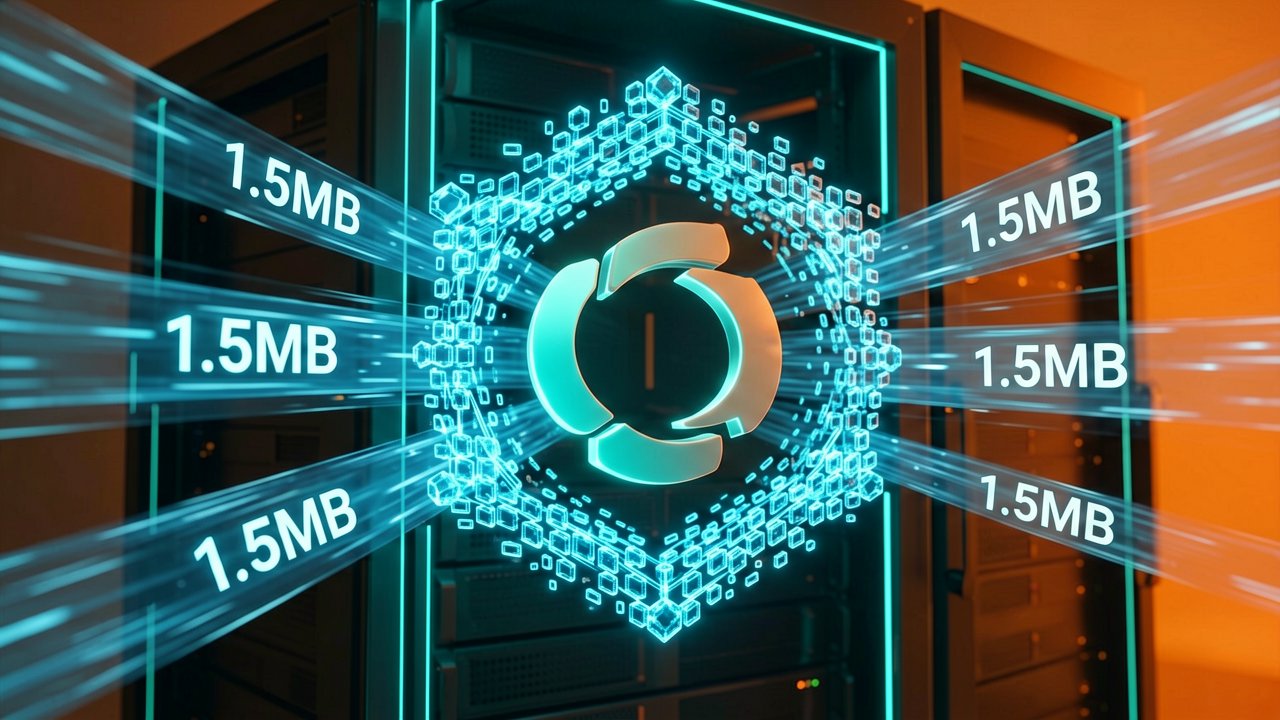
One of the most impressive technical feats in this release is the transition to a "Chisel-based" build system. By using package "slices"—essentially stripping out every file not strictly necessary for a runtime—Canonical has managed to shrink the base image footprint by 7%. But the real magic happens in the updates. A new delta-update format has slashed over-the-air (OTA) update sizes by up to 90% for most snaps. For a core base snap, that means a jump from a 16MB download to just 1.5MB, as noted in the Ubuntu Core 26 documentation. For devices on metered or low-bandwidth satellite connections, that’s the difference between a successful patch and a failed deployment.
Graphics and Observability at the Edge
Beyond the plumbing, Ubuntu Core 26 brings some serious muscle to the edge. The integration of "gpu-2604" interfaces means graphical applications can now leverage hardware acceleration natively, while the updated Ubuntu Frame display server supports multiple applications on a single screen with custom layouts. For teams needing to know exactly what’s happening in the field, the OS now hooks directly into the Canonical Observability Stack. This allows logs and metrics from thousands of devices to stream into centralized Grafana and Prometheus dashboards without bogging down the primary local workload. It is a complete, containerized ecosystem that treats every piece of hardware as a first-class citizen of the modern cloud.
Behind the Scenes: While many see a simple version bump, the transition to Ubuntu Core 26 represents a pivotal shift in how Canonical views the long-tail lifecycle of industrial hardware. In the past, the industry standard for "long-term" support hovered around five or ten years, but the move to a 15-year lifecycle is a direct response to the massive capital expenditures seen in sectors like telecommunications and smart city infrastructure. For a municipal utility deploying thousands of connected water meters or streetlights, the cost of a physical truck roll to replace hardware simply because the software reached "end-of-life" is often higher than the original cost of the devices themselves. By hardening the OS for nearly two decades, Canonical is effectively decoupling the software lifespan from the rapid churn of the consumer tech world.
The engineering effort behind the 90% reduction in update sizes isn't just about saving bandwidth; it’s about reliability in the "dead zones" of connectivity. In remote industrial environments, a multi-megabyte update over a shaky 4G or satellite link has a high probability of corruption or timeout. By utilizing the new delta-update format, Canonical ensures that only the binary differences—the "bits that changed"—are transmitted. This surgical approach minimizes the window of vulnerability during an update and preserves the write cycles of the cheap eMMC storage often found in edge gateways, which can wear out and fail after years of heavy file transfers.
From a stakeholder perspective, the integration of Livepatch is the true game-changer for Chief Information Security Officers (CISOs). Under the upcoming EU Cyber Resilience Act, manufacturers are under immense pressure to remediate vulnerabilities within narrow timeframes. Traditionally, this created a friction point between security teams wanting to patch and operations teams wanting to avoid downtime. Livepatching removes this conflict entirely. A security patch can be applied to the kernel while a robotic arm continues its precision assembly or a medical imaging device stays online, ensuring compliance without sacrificing the "nine-fives" of availability that industrial SLAs demand.
Historians of the Ubuntu project will note that Core 26 is the culmination of the "Chisel" philosophy first teased in earlier LTS cycles. By "chiseling" the OS, Canonical has moved away from the traditional Linux approach of including general-purpose libraries "just in case." Instead, they have adopted a high-precision manufacturing mindset where every byte must justify its existence. This reduction in the attack surface area is significant; if a library isn't present in the runtime environment, it cannot be exploited by an attacker, making the OS inherently more secure than a standard server distribution stripped down manually by a developer.
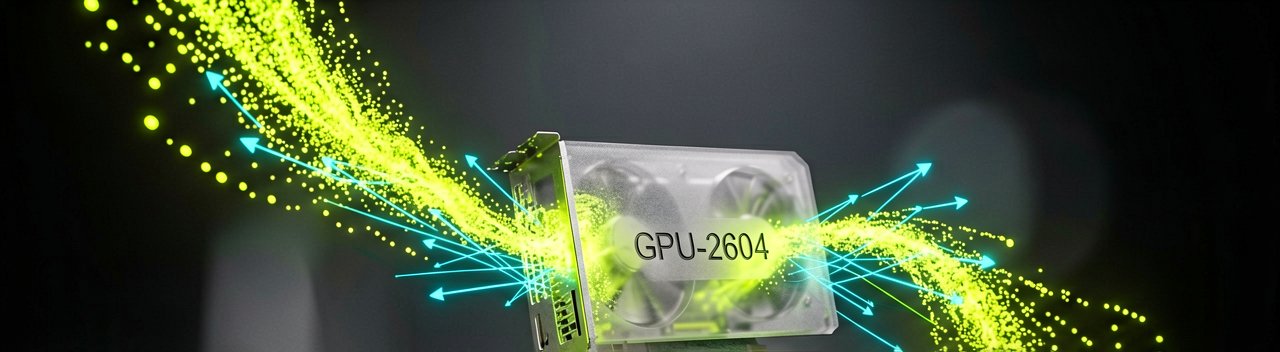
Furthermore, the focus on "Ubuntu Frame" and GPU acceleration suggests that Canonical is looking beyond headless sensors toward the "intelligent edge." We are seeing a rise in edge-AI applications, such as real-time computer vision for quality control or interactive kiosks that require heavy graphical lifting. By providing a stable, containerized way to access GPU resources, Core 26 allows developers to deploy complex AI models and rich user interfaces on low-power hardware with the confidence that the underlying OS won't break during an update. This level of abstraction is exactly what seasoned developers look for when they want to focus on their application logic rather than the underlying kernel drivers.
Ultimately, this release cements Ubuntu's role as a bridge between the cloud-native world of Docker and Kubernetes and the rugged, unforgiving world of embedded systems. The OS treats the edge not as a separate category of computing, but as a distributed extension of the data center. With the inclusion of the Canonical Observability Stack, sysadmins can now monitor a sensor in a remote oil field with the same granularity they would use for a high-traffic web server in AWS. This unification of the "cloud-to-edge" pipeline is the real story here, signaling a future where the location of the hardware matters far less than the consistency of the management layer sitting on top of it.
Reading Between the Lines: The promise of a 15-year support window is a staggering commitment, but it introduces a paradox that the industry has yet to fully reconcile: software longevity versus hardware reality. While Canonical can guarantee that the "Resolute Raccoon" kernel remains patched until 2041, the silicon it inhabits is rarely built for such a marathon. We are entering an era where the OS might outlive the physical integrity of the NAND flash or the capacitors on the board. This creates a strange imbalance where the software remains a fortress of security while the hardware underneath risks becoming a literal paperweight, forcing enterprises to consider whether they are buying a long-term solution or merely delaying an inevitable hardware refresh cycle that the software is now desperate to ignore.
There is also a subtle tension in the move toward "Chisel-based" minimalism. By stripping the OS down to its bare essentials, Canonical is effectively locking developers into a specific, opinionated workflow. While reducing the attack surface is objectively better for security, it shifts the burden of complexity onto the developers who must now precisely define every "slice" of a library their application requires. The efficiency gains in OTA updates are impressive, but they come at the cost of the flexibility that made Linux popular in the first place. For small teams without deep DevOps resources, the jump from a standard Ubuntu Server to the rigid, immutable architecture of Core 26 might feel less like an upgrade and more like a move into a high-security gated community where you can’t change the locks without permission from the HOA.
Furthermore, the push for "Livepatching everything" assumes a level of stability in upstream kernel development that hasn't always been guaranteed. While patching a vulnerability without a reboot is the gold standard for uptime, it adds a layer of runtime complexity that can occasionally lead to unpredictable state conflicts in complex edge deployments. In the mission-critical world of industrial IoT, some operators still prefer the "clean slate" of a scheduled reboot over the sophisticated gymnastics of hot-patching a running system. Canonical is betting heavily that their automated testing pipelines are robust enough to account for every edge case, but in the messy, heterogeneous world of ARM64 hardware, the distance between a "seamless update" and a "silent hang" can be uncomfortably thin.
Projecting forward, the heavy emphasis on the EU Cyber Resilience Act suggests that Ubuntu Core 26 is as much a legal shield as it is an operating system. Canonical is positioning itself as the outsourced compliance department for hardware manufacturers who lack the expertise to maintain a secure software stack for over a decade. This creates a significant vendor lock-in; once a fleet is deployed on Core, moving to a different distribution becomes a Herculean task given the 15-year lifecycle. The industry is effectively trading sovereign control over its software stack for the peace of mind that comes with a premium support contract, a trade-off that highlights how much the "free" in open source has evolved into a service-based economy where the real product is the avoidance of a regulatory fine.
Deploying an OS with a 15-year support cycle is the ultimate act of optimism; it assumes that in 2041, your hardware won't be a rusted relic, your documentation will still be readable, and—most importantly—the intern who set the root password hasn't retired to a beach in Mallorca.
Artūras Malašauskas is an AI Systems Integrator with 20+ years of production-grade web engineering experience. He has designed, shipped, and scaled enterprise Python/PHP systems for logistics, SaaS, and public-sector clients. For the past year, he has focused exclusively on AI integrations: deploying open-source LLMs, building generative media pipelines (image, audio, video), and engineering multi-agent workflows for real production environments. His standard: reproducibility, security, cost-efficient inference—no vaporware. He documents and evaluates emerging AI tooling, separating verified capabilities from marketing noise. Technical editor at: muza-ai.eu, ai-verslas.lt, ai-naujinos.lt Connect on LinkedIn
Comments