Bridging the Silos: eXo Platform Brings Sanity to Enterprise AI with New MCP Server

For anyone who’s tried to get a modern AI assistant to do something actually useful—like pulling data from a private company wiki or checking a project timeline—the struggle with "context silos" is all too real. We’ve been stuck in a loop of copy-pasting sensitive data into chat windows and crossing our fingers that the security team doesn't have a heart attack. But eXo Platform just made a massive play to end that headache by launching its own Model Context Protocol (MCP) server. It’s a move that finally lets external AI tools talk to your digital workplace without turning your data governance into a free-for-all.
The tech itself is built on the open standard originally championed by Anthropic, designed to replace those clunky, one-off connectors with a universal bridge. By acting as a secure mediator, eXo’s MCP server allows generative AI models to "see" and interact with nearly 100 different tools within the platform—from knowledge hubs to task management—all while keeping the keys to the castle firmly in the hands of the IT department. It’s less about adding another chatbot and more about giving your existing AI the "brain" it needs to understand your specific business environment.
Security That Isn’t Just a Buzzword
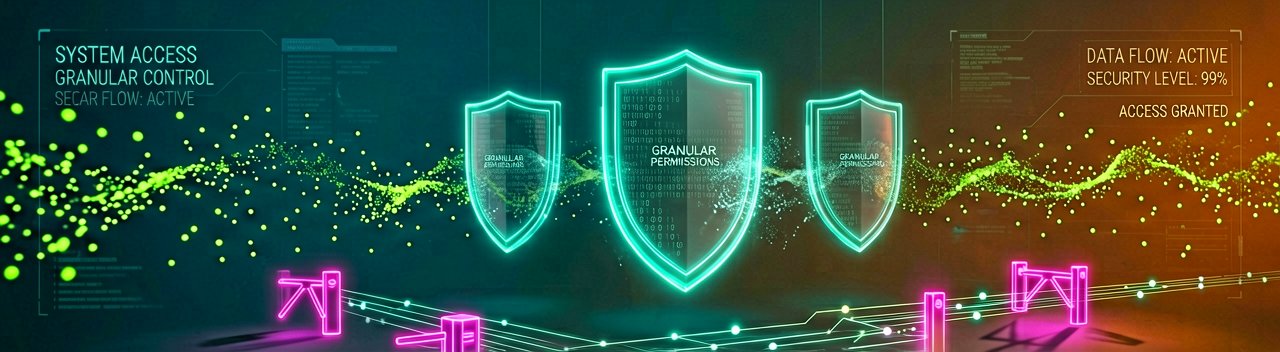
In the enterprise world, "open" usually makes security officers break out in hives. However, eXo is leaning into its open-source roots to provide a sovereign alternative to the monolithic, "black box" AI stacks we’re seeing elsewhere. According to technical details from eXo Platform, the system uses granular permissions and "human-in-the-loop" enforcement. This means an AI agent can’t just go rogue and delete a project space or leak a payroll document; it operates strictly within the originating user’s permissions and often requires an explicit "okay" before it pulls the trigger on an action.
The End of the One-Size-Fits-All AI
What’s particularly clever here is the flexibility. Because it uses the MCP standard, organizations aren't locked into a single provider. Whether your team prefers Claude, ChatGPT, or a locally hosted model for maximum privacy, the eXo server acts as the common language. It’s a refreshing break from the "walled garden" approach. By standardizing how data reaches the model, eXo is making a bet that the future of work isn't just about having the smartest AI, but about having the AI that's best connected to the work you're actually doing.
The Architectural Shift: Why MCP Matters More Than Just Another API
The Quiet Revolution Under the Hood: While most headlines focus on the shiny interface of new AI assistants, the real battle for the enterprise is happening at the protocol layer. For years, the digital workplace was a patchwork of fragmented APIs, each requiring a bespoke integration that inevitably broke the moment a version was updated. eXo Platform’s adoption of the Model Context Protocol (MCP) signals a shift away from this brittle "point-to-point" logic. By implementing a standardized relay, they are effectively creating a universal translator that allows any LLM to query corporate memory without a developer having to write a single line of custom "glue" code for every new use case.
Veteran IT architects will recognize this as the "plug-and-play" dream finally reaching maturity. Historically, sharing sensitive internal data with external intelligence tools was a binary choice: either you built a massive, expensive data lake, or you stayed in the dark. The MCP server approach bypasses this by providing a standardized "context window" that can be toggled on or off. It allows a company to keep its data exactly where it lives—in the documents and discussions of the eXo Platform—while giving the AI just enough visibility to be useful. This "on-demand" context is a far more elegant solution than the massive, risky data ingestions of the past.
From a stakeholder perspective, this is a strategic play for digital sovereignty. eXo has long championed the idea that organizations should own their infrastructure, and this server launch extends that philosophy to the AI era. By decoupling the platform (the source of truth) from the model (the reasoning engine), they prevent the kind of vendor lock-in that makes CTOs lose sleep. If a better, cheaper, or more secure model hits the market tomorrow, an organization can simply point their MCP client to the new model without needing to re-engineer their entire knowledge management system.
There is also the nuanced issue of "AI hallucination" which often stems from a lack of specific, local facts. By grounding the AI in the actual, real-time data of the eXo environment, the risk of the model confidently making things up is drastically reduced. The AI isn't just guessing based on its training data from three years ago; it is looking at the project specs uploaded ten minutes ago. This level of temporal and contextual accuracy is what transforms an AI from a novelty toy into a reliable member of the workforce.

Finally, we have to look at the cultural impact on the end-user. The "blank page" problem is the biggest hurdle to AI adoption in the office. Most employees don't know what to ask because they don't know what the AI knows. By exposing nearly 100 different tools and data streams through the MCP server, eXo is essentially giving the AI a map of the office. This transparency builds trust, as users can see exactly where the information is coming from, turning the "black box" of AI into a glass-box experience where every insight is traceable back to a source document or a colleague's post.
The Reality Check: Can a Protocol Truly Solve the Trust Deficit?
Reading Between the Lines: While the technical elegance of eXo’s MCP server is undeniable, there is a lingering tension between the promise of "seamless integration" and the messy reality of corporate data hygiene. The industry assumes that if you build a bridge, the data crossing it is actually worth reading. In many digital workplaces, internal wikis are graveyards of outdated information and project folders are cluttered with conflicting drafts. By giving an AI a high-speed pass to this "corporate memory," we risk accelerating the delivery of polished, authoritative-sounding nonsense derived from poor-quality sources. A faster pipe to a cluttered basement doesn't necessarily result in a cleaner house.
There is also a fascinating contradiction in the "sovereignty" narrative. eXo Platform is positioning itself as the guardian of data privacy, yet the very nature of an MCP server is to facilitate the export of internal context to external models. Even with "human-in-the-loop" safeguards, the metadata—the subtle patterns of who is talking to whom and which topics are trending—inevitably leaks into the ether. We are seeing a classic trade-off where the desire for productivity gains is being weighed against a theoretical loss of architectural isolation. The "sovereign" label might be more of a comfort blanket than an absolute fortress if the underlying models still reside on third-party cloud servers.
Furthermore, the reliance on "human-in-the-loop" enforcement might be the ultimate bottleneck. In an era where AI is sold as a tool for extreme efficiency, requiring a human to manually approve data fetches creates a friction point that many users will eventually find ways to bypass. If the security becomes too intrusive, employees revert to "Shadow AI"—copy-pasting into unmanaged browser windows—which ironically defeats the entire purpose of eXo’s secure server. The success of this launch depends less on the code itself and more on whether eXo can find that elusive "Goldilocks zone" where security is robust enough to satisfy the C-suite but invisible enough not to annoy the staff.
Looking forward, the implication of this protocol adoption is a commoditization of the AI models themselves. By standardizing the interface, eXo is essentially telling the likes of OpenAI and Google that their "moats" are shrinking. If a platform can swap models like lightbulbs, the value shifts entirely from the intelligence of the engine to the quality and organization of the data being fed into it. This puts immense pressure on organizations to finally get their digital houses in order. The real winners won't be the ones with the flashiest AI, but the ones who spent the last decade meticulously tagging their documents and pruning their internal forums.
The corporate dream has always been to have an AI that knows everything while telling nobody; with MCP, we’ve finally achieved the middle ground of an AI that knows exactly where your mess is kept but promises to ask for permission before showing it to the neighbors.
Artūras Malašauskas is an AI Systems Integrator with 20+ years of production-grade web engineering experience. He has designed, shipped, and scaled enterprise Python/PHP systems for logistics, SaaS, and public-sector clients. For the past year, he has focused exclusively on AI integrations: deploying open-source LLMs, building generative media pipelines (image, audio, video), and engineering multi-agent workflows for real production environments. His standard: reproducibility, security, cost-efficient inference—no vaporware. He documents and evaluates emerging AI tooling, separating verified capabilities from marketing noise. Technical editor at: muza-ai.eu, ai-verslas.lt, ai-naujinos.lt Connect on LinkedIn
Comments