Taiwan’s ITRI Just Doubled Down on the AI Robotics Revolution

Taiwan’s Industrial Technology Research Institute (ITRI) hasn't just been watching the rise of smart automation; they’ve been building the stage for it. On May 19, 2026, the institute officially pulled back the curtain on its new AI Robotics Innovation & Development Center (ARIDC) at its Southern Region Campus in Tainan. It’s a strategic move designed to turn the "Made in Taiwan" brand into "Intelligently Automated by Taiwan," specifically targeting the pressure points of the global supply chain that have been smarting since the pandemic. By housing advanced computing power capable of running complex digital twins and Universal Scene Description (USD) environments, the center is essentially a high-tech sandbox where the next generation of logistics and healthcare robots can learn to walk before they run in the real world.
What makes this more than just another R&D lab is the way it bridges the gap between raw code and iron. The center is leaning hard into Nvidia’s robot simulation platforms to help traditionally "analog" sectors like food service and disaster response catch up with the digital age. It’s not just about flashy hardware; ITRI is positioning itself as the connective tissue between nimble international startups and Taiwan’s legendary manufacturing backbone. According to reports from Taiwan News, the facility isn't working in a vacuum—it’s the second such hub in Tainan, forming a growing "robotics corridor" that links up with the National Center for AI Robotics in Shalun.
Solving the Labor Puzzle with Swarm Intelligence
The timing here isn't accidental. With aging populations and labor shortages becoming a global headache, the "ARIDC" is focusing on what ITRI Chairman Tsung-Tsong Wu calls "advancing the global deployment of AI innovation." We’re talking about more than just a single robotic arm on a line; the focus is on swarm collaboration and motion control—systems that can think, move, and work together without a human constantly looking over their shoulder. For small and medium-sized enterprises that usually find the cost of AI prohibitive, the center provides a technology verification environment that acts as a shortcut to commercialization, as noted by PR Newswire.
Building a Resilient, Automated Future
By integrating AI models directly with precision components, Taiwan is effectively securing its spot at the top of the tech food chain for the next decade. This isn't just about local pride; it’s about making the global supply chain more resilient through automation that can adapt to shocks in real-time. Whether it's a robot that can navigate a disaster zone or an AI system that manages a warehouse with surgical precision, the work coming out of Tainan right now is likely to be the silent engine driving the logistics of 2030. The industry is moving toward a future where "innovation-driven" isn't just a buzzword—it's the only way to stay in the game.
The Hidden Engine of the Supply Chain
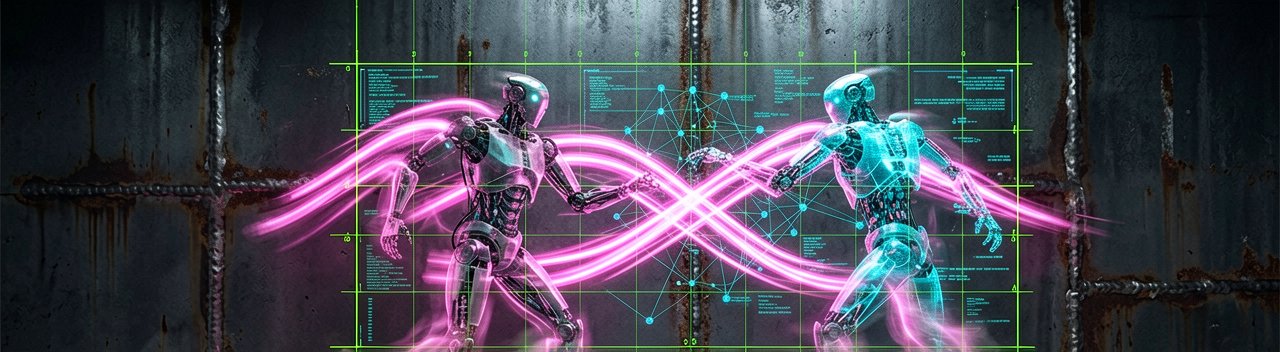
What Most Reports Miss: While the headlines focus on the shiny hardware of robotic arms and autonomous carts, the true disruption at the ARIDC lies in the invisible "connective tissue" of digital twins. By leveraging Nvidia’s Omniverse, ITRI is essentially creating a high-fidelity mirror of the physical world where robots can undergo millions of hours of training in a matter of seconds. This isn't just about speed; it’s about de-risking the massive capital investment required for automation. For a mid-sized manufacturer in the global supply chain, the ability to stress-test a robotic fleet in a virtual environment before a single bolt is tightened is the difference between a successful pivot and a catastrophic financial loss.
Historically, Taiwan has been the world’s foundry, the reliable silent partner producing the chips that power our lives. However, the launch of this center signals a sophisticated shift in the island's economic identity. ITRI is pushing Taiwan to move beyond being a hardware provider toward becoming an end-to-end solutions architect for AI-driven infrastructure. By integrating domestic precision machinery with world-class AI software, they are creating an ecosystem where the software and hardware are developed in lockstep. This vertical integration is a direct response to the fragmented supply chains that buckled during the early 2020s, offering a more resilient, localized alternative for global partners.
Stakeholders in the logistics and disaster-relief sectors are particularly keyed into the center’s work on "swarm intelligence." In traditional setups, robots are often siloed, operating on rigid pre-programmed paths that fail the moment an unexpected obstacle appears. The ARIDC is pivoting toward decentralization, where units share real-time spatial data to navigate chaotic environments collectively. This tech is being groomed for the high-stakes world of semiconductor cleanrooms and pharmaceutical labs, where even a minute of downtime or a single collision can result in millions of dollars in losses. The center acts as a neutral ground where competitors can test these collaborative protocols under ITRI’s guidance.
The human element is also being redefined within the campus walls. Rather than viewing AI as a replacement for the workforce, the center’s philosophy leans heavily toward "cobotics"—collaborative robotics designed to augment human capability. This is a pragmatic necessity given Taiwan’s demographic shifts and shrinking labor pool. By focusing on intuitive interfaces that allow a non-technical floor manager to "teach" a robot a new task without writing a single line of code, ITRI is lowering the barrier to entry for the next industrial revolution. This focus on accessibility ensures that the technological leap doesn't leave the existing industrial workforce behind.
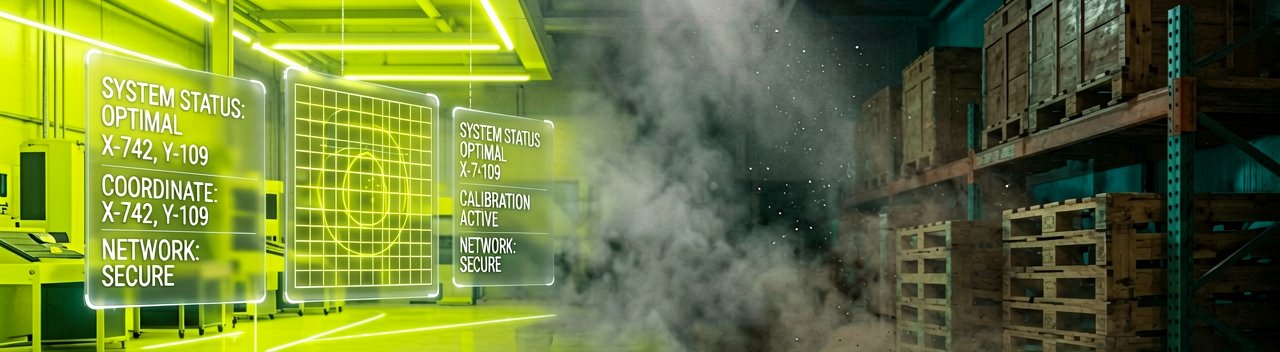
Looking at the broader geopolitical lens, this facility serves as a beacon of "silicon diplomacy." By establishing a world-class R&D hub that invites international startups to collaborate, Taiwan is cementing its role as an indispensable node in the global tech hierarchy. According to insights from Taiwan News, the concentration of these facilities in Tainan is transforming the southern region into a powerhouse of intelligent manufacturing. This geographical clustering allows for a rapid feedback loop between the engineers at ARIDC and the factories just a few miles away, creating a unique "lab-to-fab" pipeline that few other regions can replicate.
Ultimately, the ARIDC is ITRI’s bet on a future where flexibility is the ultimate currency. In an era of trade volatility and rapid technological obsolescence, the ability to reprogram a global supply chain overnight via AI is a formidable competitive advantage. The work being done in Tainan today is the blueprint for a world where the distance between a digital concept and a physical product is measured in milliseconds and mouse clicks. As these systems move from the simulation into the real world, the global standard for what constitutes an "efficient" supply chain is being rewritten in real-time by the experts at ITRI.
Reading Between the Lines: The Automation Paradox
Reading Between the Lines: While the fanfare surrounding the ARIDC paints a picture of a frictionless, automated utopia, the reality of global supply chain integration is rarely so tidy. There is a glaring contradiction in the push for universal AI robotics standards: the tension between proprietary corporate interests and the "open" collaborative spirit ITRI is championing. While simulation platforms like Nvidia’s Omniverse provide a shared language for digital twins, the most valuable data—the real-world telemetry from a factory floor—remains a closely guarded secret. This data silo effect could inadvertently create a two-tier system where only the most well-funded "smart" factories can truly leverage the center’s breakthroughs, leaving smaller players with the digital equivalent of a sports car they cannot afford to fuel.
Furthermore, the reliance on high-end simulation raises a classic engineering skepticism regarding "sim-to-real" gaps. A robot that masters a warehouse in a perfectly rendered virtual USD environment often stumbles when faced with the gritty, unpredictable variables of a real-world Tainan humidity spike or a poorly labeled pallet. ITRI’s move to bridge this gap with the Southern Region Campus is a bold step, but it assumes that the software can evolve as fast as the physical world decays. The institutional bet here is that compute power can eventually outpace physical entropy, a gamble that has historically seen mixed results in the robotics field.
There is also the geopolitical irony to consider. By strengthening the global supply chain through high-tech centralization in Taiwan, the ARIDC is making the world more dependent on the very geographic node that many international planners are currently trying to "de-risk." If the goal is a resilient global network, doubling down on a single island’s R&D prowess creates a paradox where the solution to supply chain fragility is to concentrate the most critical innovation in one of the world's most watched strategic corridors. This doesn't diminish the technical achievement, but it does suggest that the "global" part of the supply chain might remain beholden to local stability.
The economic narrative of "labor replacement versus labor augmentation" also requires a cold eye. While ITRI leans into the "cobotics" framework to ease social anxieties, the endgame of swarm intelligence and autonomous motion control is undeniably a reduction in human headcount per square foot of floor space. The pragmatic challenge isn't just teaching a manager to "program" a robot; it’s figuring out what to do with the workforce once the robot no longer needs a teacher. As noted in the broader context of Taiwan's industrial strategy by PR Newswire, the focus is on deployment, but the social friction of that deployment remains an uncalculated variable in the R&D ledger.
Finally, there is the question of the "innovation-to-implementation" lag. It is one thing to demonstrate a swarm of robots in a controlled Tainan facility; it is quite another to export that logic into legacy systems in the rust belts of Europe or North America. The ARIDC’s success will ultimately be measured not by how many startups it hosts, but by how many of these AI models can survive contact with the "dumb" infrastructure that still makes up the vast majority of the world’s logistics. Until then, the center remains a high-tech lighthouse in a world that is still very much navigating by paper charts.
The dream of a fully autonomous supply chain is a bit like the dream of a paperless office: it’s an elegant theory that usually falls apart the moment someone needs a physical signature or a robot encounters a slightly damp cardboard box.
Artūras Malašauskas is an AI Systems Integrator with 20+ years of production-grade web engineering experience. He has designed, shipped, and scaled enterprise Python/PHP systems for logistics, SaaS, and public-sector clients. For the past year, he has focused exclusively on AI integrations: deploying open-source LLMs, building generative media pipelines (image, audio, video), and engineering multi-agent workflows for real production environments. His standard: reproducibility, security, cost-efficient inference—no vaporware. He documents and evaluates emerging AI tooling, separating verified capabilities from marketing noise. Technical editor at: muza-ai.eu, ai-verslas.lt, ai-naujinos.lt Connect on LinkedIn
Comments