The Scout You Toss: Teledyne FLIR’s New 5.7-lb Robot Redefines First Entry
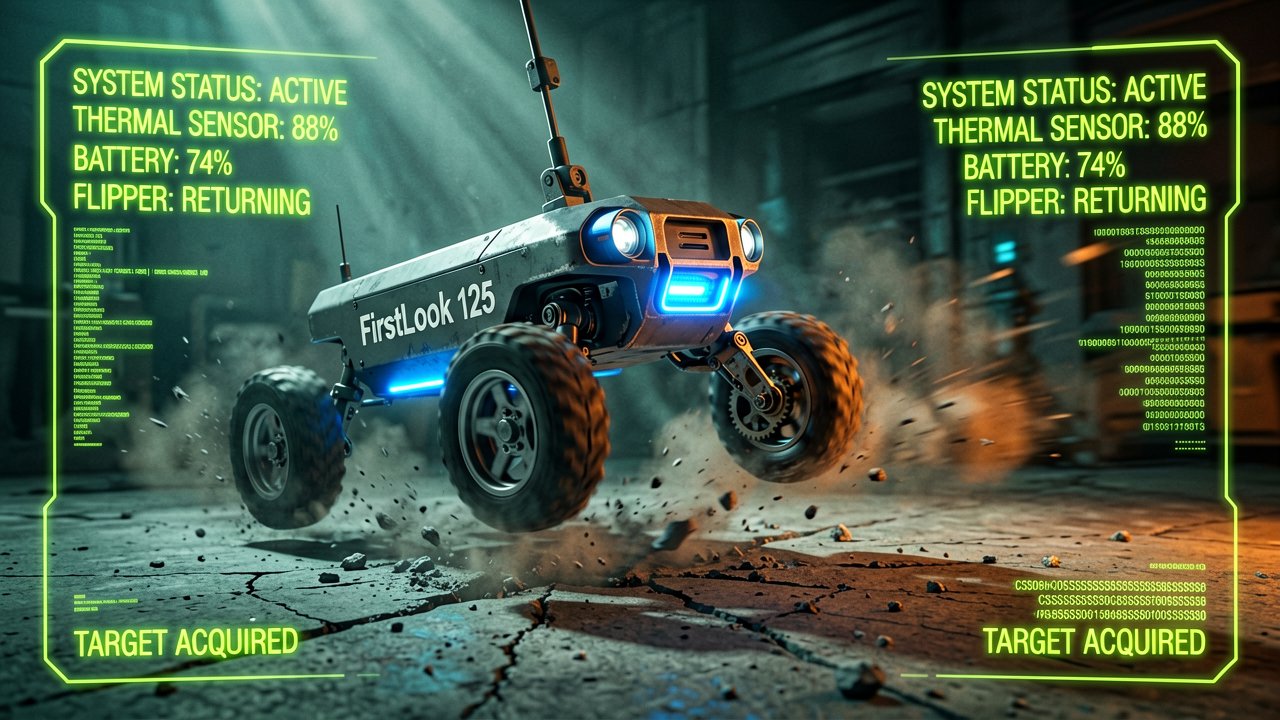
Teledyne FLIR Defense has officially pulled the curtain back on the FirstLook 125, a rugged, 5.7-pound unmanned ground vehicle (UGV) designed to be thrown directly into the heart of danger. Unveiled at SOF Week 2026, this latest iteration of the FirstLook line is built to survive 16-foot drops onto concrete, instantly self-righting itself to begin streaming high-definition thermal and visible-light video. It acts as a disposable yet high-tech sacrificial lamb, allowing military units and SWAT teams to "see" inside rooms or tunnels before a single person crosses the threshold.
The robot’s standout feature isn't just its durability—it’s its newfound brain. For the first time, the FirstLook 125 shares a common operational architecture and controller with the Business Wire Black Hornet 4 nano-drone. This interoperability means a single operator can jump between a bird’s-eye view from the air and a "mouse-eye" view on the ground without fumbling for different tablets or remotes. It’s a significant move toward a unified tactical ecosystem where ground and air assets work as a single, seamless scouting unit.
The Tactical Edge of "Disposable" Tech
Behind the Scenes: The evolution from the older, 6.6-pound FirstLook models to the sleek 5.7-pound FirstLook 125 represents more than just a diet; it’s a shift in how tactical teams prioritize speed over bulk. In the high-stress environment of a building breach, every ounce counts, and the reduction in weight allows for a more natural throwing motion, similar to tossing a football or a heavy grenade. This design philosophy stems from decades of field feedback where operators demanded a tool that could be deployed in seconds rather than minutes. By trimming the fat, Teledyne FLIR Defense has made the unit easier to carry on a vest and faster to launch under pressure.
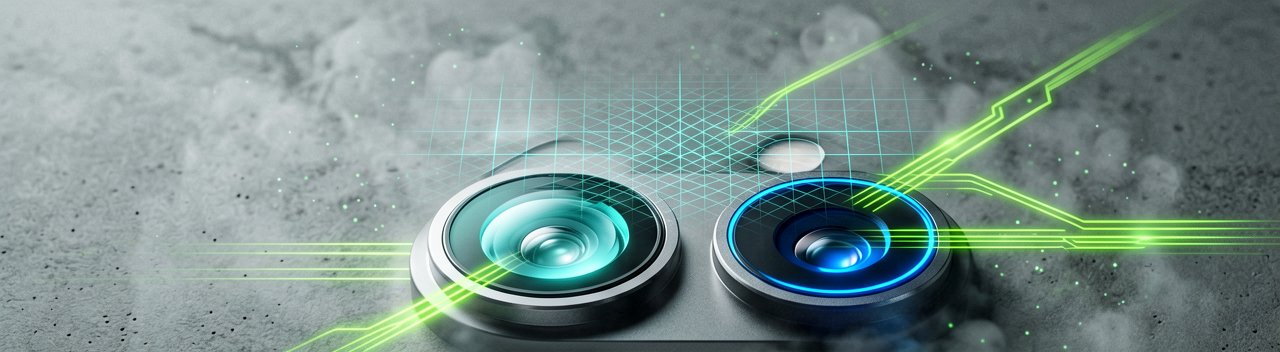
What sets this robot apart from a standard remote-controlled car is its sheer resilience. It utilizes articulated flippers to climb over 7-inch obstacles, rubble, and even navigate stairwells that would trap larger, more expensive platforms. The dual-camera suite—featuring both electro-optical and infrared sensors—ensures that if a room is filled with smoke or pitch black, the operator still has a clear picture of potential threats. This "first in" capability is critical because, as many veteran reporters note, the most dangerous moment of any tactical operation is the initial entry into an "unknown-unknown" environment.
Historically, throwable robots like those from ReconRobotics or earlier FLIR iterations have been credited with saving thousands of lives by detecting IEDs or armed suspects before human contact occurred. The FirstLook 125 continues this lineage but adds two-way audio, allowing hostage negotiators or squad leaders to communicate with people inside a structure from a safe distance. It transforms a simple camera-on-wheels into a comprehensive communication and reconnaissance hub that fits in a cargo pocket.
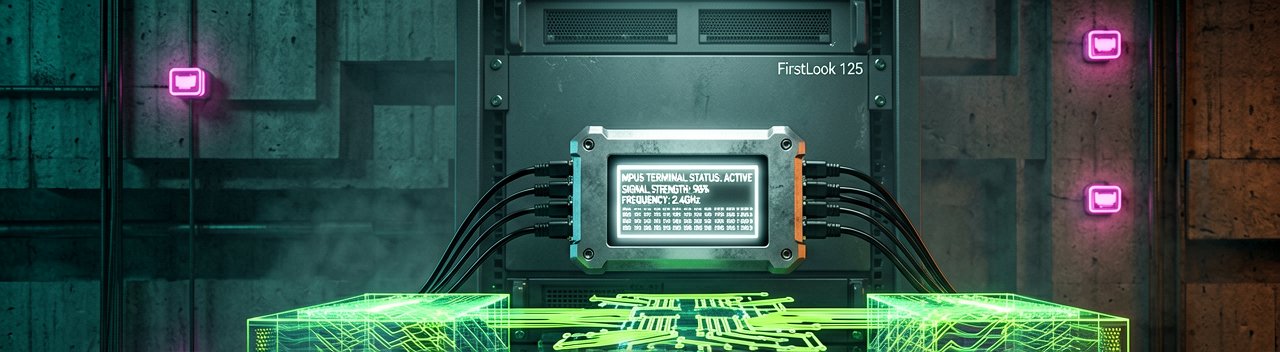
The strategic move to link this ground unit with the Black Hornet 4 drone reflects a broader trend in defense technology: the "Common Controller" mandate. By using the MPU5 radio and Wave Relay MANET, the robot can maintain a stable connection even deep inside complex steel-and-concrete structures. This ensures that the video feed doesn't cut out just as the scout enters the most critical area. For the operator, having one interface for both their ground and air scouts reduces the "cognitive load" in combat, allowing them to focus on the mission rather than the hardware.
While the hardware is undeniably impressive, the real story lies in the software ecosystem. Teledyne FLIR’s integration of digital imaging and aerospace expertise has pushed the company toward organic growth that consistently beats market expectations. As urban warfare and indoor reconnaissance become more prevalent in global conflicts, the demand for these small, ruggedized "expendables" is skyrocketing. The FirstLook 125 isn't just a gadget; it's a testament to the fact that in modern scouting, the best way to keep a person safe is to let a 6-pound machine take the first hit.
Moving forward, the focus for such platforms will likely shift toward increased autonomy—enabling a thrown robot to automatically map a room or detect human signatures without constant steering. For now, the FirstLook 125 stands as the peak of manual tactical reconnaissance, offering a rugged, reliable bridge between a squad and the dangers lurking just around the corner.
Teledyne FLIR Defense has officially pulled the curtain back on the FirstLook 125, a rugged, 5.7-pound unmanned ground vehicle (UGV) designed to be thrown directly into the heart of danger. Unveiled at SOF Week 2026, this latest iteration of the FirstLook line is built to survive 16-foot drops onto concrete, instantly self-righting itself to begin streaming high-definition thermal and visible-light video. It acts as a disposable yet high-tech sacrificial lamb, allowing military units and SWAT teams to "see" inside rooms or tunnels before a single person crosses the threshold.
The robot’s standout feature isn't just its durability—it’s its newfound brain. For the first time, the FirstLook 125 shares a common operational architecture and controller with the Business Wire Black Hornet 4 nano-drone. This interoperability means a single operator can jump between a bird’s-eye view from the air and a "mouse-eye" view on the ground without fumbling for different tablets or remotes. It’s a significant move toward a unified tactical ecosystem where ground and air assets work as a single, seamless scouting unit.
The Tactical Edge of "Disposable" Tech
Behind the Scenes: The evolution from the older, 6.6-pound FirstLook models to the sleek 5.7-pound FirstLook 125 represents more than just a diet; it’s a shift in how tactical teams prioritize speed over bulk. In the high-stress environment of a building breach, every ounce counts, and the reduction in weight allows for a more natural throwing motion, similar to tossing a football or a heavy grenade. This design philosophy stems from decades of field feedback where operators demanded a tool that could be deployed in seconds rather than minutes. By trimming the fat, Teledyne FLIR Defense has made the unit easier to carry on a vest and faster to launch under pressure.
What sets this robot apart from a standard remote-controlled car is its sheer resilience. It utilizes articulated flippers to climb over 7-inch obstacles, rubble, and even navigate stairwells that would trap larger, more expensive platforms. The dual-camera suite—featuring both electro-optical and infrared sensors—ensures that if a room is filled with smoke or pitch black, the operator still has a clear picture of potential threats. This "first in" capability is critical because, as many veteran reporters note, the most dangerous moment of any tactical operation is the initial entry into an "unknown-unknown" environment.
Historically, throwable robots like those from ReconRobotics or earlier FLIR iterations have been credited with saving thousands of lives by detecting IEDs or armed suspects before human contact occurred. The FirstLook 125 continues this lineage but adds two-way audio, allowing hostage negotiators or squad leaders to communicate with people inside a structure from a safe distance. It transforms a simple camera-on-wheels into a comprehensive communication and reconnaissance hub that fits in a cargo pocket.
The strategic move to link this ground unit with the Black Hornet 4 drone reflects a broader trend in defense technology: the "Common Controller" mandate. By using the MPU5 radio and Wave Relay MANET, the robot can maintain a stable connection even deep inside complex steel-and-concrete structures. This ensures that the video feed doesn't cut out just as the scout enters the most critical area. For the operator, having one interface for both their ground and air scouts reduces the "cognitive load" in combat, allowing them to focus on the mission rather than the hardware.
While the hardware is undeniably impressive, the real story lies in the software ecosystem. Teledyne FLIR’s integration of digital imaging and aerospace expertise has pushed the company toward organic growth that consistently beats market expectations. As urban warfare and indoor reconnaissance become more prevalent in global conflicts, the demand for these small, ruggedized "expendables" is skyrocketing. The FirstLook 125 isn't just a gadget; it's a testament to the fact that in modern scouting, the best way to keep a person safe is to let a 6-pound machine take the first hit.
The Friction of Seamless Integration
Reading Between the Lines: While the marketing copy for the FirstLook 125 sings the praises of unified "seamless" control, the reality on the ground often involves a messy battle for bandwidth. The push toward a common controller for both the Black Hornet and the FirstLook assumes a frictionless handoff that rarely survives first contact with heavy electronic warfare or even simple concrete density. There is a inherent contradiction in marketing a device as a "disposable" scout while embedding it with sophisticated EO/IR sensors and high-end radio hardware that likely carries a price tag making "disposal" a painful budgetary pill to swallow.
Projecting the implications of this tech leads to a classic military-industrial catch-22. As these robots become lighter and easier to throw, the expectation for soldiers to operate them without error increases, yet the cognitive burden of managing a ground scout while simultaneously monitoring an aerial drone is immense. We are moving toward a future where a single infantryman is expected to be a pilot, a driver, and a rifleman all at once. Skepticism is warranted regarding whether a 15% weight reduction actually solves the user-interface fatigue that plagues high-stress tactical environments.
Furthermore, the reliance on a unified digital ecosystem creates a single point of failure. If the common controller or the Wave Relay network is compromised or jammed, the operator loses both their "eyes in the sky" and their "boots on the ground" simultaneously. It is a bold strategic bet by Teledyne FLIR to consolidate these platforms, moving away from the redundancy of independent systems in favor of an elegant, yet potentially fragile, single-pane-of-glass solution. The true test will not be how well it survives a 16-foot drop, but how well it survives a cluttered, contested electromagnetic spectrum.
"Ultimately, the FirstLook 125 proves that in the future of warfare, the most heroic thing a soldier can do is develop a really good pitching arm for six-pound computers."
Teledyne FLIR Defense has officially pulled the curtain back on the FirstLook 125, a rugged, 5.7-pound unmanned ground vehicle (UGV) designed to be thrown directly into the heart of danger. Unveiled at SOF Week 2026, this latest iteration of the FirstLook line is built to survive 16-foot drops onto concrete, instantly self-righting itself to begin streaming high-definition thermal and visible-light video. It acts as a disposable yet high-tech sacrificial lamb, allowing military units and SWAT teams to "see" inside rooms or tunnels before a single person crosses the threshold.
The robot’s standout feature isn't just its durability—it’s its newfound brain. For the first time, the FirstLook 125 shares a common operational architecture and controller with the Business Wire Black Hornet 4 nano-drone. This interoperability means a single operator can jump between a bird’s-eye view from the air and a "mouse-eye" view on the ground without fumbling for different tablets or remotes. It’s a significant move toward a unified tactical ecosystem where ground and air assets work as a single, seamless scouting unit.
The Tactical Edge of "Disposable" Tech
Behind the Scenes: The evolution from the older, 6.6-pound FirstLook models to the sleek 5.7-pound FirstLook 125 represents more than just a diet; it’s a shift in how tactical teams prioritize speed over bulk. In the high-stress environment of a building breach, every ounce counts, and the reduction in weight allows for a more natural throwing motion, similar to tossing a football or a heavy grenade. This design philosophy stems from decades of field feedback where operators demanded a tool that could be deployed in seconds rather than minutes. By trimming the fat, Teledyne FLIR Defense has made the unit easier to carry on a vest and faster to launch under pressure.
What sets this robot apart from a standard remote-controlled car is its sheer resilience. It utilizes articulated flippers to climb over 7-inch obstacles, rubble, and even navigate stairwells that would trap larger, more expensive platforms. The dual-camera suite—featuring both electro-optical and infrared sensors—ensures that if a room is filled with smoke or pitch black, the operator still has a clear picture of potential threats. This "first in" capability is critical because, as many veteran reporters note, the most dangerous moment of any tactical operation is the initial entry into an "unknown-unknown" environment.
Historically, throwable robots like those from ReconRobotics or earlier FLIR iterations have been credited with saving thousands of lives by detecting IEDs or armed suspects before human contact occurred. The FirstLook 125 continues this lineage but adds two-way audio, allowing hostage negotiators or squad leaders to communicate with people inside a structure from a safe distance. It transforms a simple camera-on-wheels into a comprehensive communication and reconnaissance hub that fits in a cargo pocket.
The strategic move to link this ground unit with the Black Hornet 4 drone reflects a broader trend in defense technology: the "Common Controller" mandate. By using the MPU5 radio and Wave Relay MANET, the robot can maintain a stable connection even deep inside complex steel-and-concrete structures. This ensures that the video feed doesn't cut out just as the scout enters the most critical area. For the operator, having one interface for both their ground and air scouts reduces the "cognitive load" in combat, allowing them to focus on the mission rather than the hardware.
While the hardware is undeniably impressive, the real story lies in the software ecosystem. Teledyne FLIR’s integration of digital imaging and aerospace expertise has pushed the company toward organic growth that consistently beats market expectations. As urban warfare and indoor reconnaissance become more prevalent in global conflicts, the demand for these small, ruggedized "expendables" is skyrocketing. The FirstLook 125 isn't just a gadget; it's a testament to the fact that in modern scouting, the best way to keep a person safe is to let a 6-pound machine take the first hit.
The Friction of Seamless Integration
Reading Between the Lines: While the marketing copy for the FirstLook 125 sings the praises of unified "seamless" control, the reality on the ground often involves a messy battle for bandwidth. The push toward a common controller for both the Black Hornet and the FirstLook assumes a frictionless handoff that rarely survives first contact with heavy electronic warfare or even simple concrete density. There is a inherent contradiction in marketing a device as a "disposable" scout while embedding it with sophisticated EO/IR sensors and high-end radio hardware that likely carries a price tag making "disposal" a painful budgetary pill to swallow.
Projecting the implications of this tech leads to a classic military-industrial catch-22. As these robots become lighter and easier to throw, the expectation for soldiers to operate them without error increases, yet the cognitive burden of managing a ground scout while simultaneously monitoring an aerial drone is immense. We are moving toward a future where a single infantryman is expected to be a pilot, a driver, and a rifleman all at once. Skepticism is warranted regarding whether a 15% weight reduction actually solves the user-interface fatigue that plagues high-stress tactical environments.
Furthermore, the reliance on a unified digital ecosystem creates a single point of failure. If the common controller or the Wave Relay network is compromised or jammed, the operator loses both their "eyes in the sky" and their "boots on the ground" simultaneously. It is a bold strategic bet by Teledyne FLIR to consolidate these platforms, moving away from the redundancy of independent systems in favor of an elegant, yet potentially fragile, single-pane-of-glass solution. The true test will not be how well it survives a 16-foot drop, but how well it survives a cluttered, contested electromagnetic spectrum.
"Ultimately, the FirstLook 125 proves that in the future of warfare, the most heroic thing a soldier can do is develop a really good pitching arm for six-pound computers."
Artūras Malašauskas is an AI Systems Integrator with 20+ years of production-grade web engineering experience. He has designed, shipped, and scaled enterprise Python/PHP systems for logistics, SaaS, and public-sector clients. For the past year, he has focused exclusively on AI integrations: deploying open-source LLMs, building generative media pipelines (image, audio, video), and engineering multi-agent workflows for real production environments. His standard: reproducibility, security, cost-efficient inference—no vaporware. He documents and evaluates emerging AI tooling, separating verified capabilities from marketing noise. Technical editor at: muza-ai.eu, ai-verslas.lt, ai-naujinos.lt Connect on LinkedIn
Comments