BasedAI Breaks Stealth with Hirebase: A New Playbook for the Open-Source Enterprise

The enterprise AI space is getting a much-needed injection of open-source pragmatism. BasedAI has officially emerged from stealth, bringing with it a flagship platform called Hirebase that aims to transform how businesses handle mundane, repetitive tasks. Unlike the "chatbot-only" fatigue we’ve seen lately, this release is focused on actual execution. By leveraging an open-source vertical stack—from infrastructure APIs to agent orchestration—BasedAI is betting that companies are ready to move past simple prompting and into a world where AI agents actually do the heavy lifting across their existing toolsets.
It’s not just about flashy software, though. The launch is fortified by the strategic acquisition of Warden App’s technology, which provides the multi-agent orchestration muscle needed to navigate complex digital environments. According to reporting from Yahoo Finance , this stack allows Hirebase to deploy specialized agents directly into standard workflows, effectively creating an "instant AI workforce." For enterprises wary of the high costs and "black box" nature of closed-model providers, BasedAI’s use of open-weight models through its BasedAPIs layer offers a compelling, cost-effective alternative that doesn't compromise on security or privacy.
From Chatting to Doing
The core philosophy here is a shift from conversation to action. While most of us are used to asking a bot to summarize a meeting, Hirebase agents are designed to research, coordinate, and execute tasks across platforms like Slack, Google Docs, and Notion. It’s a bold attempt to solve the "last mile" problem of automation—making sure the AI can actually interact with the software humans use every day. With initial backing from investors like Arche Capital and a leadership team featuring veterans from NYSE and ConsenSys, BasedAI isn't just playing around in a sandbox; they’re trying to build the plumbing for the next generation of scalable business operations.
The Open-Source Gambit: While the headlines focus on the "instant AI workforce," the real story lies in the structural defiance BasedAI is showing toward the walled gardens of Silicon Valley. For years, the enterprise narrative has been dominated by a handful of giants offering proprietary models that come with steep licensing fees and opaque data policies. BasedAI’s decision to build on an open-source foundation isn't just a technical preference; it’s a strategic pivot toward "sovereign AI" for the mid-market. By utilizing open-weight models, they are giving CIOs something they’ve been desperate for: the ability to audit the logic behind their automations without paying a "closed-source tax."
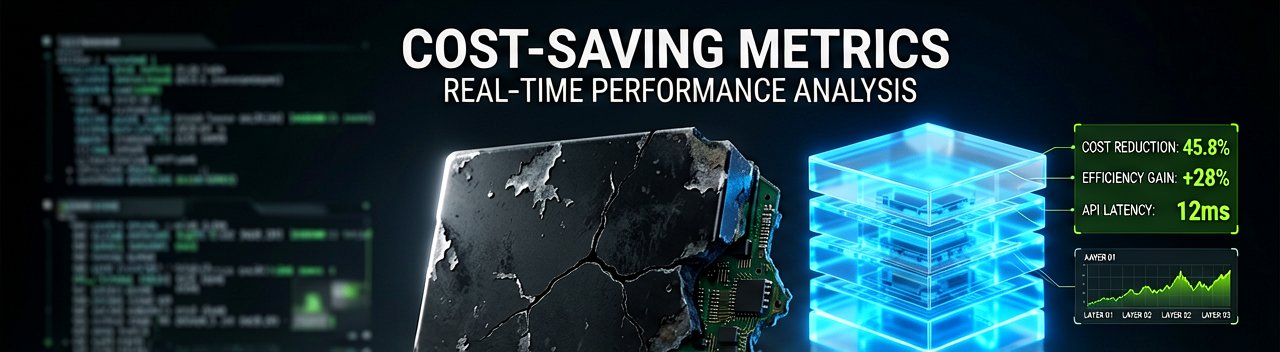
The acquisition of Warden App is the quiet engine driving this entire operation. In the world of agentic workflows, the biggest hurdle isn't the intelligence of the model, but the reliability of the "hand-off." Most AI systems fail when they have to transition a task from a research phase to an execution phase across different software environments. Warden’s orchestration technology acts as the nervous system for Hirebase, ensuring that when an agent moves from a Slack thread to a project management tool, the context remains intact and the permissions don't break. This level of technical maturity is usually reserved for internal tools at big tech firms, but BasedAI is now democratizing it for any enterprise with a standard API stack.
Stakeholders are watching the BasedAPIs layer with particular interest because it addresses the "inference cost" elephant in the room. As companies scale their AI usage, the bill for API calls to top-tier proprietary models often becomes unsustainable. BasedAI’s infrastructure allows for the deployment of smaller, specialized models that are fine-tuned for specific business functions—like procurement or lead qualification—rather than relying on one massive, expensive general-purpose model. This "right-sizing" of intelligence is a hallmark of seasoned engineering leadership that understands the difference between a cool demo and a profitable production environment.
Historically, enterprise automation was synonymous with "Robotic Process Automation" (RPA), which was notoriously brittle and broke the moment a UI element changed. BasedAI represents the post-RPA era, where agents use semantic understanding rather than hard-coded coordinates to navigate tools. This shift is significant because it reduces the maintenance burden on IT departments. Instead of fixing broken scripts, teams can focus on refining the objectives they give to their Hirebase agents. It is a fundamental change in the relationship between humans and software, moving from "operating" the machine to "directing" the outcome.
The pedigree of the founding team—spanning the high-stakes environments of the NYSE and the decentralized ethos of ConsenSys—suggests a bridge between traditional financial rigor and modern tech agility. This background is evident in their approach to security and compliance, which often feels like an afterthought in the "move fast and break things" AI startup scene. By prioritizing an open-source stack, they are inviting a level of transparency that is essential for industries like fintech and healthcare, where "trust me" isn't a valid security posture. They are betting that the future of work isn't just automated, but auditable.
The Architecture of Autonomy
At its core, Hirebase isn't trying to replace the employee; it's trying to eliminate the "digital busywork" that eats up 40% of the average workday. The integration of BasedAI’s decentralized infrastructure ensures that these agents can operate with a level of uptime and resilience that centralized services often struggle to match. As more enterprises integrate these tools, the focus will likely shift from basic task completion to complex, multi-day projects that require agents to "think" and "verify" at every step. This evolution will define whether open-source AI can truly hold its own against the multi-billion dollar incumbents.
The Productivity Paradox: While the promise of an "instant AI workforce" sounds like a corporate fever dream come true, the reality of deploying autonomous agents in the wild is rarely a plug-and-play affair. The industry is currently high on the idea that open-source models can effortlessly mirror the reasoning capabilities of their trillion-parameter cousins. However, there is a looming contradiction in the "open-source for enterprise" narrative: the more complex the workflow, the more "babysitting" an agent requires. BasedAI’s Hirebase must prove that it isn't just swapping one form of manual labor for another—replacing data entry with the high-stakes task of auditing an AI’s hallucinatory output across a dozen different SaaS platforms.
Skepticism is also warranted regarding the "sovereignty" of these open-weight stacks. While hosting your own models on BasedAPIs offers a veneer of control, the underlying hardware dependency remains a centralized bottleneck. We are seeing a shift where the power isn't necessarily held by the software provider, but by the infrastructure layer that can actually run these models at scale without melting a server rack. For BasedAI, the challenge is ensuring that the cost savings of open-source don't evaporate when factored against the specialized engineering talent required to maintain, fine-tune, and secure a decentralized agentic network.
Furthermore, the move from Robotic Process Automation (RPA) to generative agents introduces a "black box" logic problem that traditional enterprise compliance departments are ill-equipped to handle. In the old world of RPA, if a script failed, you could see exactly which line of code hit a wall. In the new world of Hirebase, an agent might decide to take a creative detour through a spreadsheet based on a nuanced interpretation of a Slack message. This unpredictability is the antithesis of traditional corporate risk management, and it remains to be seen if the efficiency gains will be significant enough for regulators to overlook the inherent lack of a deterministic paper trail.
Looking ahead, the success of this rollout hinges on whether "agentic" becomes the next "blockchain"—a buzzword that every CEO demands without understanding the plumbing. If Hirebase agents end up relegated to simple calendar scheduling and basic email triage, the platform will have failed its broader mission of enterprise-grade automation. To truly disrupt the status quo, these agents must handle the messy, non-linear tasks that actually bog down operations. Anything less is just a very expensive, very sophisticated version of the "Out of Office" auto-reply we’ve had for decades.
Ultimately, the enterprise AI race is less about who has the smartest model and more about who has the most invisible integration. BasedAI’s play for the "plumbing" of the digital office is clever because it acknowledges that most workers don't want to talk to their tools; they just want the tools to finish the job while they’re at lunch. The friction between open-source idealism and the rigid demands of a Fortune 500 quarterly report will be the ultimate testing ground for whether Hirebase is a revolutionary shift or just a very polished iteration of the tech industry’s favorite hobby: building things to fix the problems created by the last thing we built.
The Real-World Stress Test
As these agents move from controlled betas into the chaos of live enterprise environments, the metric of success won't be "intelligence," but "resilience." A model that can pass the Bar Exam is useless if it can't figure out a company's specific, convoluted naming convention for PDF invoices. The true test for BasedAI will be the first time an agent encounters a "unique" corporate workflow that hasn't been updated since 2004. In those moments, the open-source community's ability to iterate and patch will be far more valuable than any marketing deck promising a seamless transition to the future of work.
After decades of being told that technology would finally give us the four-hour work week, we’ve arrived at a future where we hire AI agents to do our jobs so we have more time to sit in meetings discussing why the AI agents aren't working.
Artūras Malašauskas is an AI Systems Integrator with 20+ years of production-grade web engineering experience. He has designed, shipped, and scaled enterprise Python/PHP systems for logistics, SaaS, and public-sector clients. For the past year, he has focused exclusively on AI integrations: deploying open-source LLMs, building generative media pipelines (image, audio, video), and engineering multi-agent workflows for real production environments. His standard: reproducibility, security, cost-efficient inference—no vaporware. He documents and evaluates emerging AI tooling, separating verified capabilities from marketing noise. Technical editor at: muza-ai.eu, ai-verslas.lt, ai-naujinos.lt Connect on LinkedIn
Comments