Telelian’s AVS300: Bringing Order to the Chaos of High-Speed Robotics
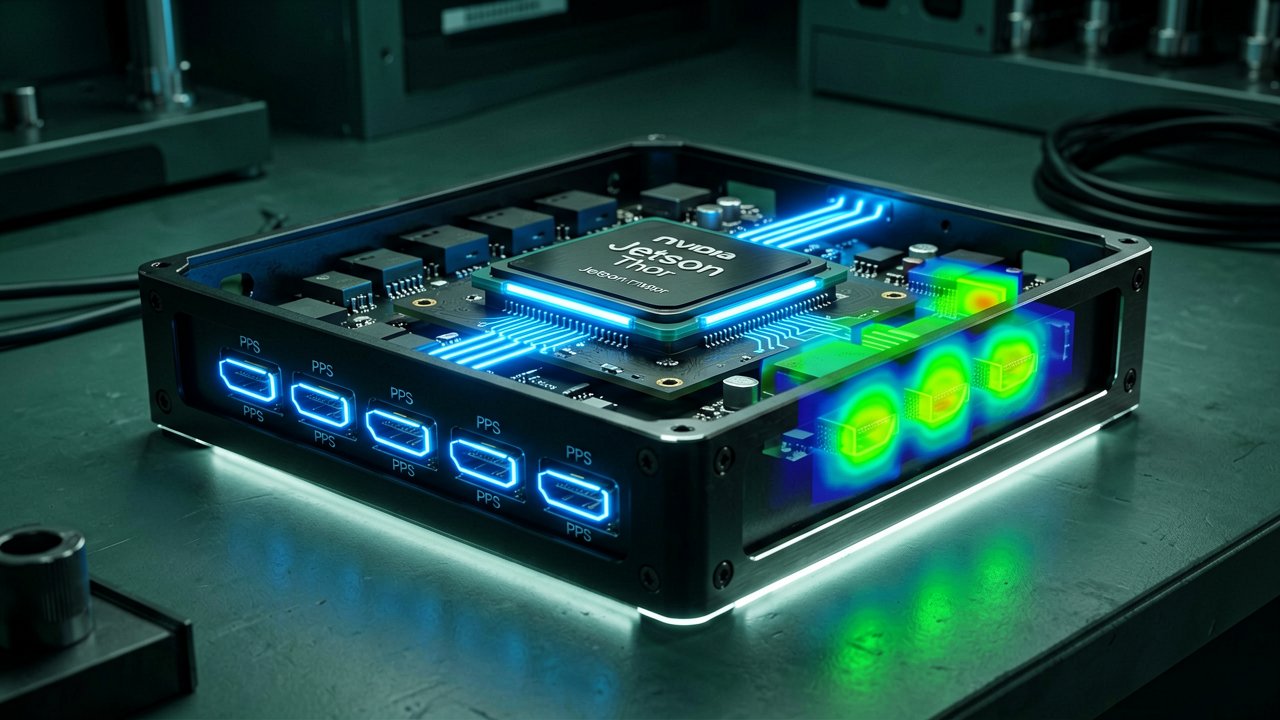
For years, the "brain" of a robot has often been faster than its "eyes," leading to the kind of stuttering perception that keeps autonomous systems confined to slow-speed environments. Telelian is looking to snap that bottleneck with its new AVS300, a high-performance edge AI controller built specifically to house the NVIDIA Jetson Thor. While everyone else is talking about raw TFLOPS, Telelian is focusing on the unglamorous but essential plumbing: ensuring that data from multiple high-speed sensors actually hits the processor at the exact same moment. According to Telelian, the platform solves the chronic issue of frame misalignment by utilizing a precision time synchronization solution optimized for NVIDIA Holoscan and Jetson Thor.
The hardware is built around the latest NVIDIA Blackwell architecture, which is no slouch when it comes to horsepower. We're looking at a staggering 2,070 FP4 TFLOPS of AI performance, but the real magic in the AVS300 is its 8-channel GMSL2 interface—a feature notably absent from the official Thor developer kits. By allowing up to eight cameras to plug directly into the unit with hardware-level synchronization via Pulse-Per-Second (PPS) signals, Telelian is handing developers a ready-made foundation for 360-degree vision and complex sensor fusion that doesn't choke on latency. As Digital Today reports, CEO Seok-gyu Kim emphasizes that real-world robot performance isn't just about the "AI brain," but about an architecture that can deliver sensor data without delay.
The Blackwell Advantage at the Edge
Moving from the previous Orin generation to Jetson Thor isn't just an incremental step; it's a massive leap in energy efficiency and compute density. The Blackwell-powered core delivers nearly eight times the AI compute of its predecessor while maintaining a manageable 130W power envelope. This allows the AVS300 to run heavy-duty Generative AI and Vision Language Models (VLMs) locally, which is crucial for robots that need to "reason" about their environment in real time rather than just following pre-programmed paths. By combining this raw power with the AVS300’s ruggedized design, Telelian is targeting the unforgiving environments found in the industrial, military, and defense sectors.
Synchronized Vision for Autonomous Systems
The inclusion of the GMSL2 (Gigabit Multimedia Serial Link) interface is a clear signal that Telelian wants a piece of the autonomous driving and high-end industrial automation markets. In these fields, even a millisecond of lag between two cameras can lead to catastrophic errors in depth perception or object tracking. The AVS300’s ability to synchronize multi-channel inputs ensures that 3D mapping and LiDAR-camera fusion remain pixel-perfect. This level of precision is exactly what’s required for the next wave of "Physical AI," where machines are expected to interact seamlessly with a dynamic, unpredictable world.
The Hidden Engineering Behind Physical AI
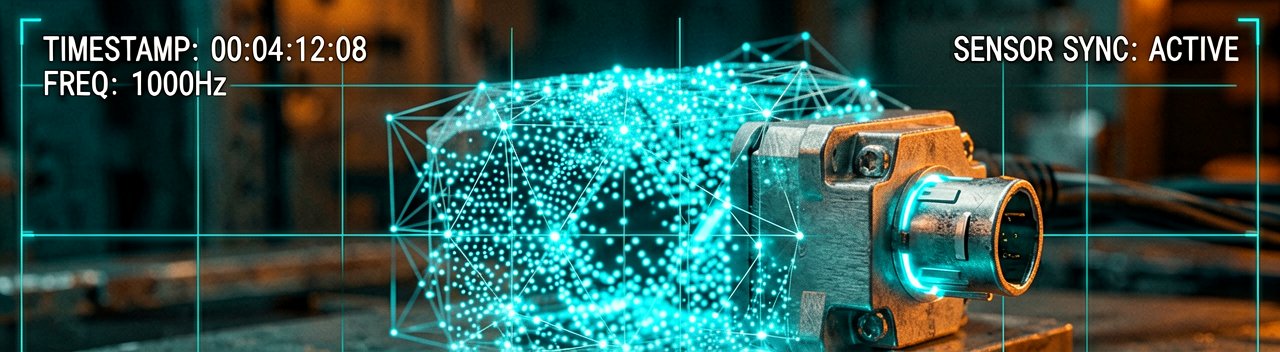
What Most Reports Miss: While the headline figure of 2,000+ TFLOPS is eye-popping, the real story lies in the transition from "computer vision" to "spatial intelligence." For years, the robotics industry has been plagued by the "I/O gap," where the software is capable of complex reasoning but the physical hardware struggles to ingest high-resolution data streams without overheating or dropping frames. Telelian’s AVS300 isn't just a shell for an NVIDIA chip; it is a specialized thermal and data management solution designed to bridge that gap. By integrating the Blackwell architecture into a ruggedized edge platform, they are addressing the reality that high-end AI belongs in the field, not just in a climate-controlled server room.
Historically, developers had to choose between the flexibility of a development kit and the durability of an industrial PC. The AVS300 attempts to kill that compromise by offering an 8-channel GMSL2 interface that is essentially "plug-and-play" for automotive-grade sensors. This is a massive win for engineering teams who previously spent months of R&D just trying to get their camera drivers to synchronize with their LiDAR pulses. In the world of high-speed robotics, even a microsecond of "jitter" in data delivery can result in a robot miscalculating its trajectory, making this granular level of hardware-timed synchronization a critical safety feature rather than a luxury.
Industry veterans recognize that the move to the Jetson Thor module represents a fundamental shift in how we build autonomous machines. Unlike previous generations that relied heavily on heuristic programming, the Blackwell-based core is designed to run Transformer-based models natively. This allows robots to utilize Vision Language Models (VLMs) to understand context—distinguishing, for example, between a person walking toward a door and a person just standing near it. Stakeholders in the logistics and defense sectors are looking at this hardware as the catalyst that will finally move robots from "automated" (following a script) to "autonomous" (making real-time decisions based on environmental cues).
Furthermore, the AVS300 leverages NVIDIA’s Holoscan framework, which was originally developed for the high-stakes world of medical imaging and robotic surgery. By bringing this level of low-latency data processing to a general-purpose robotics platform, Telelian is enabling a new class of "Physical AI" applications. Whether it’s an autonomous forklift navigating a chaotic warehouse or a drone performing sub-millimeter inspections on an oil rig, the underlying requirement is the same: the machine must process a massive volume of sensor data instantly. Telelian’s architecture ensures that the data bottleneck is removed, allowing the Blackwell GPU to operate at its full potential.
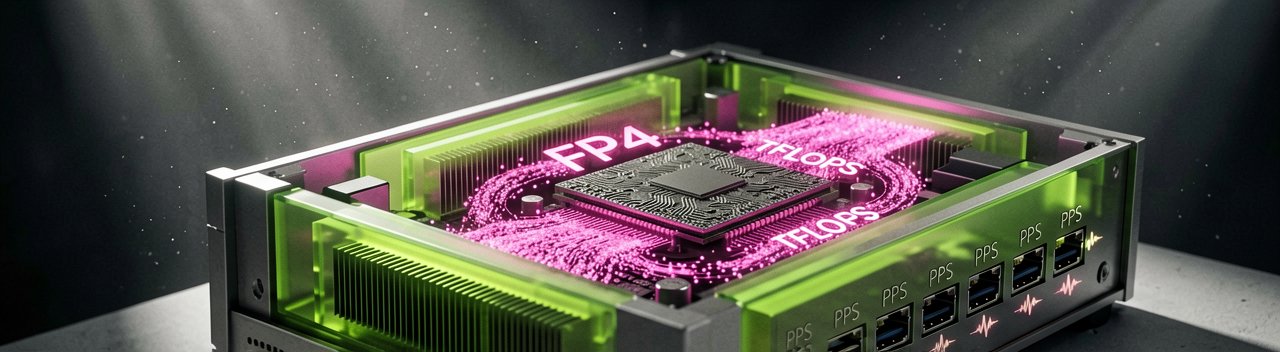
From a market perspective, this launch signals a hardening of the edge AI landscape. We are moving away from the era of experimental prototypes and into a phase of deployment-ready hardware that can survive 24/7 operations. According to Telelian, the platform's support for the Pulse-Per-Second (PPS) signal is the "secret sauce" that allows for such tight sensor fusion. By aligning the internal clocks of every connected device, the AVS300 provides a unified "truth" for the AI to act upon, which is the cornerstone of trust in autonomous systems.
Ultimately, the success of the AVS300 will be measured by how quickly it can be integrated into existing fleets. Telelian has positioned this controller as the missing link for companies that have the software talent but lack the specialized hardware engineering to build a reliable "brain box" from scratch. As the industry moves toward humanoid robots and more complex unmanned vehicles, the demand for high-bandwidth, perfectly synchronized edge compute will only grow. This platform isn't just an upgrade; it's a foundational piece of the infrastructure required for the next decade of robotics innovation.
The Paradox of Infinite Power at the Edge
Reading Between the Lines: There is a seductive trap in the robotics industry: the belief that more compute solve all problems. While Telelian’s integration of the NVIDIA Thor is a technical marvel, it highlights a growing contradiction in the field. We are packing datacenter-grade Blackwell architecture into a box intended for the "edge," yet the power requirements and thermal reality of a 130W module suggest that these robots might spend as much time managing their own heat as they do navigating their environments. The industry often treats raw TFLOPS as a silver bullet, but in a mobile robot, every watt spent on "thinking" is a watt taken away from "moving," creating a zero-sum game for battery life that hardware specs alone cannot resolve.
Furthermore, the reliance on high-bandwidth GMSL2 interfaces and synchronized multi-camera arrays introduces a new layer of complexity that borders on fragility. While Telelian correctly identifies sensor desynchronization as a bottleneck, the move toward such high-density hardware creates a "centralized brain" vulnerability. If the AVS300 is the single point of failure for an entire autonomous fleet, the cost of maintenance and the technical debt of supporting such a bespoke, high-performance architecture could outweigh the benefits for smaller operators. We are seeing a shift where robots are no longer just mechanical tools but rolling high-performance computers that require an IT department just as much as a mechanic.
There is also the question of software maturity. NVIDIA’s Holoscan and the Jetson Thor hardware are undeniably ahead of the curve, but the actual deployment of Vision Language Models (VLMs) in rugged, unpredictable environments remains more of a promise than a proven reality. Skepticism is warranted regarding how quickly the average industrial developer can actually leverage 2,070 TFLOPS of FP4 performance without drowning in the complexity of the Blackwell architecture. Hardware like the AVS300 provides the highway, but the industry is still largely driving the equivalent of horse-drawn carriages in terms of truly autonomous, decision-making software.
Finally, we must consider the geopolitical and supply chain implications of such specialized hardware. By tethering their most advanced robotics platform so tightly to a single, high-demand silicon provider, companies like Telelian are gambling on NVIDIA’s ability to maintain a steady supply of Thor modules amidst global chip hunger. For an industry that prizes reliability and long-term support cycles, the "move fast and break things" pace of high-end GPU releases can be a double-edged sword. It remains to be seen if the operational longevity of these units will match the rapid-fire release cycle of the silicon that powers them.
Building a robot with 2,000 teraflops of AI power just to have it get stuck behind a stray cardboard box is the ultimate modern irony; we’ve finally given machines the brain of a genius, now we just have to hope they develop the common sense of a toddler.
Artūras Malašauskas is an AI Systems Integrator with 20+ years of production-grade web engineering experience. He has designed, shipped, and scaled enterprise Python/PHP systems for logistics, SaaS, and public-sector clients. For the past year, he has focused exclusively on AI integrations: deploying open-source LLMs, building generative media pipelines (image, audio, video), and engineering multi-agent workflows for real production environments. His standard: reproducibility, security, cost-efficient inference—no vaporware. He documents and evaluates emerging AI tooling, separating verified capabilities from marketing noise. Technical editor at: muza-ai.eu, ai-verslas.lt, ai-naujinos.lt Connect on LinkedIn
Comments