Beyond Screens: Timefolio Dives into the Humanoid Robotics Craze
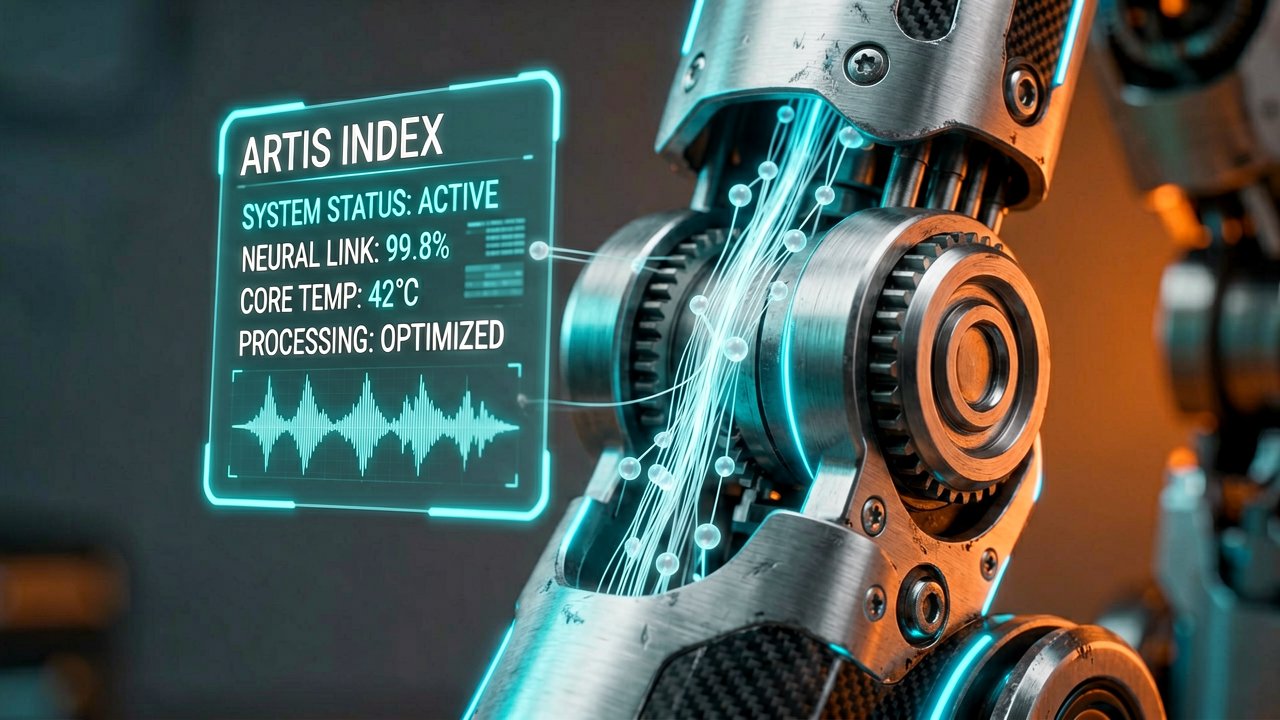
The tech world’s long-standing obsession with "embodied AI" just got a lot easier for retail investors to bet on. Timefolio Asset Management has officially launched its latest active ETF, benchmarking the Solactive Global Humanoid Robotics Index. Listed on the Korea Exchange under the ticker 0185L0.KS, the fund doesn't just want to watch the industry; it’s looking to outpace it by moving beyond the rigid constraints of passive indexing. By targeting what they call "Physical AI," Timefolio is placing a massive wager that the next stage of the digital revolution involves silicon brains finally getting some legs.
It’s no longer enough to just have a chatbot that can write a decent haiku. The real prize is automation that can navigate a messy, unpredictable warehouse or assist in a hospital. This new fund tracks a basket of roughly 30 companies that form the backbone of this vision. We’re talking about heavy hitters and nimble specialists across developed markets, including South Korea and China, that derive at least half their revenue from the humanoid value chain. According to the team at ETF Express, the index leans on Solactive’s proprietary ARTIS technology—a natural language processing tool—to sniff out firms that are genuinely moving the needle in mechatronics and AI sensing rather than just riding the hype.
The Active Edge in a Shifting Sector
What makes this launch particularly interesting is Timefolio’s "Active" moniker. Unlike a traditional passive fund that blindly mirrors its benchmark, this ETF allows managers to tweak weightings or even include non-benchmark stocks if they see a structural opportunity. This flexibility is vital in a sector as volatile as robotics, where today’s breakthrough actuator could be tomorrow's obsolete hardware. As reported by Seoul Economic Daily, the strategy mirrors the early days of the electric vehicle market—a phase defined by rapid component standardization and high stakes field testing. By actively managing the portfolio, Timefolio hopes to sidestep the laggards and double down on the winners as mass production finally begins to scale.
The timing here isn't accidental. Labor shortages and the plummeting cost of high-precision sensors have turned humanoid robots from science fiction props into viable industrial tools. The index includes familiar names like Tesla and NVIDIA alongside specialized players like Rainbow Robotics and UBTECH, ensuring exposure to both the "brains" (chips and software) and the "brawn" (motors and skeletons). For those tired of betting purely on generative AI software, this ETF offers a way to invest in the hardware that will eventually put that intelligence to work in the physical world.

The Convergence of Silicon and Sinew
The Real Engineering Moat: While the broader market focuses on the "cool factor" of bipedal machines, seasoned analysts recognize that the true value lies in the boring details of mechatronics. The Solactive Global Humanoid Robotics Index specifically targets the invisible components—precision reducers, force sensors, and high-torque actuators—that allow a machine to interact with a fragile human world without causing a catastrophe. These are not commodity parts; they are the result of decades of materials science that software-heavy firms are only now beginning to appreciate. Timefolio’s active management strategy suggests they aren't just buying the dream of a robotic butler, but the supply chain that makes it physically possible.
Historically, the robotics industry suffered from the "uncanny valley" of utility, where machines were either too specialized to be flexible or too general to be useful. We are currently witnessing a pivot point where the cost of compute has dropped enough to allow real-time spatial reasoning. This transition mirrors the move from mainframes to mobile phones. By including a mix of pure-play robotics firms and the AI giants providing the neural backbone, this ETF attempts to capture the entire ecosystem. This isn't just about labor replacement; it’s about labor augmentation in aging societies like South Korea and Japan, where the demographic cliff is no longer a future threat but a present reality.
Stakeholders in the venture capital space have noted that "Physical AI" requires a different kind of patience than traditional SaaS. You can't just patch a hardware failure over the air. This fundamental risk is likely why Timefolio opted for an active structure. It allows the fund to pivot away from companies facing manufacturing bottlenecks or regulatory hurdles in real-time. According to insights from ETF Express, the use of ARTIS technology to filter companies ensures that the portfolio isn't just filled with "robotics-adjacent" firms, but those with deep technical skin in the game.
The geopolitical angle cannot be ignored either. With significant weightings in both US and Asian markets, the fund sits at the intersection of a global arms race for automation supremacy. South Korea, in particular, has one of the highest robot densities in the world, making it a natural laboratory for this technology. Investors are looking at how these firms navigate export controls and intellectual property disputes, which often define the success of a high-tech index. Timefolio’s inclusion of regional leaders alongside global titans provides a diversified hedge against localized market volatility.
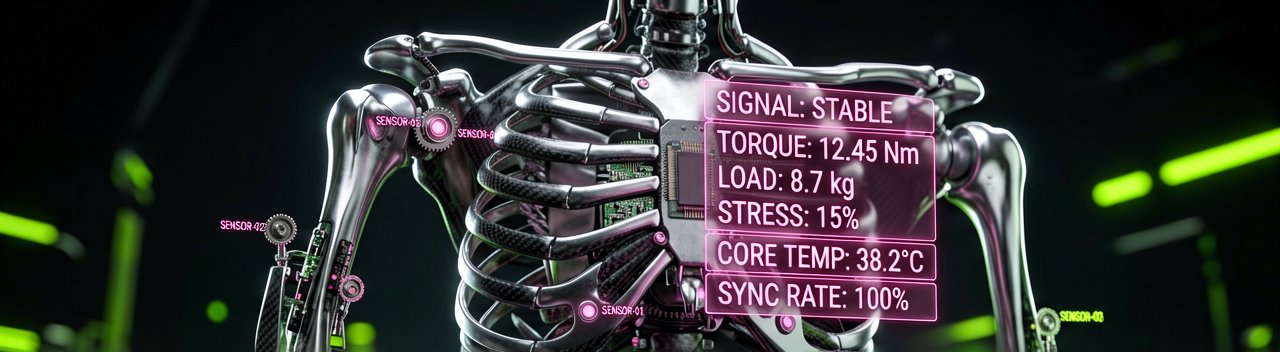
Ultimately, the success of this ETF hinges on the successful integration of Large Behavior Models (LBMs) with ruggedized hardware. We have moved past the era of programmed "if-then" logic into a world where robots learn through imitation and simulation. This shift dramatically reduces the time it takes to deploy a robot to a new task, which is the ultimate metric for ROI in industrial settings. As these machines migrate from controlled lab environments to the chaos of the factory floor, the companies that can maintain high "up-time" will be the ones that drive the index's long-term performance.
The Friction Between Hype and Hard Science
Reading Between the Lines: While the marketing gloss around "Physical AI" suggests a seamless transition from chatbots to mechanical workers, the reality is far more stubborn. There is a persistent contradiction in the current valuation of humanoid robotics: we are pricing these companies as if they were scalable software platforms, yet they are tethered to the brutal margins and logistical nightmares of traditional manufacturing. Unlike a cloud-based LLM that can scale to a million users overnight, a humanoid robot requires a physical assembly line, a complex global supply chain for rare-earth magnets, and a literal boots-on-the-ground maintenance crew. Timefolio’s active approach may be a tacit admission that a passive bet on this sector risks catching too many falling knives as the market separates the genuine innovators from the "PowerPoint" robotics startups.
There is also the overlooked issue of energy density. We have reached a point where AI can simulate human-like reasoning, but we haven't yet solved the problem of a bipedal machine that can work a full eight-hour shift without being tethered to a wall or carrying a battery that makes it dangerously heavy. Many of the firms currently buoying the Solactive index are banking on breakthroughs in battery chemistry that haven't quite left the lab. Projecting a future filled with mechanical laborers while ignoring the current limitations of the power grid and portable energy creates a speculative bubble that seasoned tech journalists have seen before—most notably in the early days of autonomous trucking, which remains "five years away" a decade later.
Furthermore, the social friction of deployment is often ignored by financial benchmarks. Even if the tech reaches parity with human movement, the regulatory and insurance frameworks are currently non-existent. A software bug that deletes a spreadsheet is a nuisance; a software bug in a 300-pound metal humanoid is a liability nightmare. The companies that will actually dominate this space are likely those that prioritize "boring" safety certifications over flashy YouTube demos of robots doing backflips. By tracking the Solactive Global Humanoid Robotics Index, investors are essentially betting that the legal and social appetite for risk will keep pace with the engineering, a gamble that assumes a level of societal agility we haven't seen since the dawn of the internet.
Finally, we must consider the "commodity trap." As mechatronic components become standardized, the hardware itself may see its margins compressed to razor-thin levels, similar to the modern smartphone or PC market. If the hardware becomes a commodity, the real value will accrue back to the software providers—the very same "Big Tech" firms that already dominate our portfolios. This raises the question of whether a dedicated humanoid ETF provides genuine diversification or just a more expensive way to buy into the same AI narratives we’ve been tracking for years. The active managers at Timefolio will have their work cut out for them in identifying which firms can maintain a proprietary edge in a world that loves to copy-paste successful hardware designs.
We’re currently teaching machines to walk and talk at the same time, which is an impressive feat of engineering, but until we can teach them to find a spare part in a messy warehouse without calling a human supervisor, they’re basically just very expensive, bipedal paperweights with excellent PR agents.
Artūras Malašauskas is an AI Systems Integrator with 20+ years of production-grade web engineering experience. He has designed, shipped, and scaled enterprise Python/PHP systems for logistics, SaaS, and public-sector clients. For the past year, he has focused exclusively on AI integrations: deploying open-source LLMs, building generative media pipelines (image, audio, video), and engineering multi-agent workflows for real production environments. His standard: reproducibility, security, cost-efficient inference—no vaporware. He documents and evaluates emerging AI tooling, separating verified capabilities from marketing noise. Technical editor at: muza-ai.eu, ai-verslas.lt, ai-naujinos.lt Connect on LinkedIn
Comments