Rocket Lab’s Defense Pivot: A $30M Anduril Deal and the Robotics Power Move
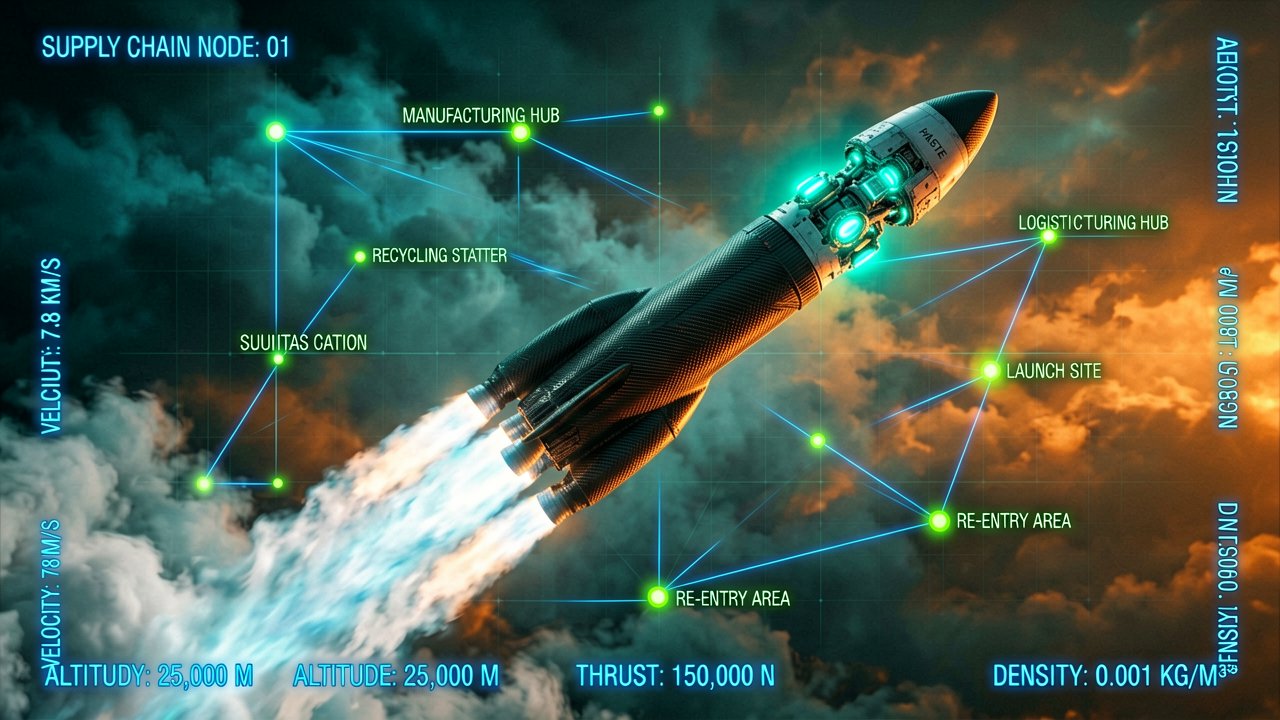
Rocket Lab isn't just a launch company anymore; it’s rapidly evolving into a vertically integrated defense powerhouse. In a one-two punch delivered alongside its Q1 earnings, the company announced a $30 million contract with defense tech unicorn Anduril Industries for three hypersonic test launches. Simultaneously, Peter Beck’s outfit is moving to acquire Motiv Space Systems, the robotics firm behind the hardware on NASA’s Mars Perseverance rover. It's a clear signal that Rocket Lab is looking to own every link in the chain, from the rocket engines on the pad to the robotic arms operating in deep space.
The deal with Anduril centers on Rocket Lab’s HASTE (Hypersonic Accelerator Suborbital Test Electron) vehicle, a modified version of its workhorse Electron rocket designed specifically for suborbital research. These three missions, funded entirely by Anduril’s internal capital, are meant to fast-track the development of technologies capable of screaming through the atmosphere at Mach 5 or higher. By leveraging Rocket Lab’s established "responsive space" capabilities, the first of these launches is expected to take flight within 12 months, according to Rocket Lab Investor Relations.
Building the "Rocket Lab Robotics" Empire
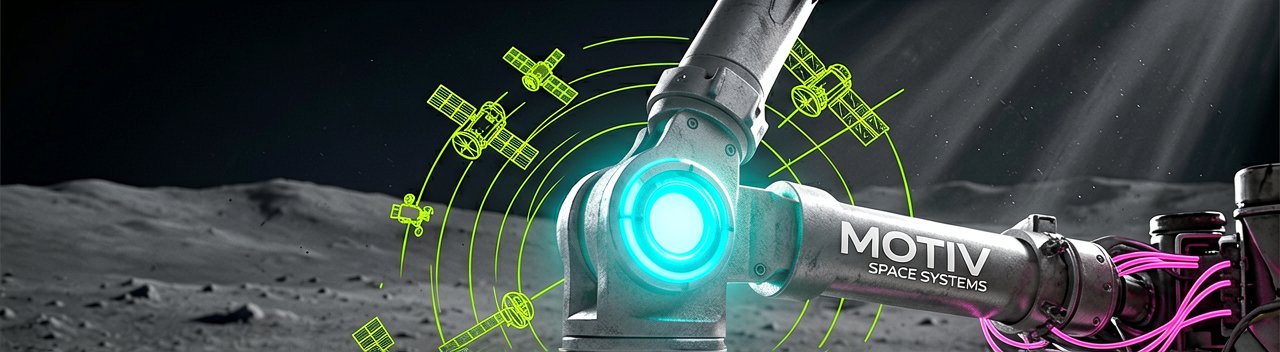
While the hypersonic contract adds immediate revenue, the acquisition of Motiv Space Systems—to be rebranded as "Rocket Lab Robotics"—is the long-term play for dominance. Motiv brings a massive technical pedigree, specializing in motion control systems and precision mechanisms that have survived the harshest environments in the solar system. For Rocket Lab, this isn't just about adding fancy robotic arms to their portfolio; it’s about solving the industry’s chronic supply chain bottlenecks.
By bringing Motiv’s expertise in-house, Rocket Lab can now manufacture its own solar array drive assemblies and antenna gimbals—critical components that are notoriously difficult to source at scale. As reported by SpaceNews, the deal "closes one of the few subsystems" the company was still buying from external vendors. This level of vertical integration is rare outside of SpaceX, and it puts Rocket Lab in a prime position to build out massive satellite constellations and support complex national security missions without waiting on third-party parts.
The Bigger Picture: A $2.2 Billion Backlog
These moves aren't happening in a vacuum. Rocket Lab recently hit a record $2.2 billion backlog, driven by its largest-ever launch contract for its upcoming Neutron rocket. Between the 20-flight hypersonic block buy from the Pentagon and this new partnership with Anduril, defense work now accounts for nearly a third of the company's total manifest. The market has noticed: with revenue climbing 63% year-over-year, the company's shift toward being a diversified space and defense contractor seems to be paying off in a big way.
The Strategic Undercurrents of the Motiv Merger
Beyond the Balance Sheet: This acquisition is less about diversifying a product catalog and more about a ruthless pursuit of vertical integration. In the aerospace world, "lead time" is the silent killer of innovation; waiting six months for a custom gimbal can derail a multi-million dollar launch window. By absorbing Motiv Space Systems, Rocket Lab isn't just buying a robotics company—it’s buying time. They are effectively insulating themselves from a volatile supply chain that has historically been the Achilles' heel of smaller launch providers.
Historically, Rocket Lab followed a trajectory similar to the early days of automotive giants, where owning the rubber plantation was as important as owning the factory. Peter Beck has frequently voiced his frustration with the "bespoke" nature of space hardware, where every component feels like a hand-crafted artifact. Motiv’s pedigree with the Mars Perseverance rover’s robotic arm provides the high-reliability foundation Rocket Lab needs to mass-produce space systems. This shift moves them away from being a boutique launch service and closer to a high-volume hardware manufacturer.
The deal also highlights a shift in how Anduril and Rocket Lab are disrupting the traditional military-industrial complex. Traditionally, "Old Space" giants like Boeing or Lockheed Martin would sit atop a mountain of subcontractors. Here, we see two "New Defense" upstarts cutting out the middleman. Anduril’s decision to fund these hypersonic tests with internal capital—rather than waiting for a slow-moving government grant—shows a Silicon Valley-style appetite for risk that Rocket Lab is uniquely positioned to facilitate with its HASTE platform.
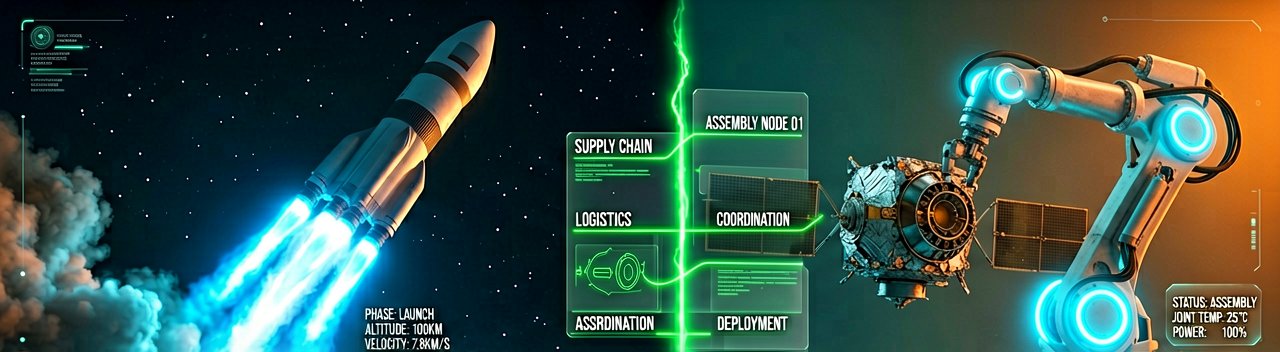
From a technical standpoint, the integration of Motiv’s robotics into the Space Systems division allows Rocket Lab to offer "end-to-end" mission profiles. Imagine a customer who needs a satellite not just delivered to orbit, but one that can perform complex proximity operations or autonomous maintenance once it gets there. With Motiv’s tech, Rocket Lab can design the bus, build the robotic appendages, and launch the entire package on an Electron or Neutron rocket. It’s a closed-loop ecosystem that very few companies on the planet can match.
Stakeholders are also keeping a close eye on the "Rocket Lab Robotics" rebranding as a signal for future lunar and planetary ambitions. Motiv’s hardware is already proven in the freezing, dust-choked environment of Mars. As the Artemis era ramps up and commercial interest in the lunar surface grows, having a battle-tested robotics division makes Rocket Lab a frontrunner for landing gear, sample collection, and infrastructure builds on the Moon. They are positioning themselves to be the primary contractor for the "last mile" of space exploration.
Ultimately, this $2.2 billion backlog represents a fundamental pivot in the company's identity. While the flashy rocket launches capture the headlines, the "quiet" revenue from space systems and high-margin robotics is what will likely sustain the company through the inevitable ebbs and flows of the launch market. Rocket Lab is no longer just building the bus; they are building the passengers, the luggage, and the destination infrastructure as well.
The Hidden Cost of Total Integration
Reading Between the Lines: The narrative of Rocket Lab as a flawless "mini-SpaceX" is compelling, but it glosses over the immense operational risk inherent in such aggressive vertical integration. While Peter Beck champions the idea of owning the entire supply chain, every acquisition—like Motiv Space Systems—adds a layer of management complexity and fixed overhead that can become a millstone if launch cadences slip. Transitioning from a lean launch startup to a sprawling conglomerate requires a cultural shift that has historically tripped up aerospace pioneers who grew too fast for their own good.
There is also a palpable tension in Rocket Lab’s dual identity as both a launch provider and a component supplier. By moving into robotics and high-end satellite subsystems, they are effectively competing with some of their own potential launch customers. It is a delicate game of "co-opetition" that could eventually backfire. If a satellite manufacturer feels that Rocket Lab might prioritize its own internal Space Systems projects or, worse, gain insight into a competitor's proprietary tech through a launch partnership, they might just take their business to a "neutral" carrier instead.
The hypersonic deal with Anduril, while lucrative, also tethers Rocket Lab’s reputation to the notoriously finicky world of Pentagon R&D. Hypersonic flight is a graveyard of "promising" prototypes that never reached mass production. By leaning so heavily into the HASTE program, Rocket Lab is betting that the current defense hype cycle won't deflate before their $2.2 billion backlog turns into actual, realized profit. There is a fine line between being a "responsive space" leader and becoming a specialized niche player for a single government customer's experimental whims.
Furthermore, the integration of Motiv Robotics raises questions about the scalability of bespoke planetary hardware. Building one-off robotic arms for a Mars rover is a prestigious feat of engineering, but it is a world apart from the high-rate manufacturing needed for commercial satellite constellations. Rocket Lab has yet to prove it can translate Motiv’s artisanal excellence into the "Fordist" assembly line model required to justify the acquisition's price tag in the long run. The transition from "scientific marvel" to "commodity part" is often where the most expensive friction occurs.
Skeptics might also point to the timing of these announcements alongside Q1 earnings as a classic "distraction play" to keep investors focused on future growth rather than current burn rates. While the 63% revenue jump is impressive, the capital expenditures required to stand up a robotics division and develop the heavy-lift Neutron rocket simultaneously are staggering. Rocket Lab is essentially running two marathons at once while trying to maintain the sprint speed of a tech startup, leaving very little margin for error in an industry where error usually ends in a very expensive fireball.
In the end, Rocket Lab seems determined to prove that the only thing more difficult than rocket science is the paperwork required to own the entire solar system’s supply chain. At this rate, Peter Beck won't just be launching the missions; he'll be the one charging the astronauts for the robotic arm they used to open the door.
Artūras Malašauskas is an AI Systems Integrator with 20+ years of production-grade web engineering experience. He has designed, shipped, and scaled enterprise Python/PHP systems for logistics, SaaS, and public-sector clients. For the past year, he has focused exclusively on AI integrations: deploying open-source LLMs, building generative media pipelines (image, audio, video), and engineering multi-agent workflows for real production environments. His standard: reproducibility, security, cost-efficient inference—no vaporware. He documents and evaluates emerging AI tooling, separating verified capabilities from marketing noise. Technical editor at: muza-ai.eu, ai-verslas.lt, ai-naujinos.lt Connect on LinkedIn
Comments