GFT’s Physical AI: When Seeing the Defect Isn’t Enough for Modern Automakers
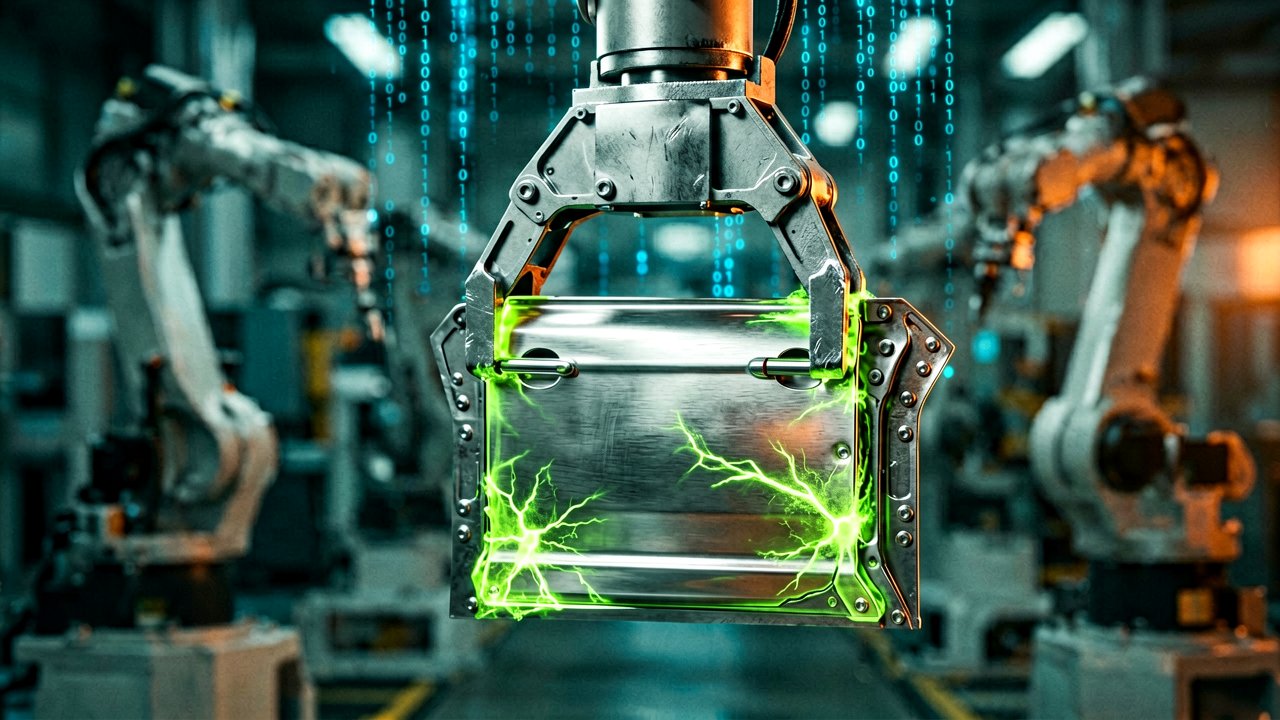
For decades, the automotive assembly line has been a masterclass in controlled chaos. While AI-powered visual inspection systems have become the industry’s "eyes," capable of spotting a hairline fracture in a cylinder head or a misaligned door seal in milliseconds, they’ve historically suffered from a form of digital paralysis. They could see the problem, but they couldn't fix it. Instead, they’d trigger a red light, halt a multi-million dollar line, and wait for a human operator to physically intervene. That gap between digital insight and physical action is where throughput goes to die, and it's exactly the bottleneck GFT Technologies is now eliminating.
By integrating AI-driven robotic arms into the inspection workflow, GFT is moving the needle from passive observation to active remediation. These aren't just programmed machines following a rigid script; they are part of a three-robot team that collaborates in real-time. One robot scans the part from multiple angles using a camera mounted on its gripper, the second flags the defect, and the third physically removes the outlier from the line. This shift to "Physical AI" ensures that defective components never advance to the next stage, saving manufacturers from the staggering costs of downstream rework or, worse, a full-scale recall that can exceed $500 per vehicle according to industry analysts at The Robot Report.
The Real-World Stakes of Zero-Defect Manufacturing
The move isn't just about speed; it's about the brutal economics of modern car building. In a high-stakes environment where a single large-scale recall can burn through tens of millions of dollars, the margin for error has effectively vanished. GFT’s solution, developed in long-standing partnership with Google Cloud, leverages a manufacturing data engine that turns every snapshot into a learning opportunity. This allows the system to adapt to new part designs with far less training data than previous generations of computer vision, making the factory floor as agile as the software that runs it.
Behind the Scenes: What seasoned plant managers know—and what the glossy brochures often skip—is that the "pilot purgatory" of AI is a very real threat to operational stability. Most AI implementations in the automotive sector fail not because the code is bad, but because the integration with legacy hardware is a nightmare. GFT’s pedigree in this space, spanning over 35 years of working with giants like Ford, gives them a unique vantage point. They aren't just dropping a shiny new robot onto a floor; they are stitching it into the existing nervous system of the plant. This historical context is vital because it addresses the skepticism of veteran engineers who have seen "transformative" tech stall when it hits the grit and grime of a real-world press shop or paint line.
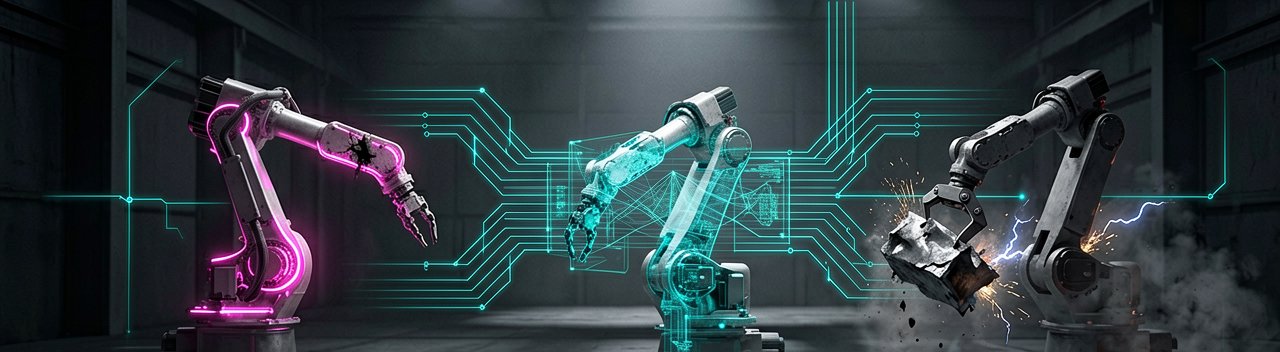
The technical nuance here lies in the collaboration between the three robotic units. While the first robot is performing a high-speed "dance" to capture 360-degree imagery of bumpers or doors, the inference engine is already cross-referencing that data against a cloud-based library of "perfect" parts. This isn't just checking a box; it’s a probabilistic assessment of structural integrity. If the system detects a 98% likelihood of a weld failure, it doesn't just stop the line; it signals the removal arm to pull the part while the rest of the assembly continues unabated. This "non-stop" philosophy is a massive departure from the traditional stop-and-fix model that has defined quality control for a century.
Stakeholders from the executive suite are increasingly looking at this through the lens of "Physical AI"—a term that has gained significant traction at industry forums like Hannover Messe. According to perspectives shared via Springer Professional, the global market for these autonomous physical systems is projected to reach 430 billion euros by 2030. For automakers, this isn't a luxury; it’s a survival mechanism against digital-native competitors who are building "gigafactories" from the ground up with these capabilities baked into the foundation. GFT is effectively offering legacy OEMs a way to retrofit that same intelligence into their established footprints.
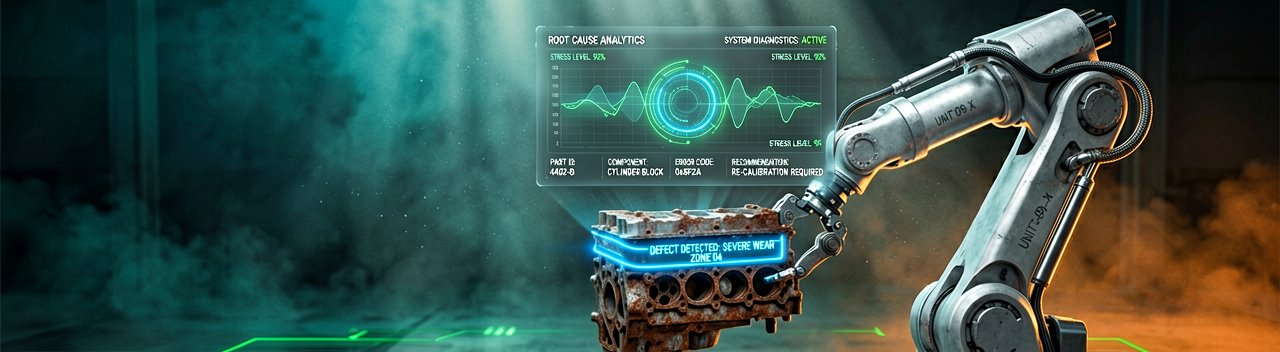
Furthermore, the data generated by these physical actions creates a closed-loop feedback system that was previously impossible. When a robot removes a defective part, the specific parameters of that defect—be it a tonnage anomaly in the press or a temperature fluctuation in the battery module assembly—are fed back into the predictive maintenance models. This means the system isn't just fixing the symptoms; it's helping engineers diagnose the root cause of the manufacturing "illness" before it produces another scrap part. It’s a shift from reactive quality gates to a self-healing production ecosystem.
Finally, there is the human element. By automating the high-fatigue, high-error task of visual inspection—which studies show loses up to 25% accuracy after just two hours of human observation—manufacturers are able to redeploy their most experienced workers to higher-level troubleshooting. This cognitive shift is essential for retaining talent in an industry facing chronic labor shortages. The robot handles the repetitive physical removal, while the human expert analyzes the trend data to optimize the entire line’s efficiency. This partnership between human intuition and machine precision is the true endgame of the smart factory.
The Friction Between Silicon Logic and Steel Reality
Reading Between the Lines: The narrative of "Physical AI" often paints a picture of a frictionless, self-healing factory, but the reality on the ground is rarely so tidy. While GFT’s three-robot choreography is a technical marvel, it highlights a glaring contradiction in the industry’s push for automation: the more complex we make the solution, the more fragile the system can become. By introducing an autonomous removal arm, manufacturers aren't just eliminating a human error point; they are introducing a sophisticated new failure mode. If the "physical action" robot suffers a calibration drift or a sensor mismatch, the very system designed to protect quality could become a source of mechanical damage, effectively "fixing" the line into a standstill.
There is also the matter of data gravity and the hidden costs of cloud-dependent robotics. Proponents emphasize the power of Google Cloud’s inference engines, yet seasoned plant engineers remain rightfully skeptical about the latency and reliability of off-site processing for real-time physical interventions. Even a millisecond of lag in a high-speed assembly environment can mean the difference between a clean part removal and a catastrophic collision. For all the talk of "agile manufacturing," many legacy plants are still wrestling with 4G dead zones and archaic PLC architectures that don't play well with high-bandwidth AI streams. GFT’s biggest challenge isn't the AI itself, but the "industrial archaeology" required to make it work in a 30-year-old stamping plant.
Furthermore, the projection that Physical AI will solve the labor crisis might be overly optimistic. While it removes the drudgery of staring at bumpers for eight hours, it replaces that role with a need for high-tier mechatronics experts who are arguably harder to find and more expensive to retain. We are essentially trading a shortage of low-skill labor for a desperate deficit in high-skill maintenance. This shift doesn't necessarily lower the overhead; it merely moves the budget from the "Direct Labor" column to "Specialized Service Contracts," potentially locking manufacturers into long-term proprietary ecosystems that are difficult to exit.
Ultimately, the move toward active AI remediation marks the end of the "black box" era of manufacturing. Previously, if a batch of parts failed, you had a paper trail and a human to interview. Now, the decision-making process is buried in neural weights and real-time sensor fusion. While GFT provides the tools to manage this, the industry's rush toward autonomy may be outpacing its regulatory and safety frameworks. We are trusting machines to make physical executive decisions on the fly, a leap of faith that works perfectly—until the first time a "perfect" part is tossed into the scrap bin due to a sunbeam hitting a lens at the wrong angle.
"We’ve finally reached the pinnacle of industrial evolution: spending millions on a robot to ensure that when the factory makes a mistake, it can at least throw the evidence away faster than a human can hide it."
Artūras Malašauskas is an AI Systems Integrator with 20+ years of production-grade web engineering experience. He has designed, shipped, and scaled enterprise Python/PHP systems for logistics, SaaS, and public-sector clients. For the past year, he has focused exclusively on AI integrations: deploying open-source LLMs, building generative media pipelines (image, audio, video), and engineering multi-agent workflows for real production environments. His standard: reproducibility, security, cost-efficient inference—no vaporware. He documents and evaluates emerging AI tooling, separating verified capabilities from marketing noise. Technical editor at: muza-ai.eu, ai-verslas.lt, ai-naujinos.lt Connect on LinkedIn
Comments