Kynooe’s Modular AI Arm: The Future of Robotics Just Got Personal
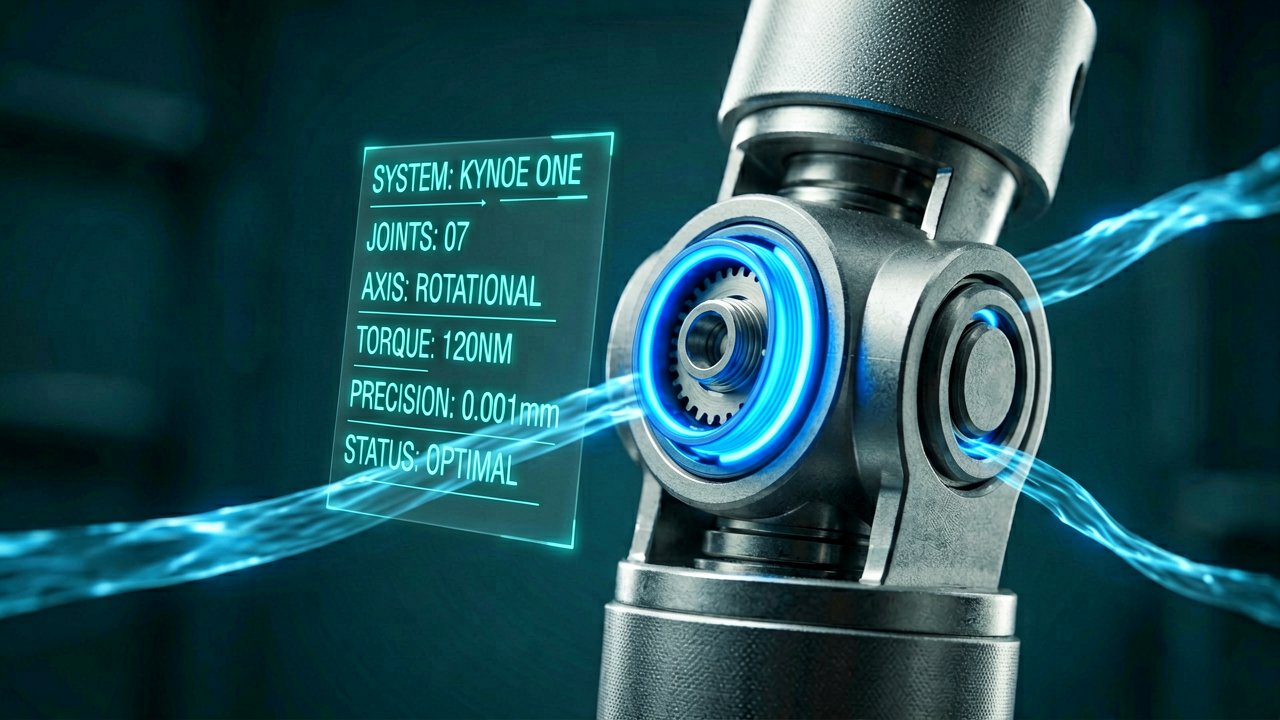
For years, the dream of a robotic sidekick has been stuck in one of two extremes: either it’s a million-dollar industrial beast that could accidentally crush a sedan, or a plastic toy that loses its charm after ten minutes. Enter Kynooe One. Launched this May on Kickstarter, Kynooe is pitching what they call the world’s first fully modular AI robotic arm designed for the actual spaces we live in. It’s not just about flashy hardware; it’s an attempt to democratize "embodied AI" by making robotics as approachable as a smartphone app.
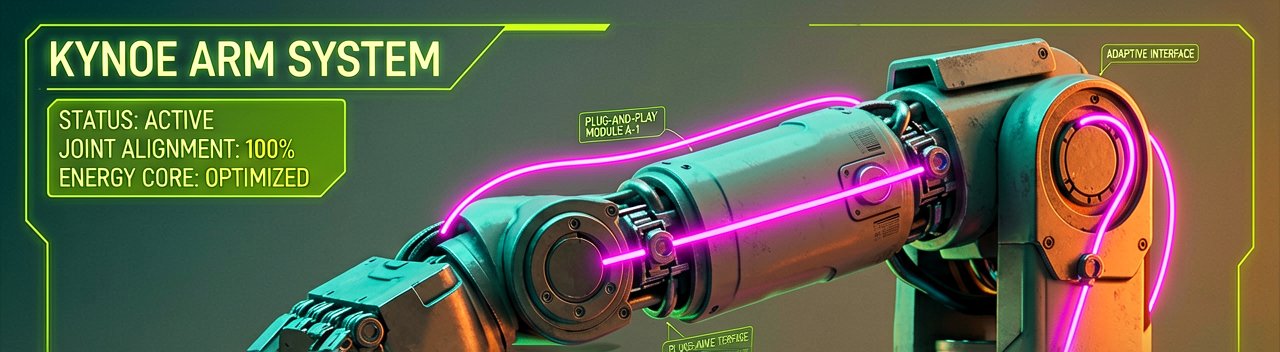
The magic here lies in the modularity. Instead of a fixed, rigid structure, Kynooe uses a plug-and-play system that lets users swap out joints and end-effectors like they’re building with high-tech LEGOs. Whether you’re a creator looking for a steady camera rig or a hobbyist wanting a hand with household chores, the hardware adapts to the task. According to reporting from Gizmochina, the system is explicitly designed for a "no-code" experience, utilizing a visual interface that allows anyone to program complex movements without touching a line of Python.
Brain Power Meets Physical Agility
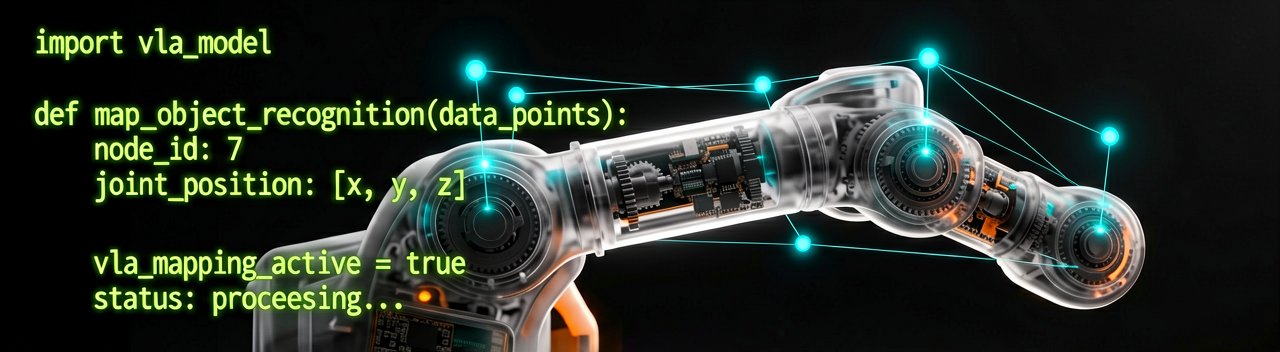
While the hardware is impressive, the "AI" in the name isn't just marketing fluff. Kynooe is integrating state-of-the-art Vision-Language-Action (VLA) models directly into the robot’s workflow. This means the arm doesn’t just move; it perceives. In early demonstrations, the unit has shown the ability to identify objects and respond to natural language commands, bridging the gap between digital intelligence and physical labor. For the more technically inclined, Kynooe's official store notes that they are keeping the SDK open-source, allowing developers to tinker with the API for each individual joint module.
Timeline for the Robot Revolution
If you're ready to clear some space on your desk, you won't have to wait an eternity. Kynooe has already moved past the prototype stage, having completed hardware validation and small-batch trial production. The current roadmap targets a first wave of shipments starting in September 2026. While many Kickstarter projects suffer from "feature creep" that pushes delivery dates into the next decade, the company's focus on a refined, consumer-ready app suggests they’re aiming for a polished launch rather than an experimental beta. It's a bold play to move robotics out of the lab and into the living room, and it might just be the moment the "helpful robot" trope finally becomes a reality.
The Architectural Shift: Why Modularity Matters
Beyond the Spec Sheet: What most surface-level reports miss is that Kynooe isn't just selling a robot; they are selling a standardized interface for physical labor. In the traditional robotics industry, "modular" usually means you can choose between two different arm lengths at the time of purchase. Kynooe has flipped this by treating the joints themselves as independent compute units. This granular approach allows the arm to scale from a simple three-axis stabilizer to a complex seven-axis manipulator depending on the user's specific spatial needs, a level of flexibility typically reserved for high-end research labs at MIT or Stanford.
The real disruption, however, lies in the "Embodied AI" layer. Industry veterans know that the hardest part of robotics isn't movement—it’s the "pick and place" problem in unstructured environments. Your kitchen counter is a chaotic mess compared to a factory floor. By leveraging Vision-Language-Action (VLA) models, Kynooe is moving away from pre-programmed coordinates. Instead, the arm uses its camera to understand that a "mug" is a "mug" regardless of its color or orientation. This shift from geometric execution to semantic understanding is the "secret sauce" that makes everyday utility possible for a non-technical user.
From a developer's perspective, the decision to keep the SDK open-source is a calculated move to build an ecosystem. History shows that hardware platforms live or die by their third-party support—think of the Apple App Store or the Raspberry Pi community. By allowing enthusiasts to write custom "skills" for the arm, Kynooe is effectively crowdsourcing the solution to niche problems, from delicate laboratory pipetting to the automated flipping of pancakes. This strategy mitigates the risk of the device becoming a glorified paperweight once the initial novelty wears off.
Stakeholders in the automation space are watching the power-to-weight ratio closely. Traditional industrial arms are heavy and dangerous, requiring safety cages to operate near humans. Kynooe's use of lightweight, high-torque actuators suggests a focus on "collaborative" robotics, where the machine stops or yields upon contact. This safety-first design philosophy is essential for any device intended to share a desk with a human. It reflects a maturing market where the goal is no longer to replace the human, but to act as a physical extension of the person's intent.
There is, of course, the hurdle of the "uncanny valley" of utility. We have seen many "social robots" like Jibo or Anki’s Vector fail because they provided companionship without enough function. Kynooe is betting that by prioritizing a high payload capacity and precision—specs usually found in the Kickstarter documentation—they can avoid the "toy" label. They are positioning the arm as a tool first and a gadget second, aiming for the same workspace status as a high-end 3D printer or a professional-grade monitor.
As we look toward the September 2026 shipping window, the success of this launch will likely hinge on the "No-Code" app experience. If the interface is as intuitive as promised, it removes the final barrier to entry for the general public. We are witnessing the transition of robotics from a specialized discipline into a consumer utility. While it’s easy to be cynical about crowdfunded hardware, the convergence of modular joints and localized AI processing suggests that Kynooe has identified the correct trajectory for the next decade of personal computing.
The Reality Check: Hardware is Harder Than Code
Reading Between the Lines: The narrative surrounding Kynooe One is intoxicating, but seasoned observers of the "hardware-as-a-service" era know that the gap between a validated prototype and a global supply chain is a graveyard of good intentions. While the modularity is a brilliant engineering feat, it introduces a terrifying number of failure points. Every connection between those "plug-and-play" joints is a potential signal loss or a mechanical weak spot. Maintaining sub-millimeter precision across a DIY assembly requires a level of manufacturing consistency that even tech giants struggle to hit at scale, making the promised ease of use a significant technical gamble.
There is also a glaring contradiction in the "everyday life" pitch. Kynooe emphasizes a no-code interface to attract the average consumer, yet the most compelling use cases—like laboratory automation or custom camera rigs—target a highly specialized power user. This creates a strategic tension. By trying to be a versatile tool for everyone, the device risks being a master of none, too expensive for the casual tinkerer and perhaps not rugged enough for the professional. The transition from a controlled Kickstarter demo to the chaotic reality of a kitchen or a cluttered garage is where most "embodied AI" hits a wall of unforeseen edge cases.
Furthermore, the reliance on Vision-Language-Action (VLA) models brings up the thorny issue of latency and local processing. If the "brain" of the arm relies on cloud computation, the slight delay in data transmission could mean the difference between catching a falling glass and sweeping up shards. Kynooe’s documentation suggests a localized approach, but the sheer computational weight of modern AI models often requires hardware that generates significant heat and drains power. The engineering trade-off between a sleek, silent desktop companion and a machine capable of real-time spatial reasoning is a tightrope walk that hasn't fully been reconciled in the public spec sheets.
Looking at the broader economic implication, we have to consider the "appification" of physical labor. If Kynooe successfully creates a marketplace for robot skills, we move into a world where you might have to pay a monthly subscription just to keep your robot's "dishwasher-loading" skill updated. While the open-source SDK is a nod to the enthusiast community, the long-term sustainability of a hardware company often necessitates locked ecosystems and recurring revenue. This could turn a one-time purchase into a perpetual digital overhead, fundamentally changing our relationship with the tools in our homes.
Finally, there is the social friction of having a persistent, camera-equipped AI limb in one’s private space. Even with the best intentions, a device that must "see" and "understand" its environment to function is, by definition, a sophisticated surveillance node. As Kynooe prepares for its 2026 rollout, the success of the platform will depend less on its torque specs and more on whether it can convince a skeptical public that its convenience outweighs the privacy tax. The robotic revolution is rarely stopped by a lack of gears; it’s usually slowed down by the messy, unpredictable nature of the humans it’s meant to serve.
We’ve spent decades worrying that robots would take our jobs, but it turns out the future is much more likely to involve us spending three hours troubleshooting a modular arm just so it can spend thirty seconds failing to fold a fitted sheet.
Artūras Malašauskas is an AI Systems Integrator with 20+ years of production-grade web engineering experience. He has designed, shipped, and scaled enterprise Python/PHP systems for logistics, SaaS, and public-sector clients. For the past year, he has focused exclusively on AI integrations: deploying open-source LLMs, building generative media pipelines (image, audio, video), and engineering multi-agent workflows for real production environments. His standard: reproducibility, security, cost-efficient inference—no vaporware. He documents and evaluates emerging AI tooling, separating verified capabilities from marketing noise. Technical editor at: muza-ai.eu, ai-verslas.lt, ai-naujinos.lt Connect on LinkedIn
Comments