The Ghost in the Machine Gets a Body: Inside Hong Kong’s High-Stakes Embodied AI Lab
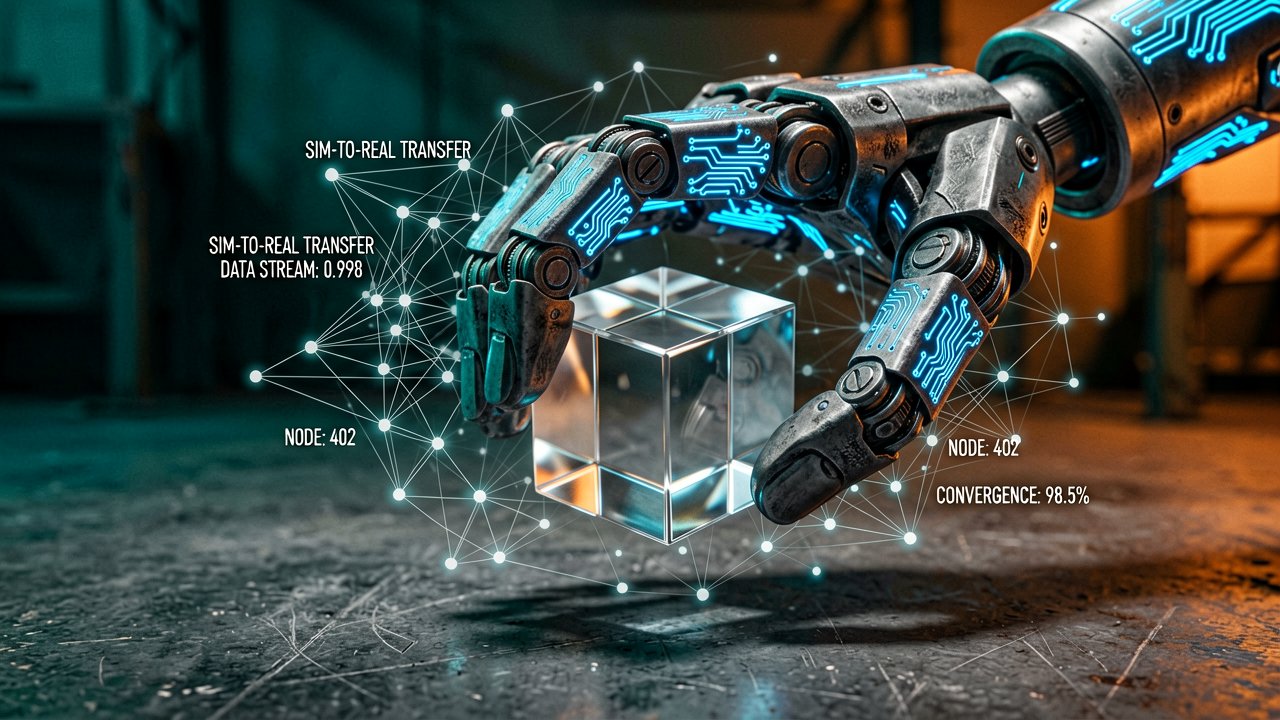
For years, we’ve treated Artificial Intelligence like a brain in a jar—a disembodied intellect capable of writing poetry or coding apps, yet utterly helpless when asked to fold a laundry basket or navigate a cluttered warehouse. That’s changing. The Chinese University of Hong Kong (CUHK) has officially stepped into the physical realm with the launch of the city’s first "full-stack" embodied AI laboratory, a move that signals Hong Kong’s intent to be more than just a financial hub; it wants to be the place where AI finally gets some hands.
Announced by the The Standard, the new Hong Kong Embodied AI Lab is being run by the university’s Centre for Logistics Robotics (HKCLR) at Science Park. If you’re wondering what "full-stack" means in this context, it’s not just about software. We’re talking about an end-to-end pipeline that covers everything from high-level "brain" training to the gritty mechanical realities of sensors, actuators, and physical interaction. It’s an ambitious attempt to bridge the gap between digital simulation and real-world execution.
The Quest for the Ten-Year Brain
The lab’s co-director, Professor Li Zhongyu, isn’t pulling any punches regarding the timeline. The goal is to reach human-level intelligence in robots within the next decade. As noted by RTHK, Li acknowledges that "neither industry nor academia know the answer" to the most complex challenges in embodied AI yet. This lab is designed to be the crucible where those answers are forged, focusing on training robotic brains to handle the unpredictability of the physical world—something that current LLMs still struggle with when translated to hardware.
What makes this initiative particularly potent is its "24-plus-1" strategy. CUHK isn't doing this in an academic vacuum; they’ve brought in 24 industry partners, including major tech firms from mainland China. This isn't just about publishing papers; it’s about "translating research into industrial applications," as Winnie Chan Chor-wing of the Innovation and Technology Commission put it. The lab is already showing off upgraded versions of locally developed robotic arms and quadrupeds that boast improved stability over their predecessors.
More Than Just Humanoids
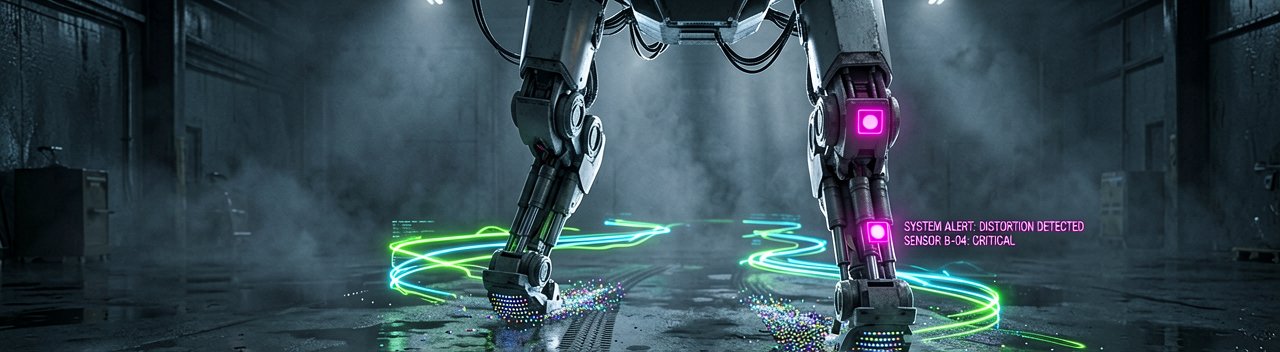
While the sexy headline is often a humanoid robot doing backflips, the lab’s focus is broader. We’re seeing a shift toward "foundation models" for robotics—AI that can understand both visual data and natural language to plan complex tasks. According to reports from the South China Morning Post, the lab is leaning heavily into humanoid and quadruped research, but the underlying tech is meant to be a "universal framework" for any physical agent.
This launch feels like a strategic pivot for Hong Kong. By positioning the lab within the Greater Bay Area ecosystem, CUHK is betting that the city’s unique "urban testing grounds" and proximity to manufacturing hubs will give it an edge. It’s a high-stakes play to ensure that when the "AI flywheel" starts spinning—where robots collect data, improve their models, and perform better—Hong Kong is the one holding the grease gun.
Ultimately, the Hong Kong Embodied AI Lab represents a bet on the future of "New Quality Productive Forces." If they can actually hit that ten-year target for human-level robotic intelligence, the "brain in a jar" era of AI will look like ancient history. For now, the focus is on the hard work: making sure the robots don't trip over the doorstep while they're learning to think.
The Reality Check Behind the Silicon: While the ribbon-cutting ceremony at Science Park looked like a scene from a sci-fi blockbuster, the actual work happening inside the CUHK lab is a gritty, high-stakes battle against "The Reality Gap." This is the notorious chasm between a robot’s performance in a pristine digital simulation and its inevitable failure when it hits a greasy factory floor or a crowded hospital corridor. For a seasoned observer, the "full-stack" label isn't just marketing—it’s a confession that the industry has finally realized you can't solve physical problems with digital-only solutions.
The Architecture of the 'Common Brain'
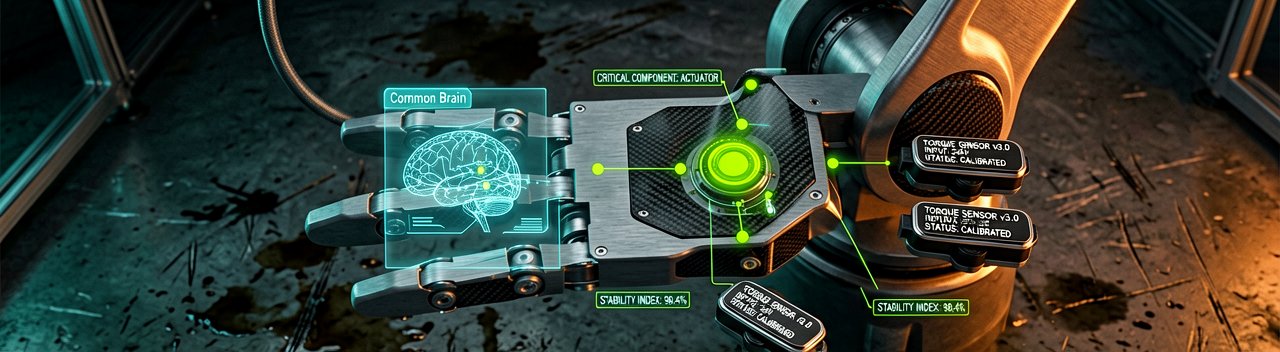
What the headlines often gloss over is the sheer technical audacity of what Professor Li Zhongyu calls the "Common Brain" project. Most robotic systems today are vertical silos; a robot arm at a car plant is useless at peeling a potato because its hardware and software are fused for one purpose. The CUHK team is attempting to decouple these, building a generalized foundation model that functions like a human motor cortex. The goal is to create a system where the "brain" can be plopped into a quadruped today and a bipedal humanoid tomorrow without having to rewrite the core logic from scratch.
This approach mirrors the evolution of Large Language Models (LLMs), but with a terrifying twist: physics doesn't have an "undo" button. If an LLM hallucinates a fact, the user gets a wrong answer; if an embodied AI hallucinates the distance to a glass table, it shatters the equipment. To combat this, the lab is leaning heavily into "Sim-to-Real" transfer technologies. They are running millions of parallel simulations in the cloud to teach robots how to fall and recover before the physical prototypes ever touch the ground, a process that saves millions in hardware costs and years in development time.
The Greater Bay Area Power Play
From a geopolitical and economic lens, this lab is the centerpiece of Hong Kong’s "re-industrialization" strategy. For decades, the city offshored its manufacturing to the mainland, becoming a service-heavy economy. However, as noted by The Standard, the involvement of the Innovation and Technology Commission suggests this is about reclaiming a piece of the high-end manufacturing pie. By partnering with 24 industry titans, CUHK is ensuring that their research doesn't end up gathering dust in a university library but instead finds its way into the supply chains of the Greater Bay Area.
There is also a palpable sense of urgency regarding the local labor market. Hong Kong is facing an aging population and a shrinking workforce in sectors like logistics and elderly care. Stakeholders in the lab aren't just looking for "cool" tech; they are looking for a solution to a looming demographic crisis. If a "full-stack" AI can navigate a public housing estate to deliver medicine or assist a nurse in a ward, the economic ROI (Return on Investment) becomes astronomical. It moves the conversation from "will robots take our jobs?" to "how soon can these robots help us?"
Ultimately, the success of this lab won't be measured by the fluidity of a robot's walk, but by the robustness of its ecosystem. The "full-stack" approach implies a belief that the hardware, the sensors, the "brain," and the industrial application must all grow together. As the lab moves out of its honeymoon phase, the tech world will be watching to see if Hong Kong can actually bridge that "Reality Gap" or if the dream of a human-level robotic brain in ten years remains exactly that—a dream.
The Skeptic’s Lens on the Ten-Year Promise: While the fanfare surrounding CUHK’s new lab paints a picture of a seamless robotic future, a seasoned look at the history of automation suggests we should temper our enthusiasm with a healthy dose of "hardware reality." The bold claim of achieving human-level robotic intelligence within a decade is an echo of the self-driving car promises of 2015—promises that ultimately stalled against the infinite edge cases of the physical world. It is one thing to train a "brain" in a sanitized Science Park lab; it is quite another to deploy it in the chaotic, high-humidity, high-density environment of a Kowloon wet market.
The Disconnect Between Bits and Atoms
The central contradiction in the "full-stack" narrative is the assumption that AI scaling laws, which worked so spectacularly for text and images, will apply equally to physical movement. In the digital realm, data is cheap and failure is a software crash. In embodied AI, data is expensive—requiring physical robots to move through physical space—and failure results in bent metal and broken sensors. While the lab’s 24-plus-1 strategy aims to subsidize this with industry partnerships, there remains a fundamental bottleneck: we still don't have a "GPT-3 moment" for motors. Training a robot to grasp a soft strawberry without bruising it requires a level of tactile feedback that current silicon often fails to process in real-time.
Furthermore, the reliance on "Sim-to-Real" transfer, though efficient, often produces "brittle" intelligence. Robots can become world-class experts at navigating a mathematically perfect simulation, only to be utterly baffled by a stray plastic bag or a change in lighting. As reported by RTHK, the lab admits that the industry doesn't have the answers yet. This honesty is refreshing, but it highlights that this lab is less of a victory lap and more of a desperate, well-funded scramble to find the missing link in robotic cognition before the current "AI bubble" faces a correction.
The Geopolitical Tug-of-War
There is also the matter of the "full-stack" supply chain. By tethering the lab so closely to mainland industry partners, CUHK is making a definitive geopolitical choice. In an era of tightening export controls on high-end chips and robotic components, the lab’s success is inextricably linked to the Greater Bay Area’s ability to remain self-sufficient. If the "brain" is developed in Hong Kong but the specialized actuators or high-precision sensors are caught in a trade crossfire, the "full-stack" dream could end up being a very expensive, very sophisticated paperweight.
Projecting forward, the real test won't be whether these robots can walk, but whether they can be repaired. A humanoid robot that requires a PhD-level engineer to fix every time it bumps a wall is not a "productivity force"; it’s a liability. For the lab to truly transform Hong Kong’s economy, it must move beyond the "Common Brain" and solve the mundane, unsexy problems of durability and maintenance. Until then, the ten-year timeline feels less like a roadmap and more like a hopeful prayer cast into the silicon void.
"We’ve spent sixty years teaching computers to beat us at chess only to realize the real challenge was teaching them not to knock over the table when they lose."
Artūras Malašauskas is an AI Systems Integrator with 20+ years of production-grade web engineering experience. He has designed, shipped, and scaled enterprise Python/PHP systems for logistics, SaaS, and public-sector clients. For the past year, he has focused exclusively on AI integrations: deploying open-source LLMs, building generative media pipelines (image, audio, video), and engineering multi-agent workflows for real production environments. His standard: reproducibility, security, cost-efficient inference—no vaporware. He documents and evaluates emerging AI tooling, separating verified capabilities from marketing noise. Technical editor at: muza-ai.eu, ai-verslas.lt, ai-naujinos.lt Connect on LinkedIn
Comments