The Heavyweight Champion of the Aisle: VisionNav’s High-Stakes Bet on Autonomous Stacking
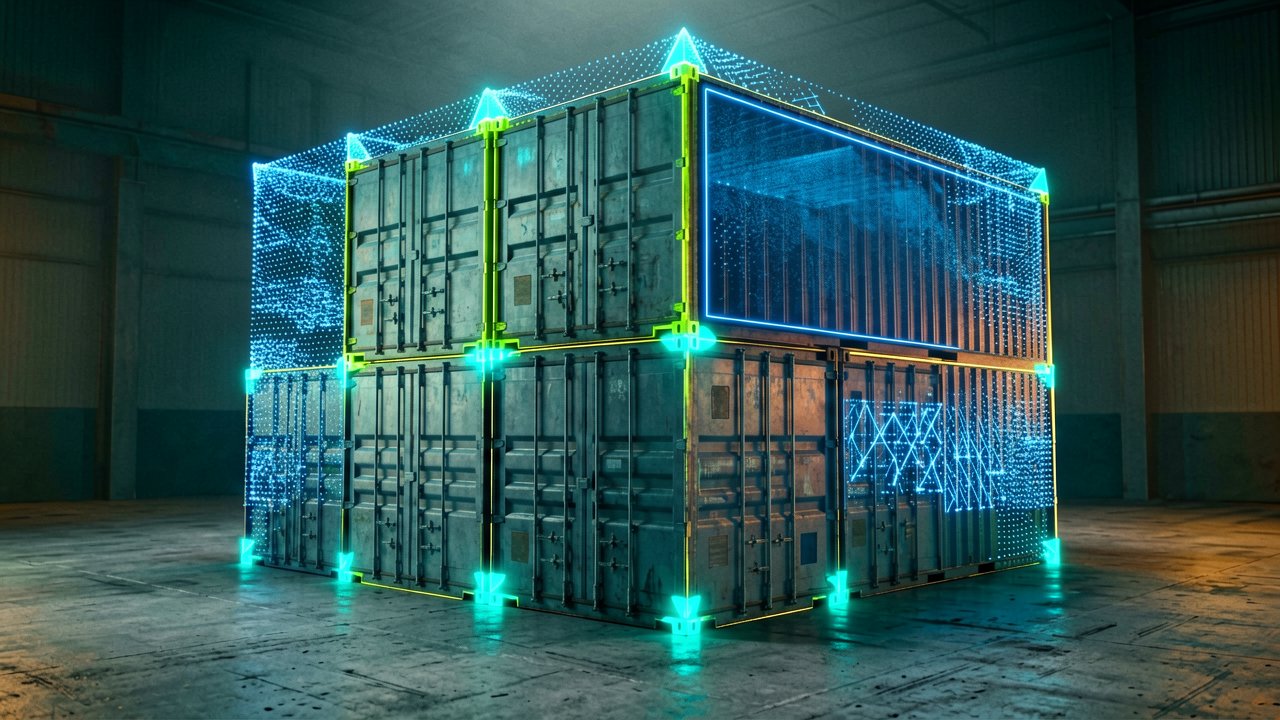
In the high-stakes world of heavy-duty logistics, precision isn’t just a nice-to-have—it’s the difference between a smooth-running floor and a costly safety incident. VisionNav Robotics is leaning hard into that reality with the debut of its VNE40-66 Autonomous Precision Stacking Solution. Unveiled as a direct answer to the messy, high-density environments of the automotive and manufacturing sectors, this system aims to automate the handling of the industry’s bulkiest, most awkward cargo: large storage cages and heavy-duty containers.
Most automation solutions handle standard pallets with ease, but start to sweat when faced with 8.8-foot-wide cages weighing over 6,100 pounds. The VNE40-66 doesn't just move these behemoths; it stacks them up to 22 feet high with millimeter-level accuracy. According to Supply & Demand Chain Executive, this is the first solution on the market specifically engineered to manage such massive dimensions at these heights, addressing a significant bottleneck in automotive "Body In White" parts storage.
Safety in a Mixed-Traffic World
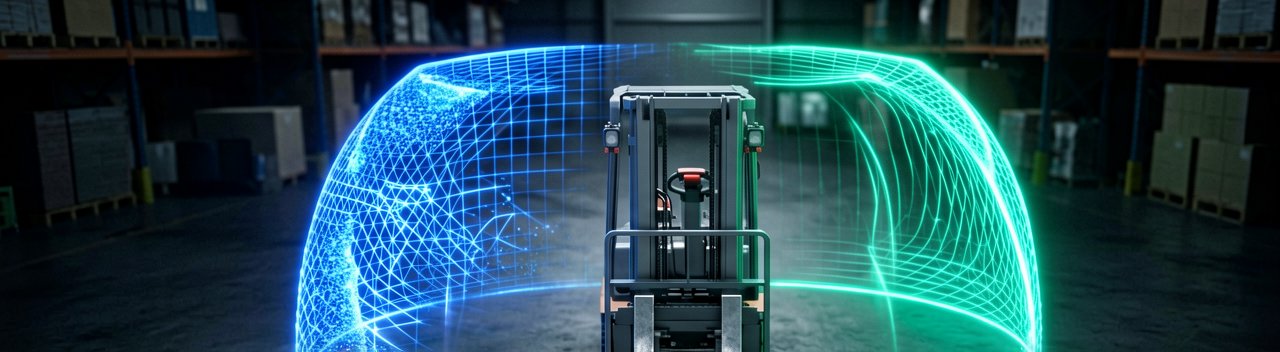
One of the biggest hurdles for robots in a warehouse isn't the work itself, but the human coworkers. Traditional AGVs often freeze up in the face of unpredictable manual forklift traffic. VisionNav’s new system tackles this with a dedicated protection module that identifies manual forklift forks in three distinct scenarios—even when they're left flat on the ground. As noted by Automation.com , the system can spot obstacles as small as 4x4 inches, ensuring the robot doesn't trip over the equipment of its human counterparts.
The tech under the hood is a sophisticated "sensor fusion" cocktail. By combining 3D LiDAR with vision-based perception, the VNE40-66 creates a dynamic safety envelope that adjusts in real time. If the robot is taking a sharp corner or carrying a particularly wide load, its internal braking zones reconfigure automatically. It’s a context-aware approach that moves away from static safety margins, making it much more viable for the frantic pace of a modern manufacturing hub.
Built-In Resilience and Smart Recovery
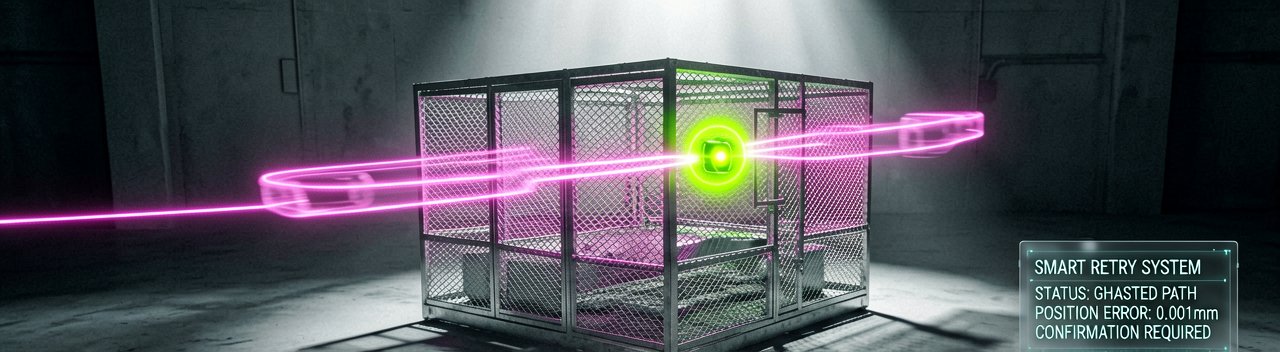
Perhaps the most "human-like" feature of the new system is what VisionNav calls Smart Retry Functionality. In the past, if an autonomous vehicle encountered a slightly misaligned cage or an uneven post, it would simply stop and wait for a human supervisor to fix the problem. The VNE40-66 is a bit more proactive; it monitors for these anomalies in real time and can abort and retry a placement autonomously. Reporting from Warehouse Automation & Robotics highlights how this autonomy reduces downtime and prevents the "cascading bottlenecks" that often plague less sophisticated robotic fleets.
With its headquarters in Atlanta and a global footprint, VisionNav is clearly positioning this launch as a cornerstone of its "full-stack" material handling strategy. By solving the "heavy and wide" problem, they aren't just moving boxes—they're proving that even the most demanding corners of a factory can finally let go of the steering wheel. For plant managers tired of the risks associated with manual high-altitude stacking, the VNE40-66 might just be the heavyweight champion they’ve been waiting for.
The Real-World Stress Test: While the glossy press releases focus on the "what," seasoned floor managers are asking "how long until it breaks?" The jump from standard pallet automation to 6,000-pound cage stacking isn't just a matter of bigger motors; it’s a physics problem. In the automotive sector, where a single minute of downtime can cost tens of thousands of dollars, the VNE40-66 represents a shift from "experimental" automation to "industrial-grade" reliability. Historical attempts at this scale often failed because sensors couldn't distinguish between a structural beam and a slightly bent container leg.
What sets this iteration apart is the focus on the "unstructured" environment. Most warehouses are neat on paper but chaotic in practice. Containers get dinged, floors are rarely perfectly level, and lighting fluctuates. By leaning on vision-based perception rather than just pre-mapped LiDAR, VisionNav is betting on a system that perceives its surroundings more like a human operator—spotting the subtle tilt of a stack before it becomes a hazard. This "spatial intuition" is what allowed the system to graduate from controlled pilots to the high-density "Body In White" lines where space is at a premium.
The Stakeholder Shift: From Fear to Facilitation
There is an undeniable tension whenever a machine this capable enters the floor. However, the narrative in heavy manufacturing is shifting from "job replacement" to "injury prevention." Stacking three-ton cages 22 feet in the air is one of the most high-risk maneuvers a manual forklift driver can perform. By automating the "Three Ds"—tasks that are Dull, Dirty, and Dangerous—companies are finding they can retain veteran staff for higher-level fleet management roles while letting the VNE40-66 handle the nerve-wracking high-altitude work.
Industry insiders are also eyeing the data-harvesting potential. Unlike a manual forklift, every lift and "smart retry" by this autonomous system is logged. This creates a digital twin of the warehouse flow that was previously invisible. If the robot consistently struggles with a specific stack, it flags a structural issue or a localized floor subsidence long before a human would notice. It’s this predictive layer that transforms a simple piece of heavy machinery into a diagnostic tool for the entire facility's health.
Ultimately, the VNE40-66 is a bellwether for the "full-stack" warehouse. We are moving past the era of isolated robotic islands. As these systems become more adept at navigating around their human counterparts and correcting their own errors, the friction between manual and automated workflows begins to evaporate. For the heavy-duty sector, the era of the "smart" forklift has finally caught up to the massive scale of its cargo.
The Skeptic’s Lens: For all the talk of "seamless integration," the arrival of the VNE40-66 serves as a stark reminder that our warehouses are becoming increasingly hostile to the very humans they were built for. There is a fundamental contradiction in VisionNav’s pitch: the system is lauded for its ability to navigate around "unpredictable" human traffic, yet the more we optimize for millimeter-precise robotic stacking, the less room there is for human error—or even human presence. We are effectively designing "lights-out" capabilities into facilities that are still technically "lights-on," creating a hybrid tension that few managers are truly prepared to navigate.
Furthermore, the reliance on "Smart Retry" logic is a double-edged sword. While VisionNav frames it as a breakthrough in resilience, a cynical observer might see it as an admission of the inherent fragility of autonomous vision in high-density environments. If a robot has to "try again," it isn’t being efficient; it’s compensating for the fact that the physical world is messier than its algorithms prefer. In a just-in-time manufacturing sequence, a "smart retry" is still a delay. The industry’s true test won’t be how many containers these robots can stack in a vacuum, but how the total throughput holds up when three robots are simultaneously performing "retries" because a pallet of parts was dropped two inches off-center by a tired human driver.
The Hidden Cost of High-Altitude Precision
There is also the matter of infrastructure fatigue. Stacking 6,000-pound cages 22 feet high puts immense localized pressure on warehouse flooring. While the VNE40-66 is a marvel of sensor fusion, it cannot fix a cracking concrete slab or a shifting foundation. Companies rushing to automate may find that their "labor savings" are quickly eaten by the maintenance costs of upgrading floors to meet the rigorous tolerances required by high-precision autonomous masts. Automation doesn't just replace a driver; it demands a more expensive, more disciplined environment.
Projecting forward, the success of this system will likely trigger an arms race in container standardization. For the VNE40-66 to truly shine, the "Body In White" cages it carries must remain within strict structural tolerances. This could lead to a paradoxical situation where companies spend millions on robots to handle "diverse" cargo, only to realize they must then spend millions more replacing their entire fleet of "diverse" containers with perfectly uniform, robot-friendly versions. The road to autonomy is often paved with the very manual costs it promises to eliminate.
"We’ve finally reached the point where robots can stack three tons of steel with the delicacy of a watchmaker, which is great news for the cargo—but it does leave one wondering if the human operators are being kept around mainly to apologize to the machines when the floor isn't level enough for their liking."
Artūras Malašauskas is an AI Systems Integrator with 20+ years of production-grade web engineering experience. He has designed, shipped, and scaled enterprise Python/PHP systems for logistics, SaaS, and public-sector clients. For the past year, he has focused exclusively on AI integrations: deploying open-source LLMs, building generative media pipelines (image, audio, video), and engineering multi-agent workflows for real production environments. His standard: reproducibility, security, cost-efficient inference—no vaporware. He documents and evaluates emerging AI tooling, separating verified capabilities from marketing noise. Technical editor at: muza-ai.eu, ai-verslas.lt, ai-naujinos.lt Connect on LinkedIn
Comments