The Pragmatist’s Manifesto: Kai-Fu Lee on the Great AI Divide

If you’ve spent any time tracking the trajectory of artificial intelligence, you know the "open versus closed" debate is often framed as a religious war. On one side, the high-priests of proprietary models—think OpenAI and Google—argue that massive compute and closed ecosystems are the only way to ensure safety and maintain a competitive edge. On the other, the open-source evangelists claim that democratization is the only way to prevent a digital oligarchy. But when you sit down with Kai-Fu Lee, the CEO of 01.AI and a man who has lived several lifetimes across both Silicon Valley and Beijing, the conversation shifts from ideology to cold, hard pragmatism.
The Android vs. iPhone Moment
Lee doesn't see a winner-take-all scenario. Instead, he points to a historical precedent we all carry in our pockets: the smartphone market. In a recent discussion, Lee suggested that the AI landscape is destined to mirror the Capgemini dynamic between iPhone and Android. Proprietary "closed" models will likely capture the high-margin, premium enterprise segments—much like Apple dominates profit share. Meanwhile, "open" models will provide the massive global footprint, fueling adoption in emerging markets where the high costs of American proprietary stacks simply don't scale.
It’s a refreshing take because it acknowledges that "better" is subjective. If you're a Fortune 500 company with a massive budget and a need for a "turnkey" solution, the reliability of a closed model makes sense. But if you’re a developer in Jakarta or Nairobi, or a startup in Shenzhen trying to squeeze maximum performance out of limited hardware, open source isn't just a preference; it’s a necessity.
Efficiency Over Excess
One of the most striking points Lee makes is about the sheer economics of training. While American giants are pouring billions into compute to chase the next decimal point of accuracy, Lee’s firm, 01.AI, has been proving that you can do more with less. He notes that Chinese companies are often spending AI Base less than 10% of what their U.S. counterparts spend, yet they are producing models that reach 90-95% of the capability.
This isn't just about being frugal; it’s about "extreme engineering." When you’re faced with chip sanctions and resource constraints, you stop trying to build a bigger engine and start figuring out how to make the car more aerodynamic. This lean approach is naturally symbiotic with the open-source world, where efficiency is the primary currency.
The Middle Path to Sovereignty
For nations outside the U.S. and China, the "open vs. closed" choice is actually a question of "AI Sovereignty." Lee argues that many countries make the mistake of thinking they have to build a foundation model from scratch to be independent. He calls this a Capgemini consequential error. Building from zero is a fool's errand for most.
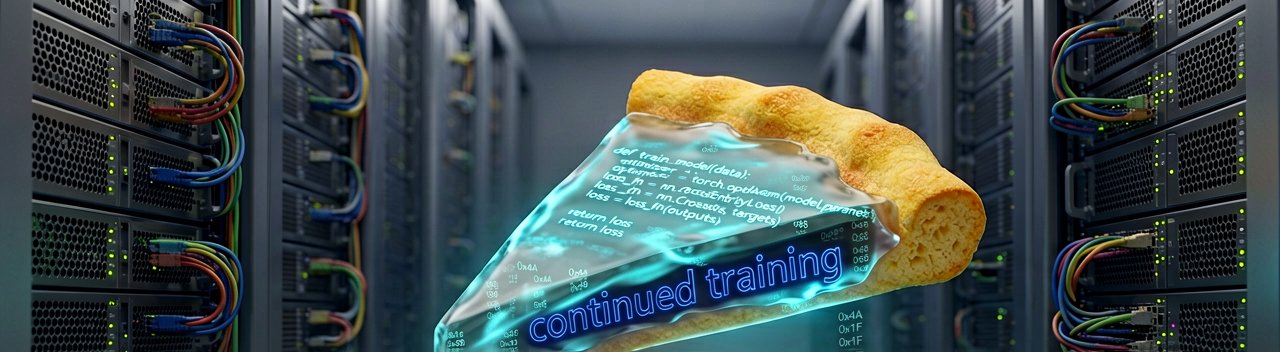
The "middle path" he proposes involves taking a high-quality open-source model—like Meta's Llama—and performing "continued training" rather than just simple fine-tuning. He uses the analogy of buying a frozen pizza: you don't need to build the oven or mill the flour, you just add your own local ingredients and bake it to your specific cultural and regulatory taste. This allows countries to maintain control over their data and values without the multibillion-dollar price tag.
Ultimately, Lee’s vision is one of coexistence. Closed models will push the absolute frontier of what’s possible, acting as the high-end R&D labs of the world. Open models will act as the "operating system" for everyone else, ensuring that the AI revolution doesn't leave the rest of the planet behind. It’s not about which side wins; it’s about how they both define the boundaries of our new reality.
Which side of the "pizza" analogy do you think will define the next decade of AI: the "frozen" base of open models or the "chef-prepared" proprietary experience?
What Most Reports Miss: While the mainstream media fixates on the "AI arms race" as a binary struggle for power, the real story lies in the fragmentation of the hardware layer and how it dictates software philosophy. To understand Kai-Fu Lee’s stance, you have to look at the "Compute Tax." Every time a developer uses a closed-source API, they are paying a premium for the convenience of not managing infrastructure. Lee’s push for high-efficiency open models is, at its core, an insurgent move to break the tax code established by the Silicon Valley incumbents.
The Shadow of the GPU Sanctions
You can't discuss Lee’s preference for lean, open-friendly architectures without mentioning the elephant in the server room: export controls. When the U.S. restricted high-end NVIDIA chips, it didn't just slow down Chinese AI; it forced a radical pivot in engineering philosophy. Seasoned observers noted that while OpenAI could afford to be "wasteful" with H100 clusters to brute-force intelligence, Lee’s team at 01.AI had to treat every FLOP (floating-point operation) as a scarce resource. This scarcity birthed the Yi series of models, which often punch far above their weight class in parameter count.
This "engineering under duress" has created a fascinating byproduct. Because these models are designed to run on less-than-ideal hardware, they are inherently more portable. This makes them the darlings of the open-source community, which operates on consumer-grade GPUs or older enterprise hardware. Lee isn't just advocating for open source out of the goodness of his heart; he's betting that the world’s "mid-tier" hardware ecosystem will eventually outweigh the concentrated power of a few specialized supercomputers.
The Developer’s Dilemma
Stakeholders in the developer community often point to a "trust gap" that closed models can't bridge. If you build your entire startup on a proprietary API, you are effectively a tenant on someone else's land. We’ve seen this play out before with the "Twitter API rug-pull" of years past. Lee’s advocacy for open models resonates with founders who are terrified of "model drift"—the phenomenon where a closed model's behavior changes overnight because the provider tweaked the weights behind the scenes.
In Lee’s view, the open-source path offers "Model Insurance." By having the weights locally, a company ensures that their application won't break or become ten times more expensive because of a corporate pivot in San Francisco or Seattle. It’s the difference between renting a high-performance sports car and owning a reliable truck that you can fix yourself. For the "global majority" of developers, the truck is the better investment every single time.
The Cultural Alignment Factor
Historical context tells us that technology is never culturally neutral. Closed models often reflect the biases and safety guardrails of their creators’ home jurisdictions. Lee has been vocal about the need for models that "speak" the local context—not just in terms of language translation, but in terms of social nuances and business etiquette. Open-source models allow for a level of "surgical fine-tuning" that proprietary models simply don't permit.
When a model is open, a bank in Brazil or a government agency in Singapore can take the "base" and bake in their specific regulatory requirements without leaking sensitive data to a third-party provider. This is the "sovereign AI" Lee frequently champions. He envisions a future where the world doesn't run on one or two "God-models," but on thousands of highly specialized, locally-aligned versions of an open-source trunk. It’s a decentralized vision that contrasts sharply with the centralized "AGI-in-a-box" dream of his peers.
Does the future of AI belong to the "cathedrals" of centralized power or the "bazaars" of open-source collaboration?
Reading Between the Lines: The romanticized view of open-source AI as a grassroots liberation movement ignores a glaring contradiction: it is currently being bankrolled by the world’s largest corporations. When Kai-Fu Lee champions the "open" path, we have to ask whether we are witnessing the democratization of intelligence or merely a strategic "commodity-the-complement" play. By supporting open models, players who are behind in the frontier race—or those who want to undercut the margins of the leaders—effectively turn their rivals’ expensive R&D into a low-cost utility.
The Paradox of "Open" Safety
There is a persistent friction in Lee’s narrative regarding the safety of decentralized models. The proprietary titans argue that keeping the "secret sauce" under lock and key is the only way to prevent bad actors from removing safety guardrails. In contrast, the open-source camp argues that more eyes on the code lead to faster patching. However, the reality is likely messier. If everyone has the "frozen pizza" base Lee describes, they also have the ability to scrape off the nutritional labels. We are approaching a period where the "democratization" Lee speaks of might look less like a library and more like an uncontrolled laboratory.
Furthermore, Lee’s "Android vs. iPhone" analogy has a cynical flip side. While Android democratized mobile access, it also created a fragmented security nightmare and a race to the bottom for hardware manufacturers. If open-source AI follows this path, we may see a world flooded with "good enough" models that are riddled with hallucination vulnerabilities, while the truly "safe" and high-performance intelligence remains hidden behind the velvet ropes of expensive subscriptions.
The Sustainability Mirage
We must also apply a healthy dose of skepticism to the idea of "extreme engineering" as a permanent solution to chip scarcity. While Lee correctly identifies that Chinese firms are doing more with less, there is a physical limit to optimization. You can only make a car so aerodynamic before you simply need a more powerful engine to go faster. The "efficiency gap" might keep the lights on for now, but in the long run, the compute-heavy approach of the West acts as a compounding interest machine. If the "frontier" continues to move at its current pace, "doing more with less" might eventually just mean "falling behind more slowly."
Projecting forward, the implication of Lee’s vision is a world of "Balkanized Intelligence." Instead of a global, interconnected web of logic, we might see isolated pools of AI that reflect regional biases and political constraints, all built on the same open-source skeletons but modified beyond recognition. It’s a pragmatic future, certainly, but it’s one that trades the dream of a universal "digital mind" for a series of localized tools that don't necessarily like to talk to one another.
Ultimately, Lee’s pragmatism is his greatest strength and perhaps his most revealing trait. He isn't selling a techno-utopia; he is selling a survival strategy for a fractured world. Whether that strategy leads to a flourishing ecosystem or a series of digital walled gardens remains the trillion-dollar question that no amount of "continued training" can currently answer.
"In the end, the 'open vs. closed' debate is just a high-tech version of the classic restaurant dilemma: you can either pay the chef a fortune to keep the recipe a secret, or give the recipe to everyone and hope nobody notices that your stove is the only one that actually works."
Artūras Malašauskas is an AI Systems Integrator with 20+ years of production-grade web engineering experience. He has designed, shipped, and scaled enterprise Python/PHP systems for logistics, SaaS, and public-sector clients. For the past year, he has focused exclusively on AI integrations: deploying open-source LLMs, building generative media pipelines (image, audio, video), and engineering multi-agent workflows for real production environments. His standard: reproducibility, security, cost-efficient inference—no vaporware. He documents and evaluates emerging AI tooling, separating verified capabilities from marketing noise. Technical editor at: muza-ai.eu, ai-verslas.lt, ai-naujinos.lt Connect on LinkedIn
Comments