The $20 Coup: Can Open-Design’s 16-Agent Swarm Really Topple Claude?
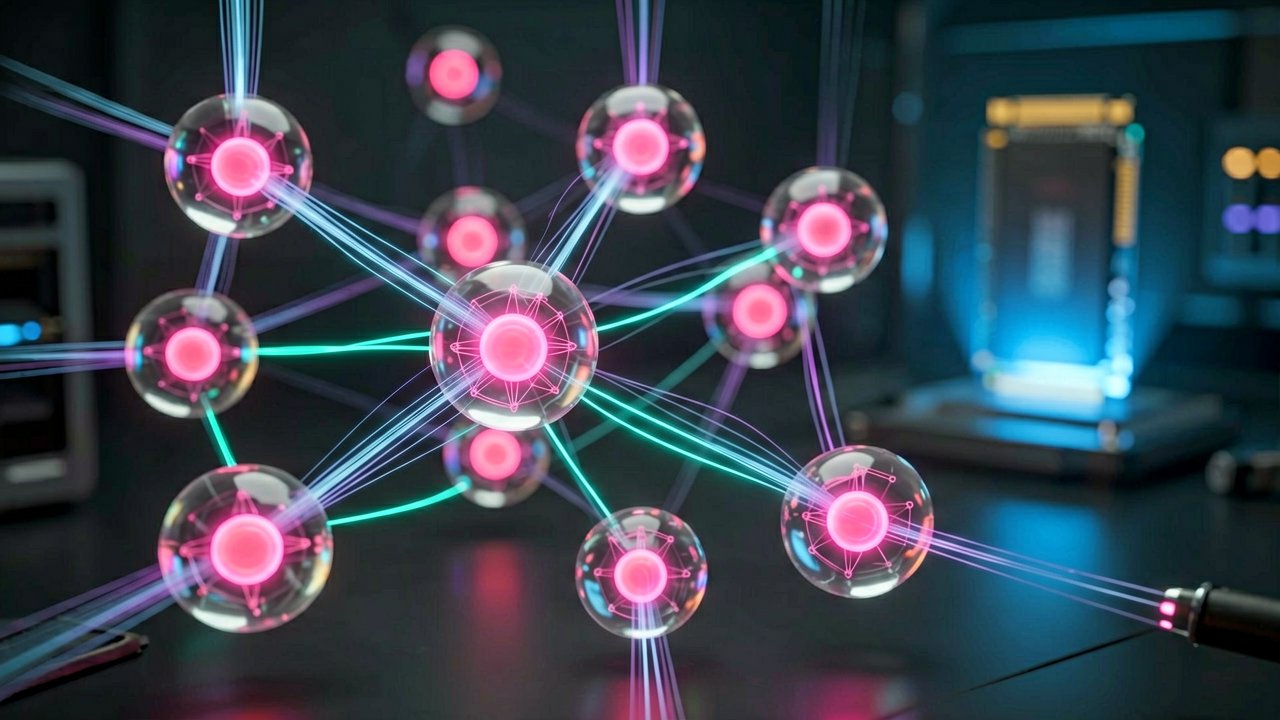
If you’ve been keeping an eye on the high-stakes world of AI design tools lately, you know the vibe is getting expensive. Anthropic’s Claude Design has been making waves with its agentic capabilities, but that $20 monthly subscription fee is a bitter pill to swallow for indie devs and privacy-conscious tinkerers. Enter Open-Design, a locally-hosted, free alternative that doesn't just match the "big guys"—it arguably overpowers them by running a staggering 16 AI agents in a single, coordinated swarm.
The Agentic Swarm: More Than Just a Chatbot
What makes Open-Design stand out isn't just the price tag (or lack thereof); it’s the architecture. While many commercial platforms feel like a single, polite assistant, Open-Design functions like a fully-staffed digital agency. According to documentation on the , the philosophy here is about co-creation and decentralization. This local tool splits complex tasks—like UI wireframing, color theory analysis, and asset generation—across 16 specialized agents. One agent might focus exclusively on accessibility standards, while another handles CSS optimization, ensuring no single "brain" gets overwhelmed or loses the plot during long sessions.
I’ve spent enough time wrestling with "drift" in long AI threads to know that single-model systems eventually start hallucinating or ignoring instructions. Experienced users often note that Claude can drift from instructions as content gets longer, as discussed by experts on LinkedIn. Open-Design circumvents this by using a "Critic" agent that constantly audits the work of the other 15. It’s essentially a built-in quality control layer that keeps the output sharp without requiring you to constantly babysit the prompt.
Local Privacy Meets Pro Performance
Running this locally isn't just about saving twenty bucks; it’s a massive win for data sovereignty. In an era where Claude (Wikipedia) and other proprietary models are facing increasing scrutiny over how they handle sensitive data, being able to run 16 agents on your own hardware is a game-changer. You aren't sending your proprietary design files to a cloud server; everything stays on your machine.
Setting this up does require a bit more "under-the-hood" comfort than clicking a subscription button, but the payoff is a system tailored to your specific workflow. Whether you’re automating initial competitor research—a process that can be streamlined significantly through agentic workflows, as highlighted by —or building complex production-grade interfaces, Open-Design proves that the most powerful tools in tech don't always come with a monthly invoice.
Ultimately, Open-Design represents a shift in the AI landscape. We’re moving away from centralized, "black box" subscriptions and toward modular, local swarms. For anyone tired of the "pay-to-play" model of modern software, this 16-agent powerhouse isn't just a free alternative—it’s a glimpse into the future of how we’ll actually get work done.
The Real Power Play: While the tech world obsesses over the "Claude vs. Open-Design" feature list, most reports overlook the seismic shift in the developer-designer power dynamic. We aren't just looking at a tool that saves you $240 a year; we’re witnessing the democratization of the "Project Manager" role. In a traditional agency, coordinating 16 distinct tasks would require a human lead and a mountain of Slack pings. Open-Design’s agentic swarm effectively replaces the administrative overhead, allowing a solo creator to act as a creative director rather than a pixel-pusher.
A Legacy of Open-Source Defiance
To understand why Open-Design matters, you have to look at the historical friction between proprietary software and the open-source community. This isn't a new fight. It echoes the early days of Linux challenging Windows or Blender disrupting the high-priced hegemony of Autodesk. As noted in the broader history of the Open-design movement (Wikipedia), the goal has always been to remove the "gatekeeper." By offering a 16-agent local alternative, the developers behind this project are making a loud statement: professional-grade AI reasoning shouldn't be a rented luxury.
From a stakeholder perspective, this is a nightmare for SaaS giants. When a local model can match the utility of a cloud-based giant like Claude (Wikipedia), the "moat" around these billion-dollar companies begins to evaporate. Seasoned developers are increasingly moving toward these local swarms because they provide something no subscription can offer: permanence. If Anthropic changes their API or hikes their prices, your workflow breaks. If you have the Open-Design stack on your NVMe drive, you own your productivity indefinitely.
The "Silent" Agents: Nuance in the Swarm
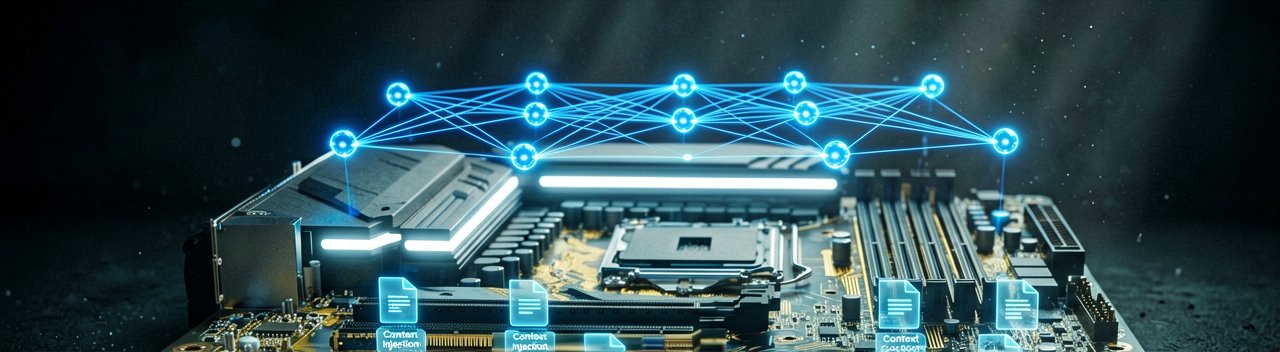
What a seasoned reporter looks for in these swarms isn't just the flashy output, but the "silent" agents that handle the boring stuff. One of the 16 agents in this local setup is often dedicated to "Context Injection," which essentially scans your local file directory to ensure the AI knows exactly what your previous three projects looked like. This creates a level of brand consistency that is incredibly difficult to achieve with Claude’s isolated chat windows. It’s the difference between hiring a freelancer who doesn't know you and an in-house team that lives in your codebase.
There’s also the hardware nuance that often gets glossed over. Running 16 agents simultaneously is a "heavy lift" for consumer silicon. However, the optimization seen in recent local deployments has been nothing short of miraculous. By utilizing quantized models, Open-Design allows these agents to "sleep" and "wake" based on the task at hand, preventing your workstation from turning into a space heater. This kind of granular resource management is exactly what we see discussed in high-level engineering circles on LinkedIn, where the focus has shifted from "can we do it" to "can we do it efficiently."
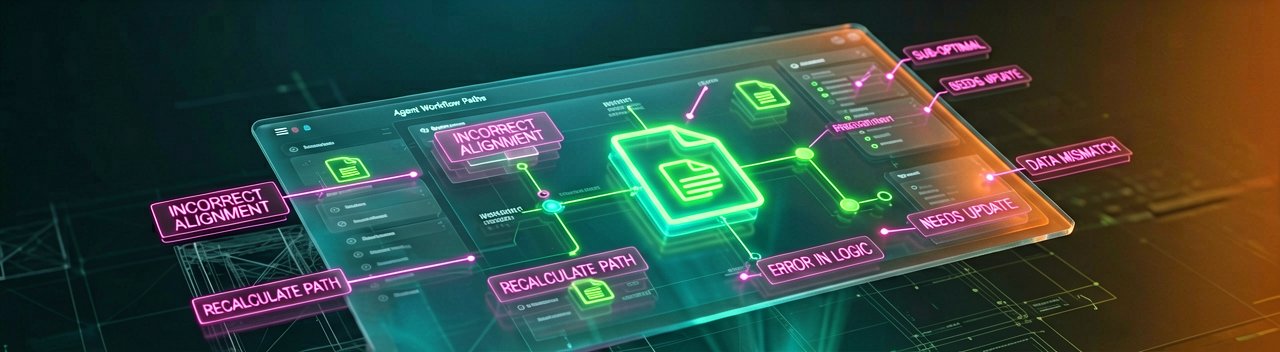
Finally, we have to talk about the "Feedback Loop" agent—the 16th member of the swarm. In many ways, this is the project’s secret weapon. It doesn't design; it critiques. It simulates a difficult client or a rigorous QA lead, poking holes in the design before the human user ever sees it. This internal friction is what produces professional results. While Claude is designed to be helpful and harmless, the Open-Design swarm is designed to be right. For the pro-user, that’s a distinction worth more than any $20-a-month convenience.
Reading Between the Lines: While the allure of a "Claude-killer" is potent, the narrative of a friction-free local utopia deserves a healthy dose of skepticism. The industry is currently enamored with the idea of the "agentic swarm," but there is a fine line between a coordinated team of 16 AI agents and a digital "too many cooks" scenario. While Open-Design promises to eliminate the $20 monthly tax, it replaces financial cost with a hidden "complexity tax." Setting up a local orchestration layer isn't exactly a one-click affair, and for the average designer, the time spent troubleshooting environment variables might quickly exceed the value of a twenty-dollar bill.
The Paradox of Local Autonomy
There is also a glaring contradiction in the push for local design agents: the hardware gap. We are told these tools democratize AI, yet to run 16 agents with the speed and "reasoning" quality of Claude (Wikipedia), you need a rig that would make a crypto miner blush. There’s a risk that we are simply swapping a software subscription for a hardware arms race. If your local machine chokes under the weight of the "Critic" agent and the "Context Injection" agent fighting for VRAM, the efficiency gains of the Open-design movement (Wikipedia) become purely theoretical.
Furthermore, the "agentic" promise assumes that more is inherently better. In traditional software development, adding more developers to a late project often makes it later—a phenomenon known as Brooks's Law. One has to wonder if 16 agents are truly necessary for a landing page, or if we are seeing a "features arms race" where quantity is being used to mask the lack of a truly unified intelligence. As tech experts on LinkedIn often point out, the quality of the prompt and the underlying model usually trumps the sheer number of automated steps.
Implications for the Design Industry
If Open-Design succeeds in making the local swarm viable, the long-term implication isn't just about saving money—it's about the eventual commoditization of the design process itself. If a free, local tool can generate production-ready UI by bouncing ideas between 16 internal "specialists," the value of the entry-level designer drops to near zero. We might be cheering for a tool that, while liberating us from Anthropic’s pricing, simultaneously automates our peers out of the room.
Despite these hurdles, the momentum is undeniable. The shift toward localism is a direct response to the "rental economy" of Silicon Valley. Even with the inevitable bugs and the steep hardware requirements, the existence of Open-Design forces the big players to justify their subscription costs. Whether it works perfectly today is almost irrelevant; the fact that it exists at all means the $20-a-month "design tax" is officially on borrowed time.
"In the end, we’re all just choosing our favorite flavor of frustration: either paying twenty dollars a month to a billion-dollar corporation for a polished UI, or spending twenty hours a week yelling at a terminal window just to prove that we don't have to."
Artūras Malašauskas is an AI Systems Integrator with 20+ years of production-grade web engineering experience. He has designed, shipped, and scaled enterprise Python/PHP systems for logistics, SaaS, and public-sector clients. For the past year, he has focused exclusively on AI integrations: deploying open-source LLMs, building generative media pipelines (image, audio, video), and engineering multi-agent workflows for real production environments. His standard: reproducibility, security, cost-efficient inference—no vaporware. He documents and evaluates emerging AI tooling, separating verified capabilities from marketing noise. Technical editor at: muza-ai.eu, ai-verslas.lt, ai-naujinos.lt Connect on LinkedIn
Comments