Faraday’s Hail Mary: YT Jia Pivots to Physical AI to Save the Future
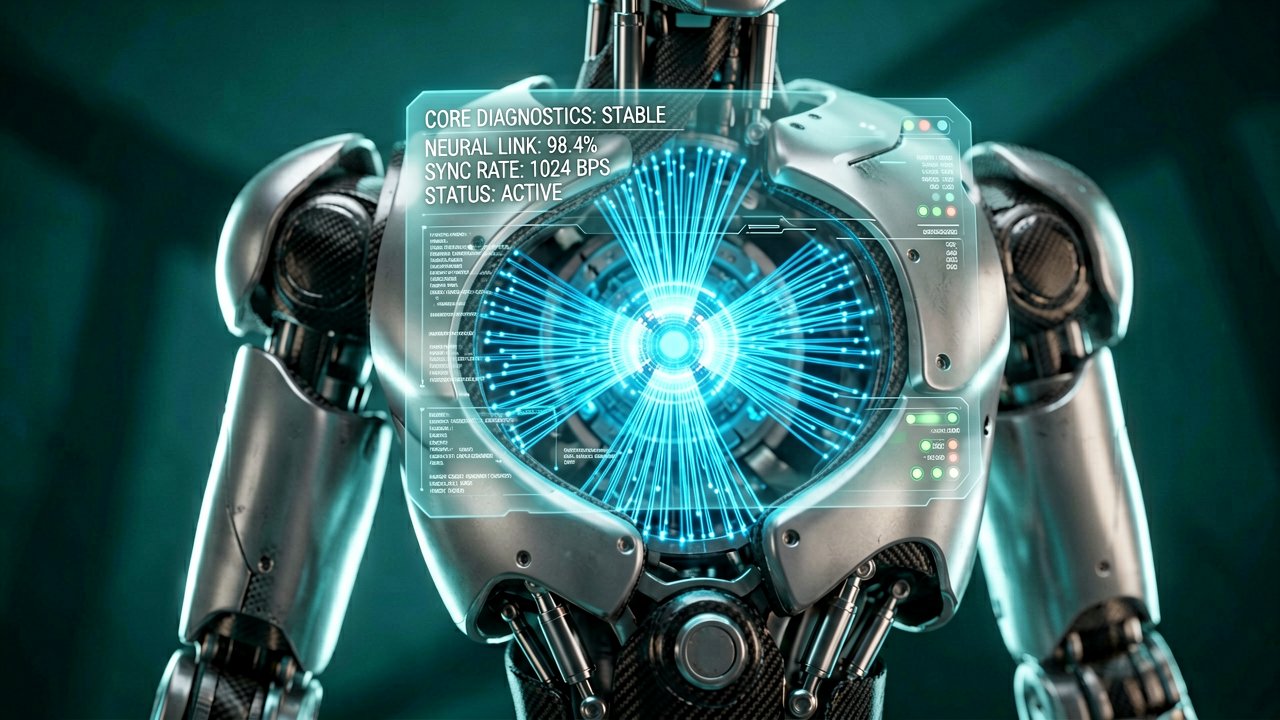
What Most Reports Miss: YT Jia’s latest investor update isn’t just a routine corporate pivot; it is a high-stakes survival maneuver designed to rebrand Faraday Future from a struggling EV boutique into a "Physical AI" powerhouse. By de-emphasizing the capital-intensive luxury car market in favor of agile, high-margin robotics, Jia is attempting to outrun a history of liquidity crises. The "Comprehensive Transformation" across strategy, finance, and technology serves as a unified front to prove that FF can finally generate sustainable cash flow—not from million-dollar cars, but from a "Three-in-One" ecosystem of devices, data, and its proprietary AI brain.
The Robotics Pivot: Solving the Cash Crunch
The centerpiece of this update is the rapid acceleration of the Embodied AI (EAI) robotics business. While the ultra-luxury FF 91 remains the brand's halo, the real volume is being shifted to humanoid and bionic robots targeting the U.S. education and enterprise sectors. Per Seeking Alpha , FF has officially raised its 2026 shipping target to 1,500 units, buoyed by 68 units already shipped as of April and a backlog of 1,200 paid pre-orders. This shift is pragmatism at its finest: robots require significantly less capital to produce than electric vehicles, allowing FF to report its first-ever positive gross margins on products this year.
A Financial Facelift: From Liquidity to Governance
Financially, Jia is moving away from the "liquidity-driven" survival mode that defined FF’s past. The company recently secured a total of $70 million in new financing over two months, which claims will fully fund the first phase of its robotics rollout through late 2026. Crucially, the strategy includes reducing reliance on highly dilutive convertible debt, a move aimed at stabilizing a stock price that has long been under pressure from market volatility and alleged illegal short selling. For the first time in years, the company reported two consecutive quarters of positive equity growth, marking a potential "clearing of the decks" after the SEC concluded its long-standing investigation without penalties.
The "AI Operating System" and the Faraday X Bridge
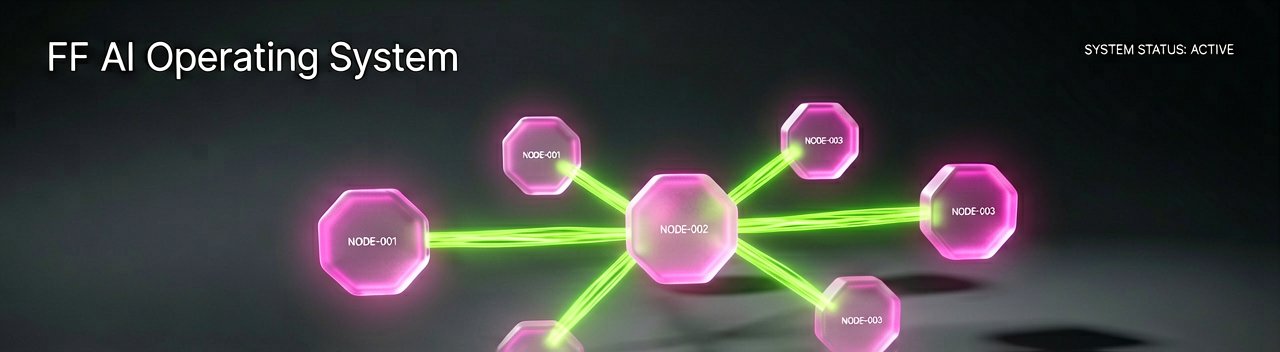
The technological transformation focuses on the FF AI Operating System, which Jia envisions as the "connective tissue" between humanoid robots and the upcoming mass-market "Faraday X" (FX) brand. The Motley Fool reports that ecosystem revenue—including software packs and AI "skills"—already accounts for 26% of FF's total revenue. This software-first approach is intended to create a "flywheel effect" where real-world data from robots improves the AI brain, which in turn enhances the autonomous capabilities of the FX Super One, FF's planned volume-market MPV. However, Jia was candid: mass production of the FX Super One is strictly contingent on securing further long-term strategic funding.
Cultural Reconstruction and Stakeholder Alignment
Perhaps the most human element of this transformation is the internal cultural overhaul. Jia is implementing a "Stockholder First" incentive scheme to align executive rewards directly with share performance. This is paired with an aggressive legal stance against market manipulation, signaling a CEO who is tired of being defensive. By relocating the headquarters to El Segundo’s Silicon Beach, Jia is clearly fishing for a new caliber of AI talent to fuel this "Physical AI" identity. For investors, the message is clear: the old Faraday Future is being dismantled to make room for a faster, leaner, and more tech-centric entity.
Reading Between the Lines: While the pivot to "Physical AI" and robotics sounds like a masterclass in modern corporate agility, seasoned observers know that Faraday Future has a long history of selling the future to pay for the present. On paper, trading the capital-intensive nightmare of luxury EV manufacturing for the high-margin world of robotics is a stroke of genius. However, skepticism remains high: Is this a genuine technological evolution, or a convenient pivot born from the reality that mass-producing the FF 91 is simply no longer financially viable?
The Hardware Paradox
The decision to lean into the Faraday X (FX) brand and humanoid bionics highlights a glaring contradiction in FF’s legacy. For years, the company staked its reputation on being the "Ultrain-Luxury" alternative to Tesla, yet the new strategy effectively puts the halo car on the back burner. By chasing the mass market with the FX Super One, FF is entering a price-war territory—dominated by giants like BYD and Tesla—where they lack the manufacturing scale to compete. The "Physical AI" rebranding might just be a sophisticated way to pivot away from the car business without admitting the original dream was unsustainable.
The "AI Operating System" Gamble
Jia’s reliance on the FF AI Operating System as a revenue driver assumes that the company can out-innovate established tech titans in the software space. While 26% of revenue coming from the ecosystem is an impressive statistic, much of that is currently derived from a very small pool of early adopters. To maintain this momentum, FF must prove that its "AI skills" provide tangible value over open-source or Big Tech alternatives. There is a fine line between an integrated ecosystem and a "walled garden" that nobody wants to enter, and FF’s survival depends on staying on the right side of that line.

The Capital Tightrope
Even with $70 million in new funding, the "Comprehensive Transformation" is a remarkably expensive undertaking. The company’s history of "liquidity-driven" management means that every missed milestone carries an existential threat. Jia’s move to curb illegal short selling and align executive incentives is a necessary step for market confidence, but it doesn't change the underlying math: robotics and mass-market EVs require billions, not millions, in long-term capital. The project's success hinges on whether this "Physical AI" narrative can convince deep-pocketed strategic investors that FF is finally a tech company, not just a car company that ran out of gas.
"In the world of EV startups, Faraday Future is the ultimate cat with nine lives; it has spent eight of them pivoting, but if they actually manage to make a robot that can find a path to profitability, they might just survive long enough to see the ninth."
Artūras Malašauskas is an AI Systems Integrator with 20+ years of production-grade web engineering experience. He has designed, shipped, and scaled enterprise Python/PHP systems for logistics, SaaS, and public-sector clients. For the past year, he has focused exclusively on AI integrations: deploying open-source LLMs, building generative media pipelines (image, audio, video), and engineering multi-agent workflows for real production environments. His standard: reproducibility, security, cost-efficient inference—no vaporware. He documents and evaluates emerging AI tooling, separating verified capabilities from marketing noise. Technical editor at: muza-ai.eu, ai-verslas.lt, ai-naujinos.lt Connect on LinkedIn
Comments