The Edge of Reason: CSIRO’s Vetra Gives Robots a Local Nervous System
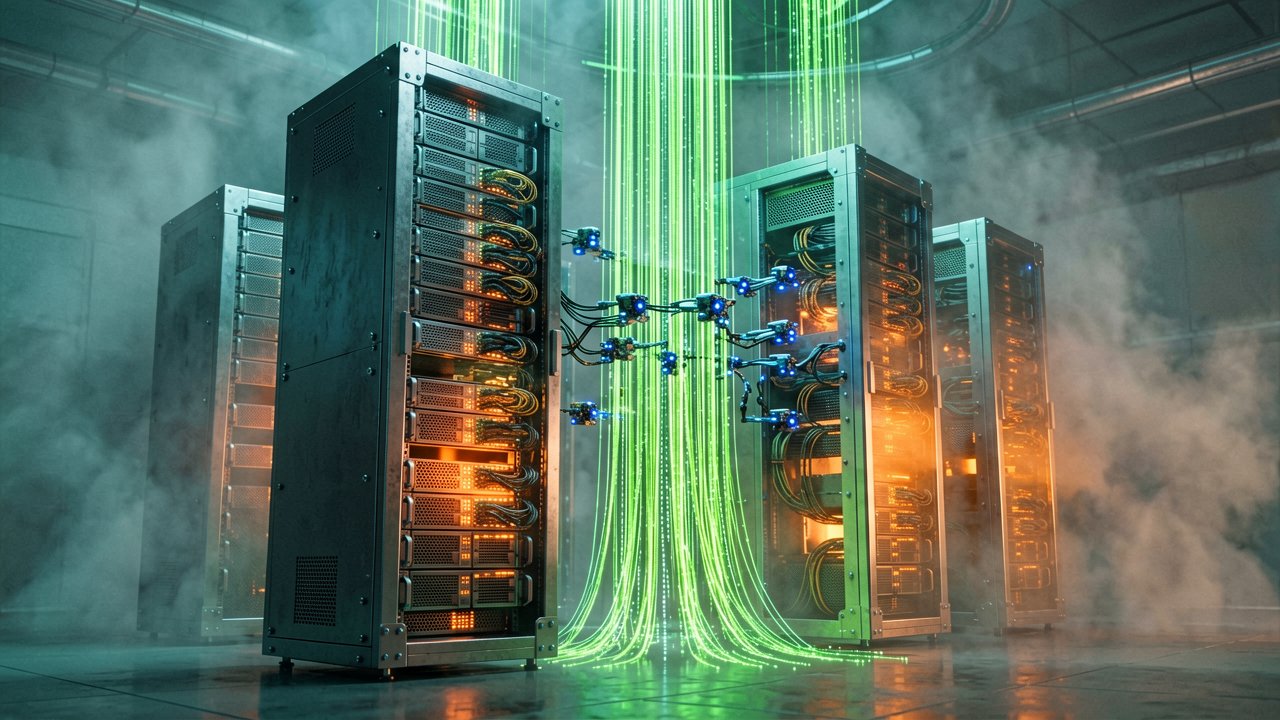
In the world of robotics, "real time" has always been a bit of a polite fiction. Most machines today don’t actually learn on the fly; they execute pre-baked routines or wait for a distant cloud server to tell them what a pixel means. But Australia’s national science agency, CSIRO, is looking to kill that lag for good. On Monday, the agency unveiled Vetra, a new AI infrastructure hub designed to give robots the kind of localized "brainpower" they need to make split-second decisions without phoning home.
Located at the Queensland Centre for Advanced Technologies (QCAT) in Pullenvale, Vetra isn't your typical sprawling data center. It’s compact, modular, and—crucially—sits right next to the dirt and grease of real-world testing. By moving high-performance AI processing to the "edge," CSIRO is essentially giving its robots a nervous system that works at the speed of reality. As reported by the Kyabram Free Press, this setup allows machines to make judgment calls within fractions of a second, which is a massive deal when you’re navigating an unstable mine site or a storm-damaged solar farm.
Closing the "Sim-to-Real" Gap
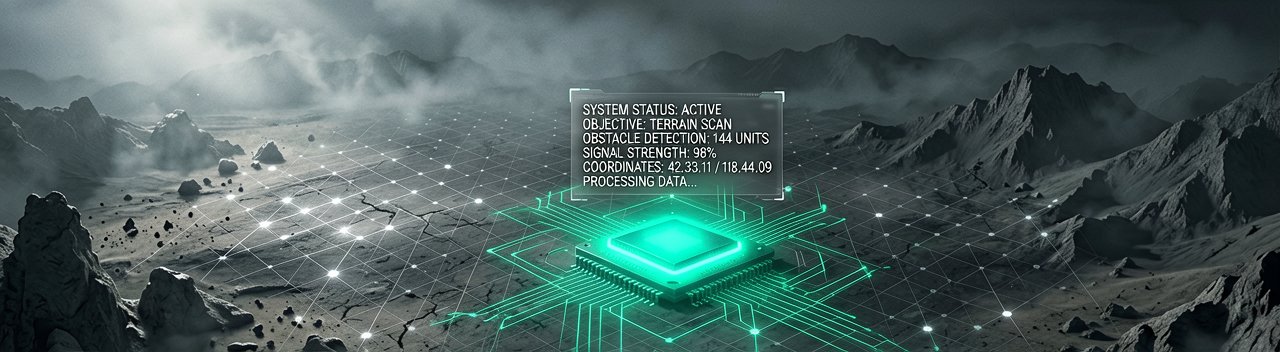
The tech industry loves to talk about the "sim-to-real" gap—the frustrating difference between how a robot performs in a clean computer simulation versus a muddy trench. Historically, cloud-based AI has been the bottleneck. If a robot has to wait for a server in another time zone to process 3D mapping data, it’s going to hit a wall—literally. Vetra changes the math by keeping that data on Australian soil and, more importantly, on-site. It’s about "fast, trusted computing" where the data is actually born, a necessity for safety-critical applications where a three-second delay is an eternity.
This isn't just about speed, though; it’s about evolution. CSIRO’s vision involves robots that don't just follow instructions but actually learn from their environment as they move through it. Think of it as a "flywheel" effect: the robot encounters a new obstacle, processes the data locally via Vetra, adapts its behavior, and gets better in real time. This kind of "object intelligence" is what allows platforms like the to pick up items it has never seen before, mimicking the intuitive grasping of a human infant.
Australia’s Sovereign AI Play
There’s a geopolitical layer to this, too. While tech giants like Amazon and Microsoft are pouring billions into massive Australian data centers, CSIRO’s Vetra is a more surgical, sovereign play. It ensures that the cutting-edge learning happening in our mines, oceans, and labs stays on local infrastructure. For industries like defense or sensitive infrastructure maintenance—where CSIRO Research is already using autonomous bots to inspect solar farms—keeping that intelligence loop local is a matter of both speed and security.
Ultimately, Vetra represents a shift in how we think about "smart" machines. We’re moving away from robots that are tethered to the digital world and toward machines that truly inhabit the physical one. By embedding AI infrastructure directly into the research environment, CSIRO isn't just building faster robots; they're building a future where machines can finally keep up with the messiness of the real world. If the goal is to make AI "quietly human," as some industry experts suggest, Vetra is the localized engine that might finally make it happen.
The Quiet Revolution at QCAT: While the glossy press releases focus on the "what," the real story lies in the "where" and the "why." This isn't just about sticking a faster processor in a box; it’s about a fundamental shift in how Australia plans to compete in the global robotics race. For years, the bottleneck hasn't been the mechanical limbs of the robots themselves, but the invisible tether connecting them to the cloud. By the time a signal travels from a remote Pilbara mine to a server farm and back, the environment has already changed. Vetra is the decisive move to cut that cord, effectively moving the "brain" into the robot's backpack.
Historical context is key here. CSIRO has a long, storied history with autonomous systems—remember, these are the folks who took home silver in the DARPA SubT Challenge. They’ve spent decades watching robots stumble because the "intelligence" was too far away. Stakeholders within the agency have hinted that Vetra was born out of frustration with off-the-shelf cloud solutions that simply couldn't handle the "dirty" data generated in extreme environments. When you’re dealing with dust, heat, and electromagnetic interference, a standard AWS instance doesn't always cut it.
A Shift in Technical Philosophy
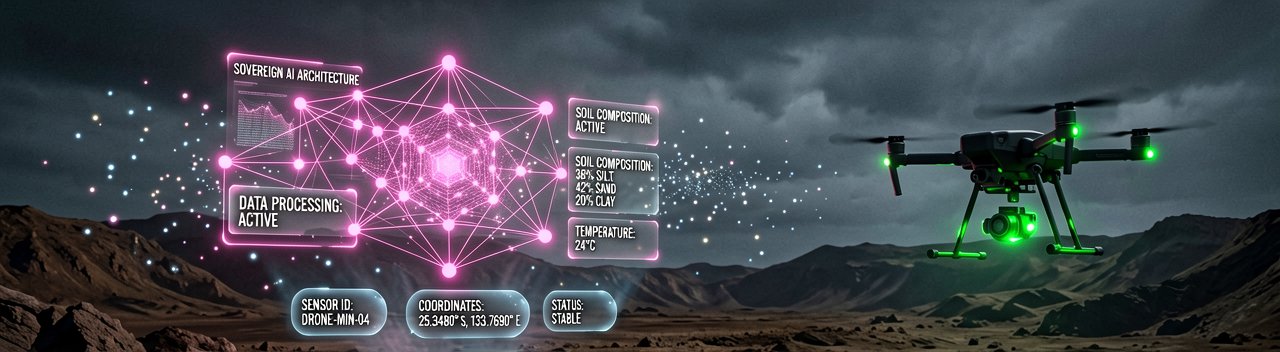
What a seasoned observer will notice is that Vetra prioritizes "low-latency inference" over sheer raw storage. Most AI infrastructure is built to store massive amounts of static data; Vetra is built to process a firehose of live sensor data. It’s a specialized architecture that favors the frantic, high-speed calculations needed for computer vision and tactile feedback. This pivot suggests that CSIRO is no longer content with machines that just "see"—they want machines that "understand" the physical consequences of their next move before they make it.
There is also the human element to consider. Engineers on the ground at Pullenvale aren't just looking at the tech; they're looking at the workflow. In the past, a researcher might spend weeks tuning a model in a lab, only to have it fail the moment it hit the field. With Vetra, the "lab" and the "field" are merging. This "live-loop" training means a developer can tweak a robot’s navigation algorithm in the morning and see the machine learn from its mistakes by lunch. It’s a pedagogical shift in robotics—treating the machine more like a student and less like a programmed tool.
The Sovereignty Question
Finally, we have to talk about the "S" word: Sovereignty. In the current geopolitical climate, data is the new oil, and AI models are the new refineries. By building Vetra, Australia is staking a claim on its own intellectual property. If an Australian mining company develops a revolutionary way for a drone to map a cave, they don't necessarily want that training data being processed—and potentially mirrored—on servers owned by a foreign tech giant. Vetra provides a "safe harbor" for Australian innovation, ensuring that the "lessons" learned by our robots stay within our borders.
This localized approach also solves a massive logistical headache: bandwidth. In remote Australia, you can't always count on a 5G connection, let alone fiber. By processing data on-site, CSIRO is making robotics viable in the "black spots" of the map. It’s a pragmatic, gritty solution to a uniquely Australian problem, proving once again that some of the best tech isn't built in Silicon Valley, but in the places where the rubber—or the tread—actually meets the road.
The Reality Check: For all the talk of "sovereign brains" and "learning in the wild," we have to ask if Vetra is truly a leap forward or just a very expensive band-aid for Australia’s notoriously patchy digital infrastructure. The tech industry has a habit of rebranding "edge computing"—a concept as old as the first localized server—into something mystical. While CSIRO is pitching this as a revolutionary hub, the cynical take is that we are simply building high-tech islands because our national "ocean" of connectivity is still too shallow to support real-time cloud robotics at scale.
There is also a fascinating contradiction in the "learning in real time" narrative. In a controlled lab environment, a robot learning from its mistakes is a breakthrough; in a deep-shaft mine or a high-voltage solar farm, a robot "experimenting" with its environment is a massive liability. The insurance industry, which generally prefers its machines to be boringly predictable, may have a very different view of "on-the-fly adaptation" than the researchers at Pullenvale. Bridging the gap between a robot that is smart enough to learn and one that is safe enough to trust remains the industry’s most awkward hurdle.
The Maintenance Trap
Furthermore, the move toward localized AI infrastructure introduces a new flavor of technical debt. Cloud giants like Amazon and Google spend billions ensuring their servers don't melt down; by shifting that burden to modular hubs like Vetra, CSIRO and its partners are now in the business of hardware maintenance in some of the harshest climates on Earth. It’s one thing to run a neural network in an air-conditioned data center in Sydney; it’s quite another to keep that same "brain" alive when it’s covered in red dust and baking in 45-degree heat.
The success of Vetra will ultimately be measured not by how many robots it trains, but by how many it manages to graduate into the real world without a human handler standing five feet away with a kill switch. If Vetra ends up being a sandbox where robots learn to navigate Pullenvale but still fail in the Pilbara, it will just be another entry in the long history of "almost-there" Australian innovation. The tech is impressive, sure, but in the world of robotics, the distance between "impressive" and "indispensable" is usually measured in several thousand lines of crash-prone code.
We should also keep an eye on the "sovereignty" play. While keeping data on-shore sounds great for national security, it risks isolating Australian robotics from the global AI ecosystem. If our machines are learning on a specialized, localized stack, will they still be compatible with the global standards being hammered out in San Francisco and Beijing? There’s a fine line between a "sovereign advantage" and a "geographic silo." CSIRO is betting that being the biggest fish in the Australian pond is better than being a small fish in the global cloud, but only time—and a few hundred autonomous hours—will tell if that bet pays off.
"We’ve finally given robots the ability to think for themselves in the middle of nowhere; now we just have to hope they don't use that newfound intellect to realize that working in a dusty mine for twenty hours a day is actually a pretty raw deal."
Artūras Malašauskas is an AI Systems Integrator with 20+ years of production-grade web engineering experience. He has designed, shipped, and scaled enterprise Python/PHP systems for logistics, SaaS, and public-sector clients. For the past year, he has focused exclusively on AI integrations: deploying open-source LLMs, building generative media pipelines (image, audio, video), and engineering multi-agent workflows for real production environments. His standard: reproducibility, security, cost-efficient inference—no vaporware. He documents and evaluates emerging AI tooling, separating verified capabilities from marketing noise. Technical editor at: muza-ai.eu, ai-verslas.lt, ai-naujinos.lt Connect on LinkedIn
Comments