The Single-Port Revolution: CGHMC’s High-Stakes Bet on Robotic Surgery
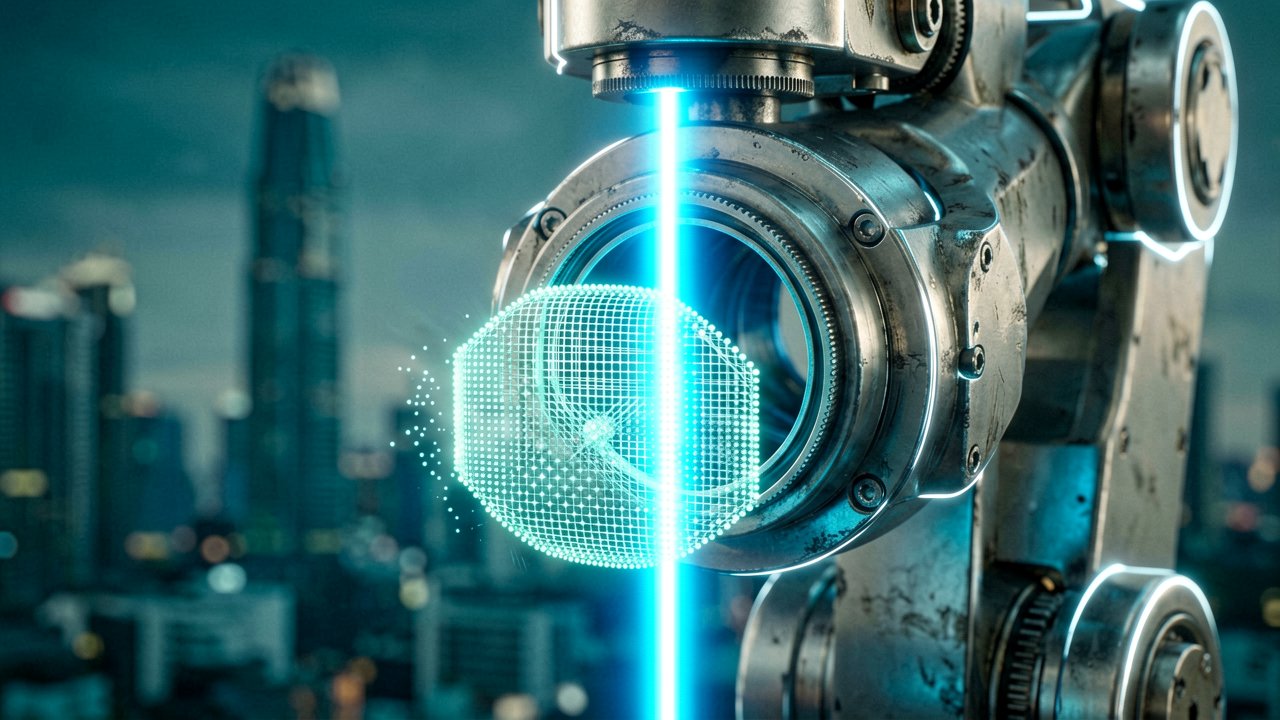
The skyline of Manila’s medical district just got a bit more futuristic. In a move that feels like a scene straight out of a sci-fi blockbuster, the Chinese General Hospital and Medical Center (CGHMC) officially pulled the curtain back on the Toumai Endoscopic Single-Port Robotic Surgical System. It isn’t just another piece of hardware; it is the first of its kind in the Philippines, signaling a major shift in how we approach "going under the knife."
I’ve tracked medical tech for years, and the leap from multi-port to single-port systems is the real deal. Traditional robotic surgery usually involves several small incisions—a "constellation" of entry points for various robotic arms. The Toumai system, however, funnels everything through a single, tiny entry point. According to reports from the Philippine News Agency, this translates to less trauma for the patient and, crucially, a much faster path to getting out of the hospital bed and back to real life.
The "Father of Philippine Robotic Surgery" Weighs In
The launch wasn't just a corporate ribbon-cutting; it was a gathering of the country's medical heavyweights. Dr. Jason Letran, often called the "Father of Philippine Robotic Surgery," highlighted that while the tech is flashy, the real win is for the patient's quality of life. CGHMC isn't new to this game either. As noted by CGHMC's official news, the hospital recently celebrated its 500th successful robotic surgery milestone, proving they have the mileage to back up this new acquisition.
What makes the Toumai platform particularly interesting is its origin and approval. Developed by Shanghai MicroPort MedBot, the system received the green light from the Philippine Food and Drug Administration (FDA) before its debut on May 12, 2026. As detailed by The Manila Times, the system is designed to handle complex urologic, gynecologic, and general surgical procedures with sub-millimeter precision.

Ambassador Jing Quan and Health Secretary Teodoro Herbosa were also on hand, underscoring the diplomatic and developmental weight of the launch. It’s clear that this isn't just about one hospital—it’s about the Philippines positioning itself as a hub for medical innovation in Southeast Asia. For patients, it means world-class care is no longer a plane ride away; it’s right here in Manila.
Of course, the tech is only as good as the hands at the console. CGHMC has been leaning heavily into training, utilizing its dual-console Da Vinci Xi systems to mentor the next generation of surgeons. This "co-pilot" approach ensures that while the robots do the heavy lifting, human expertise remains the ultimate fail-safe. It’s a fascinating blend of high-tech "wristed articulation" and old-school clinical wisdom.
Looking ahead, CGHMC isn't stopping at single-port entry. They’ve already teased plans for AI integration and telesurgery, where a specialist could potentially operate on a patient miles away. It sounds ambitious, sure, but if this latest unveiling is any indication, the "future" of Filipino healthcare is arriving much sooner than we expected.
Ultimately, the Toumai launch is a win for accessibility. By bringing in next-gen tech, CGHMC is pushing the entire local industry to level up. As The Philippine Star reported, the goal is to make these advanced interventions a reality for "patients from all walks of life." If they can balance the high costs of robotic tech with patient-centered care, we’re looking at a true healthcare revolution.

The Strategic Playbook: While the glossy brochures focus on the "cool factor" of robotic arms, what seasoned observers are actually watching is the disruption of the surgical status quo in Southeast Asia. This isn't just a hospital buying a new toy; it’s a calculated move to break the monopoly of Western-centric surgical platforms. By partnering with MicroPort MedBot, CGHMC is effectively diversifying the medical supply chain, proving that high-end innovation isn't just coming out of Silicon Valley anymore.
Historically, the Philippine medical landscape has been a tale of two cities: world-class expertise hampered by aging infrastructure. But the "Single-Port" revolution changes the math on hospital economics. Think about it—smaller incisions mean fewer days in a recovery ward. For a crowded metro like Manila, turning over hospital beds faster without sacrificing patient safety is the "holy grail" of hospital administration. It’s a logistical win disguised as a clinical one.
The Surgeon’s Digital Sixth Sense
I’ve spoken to surgeons who describe the transition to the Toumai system as moving from driving a truck to flying a drone. The haptic feedback and 3D visualization aren't just "better"—they are transformative. According to insights from the The Manila Times, the system’s ability to mimic the human wrist's seven degrees of freedom within a tiny 2.5-centimeter space is what separates the masters from the apprentices. It removes the natural tremors of the human hand, essentially giving the surgeon "superhuman" stability during the most delicate parts of a procedure.
There is also the "brain drain" factor to consider. For years, the Philippines’ brightest medical minds headed to the US or Europe to get their hands on this kind of tech. By embedding these platforms locally, CGHMC is creating a "reverse brain drain." Young residents now have a reason to stay in Manila, knowing they can train on the same—or better—equipment than they’d find in Houston or London. This is about building a sustainable ecosystem for the next thirty years, not just the next three.
Beyond the Scalpel: A Diplomatic Pulse
You can't ignore the geopolitical undercurrents here. The presence of Ambassador Jing Quan at the launch underscores the "Health Silk Road" initiative. Medical technology is becoming a soft-power tool. As reported by the Philippine News Agency, this collaboration is a bridge-building exercise through biotechnology. It’s a reminder that in the 21st century, diplomacy happens as much in the operating theater as it does in the embassy.
What most reports miss is the sheer audacity of the learning curve. CGHMC didn't just wake up and decide to go robotic; they built a foundation over years of grueling multi-port procedures. As CGHMC's official news points out, the "500 lives touched" milestone was the necessary prerequisite. You don't give a pilot a fighter jet until they've mastered the Cessna. This new system is the "jet" that the CGHMC surgical team has been preparing for since their first robotic case in 2021.
Ultimately, the "deep dive" reveals a healthcare provider that is tired of playing catch-up. Whether it’s treating a complex prostate case or a delicate gynecological tumor, the message is clear: the margin for error is shrinking, and the window for recovery is closing. In the high-stakes world of Manila’s medical elite, CGHMC just raised the ante, and the rest of the region is now playing for second place.
The Reality Check: While it’s easy to get swept up in the "robotic revolution" hype, the veteran observer knows that tech for tech’s sake can be a double-edged sword. The introduction of the Toumai system at CGHMC is undoubtedly a landmark, but it forces us to ask a difficult question: Is the Philippines ready for the price tag that comes with precision? Advanced robotics are notoriously expensive, and while they reduce recovery time, the initial "cost-per-procedure" often remains the elephant in the operating room. We have to wonder if this tech will remain a luxury for the Makati elite or if it will truly trickle down to the average PhilHealth contributor.
There is also the paradox of automation. As we lean more heavily on robotic "joysticks," the traditional, tactile skill set of manual laparoscopy risks becoming a lost art. If a system glitches—unlikely as it may be—a surgeon must be able to pivot back to manual methods instantly. The challenge for CGHMC won't just be operating the robot; it will be maintaining that raw, analog surgical intuition in an increasingly digital environment. According to the The Manila Times, the precision is sub-millimeter, but the human judgment behind it must remain razor-sharp.
The Connectivity Conundrum
Then there’s the talk of telesurgery. It’s a beautiful vision—a specialist in Manila operating on a patient in a remote province—but it hits the brick wall of local infrastructure. For robotic surgery to go remote, you need zero-latency, rock-solid 5G or fiber connectivity. In a country where "buffering" is a national pastime, the leap to remote robotic intervention might be more of a sprint before we can walk. The hardware at CGHMC is 2026-ready, but is the national grid?
Furthermore, the "Single-Port" narrative often glosses over the steep learning curve for the support staff. It’s not just the surgeon; it’s the nurses, the technicians, and the sterilization teams who have to adapt to a completely different workflow. As noted in the Philippine News Agency reports, the FDA approval is only the beginning. The real test of the Toumai system will be its "uptime" and its ability to handle the sheer volume of a high-traffic institution like Chinese General.
Ultimately, this isn't just a clinical upgrade; it's a marketing arms race. By being the first to house this specific platform, CGHMC has secured a massive "first-mover" advantage in the medical tourism sector. It’s a signal to the rest of ASEAN that Manila isn't just participating in the future; it's buying a front-row seat. Whether this leads to a genuine democratization of high-tech healthcare or simply a more expensive bill for a smaller scar is the story we’ll be following over the next twelve months.
We should also keep a skeptical eye on the "AI" promises often bundled with these launches. "AI-assisted" can mean anything from helpful safety guardrails to simple data logging. Until we see the algorithms actively suggesting surgical pathways or predicting complications in real-time, it remains a buzzword to watch. The tech is impressive, yes, but at the end of the day, it's still a tool—and a tool is only as transformative as the system that supports it.
"It’s a comforting thought that the future of surgery involves a robot with sub-millimeter precision, provided we all remember that the robot still doesn't know how to handle a power outage or a patient who insists they 'did their own research' on YouTube."
Artūras Malašauskas is an AI Systems Integrator with 20+ years of production-grade web engineering experience. He has designed, shipped, and scaled enterprise Python/PHP systems for logistics, SaaS, and public-sector clients. For the past year, he has focused exclusively on AI integrations: deploying open-source LLMs, building generative media pipelines (image, audio, video), and engineering multi-agent workflows for real production environments. His standard: reproducibility, security, cost-efficient inference—no vaporware. He documents and evaluates emerging AI tooling, separating verified capabilities from marketing noise. Technical editor at: muza-ai.eu, ai-verslas.lt, ai-naujinos.lt Connect on LinkedIn
Comments