The Ghost in the Machine is Getting a Body: Why Physical AI Changes Everything
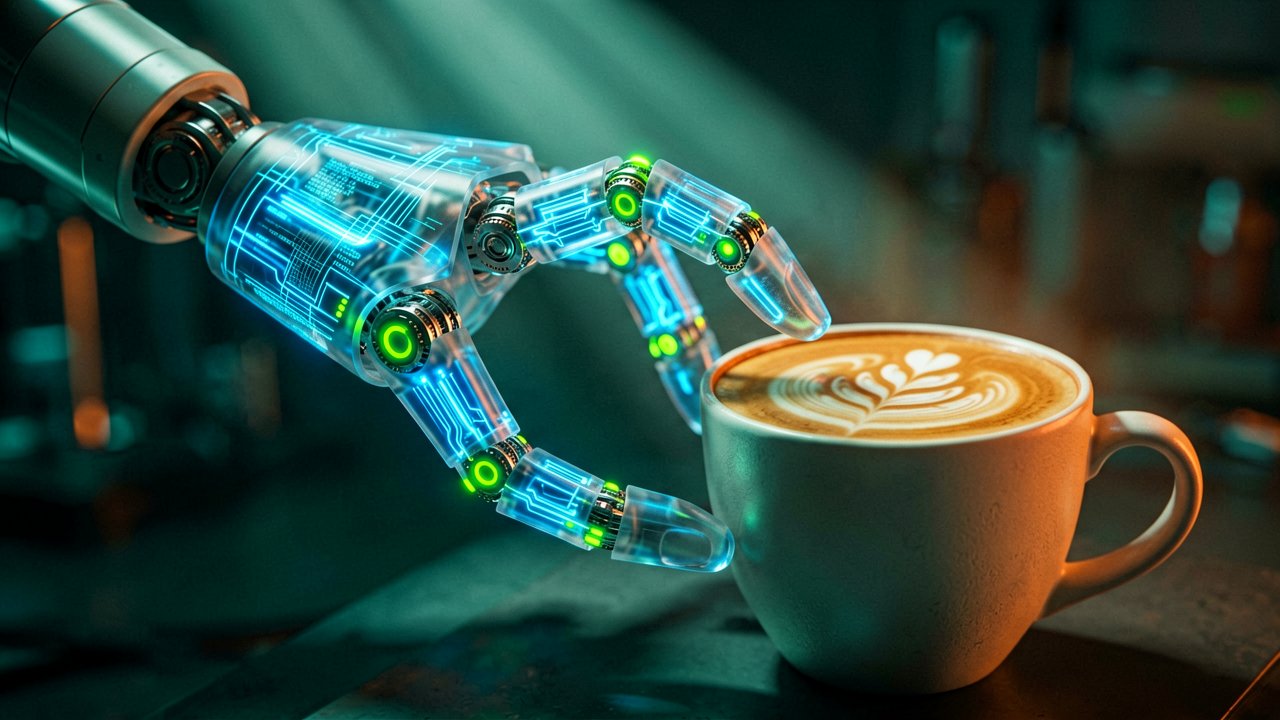
For years, the "AI revolution" was something that happened behind glass. It lived in our browser tabs, our chat interfaces, and our spreadsheets—a brilliant, disembodied brain that could write poetry but couldn't fold a laundry basket to save its life. But the wind is shifting. We're entering the era of Physical AI, where the generative smarts of large language models are finally being bolted onto robotic hardware. It’s the moment the ghost finally gets a body, and it’s about to make our "smart homes" look like relics from the Stone Age.
Breaking the Simulation Barrier
The biggest hurdle for robotics hasn't been the metal; it’s been the "edge cases." Traditional robots are great at doing the same thing a million times in a sterile factory, but they fall apart the moment a cat walks across the room or a chair is out of place. As noted by experts at MIT Technology Review, the breakthrough comes from "foundation models" for robotics. Instead of programming a robot to "pick up a mug," we’re teaching them to understand the world through massive datasets, allowing them to generalize and react to the messy, unpredictable reality of a kitchen or a hospital ward.
It’s not just about fancy arms, either. We’re seeing a surge in humanoid forms because, frankly, we’ve built the entire world for humans. If a robot is going to navigate our stairs, open our round doorknobs, and use our power tools, it needs to look a bit like us. Companies like Figure and Tesla are betting billions on this thesis. According to recent reporting from Bloomberg, the race to deploy these general-purpose humanoids is accelerating as labor shortages in logistics and manufacturing reach a breaking point.
The End of the Chore
What does this look like for the rest of us? Imagine a device that doesn't just vacuum your floor (poorly, while getting stuck on a rug) but actually tidies up. We're talking about machines that can distinguish between a dirty sock and a dog toy, placing each where they belong. This level of semantic understanding is what sets Physical AI apart. It’s the difference between a machine that follows a path and a machine that understands its environment. As Wired has pointed out, the integration of vision-language-action (VLA) models means robots can now follow verbal instructions like "clean up the spill in the hallway" without needing a line of code for every specific movement.
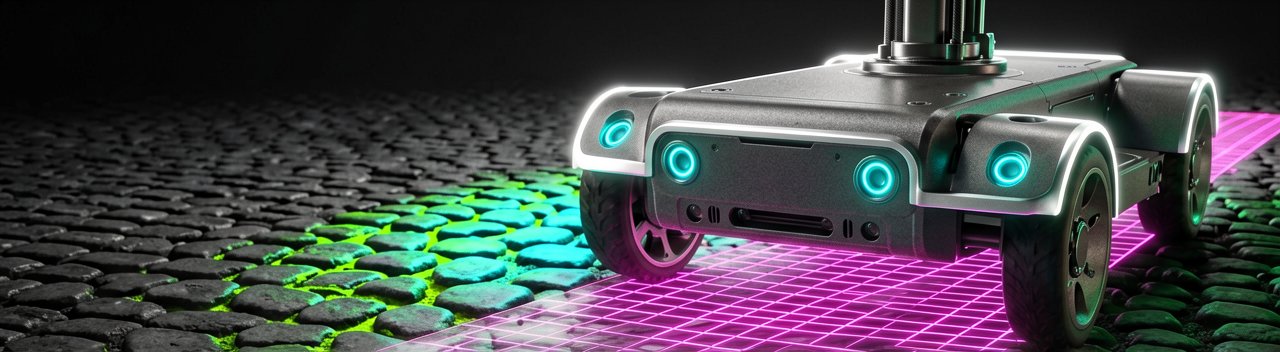
Of course, the skeptics are out in force, and they aren't entirely wrong. The "uncanny valley" is real, and the safety implications of a 150-pound metal humanoid walking around your toddlers are non-trivial. There’s also the looming question of energy; running these massive AI models locally on a robot’s "brain" requires immense power. Yet, the momentum feels different this time. We aren't looking at toys; we're looking at the next major computing platform.
A New Social Contract
As these machines migrate from the lab to the living room, we’re going to have to rewrite our social contract with technology. We've spent decades getting used to screens stealing our attention; now, we have to get used to machines sharing our physical space. It’s a transition that will be clunky, occasionally hilarious, and eventually, invisible. Like the washing machine or the dishwasher before it, the Physical AI robot will eventually stop being "the future" and simply become the thing that does the dishes while we get on with the business of being human.
In the end, Physical AI isn't about replacing people; it's about filling the gaps that digital AI couldn't touch. It’s the bridge between the world of bits and the world of atoms. And while we’re still a few years away from a robot in every home, the hardware is finally catching up to the hype. Better start clearing some space in the coat closet—you might have a new roommate sooner than you think.
The Real Friction Point: While the glossy demos of robots making coffee or folding shirts capture the headlines, what most reports miss is the staggering "data poverty" currently holding the industry back. Unlike digital AI, which feasted on the trillions of words available on the open internet, Physical AI can't just scrape the web to learn how to handle a delicate egg or navigate a crowded subway station. It needs physical demonstrations, and lots of them. We are currently witnessing a massive, behind-the-scenes scramble to collect "teleoperation" data, where humans wear VR suits to puppet robots through thousands of mundane tasks to create the training libraries of the future.
The Hardware-Software Paradox
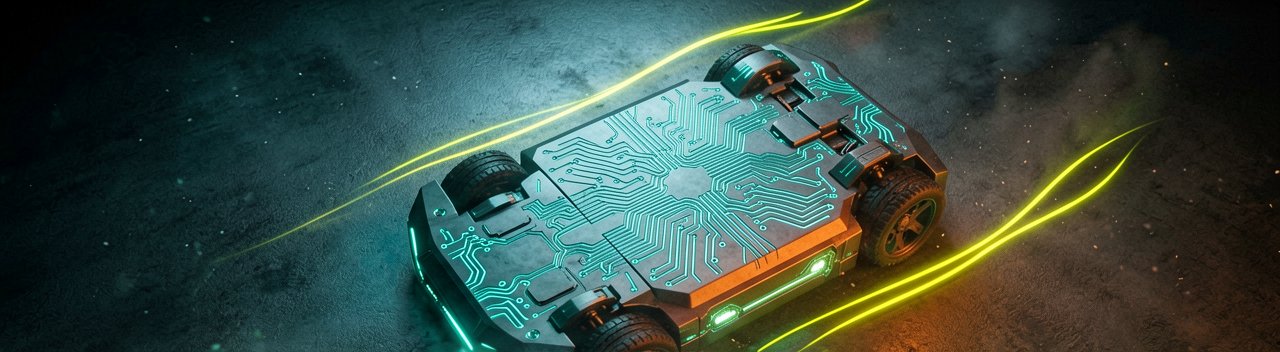
There is a quiet tension brewing between the silicon giants and the traditional mechanical engineers. For decades, robotics was about precision and rigidity—think of the giant, bolted-down arms on an automotive assembly line. But as The Verge has highlighted in recent deep dives, the new wave of Physical AI thrives on "compliance," or the ability for a robot to be soft and adaptable. A robot that is too rigid is dangerous in a home; a robot that is too soft is clumsy. Finding that "Goldilocks zone" in actuator technology is the secret war being fought by startups trying to outpace the likes of Boston Dynamics.
History tells us that hardware is hard, and expensive. We saw this with the collapse of several promising social robotics companies in the late 2010s—names like Jibo and Anki that promised companionship but delivered glorified paperweights. The difference now, according to veteran analysts at Forbes, is the "Edge AI" revolution. We finally have chips small enough and powerful enough to run complex neural networks locally on the device, eliminating the lag that would occur if a robot had to ask a cloud server for permission before catching a falling glass.
The Labor Paradox and the "Grey Tsunami"
If you talk to the CEOs in this space, they don't frame this as a story of job theft; they frame it as a demographic necessity. Japan and parts of Western Europe are facing a "grey tsunami"—an aging population with a shrinking workforce to care for them. From this perspective, Physical AI isn't a luxury; it’s an infrastructure play. Stakeholders in the healthcare sector are looking at these machines as "force multipliers" that can handle the heavy lifting and sanitation tasks, allowing human nurses to focus on actual patient care.
However, the transition won't be seamless. There is a looming "skill gap" for the technicians who will have to maintain these fleets. We aren't just talking about mechanics, but "robot whisperers" who understand how to debug an AI model that has developed a strange habit of misinterpreting shadows as obstacles. The seasoned reporter looks past the shiny chassis and sees the massive secondary economy of maintenance, insurance, and ethical auditing that is currently being built from the ground up to support a world where robots walk among us.
The Reality Check: We are currently drowning in a sea of venture-backed optimism, but the jump from a scripted demo to a reliable consumer product is a chasm littered with the corpses of "next big things." The industry assumes that because we’ve solved the linguistic puzzles of AI, the physical ones will naturally follow. This ignores the "Moravec’s Paradox"—the discovery that high-level reasoning requires very little computation, but low-level sensorimotor skills require enormous computational resources. We’ve built a god-like brain, but we are still trying to give it the coordination of a toddler.
The Privacy Debt
There is a glaring contradiction in the promise of the "helpful" home robot. For a machine to be truly useful—to know where your keys are or to realize you’ve forgotten to take your medication—it must be in a state of constant, high-resolution surveillance. Every room it enters is mapped; every face it sees is scanned. As privacy advocates at Electronic Frontier Foundation often warn, we are essentially inviting a 360-degree camera with legs and a direct connection to a corporate cloud into our most intimate spaces. The convenience of a folded towel might come at the cost of a data harvest that makes current social media tracking look quaint.
The Maintenance Trap
We must also look at the projected "democratization" of this tech with a healthy dose of skepticism. The narrative suggests these robots will free us from drudgery, but the history of domestic technology suggests otherwise. When the washing machine arrived, we didn't spend more time lounging; we simply raised our standards for cleanliness and did more laundry. There is a very real risk that Physical AI becomes the ultimate "subscription trap," where the hardware is a loss-leader designed to lock families into perpetual monthly service fees just to keep their mechanical butler from becoming a very expensive coat rack.
Furthermore, the physical durability of these machines remains a massive question mark. A smartphone doesn't have moving parts that wear out from friction, grit, and gravity. A 150-pound humanoid doing household chores will require a level of mechanical maintenance that the average consumer is entirely unprepared for. Unless the industry develops a "Right to Repair" framework that actually works, we are looking at a future of high-tech landfills filled with robots that just needed a new $10 joint actuator that was "user-inaccessible."
"We were promised a future where robots would do our chores while we wrote poetry, but instead we got robots that write poetry while we still have to unload the dishwasher because the AI can’t figure out which drawer holds the spatulas."
Artūras Malašauskas is an AI Systems Integrator with 20+ years of production-grade web engineering experience. He has designed, shipped, and scaled enterprise Python/PHP systems for logistics, SaaS, and public-sector clients. For the past year, he has focused exclusively on AI integrations: deploying open-source LLMs, building generative media pipelines (image, audio, video), and engineering multi-agent workflows for real production environments. His standard: reproducibility, security, cost-efficient inference—no vaporware. He documents and evaluates emerging AI tooling, separating verified capabilities from marketing noise. Technical editor at: muza-ai.eu, ai-verslas.lt, ai-naujinos.lt Connect on LinkedIn
Comments