The Quantum Flight Simulator: Quobly and Hon Hai Open-Source the Future of Phase Estimation

In the high-stakes race to make quantum computers actually useful, we’ve often been stuck in a weird limbo between beautiful chalkboard theories and the messy reality of hardware that doesn't quite exist yet. This week, French silicon-spin pioneer Quobly and the Hon Hai Research Institute (the R&D powerhouse behind Foxconn) decided to close that gap. They’ve dropped an open-source "QPE Toolbox" on GitHub that essentially gives researchers a high-powered flight simulator for one of the most important algorithms in the quantum canon: Quantum Phase Estimation.
If you aren't familiar with Quantum Phase Estimation (QPE), think of it as the master key for future quantum chemistry and materials science. It’s the algorithm that will eventually let us simulate molecules with enough precision to revolutionize everything from battery tech to drug discovery. But as noted by Quantum Computing Report , while the math behind QPE is well-trodden, we’ve lacked practical ways to test how these circuits will actually behave on the fault-tolerant machines of tomorrow. That’s exactly what this new toolkit is designed to fix.
From Chalkboard to Circuit
The beauty of the "qpe-toolbox" is that it doesn't require a million-dollar quantum fridge to run. It’s a Python-based library built on top of the quimb tensor-network library, allowing researchers to simulate complex QPE pipelines on the "boring" classical hardware they already have. According to the developers at Hon Hai Research Institute , the toolbox can handle circuits with up to 100,000 gates and roughly 20 qubits on a standard laptop. This isn't just a toy; it’s a sandbox for stress-testing how design choices—like how you encode a molecular Hamiltonian—impact the depth and error rates of a circuit before you ever touch a quantum processor.
What makes this collaboration particularly interesting is the "brains vs. brawn" narrative. Foxconn, long known as the world’s manufacturing brawn, is making a massive pivot into the "brains" of deep tech. By partnering with a nimble startup like Grenoble-based Quobly, which is focused on scaling silicon qubits using standard semiconductor manufacturing, they’re positioning themselves at the intersection of hardware and algorithm co-design. As Quobly’s Thibaud Louvet told Computer Weekly , the goal is to move beyond "theoretical cost models" and give researchers a "numerical playground" to develop real intuition for how fault-tolerant algorithms behave in the wild.

A Practical Toolkit for the Fault-Tolerant Era
For the researchers actually getting their hands dirty, the toolbox offers more than just simulations. It integrates directly with industry-standard chemistry tools like PySCF and OpenFermion. This means a scientist can start with a molecular model, use the toolbox to prepare a physically motivated initial state, and then compare traditional QPE against more modern variants like Robust Phase Estimation (RPE). It’s a complete workflow that treats quantum computing as a practical engineering challenge rather than a distant science project.
Ultimately, the Quobly and Hon Hai partnership is a signal that the industry is maturing. We’re moving past the "look at our qubit count" phase and into the "how do we actually run an application" phase. By making these tools open-source, they’re effectively inviting the entire community to help find the most efficient path to quantum advantage. It’s a smart move—because the sooner we can simulate the future, the sooner we can build it.
Do you think open-sourcing these algorithmic toolboxes will accelerate the timeline for industrial quantum chemistry applications?
The Real Engineering Gap: While the headlines focus on the "what," the seasoned observers in the quantum sector are looking at the "why now." For years, we’ve been stuck in a cycle of theoretical papers that assume a perfect world, but Quobly and Hon Hai are tackling the gritty reality that most press releases gloss over: the massive resource overhead of error correction. By releasing this toolbox, they aren't just giving away code; they are providing the industry with a reality check on exactly how many physical qubits we’ll need to do something useful, like simulating a nitrogenase enzyme for fertilizer production.
The Silicon-Spin Strategy
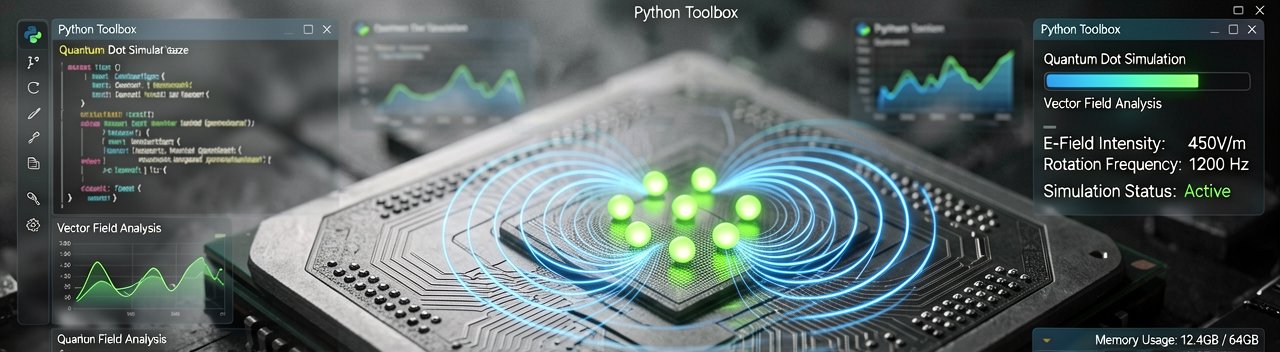
To understand why a silicon-spin startup like Quobly is leading this charge, you have to look at the manufacturing pedigree. Unlike the flashy, room-sized superconducting machines from IBM or Google, Quobly is betting on "quantum dots" etched into the same silicon wafers used for smartphone chips. This collaboration with the Hon Hai Research Institute—essentially the brain trust of the world’s largest electronics manufacturer—is a loud signal. It suggests that the path to a million-qubit machine won't be paved by bespoke laboratory setups, but by the same industrial scaling processes that gave us the modern CPU.
This "industrial-grade" mindset is baked into the QPE toolbox. Historically, Quantum Phase Estimation was seen as the "holy grail" that was always twenty years away because it requires deep circuits that decohere quickly on today's noisy hardware. However, by focusing on "Robust Phase Estimation" (RPE) and tensor-network simulations, this toolkit allows developers to find shortcuts. It’s about finding the "minimum viable quantum circuit"—the shortest path to a result that a classical computer can't replicate—without waiting for the hardware to become perfect.
A Geopolitical Bridge in Code
There is also a fascinating geopolitical subtext here. At a time when tech "de-risking" often separates Western startups from Asian manufacturing giants, this open-source bridge between Grenoble and Taipei is a breath of fresh air. It represents a "middle-out" approach to the quantum stack: European algorithmic sophistication paired with Taiwanese systems-level engineering. For Quobly, it’s a way to ensure their future silicon chips have a library of optimized software ready to go on day one; for Hon Hai, it’s about ensuring they aren't just the people who build the boxes, but the people who define the logic inside them.
What the average report misses is that this toolbox isn't just for "quantum people." Because it integrates with classical chemistry libraries like PySCF, it’s a direct invitation to the world's computational chemists. The message is clear: You don't need to be a quantum physicist to start preparing your molecular models for the fault-tolerant era. By lowering the barrier to entry, Quobly and Hon Hai are effectively crowdsourcing the search for the first "killer app" of quantum computing, ensuring that when the hardware finally arrives, the software won't be the bottleneck.
Should we expect more "manufacturing-algorithm" partnerships like this to define the next decade of quantum development?
The "Open Source" Mirage: While the tech world loves a story about democratization through open-source software, there is a certain irony in releasing a high-end simulation toolbox for hardware that doesn’t actually exist yet. It’s a bit like releasing a sophisticated flight manual for a teleportation device; it’s brilliant and forward-thinking, but it also highlights how much of the quantum industry is currently built on a foundation of "if we build it, they will come." The skepticism here isn't about the math—the math is sound—it’s about whether this toolbox will become the industry standard or just another repository gathering digital dust in the crowded GitHub landscape.
The Simulation Paradox
There is a fundamental contradiction at the heart of quantum classical simulation libraries like this one. We are using classical computers to simulate how quantum computers will eventually perform tasks that classical computers theoretically cannot do. While the qpe-toolbox can handle 100,000 gates, it does so by utilizing tensor-network tricks that work best on circuits with limited entanglement. If the "useful" quantum algorithms of the future require massive, dense entanglement across hundreds of qubits, these classical simulators will hit a brick wall. We are essentially using a very fast horse-drawn carriage to plan the route for a supersonic jet.
Furthermore, we have to look at the competitive landscape. Quobly and Hon Hai aren't the only ones playing this game. Giants like NVIDIA with their cuQuantum platform and IBM with Qiskit have already staked massive claims in the simulation space. For a specialized QPE toolbox to survive, it needs to offer more than just "robustness"—it needs to offer a reason for researchers to leave the ecosystems where they’ve already invested thousands of hours. The "open source" tag is a great marketing hook, but in the cutthroat world of deep tech, utility and integration always trump altruism.
Scalability or Smoke and Mirrors?
The pivot of Hon Hai (Foxconn) into quantum research also raises eyebrows. Is this a genuine move toward high-compute leadership, or a strategic hedge to ensure they remain relevant as the semiconductor industry moves beyond CMOS? By focusing on Quantum Phase Estimation—an algorithm notoriously hungry for "logical" qubits—they are setting a very high bar for success. If the physical hardware (specifically Quobly’s silicon spin qubits) can’t overcome the massive error-correction overhead revealed by these very simulations, then the toolbox might end up documenting the limitations of the technology rather than its triumphs.
Ultimately, the value of this partnership lies in its pragmatism. Even if the toolbox eventually hits a classical ceiling, the insights gained in the interim—about gate fidelity requirements and Hamiltonian encoding—will be the "failure data" that drives the next generation of hardware design. In a field that has often been accused of over-hyping its timelines, a tool that forces researchers to confront the numerical reality of their algorithms is, at the very least, an honest step forward. It turns the "Quantum Winter" talk into a productive "Quantum Engineering" spring, provided we don't mistake the map for the territory.
Building a software suite for a computer that might not exist for a decade is the ultimate tech-industry flex: it’s essentially the high-performance equivalent of buying a designer wardrobe for a baby that hasn't been born yet, just in case they turn out to be a supermodel.
Artūras Malašauskas is an AI Systems Integrator with 20+ years of production-grade web engineering experience. He has designed, shipped, and scaled enterprise Python/PHP systems for logistics, SaaS, and public-sector clients. For the past year, he has focused exclusively on AI integrations: deploying open-source LLMs, building generative media pipelines (image, audio, video), and engineering multi-agent workflows for real production environments. His standard: reproducibility, security, cost-efficient inference—no vaporware. He documents and evaluates emerging AI tooling, separating verified capabilities from marketing noise. Technical editor at: muza-ai.eu, ai-verslas.lt, ai-naujinos.lt Connect on LinkedIn
Comments