From Sci-Fi to Showroom: Unitree’s €500,000 Mecha Brings Wall-Smashing Fantasy to Life
For a generation of gearheads who grew up on a steady diet of Gundam , Transformers , and Pacific Rim , the dream has always been simple: climbing into a massive mechanical suit and stomping through the nearest obstacle. That fantasy just took a massive, wall-shattering step toward reality. Chinese robotics powerhouse Unitree has officially pulled the curtain back on the GD01, a pilotable "mecha" that looks like it stepped straight off a Hollywood backlot and carries a price tag—roughly €500,000—to match, according to Yahoo News .
This isn't just a shiny display piece for tech conventions. Unitree is billing the GD01 as the world’s first production-ready, manned transformable mecha. Standing at approximately 2.8 meters (about 9 feet) tall, the robot features an open cockpit nestled in its torso where a human pilot can strap in and take the reins. While we’ve seen similar projects like Japan’s ARCHAX or America’s ill-fated MegaBots, those were largely hand-built curiosities or one-off gladiator platforms. The GD01 represents a shift toward commercial accessibility—at least for those with half a million euros to burn—as reported by Euronews .
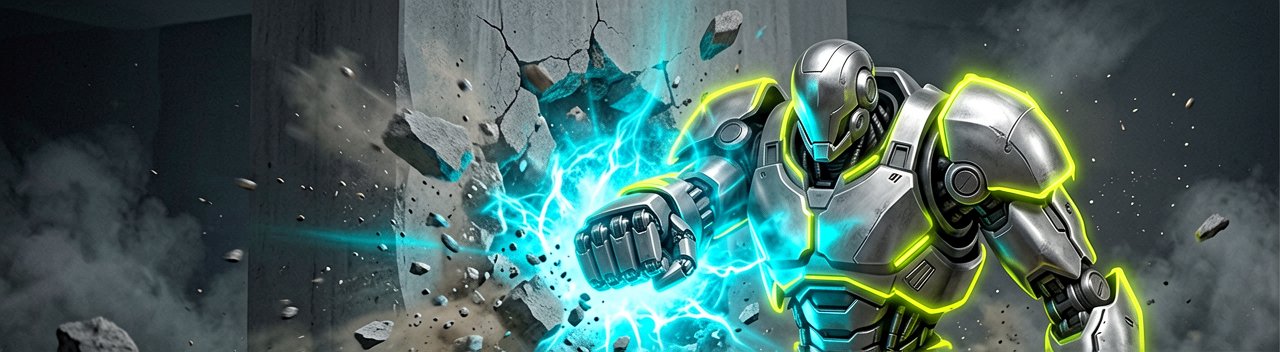
The "wow" factor isn't limited to its size. In a demonstration that could give building inspectors a heart attack, the GD01 was filmed effortlessly punching through a wall of cinder blocks. It’s a visceral display of the machine's high-torque density joint motors, specifically the in-house developed M107 units. Beyond raw power, the robot is surprisingly agile; it can walk upright on two legs in a humanoid stance or drop down onto all fours to tackle rougher terrain, a transformation that takes only seconds, according to details from .
From Robot Dogs to Piloted Giants
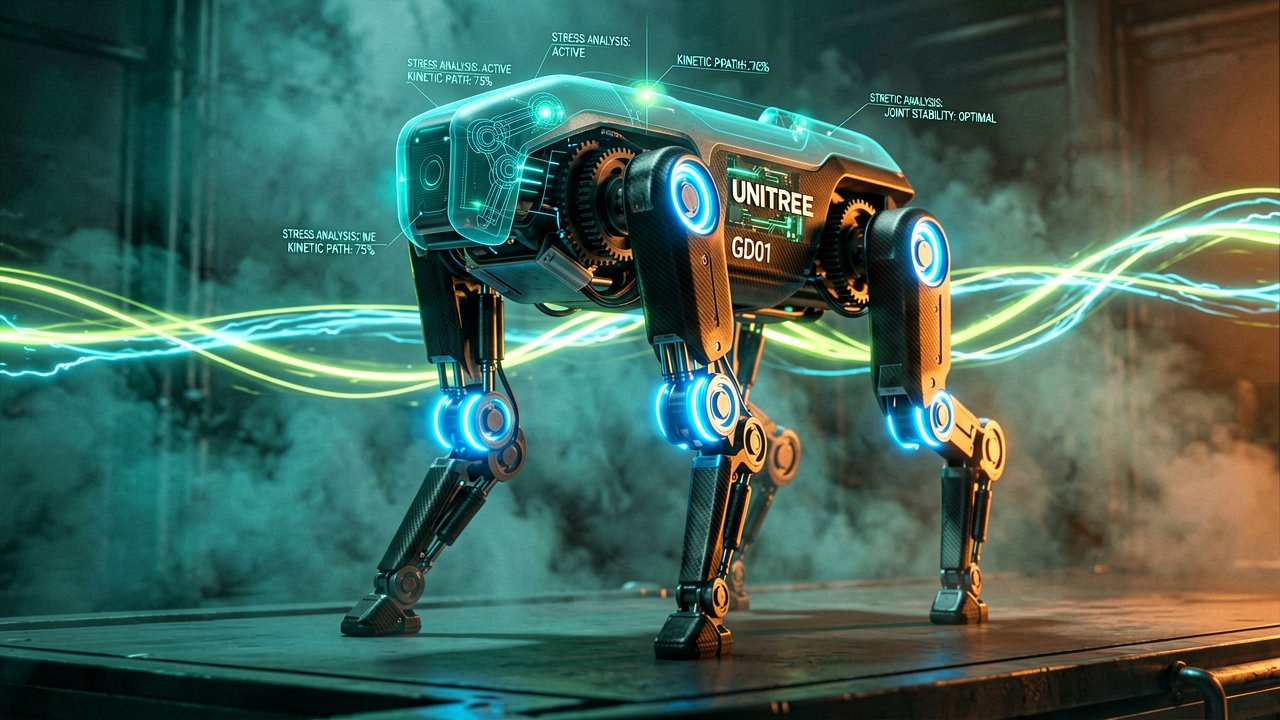
Unitree hasn't come out of nowhere. They've spent the last few years flooding the market with agile quadruped "dogs" and the surprisingly affordable G1 humanoid, which retails for a fraction of what a luxury car costs. This vertical integration—controlling everything from the motors to the reinforcement learning algorithms—has allowed them to scale up to the GD01 with frightening speed. While competitors are still fine-tuning laboratory prototypes, Unitree is opening direct retail stores and filing for billion-yuan IPOs, as noted by Instagram sources covering the launch.
Of course, there’s the question of what you actually do with a 500kg wall-smashing robot. Unitree is officially classifying it as a "civilian vehicle," suggesting applications in tourism, high-end entertainment, or commercial showcases. Imagine a theme park where you can actually pilot a mech, rather than just watching a screen. However, technical specifics like battery life and top speed remain under wraps for now, leaving some to wonder if it's more of a high-status toy than a practical transport solution, per AOL News .
Despite the sci-fi spectacle, the GD01 highlights a very real shift in the global robotics race. With Chinese firms reportedly accounting for nearly 90% of global humanoid sales in recent years, the arrival of a mass-produced mecha suggests the industry is moving past the "novelty" phase. Whether we’ll see these things walking down city streets or if they’ll remain the playthings of the ultra-wealthy is still up in the air. But one thing is certain: the line between the movies we love and the machines we can buy is getting thinner every single day.
Do you think we'll see these robots in emergency response roles soon, or will they stay in the realm of high-end entertainment?
The Real Engineering Gamble: While the headline-grabbing spectacle of a wall-smashing titan is great for social media engagement, the industry veterans I speak to are looking at something much more subtle: the actuator physics. Scaling a humanoid frame from the size of a dog to a nine-foot behemoth isn't just about bigger motors; it’s a terrifying dance with the square-cube law. As the GD01 doubles in height, its weight and the stress on its joints increase cubically, making the fact that it can maintain balance with a shifting human payload inside the cockpit a genuine feat of control theory. Most reports gloss over the "human factor," but keeping a pilot from getting whiplash while the machine transitions from bipedal to quadrupedal mode requires a level of software dampening that Unitree has likely adapted from their high-speed running quadruped line.

Historically, we’ve been here before. We saw the hype around Suidobashi’s Kuratas and the televised "Giant Robot Duel" that ended in a somewhat sluggish, scripted whimper. Those machines were hydraulic-heavy and tether-dependent. What makes the GD01 a different beast is the shift to high-torque electric motors. By ditching messy hydraulics for the same M107 electric actuators used in their industrial humanoids, Unitree is betting on a "maintenance-lite" future for mecha. This moves the needle from "experimental art project" to "viable product," which is exactly why the €500,000 price tag, though eye-watering, is being taken seriously by luxury resorts and tech-focused theme parks in the Middle East and East Asia.
The Geopolitical Mechanics
There’s a broader narrative here that goes beyond the "cool factor." This launch is a loud, metallic signal of China’s dominance in the robotics supply chain. While Western firms like Boston Dynamics have focused on the terrifyingly fluid movement of prototypes that aren't for sale, Chinese firms are focusing on "good enough" robotics at massive scale. By releasing a rideable mech, Unitree is effectively stress-testing their manufacturing pipeline. If you can reliably build and ship a nine-foot transformable robot, building a thousand smaller humanoid laborers for a factory floor becomes a trivial exercise in logistics. It’s a classic "halo product" strategy, intended to make the brand synonymous with the future of the human-machine interface.
Stakeholders in the automation space are already whispering about the "dual-use" elephant in the room. While Unitree leans heavily into the "civilian vehicle" and "entertainment" branding to avoid regulatory hurdles, the structural reinforced limbs and wall-breaking capabilities have obvious implications for disaster relief and search-and-rescue. Imagine a pilot navigating the unstable ruins of an earthquake-hit building, protected by a roll cage, using the machine’s sheer torque to clear debris that would stall a traditional excavator. However, for now, the primary hurdle isn't the technology—it's the liability. Convincing an insurance company to cover a 500kg bipedal robot with a human inside is a battle that might be harder to win than punching through a cinder-block wall.
Are we witnessing the birth of a new vehicle category, or is this just the ultimate "flex" for the billionaire who already has everything?
The Skeptic’s Lens: For all the cinematic glory of a wall-smashing robot, we need to ask if we are looking at a breakthrough or just the world’s most expensive carnival ride. The optics are undeniable, but the physics of a pilotable bipedal mech are notoriously unforgiving. When Unitree shows the GD01 punching through cinder blocks, they are demonstrating peak force, not sustained utility. In a real-world scenario, the kinetic feedback from such an impact would be jarring for a human occupant, and without sophisticated force-feedback dampening, the pilot’s spine might be the most fragile component in the entire system. We have yet to see this machine navigate anything more complex than a flat studio floor or a staged obstacle, leaving the "all-terrain" claims in the realm of "wait and see."
Furthermore, there is a glaring contradiction in the marketing of the GD01 as a "production vehicle." A vehicle requires a standard of safety and reliability that robotics—especially those using experimental reinforcement learning—have yet to fully satisfy in public spaces. If the GD01 stumbles, it isn't just a 500kg machine falling; it is a half-million-euro liability carrying a human being. The transition from bipedal to quadrupedal mode, while technically impressive, also highlights a lack of confidence in two-legged stability. If the bipedal stance were truly robust, there would be little need for the machine to drop to all fours for "rough terrain." It suggests that while the hardware is ready to play the part of a sci-fi giant, the software is still playing it safe.
The Sustainability of the Spectacle
We also have to consider the "rich man’s toy" trap. History is littered with ambitious robotics companies that burned through venture capital creating high-spec marvels that ultimately lacked a market. By pricing the GD01 at €500,000, Unitree is targeting a demographic that values novelty over necessity. While this helps fund R&D for their more practical humanoid lines, it risks pigeonholing the mecha category as a mere curiosity. Unless Unitree can prove that a pilot inside a mech is more efficient than a remote operator using VR—which, let’s be honest, is cheaper and safer—the GD01 might find its only home in the private collections of tech eccentrics rather than on actual job sites or disaster zones.
The ultimate implication here is less about the mech itself and more about the "normalization" of extreme robotics. By making a rideable wall-smasher a commercial reality, Unitree is desensitizing the public to the presence of large-scale, powerful autonomous systems. We are being sold a fantasy to mask the arrival of a very heavy, very disruptive industrial reality. Whether the GD01 is a genuine pioneer or just a very loud distraction, it has successfully moved the goalposts of what we expect to see for sale in a retail store. The question isn't whether the robot can smash the wall—it’s whether the business model behind it can survive the impact.
"It’s the ultimate solution for the man who has everything except a neighbor who understands the concept of a shared fence; just remember that for half a million euros, 'manual override' is usually tech-speak for 'I hope you wore your helmet.'"
Artūras Malašauskas is an AI Systems Integrator with 20+ years of production-grade web engineering experience. He has designed, shipped, and scaled enterprise Python/PHP systems for logistics, SaaS, and public-sector clients. For the past year, he has focused exclusively on AI integrations: deploying open-source LLMs, building generative media pipelines (image, audio, video), and engineering multi-agent workflows for real production environments. His standard: reproducibility, security, cost-efficient inference—no vaporware. He documents and evaluates emerging AI tooling, separating verified capabilities from marketing noise. Technical editor at: muza-ai.eu, ai-verslas.lt, ai-naujinos.lt Connect on LinkedIn
Comments