The Mecha Age Arrives: China Unveils the World’s First Retail Human-Piloted Giant Robot
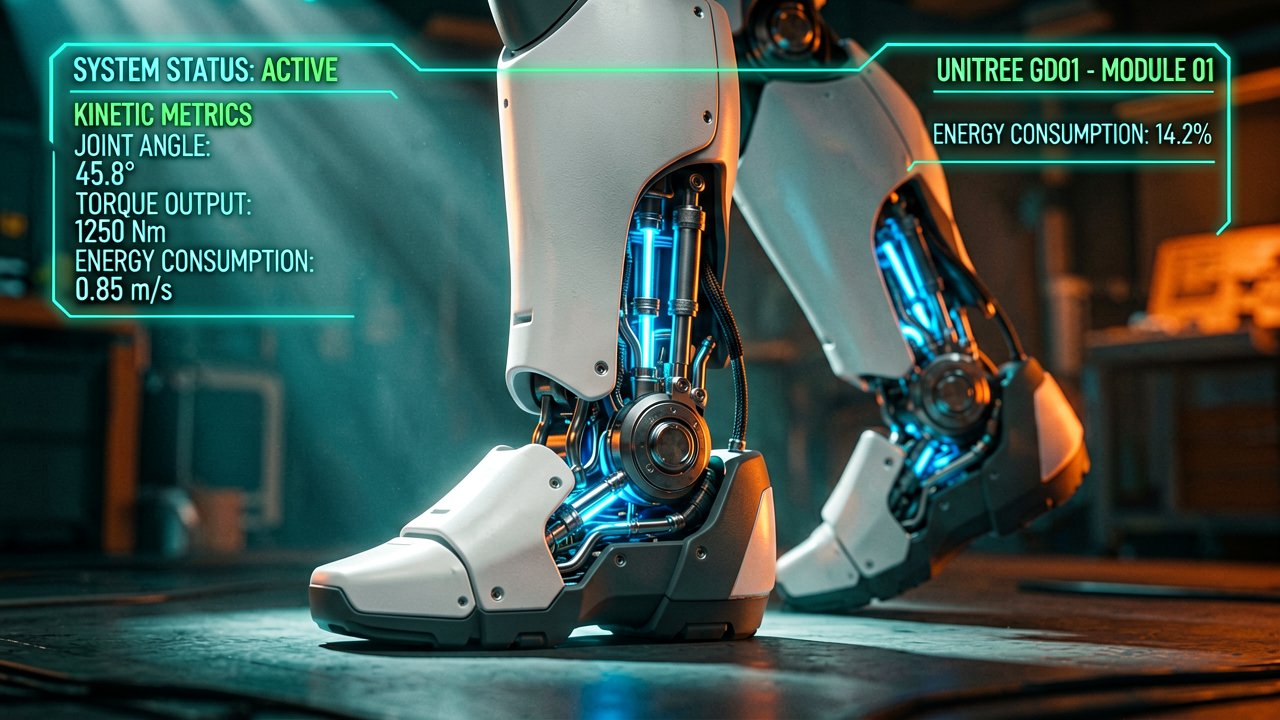
If you grew up watching Pacific Rim or Gundam, the dream of actually stepping into a mechanical titan and walking away in it was always the "someday" technology that never quite arrived. Well, "someday" just hit the calendar. This week, Chinese robotics powerhouse Unitree Robotics pulled the curtain back on the GD01—a nearly 2.8-meter-tall manned mecha that isn't just a trade show prototype. It’s a retail product, and it’s every bit as terrifying and awesome as the sci-fi movies promised, as reported by Euronews .
The GD01 isn't your average factory-floor robotic arm. We’re talking about a 500-kilogram steel colossus built from high-strength alloys, specifically designed to carry a human pilot in an open, torso-mounted cockpit. In a launch video that looks like a high-budget action trailer, Unitree founder Wang Xingxing actually climbed into the beast and piloted it himself, maneuvering the machine forward and using its mechanical arms to smash through brick walls with unsettling ease. According to Global Times , the debut has sent ripples across social media, with many hailing it as the moment fiction finally became fact.
The Transformer in the Room
What sets the GD01 apart from previous "giant robot" attempts is its sheer versatility. This thing doesn't just walk; it transforms. Within seconds, it can shift from a bipedal humanoid stance into a quadrupedal "crawl" mode. This isn't just for show—the four-legged configuration is optimized for high-stability tasks like climbing stairs, navigating steep slopes, or crossing the kind of rough terrain that would leave a standard bipedal robot face-planting in the dirt. It's a clever bit of engineering that balances "cool factor" with genuine mechanical utility, as noted by .
Of course, this futuristic hobby doesn't come cheap. If you want to park a GD01 in your garage, you’re looking at a starting price of roughly 3.9 million yuan, or about $650,000. It’s a price tag that positions it more as a luxury civilian vehicle or a high-end commercial attraction than a mass-market tool. Unitree is positioning the mecha for everything from tourism and entertainment to "civilian transport" in specialized environments. But let’s be honest: most of the people eyeing this are doing so because they want to feel like a pilot in a futuristic war-machine.
China’s Robotics Hegemony
While the GD01 is the flashiest headline, it’s actually a symptom of a much larger trend. China is currently dominating the robotics space with a ferocity that’s catching the West off guard. In 2025 alone, Chinese firms reportedly accounted for nearly 90 percent of global humanoid robot sales, according to data cited by Phemex News . Unitree itself shipped over 5,500 humanoid units last year—more than any other manufacturer on the planet, including Tesla.
There’s still plenty we don’t know, though. Unitree has been somewhat cagey about the "boring" specs like battery life, maximum speed, and payload capacity. We also haven't seen how the robot handles the transformation with a human pilot inside; in current demos, the pilot typically boards after the shift. But with the company already eyeing a massive IPO on the Shanghai Star Market, the GD01 is more than just a toy. It’s a statement of intent: the mecha age is here, and it’s being built in Hangzhou.
Peeling Back the Chrome: While the viral footage of a man smashing through brick walls makes for a great TikTok loop, the emergence of the GD01 is actually the climax of a decade-long hardware arms race in the Zhejiang province. To the casual observer, this looks like a sudden leap into science fiction, but to those of us tracking the supply chain, it’s the logical conclusion of China’s "Robotics Plus" action plan. Unitree isn't just selling a robot; they’re stress-testing high-torque joint actuators that were, until recently, too expensive for anything but aerospace applications.
The "secret sauce" behind this mechanical titan isn't just the flashy cockpit; it’s the transition from hydraulics to high-performance electric motors. Historically, rideable mechs like the Japanese Kuratas or the American MegaBots relied on messy, slow-reacting hydraulic systems. Unitree’s decision to stick with a fully electric drivetrain—the same tech powering their world-record-breaking bipedal sprinters—means the GD01 is significantly quieter and more responsive. It moves with a terrifying fluidity that makes its predecessor projects look like steam-powered relics.
The Skeptic’s Corner: Power and Liability
However, we need to address the elephant in the room: the energy density problem. A 500-kilogram machine performing high-impact maneuvers consumes an astronomical amount of power. While Euronews highlighted the robot's versatility, industry insiders are quietly questioning the actual runtime. If the GD01 can only operate for 45 minutes before needing a multi-hour charge, its utility in a real-world disaster zone—where power grids are usually the first thing to fail—remains a major hurdle for serious adoption.
Then there’s the legal nightmare. Currently, there is no global regulatory framework for a half-ton "civilian" exoskeleton that can punch through a building. Insurance companies are likely looking at the GD01 with a mixture of confusion and horror. If a pilot loses synchronization or the software glitches while in quadruped mode, the potential for property damage or injury is massive. This isn't a drone you can just ground; it’s a heavy-duty industrial asset that functions as a vehicle, a robot, and a weapon of physics all at once.
From Science Fiction to Sovereignty
Beyond the hobbyist market, there is a distinct sense that this is a geopolitical flex. By being the first to put a human in a viable, transformable bipedal unit, Unitree is signaling that the era of Western dominance in high-end robotics is over. As noted by analysts at Phemex News, the sheer volume of humanoid units China is pushing out allows them to fail faster and iterate quicker than their competitors. The GD01 isn't the finish line; it’s a 2.8-meter-tall billboard for a future where the hardware is finally catching up to our imaginations.
The Reality Distortion Field: For all the cinematic glory of a pilot-operated mecha, we have to ask if the GD01 is a genuine revolution or merely the world’s most expensive piece of "tech-theater." The tech industry is littered with the corpses of high-concept hardware that looked great in a pitch deck but failed the grocery-store test. While Unitree is successfully selling the fantasy of the "Iron Man" suit, the practical reality of a 2.8-meter-tall machine in a world designed for 1.8-meter humans is a logistical headache that no amount of cool transformation footage can hand-wave away.
Consider the interface problem. Most reports focus on the "cool factor" of being inside the cockpit, but they gloss over the cognitive load of piloting such a beast. Human-machine synchronization is notoriously difficult; if the GD01 relies on traditional joysticks, it’s just a glorified excavator. If it uses neural or haptic mapping, the latency issues become a safety nightmare. We are seeing a contradiction where the hardware is ready for 2030, but the interface technology—and human reflexes—might still be stuck in 2024. As demonstrates, the movements are fluid, yet the pilot's actual level of granular control remains a closely guarded trade secret.
A Solution in Search of a Problem?
The most measured skepticism must be reserved for the intended use case. Unitree mentions "tourism" and "civilian transport," but let’s be real: nobody is commuting to work in a transformable robot that costs more than a Lamborghini and can’t fit through a standard drive-thru. By framing this as a "civilian" tool, the company may be trying to sidestep the inevitable scrutiny that comes with dual-use technology. If a machine can smash a brick wall, it can smash a barricade, and that brings us back to the geopolitical tension noted by Phemex News regarding China's aggressive market grab.
Ultimately, the GD01 might find its true home not on the battlefield or the construction site, but in the theme parks of the super-rich. It’s a spectacular engineering flex that proves bipedal stability is a solved problem, yet it fails to answer why a human needs to be inside the machine at all. In an age where AI can pilot drones with surgical precision from thousands of miles away, putting a soft, breakable human in the center of a half-ton metal kinetic weapon feels less like "the future" and more like a nostalgic tribute to the 1980s anime we can’t seem to outgrow.
"We finally built the giant rideable robot of our childhood dreams, only to realize that the most difficult part of the future isn't the walking hydraulic legs—it's finding a parking spot tall enough to accommodate our soaring egos."
Artūras Malašauskas is an AI Systems Integrator with 20+ years of production-grade web engineering experience. He has designed, shipped, and scaled enterprise Python/PHP systems for logistics, SaaS, and public-sector clients. For the past year, he has focused exclusively on AI integrations: deploying open-source LLMs, building generative media pipelines (image, audio, video), and engineering multi-agent workflows for real production environments. His standard: reproducibility, security, cost-efficient inference—no vaporware. He documents and evaluates emerging AI tooling, separating verified capabilities from marketing noise. Technical editor at: muza-ai.eu, ai-verslas.lt, ai-naujinos.lt Connect on LinkedIn
Comments