The Pocket-Sized Ghost in the Machine: Oppo’s X-OmniClaw and the High Stakes of Local AI
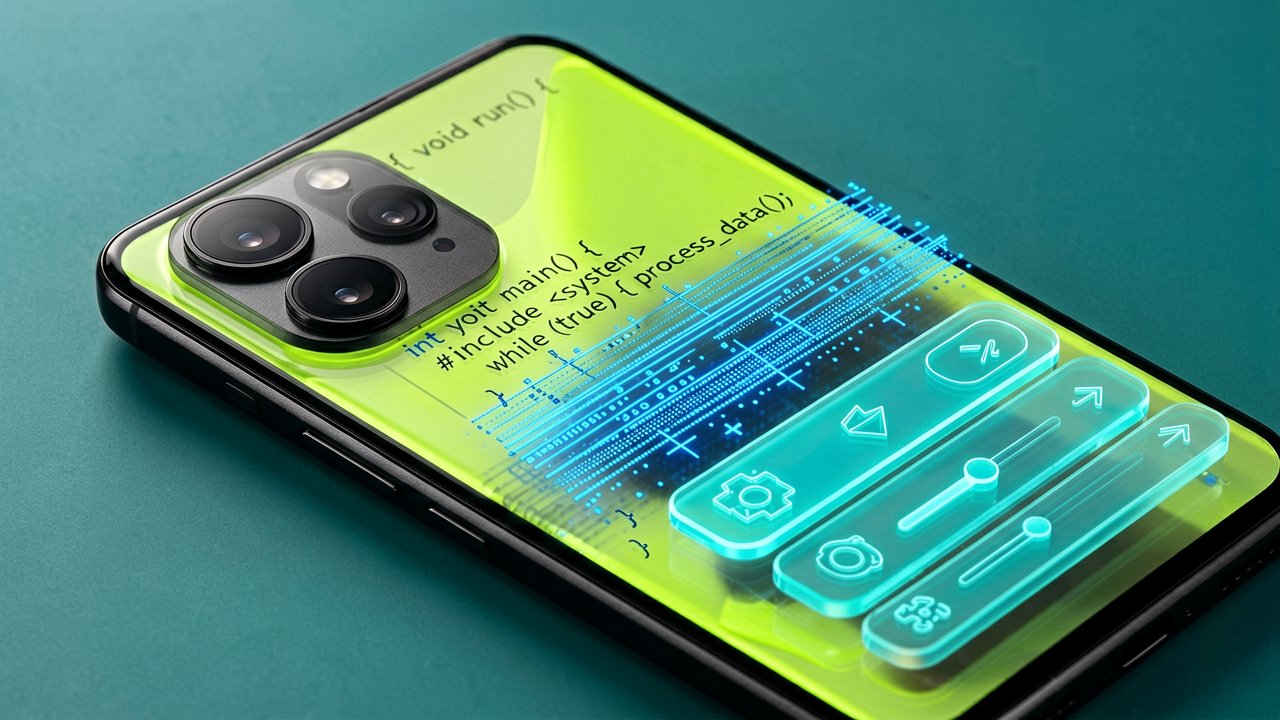
Oppo isn’t just building another chatbot; they’re trying to build a brain for your pocket that actually stays there. The company’s latest move into the wild west of "Agentic AI" comes in the form of X-OmniClaw , an edge-native multimodal agent that they’ve just tossed onto GitHub . Unlike the chatty assistants we’ve grown used to—the ones that constantly phone home to massive server farms—X-OmniClaw is designed to live and breathe entirely on your physical Android device. It’s a bit of a flex in the world of mobile privacy, aiming to handle your camera, screen, and voice without a single packet of sensitive data ever crossing the cloud's threshold.
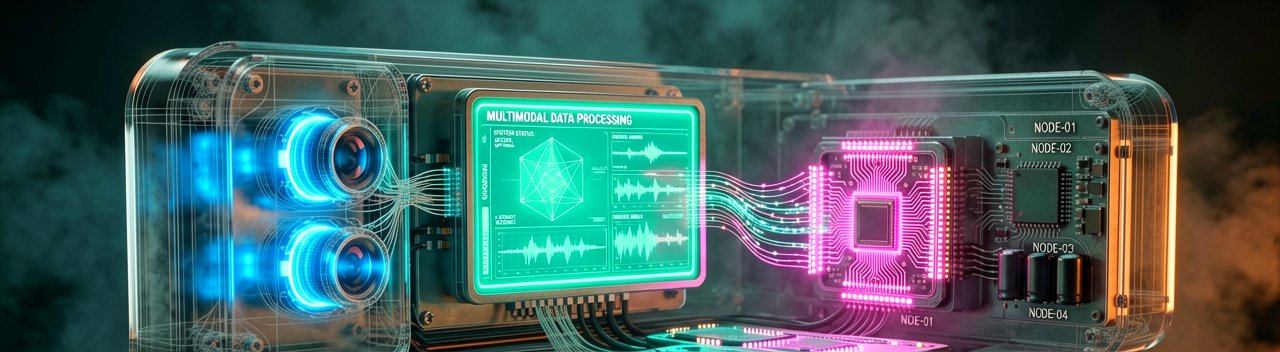
The "Omni" in the name isn't just marketing fluff. It refers to a triple-threat of sensing domains: the UI state of your screen, real-world visual context from your camera, and audio input from your voice. By stitching these together, the agent doesn't just "see" an app; it understands where you are and what you’re trying to do. According to technical documentation on GitHub , this "unified perception-to-action framework" allows the agent to execute native touch interactions and cross-app operations autonomously. Imagine telling your phone to "find that restaurant I saw on Instagram and book a table for 7 PM," and having it navigate between apps to make it happen.
The Privacy Play: Keeping Data Local
What makes X-OmniClaw stand out in a crowded market is its commitment to the "edge." In tech-speak, that means the heavy lifting happens on the chip inside your phone rather than a remote data center. As noted by , Oppo has been working with MediaTek to run complex models locally, ensuring that even if you’re in airplane mode, your AI assistant isn't suddenly lobotomized. This isn't just about speed; it's a fundamental shift in how we think about AI security. By processing core logic on-device, Oppo is sidestepping the massive privacy concerns that plague cloud-centric AI systems.
The system also features something called Omni Memory , which acts as a personalized intelligence layer. It analyzes your local data to understand your habits and preferences without shipping your life story to an external server. It’s a vision of an AI companion that actually knows you, but doesn't tell anyone else what it knows. This aligns with Oppo's broader "Agent Matrix" strategy, recently detailed in their China Daily coverage, which treats the OS as a living, learning ecosystem rather than a static collection of apps.
Open Source and the Road Ahead
By open-sourcing X-OmniClaw, Oppo is effectively inviting the developer community to kick the tires on their vision of the future. It’s a gutsy move that could standardize how multimodal agents interact with the Android ecosystem—a space that has historically been fragmented and difficult to automate. While projects like OAgents have laid the groundwork for modular agent frameworks, X-OmniClaw represents a more integrated, "real-world" application of the tech.
We’re still in the early days, of course. Running a multimodal model that can handle real-time visual telemetry is a massive drain on resources, and while modern chips are getting faster, the battery-life trade-off remains the elephant in the room. Still, if Oppo can prove that a phone can truly understand its surroundings and its user without leaking data like a sieve, they might just have written the blueprint for the next decade of mobile computing. It’s a future where your phone isn’t just a tool you use, but an agent that works for you—privately, locally, and surprisingly capably.
The Quiet Revolution Under the Hood: While most of the tech world is busy chasing the latest LLM benchmarks, Oppo’s decision to open-source X-OmniClaw is a calculated strike at the "walled garden" problem. For years, mobile operating systems have been silos—apps don't talk to each other, and they certainly don't let third-party assistants touch their internal logic. By releasing this code on GitHub, Oppo is essentially handing developers a master key to the Android interface, bypassing the need for specific API integrations by simply "watching" the screen like a human would.
This approach, often called "Pixel-to-Action," is the holy grail for a truly unified mobile experience. A seasoned observer will notice that X-OmniClaw isn't just reacting to what it sees; it’s predicting the user's intent based on historical context stored in its local memory. According to technical deep-dives on the X-OmniClaw repository, the model uses a "Self-Refining Action Loop" to correct itself if a tap doesn't result in the expected screen change. It’s this kind of iterative reasoning—happening in milliseconds on a mobile NPU—that separates a sophisticated agent from a basic macro script.
Historical Context: From Voice Command to Visual Agent
We’ve seen versions of this dream before. Remember the early days of Google Assistant or Siri? They were supposed to be our digital concierges, but they quickly hit a ceiling because they couldn't "see" what was happening inside your favorite food delivery or banking app. Oppo’s shift toward multimodal perception—combining the camera's view of the physical world with the screen's digital world—is the pivot the industry has been waiting for. As highlighted in China Daily, the goal is to move beyond "passive" AI that waits for a prompt to "proactive" AI that anticipates a need before it’s even voiced.
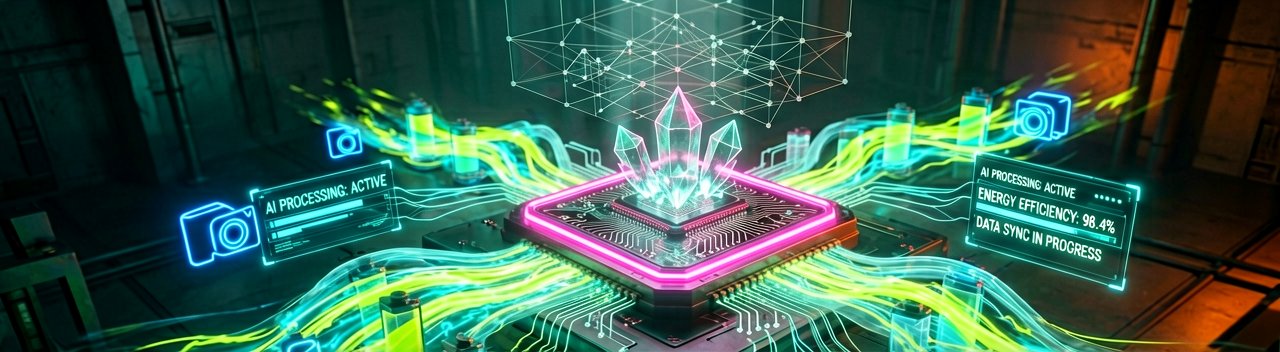
Stakeholders in the silicon space are particularly interested in how this affects hardware cycles. To run X-OmniClaw effectively without turning the phone into a hand-warmer, you need massive throughput from the NPU (Neural Processing Unit). Oppo’s close partnership with chipmakers like MediaTek suggests that future hardware isn't just about more megapixels or faster refresh rates; it’s about "AI bandwidth." If the agent is constantly scanning the screen and listening for voice cues, the efficiency of the silicon becomes the primary differentiator for the user experience.
The Developer's Gambit
Why give this away for free? In a landscape dominated by Google’s Gemini and Apple’s upcoming "Apple Intelligence," Oppo is playing the role of the great equalizer. By making X-OmniClaw open-source, they are betting that a community-driven ecosystem will evolve faster than a proprietary one. They are leveraging projects like OAgents to create a modular standard. If developers start building their "agentic" workflows on Oppo’s framework, Oppo effectively dictates the language of the next generation of smartphones.
Ultimately, the "deep dive" reveals that this isn't just a feature for the Find X series; it’s a bid for platform relevance. In a world where the AI might become the primary way we interact with our devices, the brand that controls the agent controls the user relationship. Oppo is betting that by keeping the agent local, private, and open, they can win over a tech-savvy audience that is increasingly wary of the cloud-first, data-hungry models being pushed by the Western giants.
Reading Between the Lines: For all the utopian talk of an "AI friend" that lives on your device, we have to address the glaring contradiction sitting in the room: the sheer physics of mobile computing. Oppo is pitching a vision where your phone is constantly processing high-resolution video from your camera and real-time telemetry from your screen, all while listening for voice cues. On paper, it’s a privacy miracle; in practice, it’s a thermal nightmare. Silicon efficiency has made leaps, but asking a handheld device to perform constant multimodal inference without tethering itself to a wall charger feels like an optimistic stretch that defies the current reality of battery technology.
There is also the "Ghost in the Machine" problem regarding autonomous action. By granting X-OmniClaw the power to execute touch interactions across any app, Oppo is essentially opening a digital back door. While the data stays local, as emphasized on GitHub, the potential for "hallucinated actions"—where the AI misinterprets a UI element and clicks the wrong button—could range from minor annoyances to accidental financial transfers. Skeptics will rightly ask if we are ready to trust a local model, which inherently lacks the massive reasoning guardrails of a multi-billion parameter cloud model, with the "keys" to our banking and messaging apps.
The Open Source Paradox
Then there’s the curious case of the open-source gesture itself. In the hyper-competitive smartphone market, companies rarely give away their crown jewels for the sake of altruism. By pushing X-OmniClaw and its sister project OAgents into the public domain, Oppo might be acknowledging that they can’t build a viable ecosystem alone. It’s a strategic move to let the community solve the messy "edge cases" of Android’s fragmented UI. If the developer community does the heavy lifting of optimizing the agent for various screen sizes and OS versions, Oppo gets a polished product for their own hardware at a fraction of the R&D cost.
Furthermore, the reliance on specific NPU architectures, like those discussed in China Daily, suggests that "Open Source" might come with a hardware-shaped asterisk. If the agent only runs smoothly on the latest flagship MediaTek or Snapdragon chips, it’s less of a universal standard and more of a subtle nudge to upgrade your handset. We are entering an era where software "freedom" is increasingly gated by how much heat your pocket can handle and how much you're willing to pay for the latest 3nm processor.
"Ultimately, we’re being promised a phone that finally understands us, though I suspect the first thing it will understand is that it’s very, very tired and would quite like to take a nap on its wireless charger until the next software patch arrives."
Artūras Malašauskas is an AI Systems Integrator with 20+ years of production-grade web engineering experience. He has designed, shipped, and scaled enterprise Python/PHP systems for logistics, SaaS, and public-sector clients. For the past year, he has focused exclusively on AI integrations: deploying open-source LLMs, building generative media pipelines (image, audio, video), and engineering multi-agent workflows for real production environments. His standard: reproducibility, security, cost-efficient inference—no vaporware. He documents and evaluates emerging AI tooling, separating verified capabilities from marketing noise. Technical editor at: muza-ai.eu, ai-verslas.lt, ai-naujinos.lt Connect on LinkedIn
Comments