Beyond the Dashboard: MindsDB’s Anton and the Rise of Agentic Business Intelligence

Let’s be honest: Business Intelligence (BI) has always felt a bit like a members-only club where you need a SQL-shaped key to get through the door. For years, the dream has been "democratized data," but the reality is usually a frantic Slack message to the data team asking for a "quick dashboard update" that inevitably takes three days. That’s the friction MindsDB is trying to sand down with the release of Anton, their new open-source BI agent.
Anton isn't just another chatbot stapled onto a database. It’s designed as a dedicated AI agent that lives where your data does, specifically built to handle the messy, nuanced reality of business queries. While most AI tools today can write a decent SQL query if you give them a perfect schema, Anton is positioned to actually understand the context—knowing that when a marketing lead asks for "churn," they aren't just looking for a column name, but a specific set of logic defined by the business.
Moving Beyond Text-to-SQL
The "wow" factor here is the shift from simple natural language processing to full-blown agency. According to MindsDB, the platform allows users to query both structured and unstructured data directly in its current location. Anton takes this a step further by automating the entire lifecycle of an insight: it identifies the relevant data sources, constructs the query, executes it, and then—critically—wraps it in a visualization that actually makes sense to a human being.
What makes this particularly interesting for the open-source community is the "open" part. We’ve seen plenty of proprietary BI bots from the big cloud players, but those often come with a "hotel California" vibe—your data checks in, but the logic never leaves. By keeping Anton open-source, MindsDB is betting that developers want to see under the hood. They want to know exactly how the agent is interpreting their data and, more importantly, they want to be able to tweak that reasoning for their specific industry quirks.
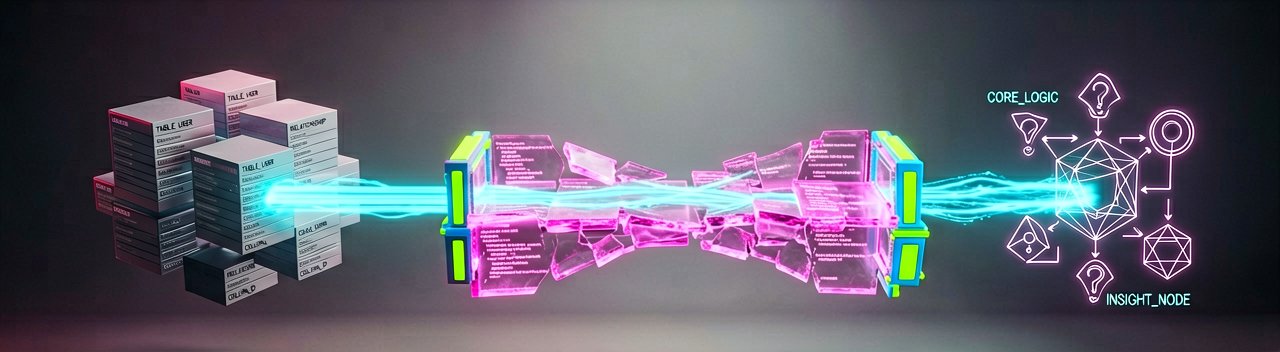
It’s a bold move in an increasingly crowded space. We’re currently seeing a massive shift in how enterprise software is built, moving away from static interfaces toward agentic workflows. If Anton can reliably bridge the gap between "I have a question" and "here is the chart that answers it," it might just be the tool that finally makes those "Data Scientist" titles on LinkedIn a little less overworked.
Of course, the proof will be in the production environments. AI agents are notoriously prone to "hallucinating" data when they hit a wall, and in the world of finance or operations, a 5% error rate is a 100% dealbreaker. MindsDB seems confident that by grounding the agent in their existing AI-layer architecture, they can provide the guardrails necessary to make Anton a reliable colleague rather than a creative writer. Time will tell if Anton is the BI savior we’ve been waiting for, or just another voice in the growing AI choir.
The Architect’s Dilemma: What most press releases gloss over is that MindsDB isn't just launching a tool; they are attempting to solve the "semantic gap" that has haunted data engineering since the 90s. For decades, the industry tried to fix this with "Universal Semantic Layers"—essentially giant, brittle dictionaries that mapped business terms to database columns. They were a nightmare to maintain. Anton represents a pivot toward a living semantic layer, where the AI doesn't just read a map; it learns the territory through iterative feedback.
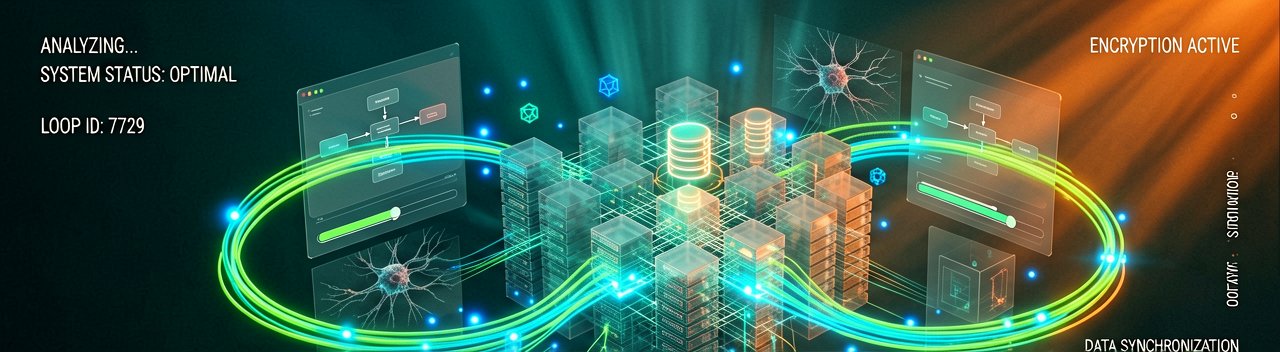
From a stakeholder perspective, the real win here isn't the natural language interface—we’ve had those in varying degrees of brokenness for years. The "secret sauce" is the integration with MindsDB’s existing "AI-tables" concept. By treating models as if they were just another table in a database, Anton can join live production data with predictive insights in a single step. For a CFO, this means the difference between seeing what happened last quarter and seeing a forecast of what will happen next month, all within the same chat thread.
The Ghost in the Machine: Why Open Source Matters Here
Historical context is key to understanding why the open-source nature of Anton is such a tactical jab at the incumbents. In the early 2010s, we saw the rise of "Black Box BI," where proprietary algorithms decided how your churn was calculated. If the numbers looked wrong, you had no recourse but to open a support ticket. By exposing Anton’s "thought process" through open-source code, MindsDB is leaning into a culture of radical transparency that seasoned CTOs are starting to demand in the wake of AI hallucinations.
There is also a subtle play here regarding data gravity. Most BI tools require you to move your data to their cloud to analyze it, which is a security and latency headache. Anton, following the MindsDB philosophy, stays put. It brings the intelligence to the data, whether that’s in PostgreSQL, MongoDB, or Snowflake. This "in-database" execution is a sophisticated architectural choice that reflects a deep understanding of the enterprise's fear of data egress fees and security breaches.
Finally, we have to talk about the "Agentic" shift. We are moving from a world of "software as a tool" to "software as a collaborator." Anton’s ability to not just write code but to verify its own output against the schema suggests a future where the BI agent acts as a first-tier data analyst. It’s a high-wire act; if the agent loses the user's trust early by providing confident but incorrect answers, it’s a long road back. But if MindsDB pulls this off, they won’t just be a part of the stack—they’ll be the interface for the entire business.
Reading Between the Lines: While the hype cycle paints Anton as a frictionless bridge to data-driven enlightenment, any seasoned database administrator will tell you that "natural language" is often a synonym for "ambiguity." The industry is currently infatuated with the idea that LLMs can replace the rigorous logic of a human analyst, but this assumes that business users actually know how to ask the right questions. In reality, the greatest threat to Anton’s success isn't its code—it’s the messy, contradictory way humans define their own metrics.
There is a fundamental tension in MindsDB’s promise of open-source autonomy. By giving users the power to query data directly through an agent, you bypass the traditional gatekeepers of data integrity. This creates a paradox: the "democratization" of data often leads to a "decentralization" of truth. If three different departments ask Anton for "revenue growth" and receive three different charts because they used slightly different phrasing, the resulting boardroom chaos will make people pine for the days of the slow but consistent centralized dashboard.
The Hallucination Tax
We also need to talk about the hidden costs of agentic BI. While the software itself is open-source, the compute cycles required to have an LLM constantly parsing schemas and synthesizing visual logic are anything but free. Organizations may find that they’ve traded a human analyst’s salary for a massive API bill from a model provider. Furthermore, the skepticism around "in-database AI" remains high; letting an autonomous agent execute code within a production environment is enough to give most security officers a mild heart attack, regardless of how many guardrails MindsDB claims to have installed.
Projecting forward, the success of Anton hinges on its ability to handle the "edge cases of human error." It’s easy to demo a bot that finds the top sales person in a clean demo set; it’s a nightmare to build a bot that realizes a user’s query is based on a fundamental misunderstanding of how the underlying database is structured. If Anton can’t learn to say "I don't know" or "Your question makes no sense in this context," it risks becoming a very expensive, very fast generator of sophisticated-looking nonsense.
Ultimately, MindsDB is making a massive bet that the AI-native developer is the new kingmaker. By courting the open-source community, they are hoping that the collective brainpower of thousands of contributors will harden Anton faster than any proprietary lab could. It’s a classic Silicon Valley gamble: build the platform, invite the crowd, and hope the sheer velocity of innovation outruns the inevitable bugs. If it works, the SQL manual might finally become a museum piece; if it doesn't, we’ll just have a whole new generation of broken charts to explain away.
As we watch this play out, the real metric of success won't be how many stars the project gets on GitHub, but how many CFOs actually trust a chart generated by a bot they’ve never met. For now, Anton is a fascinating experiment in trust, transparency, and the limits of automated insight. It’s a bold step toward a future where data speaks our language—let’s just hope it doesn’t start lying to us in it.
The transition from manual reporting to agentic BI feels inevitable, but the road is paved with the ghosts of "self-service" tools that were supposed to fire the data team five years ago. Instead of replacing the experts, these tools usually just give the experts more interesting fires to put out.
"We’ve spent forty years trying to get computers to understand business people, only to realize that most business people are still trying to understand their own spreadsheets. Anton might be a genius, but even Einstein would struggle to explain a Q3 projection to a manager who thinks 'Cloud' is something that happens when it rains."
Artūras Malašauskas is an AI Systems Integrator with 20+ years of production-grade web engineering experience. He has designed, shipped, and scaled enterprise Python/PHP systems for logistics, SaaS, and public-sector clients. For the past year, he has focused exclusively on AI integrations: deploying open-source LLMs, building generative media pipelines (image, audio, video), and engineering multi-agent workflows for real production environments. His standard: reproducibility, security, cost-efficient inference—no vaporware. He documents and evaluates emerging AI tooling, separating verified capabilities from marketing noise. Technical editor at: muza-ai.eu, ai-verslas.lt, ai-naujinos.lt Connect on LinkedIn
Comments