Silicon Apprentices: Inside China’s National Strategy to Mass-Produce Robotic Labor
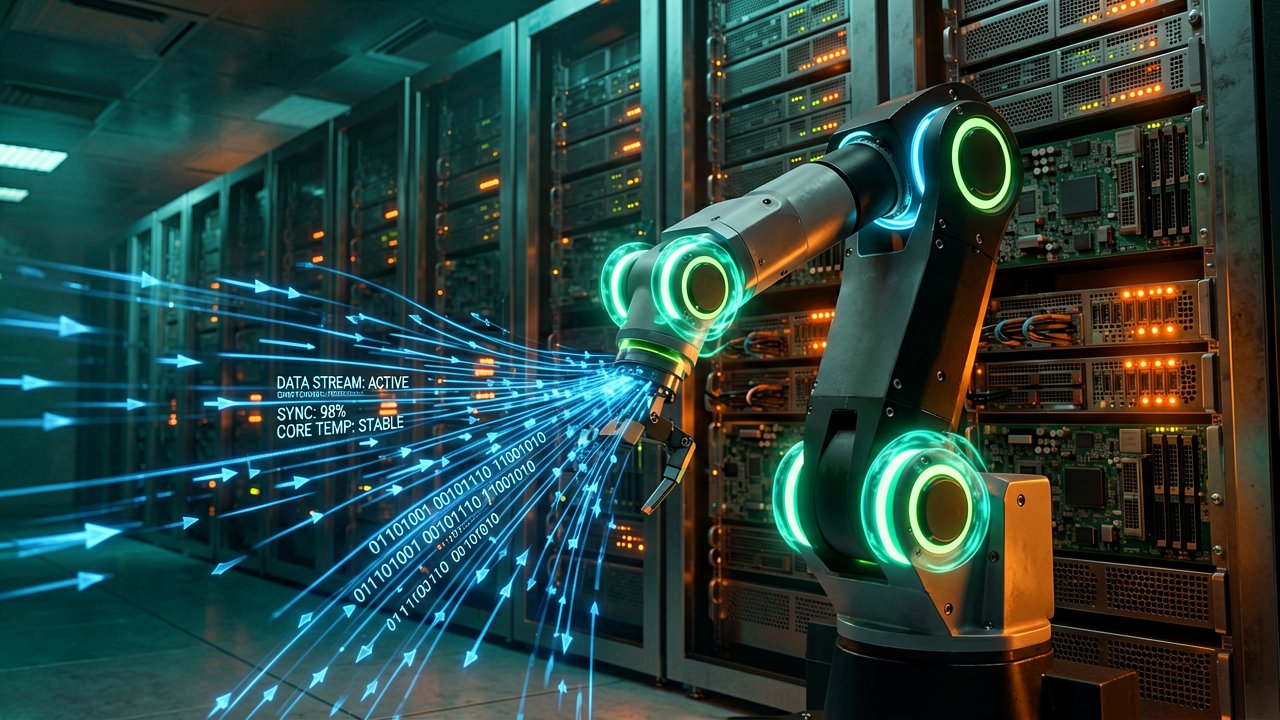
If you thought the "Robot Revolution" was going to happen in a sterile Silicon Valley lab, think again. The real action is currently unfolding in a massive, nondescript facility in Hangzhou, where the future of labor is literally being programmed. This isn't just another tech demo; China has officially pulled the curtain back on its National Pilot Base for Embodied AI Applications, a high-stakes "vocational school" designed to turn clumsy blocks of metal into the world's next great workforce. As reported by Xinhua , the base launched this Saturday with a roster of over 130 robots already in training.
The facility represents a tectonic shift in how we think about Artificial Intelligence. We've spent the last few years obsessing over LLMs—the "brains" that can write a decent essay but can't hold a screwdriver. Now, Beijing is doubling down on "embodied AI," the physical manifestation of those brains. This new training ground isn't for showing off; it's for grinding. We're talking 30 distinct vocational scenarios that range from the mundane, like catering and retail, to the hazardous, like power line inspections and downhole operations. It’s essentially a boot camp where robots learn to navigate the messy, unpredictable reality of a human world.
A Factory for Experience
What makes this Hangzhou base—and its cousins in Shanghai and Beijing—so critical isn't just the hardware. It's the data. In the robotics world, high-quality "real-world" data is the rarest currency. Most startups struggle because their robots only know what they've seen in simulations. This pilot base solves that by acting as a massive data factory. As highlighted by People's Daily, these facilities use motion capture and VR to record human experts performing tasks, which are then fed into the robots' neural networks. It’s a loop of "imitation learning" that allows a machine to gradually master the subtle art of folding laundry or picking fruit.
The scale here is staggering. While the U.S. approach often feels like a series of fragmented moonshots from companies like Tesla or Figure, China is treating this as critical national infrastructure. The Hangzhou hub is part of a broader strategy embedded in the country's 15th Five-Year Plan, aiming to standardize the "industrial chain" of robotics. According to Six Degrees of Robotics, this isn't just aspirational policy; it’s procurement at a national scale. They’re building an ecosystem where foundational chips, operating systems, and training data are shared across the industry to avoid "fragmentation."

But why Hangzhou? Because the city is already a robotics beehive, home to heavy hitters like Unitree. It’s a town that produced an industry output value of over 100 billion yuan in 2025 alone. By launching this national base here, the government is essentially plugging its best robot makers into a shared "super brain" facility. The goal is to move beyond the "one-off" robot and toward a world where a general-purpose machine can be deployed to a factory, a hospital, or a farm with the same ease we download an app today.
The Race for the "Super Brain"
There's a palpable sense of urgency in these developments. As the global tech race heats up, the prize isn't just a smarter chatbot; it's the ability to automate the physical economy. Journalists from NBC News recently toured similar facilities in Beijing, noting that the focus has shifted from "looking human" to "doing what humans do." This involves tackling "atomic skills"—the basic building blocks of movement like grasping and pivoting—that can be combined into complex workflows.
The long-term play is the development of a "General-Purpose Embodied Intelligence Foundation Model." Imagine a single AI model that understands physics, spatial reasoning, and tool use, which can be dropped into any robot body. That’s the endgame. If China can successfully aggregate the data from these vocational training grounds, they won’t just have a few smart robots; they’ll have the operating system for the entire physical world. It’s an ambitious, slightly terrifying, and undeniably impressive bet on where the next decade of productivity is coming from.
The Industrial Soul of the Machine: What most reports miss is that this isn't merely a software upgrade for heavy machinery; it is a fundamental reconfiguration of the Chinese manufacturing identity. For decades, the "Made in China" moniker was synonymous with an inexhaustible pool of human labor. But as demographic shifts turn that pool into a puddle, Beijing is effectively attempting to "bottle" the muscle memory of its aging master craftsmen before they retire. This vocational ground is less of a lab and more of a digital archive for the physical intuition that built the modern world.

Inside the Hangzhou facility, the atmosphere is a strange blend of a high-tech gym and a surgical theater. You see humanoid rigs draped in sensors, mimicking the precise, fluid wrist movements of a veteran welder or the delicate pressure applied by a quality-control inspector. This is the "human-in-the-loop" phase that seasoned industry watchers prioritize. By capturing the high-fidelity nuances of human touch—something traditional programming could never quite replicate—they are overcoming the "Moravec’s Paradox," where high-level reasoning is easy for AI, but low-level sensorimotor skills are incredibly hard.
The Stakeholder Gamble
From the perspective of local provincial leaders, the pilot base is a desperate play for "new productive forces." They aren't just looking for robots; they are looking for tax revenue and industrial stickiness. If a region provides the data and the training infrastructure, robot manufacturers are less likely to move their production offshore. It creates a new kind of "data-anchored" industrial cluster. According to insights from South China Morning Post, the goal is to reach mass production of humanoids by 2025, a timeline that forces stakeholders to prioritize functional reliability over aesthetic perfection.
However, the transition isn't without friction. Industry veterans point out that while the hardware is maturing, the "sim-to-real" gap remains a formidable hurdle. A robot can be a "straight-A student" in a simulated factory environment but fail miserably when faced with a dusty floor or a flickering light. This is why the Hangzhou base emphasizes "30 distinct scenarios." They are intentionally introducing chaos—varied lighting, physical obstacles, and non-standardized tools—to harden the AI. It is a grueling curriculum that mimics the apprenticeship of a human trade school.
Historical Echoes and Future Hooks
Historically, we've seen this pattern before with the rise of CNC machining and early industrial robotics in the 1980s. The difference now is the "general-purpose" nature of the tech. We are moving away from robots that do one thing a million times to robots that can do a million things once. Analysts at MIT Technology Review have often noted that the winner of this race won't necessarily be the one with the best robot, but the one with the most diverse training environment. China’s decision to centralize this training ground suggests they’ve taken that lesson to heart.
Ultimately, the Hangzhou pilot base serves as a lighthouse for the global robotics industry. It signals that the era of the "bespoke robot" is ending. By treating robot training as a public utility—a vocational school for the silicon-based worker—China is attempting to commoditize dexterity. For the seasoned tech journalist, the story here isn't just the launch; it's the inevitable ripple effect on global labor costs and the looming question of how Western firms will compete with a workforce that never sleeps, never strikes, and has just graduated from the world's most rigorous training program.
Reading Between the Lines: The prevailing narrative suggests that China’s centralized "robot academy" is an unstoppable juggernaut of efficiency, but a seasoned look reveals a landscape riddled with architectural contradictions. We are being asked to believe that a state-directed foundation model can seamlessly adapt to the messy, idiosyncratic floors of a million different private factories. History, however, suggests that top-down standardization in tech often struggles to keep pace with the "edge cases" of reality. While the Hangzhou base provides the hardware with a polished education, there is a very real risk that these robots will graduate as "academic overachievers" who crumble the moment they encounter a non-standardized wrench or an undocumented workflow.
There is also the friction of the "Open vs. Closed" ecosystem to consider. By attempting to nationalize the "super brain" of embodied AI, Beijing is betting that collective data will outweigh individual innovation. But in the West, companies like Tesla and Boston Dynamics are banking on proprietary, vertically integrated stacks where the hardware and software are evolved in a tight, secretive loop. This creates a fascinating geopolitical experiment: can a subsidized, collaborative "public utility" model for AI out-iterate the hyper-competitive, venture-backed silos of Silicon Valley? Skeptics argue that centralizing the training data might actually stifle the "evolutionary mutations" in software that lead to true breakthroughs.
The Labor Paradox
The most glaring irony lies in the human element of this robotic vocational school. To train these machines, China is currently employing thousands of "data labelers" and human teleoperators—frequently young, gig-economy workers—to strap on VR headsets and "act out" the labor for the AI to mimic. It is a strange, temporary symbiosis: using the very labor you intend to replace to teach its replacement. If the "embodied AI" takes longer to mature than the demographic clock allows, China might find itself in a "middle-technology trap," where it has invested billions in an automated workforce that still requires a massive, shadow army of human handlers to keep it functional.
Furthermore, we must look at the "exportability" of this silicon workforce. A robot trained on the specific industrial standards and social norms of a Hangzhou pilot base may not "translate" easily to a construction site in Germany or a warehouse in Chicago. Technical standards are the new trade barriers. By locking their robots into a specific national foundation model, China isn't just building a workforce; they are building a digital Great Wall that might make their robotic exports technically incompatible with global markets that favor decentralized, open-source architectures like ROS (Robot Operating System).
Finally, there is the question of "Projected vs. Real" utility. The 15th Five-Year Plan talks a big game about humanoid dominance by 2025, but the distance between a successful pilot demonstration and a profitable, fleet-wide deployment is an abyss littered with the corpses of once-promising robotics startups. As The Economist has noted, the real bottleneck isn't the AI's "brain," but the cost and durability of the "muscles"—the actuators and batteries that still wear out far faster than a human hip joint. Until the hardware catches up to the software’s ambition, these vocational grounds might remain more of a high-tech theater than a true industrial revolution.
It turns out that teaching a robot to appreciate the subtle difference between a ripe peach and a bruised one requires a billion-dollar national initiative, whereas most humans can do it for the price of a snack. We’ve spent forty years worrying that robots would become too smart and take over the world, only to realize the real challenge is making them useful enough to actually finish a shift without needing a firmware update and a team of six engineers.
Artūras Malašauskas is an AI Systems Integrator with 20+ years of production-grade web engineering experience. He has designed, shipped, and scaled enterprise Python/PHP systems for logistics, SaaS, and public-sector clients. For the past year, he has focused exclusively on AI integrations: deploying open-source LLMs, building generative media pipelines (image, audio, video), and engineering multi-agent workflows for real production environments. His standard: reproducibility, security, cost-efficient inference—no vaporware. He documents and evaluates emerging AI tooling, separating verified capabilities from marketing noise. Technical editor at: muza-ai.eu, ai-verslas.lt, ai-naujinos.lt Connect on LinkedIn
Comments