ShengShu Unveils MotuBrain: The ‘World Action Model’ Promising Infinite Robotic Possibilities
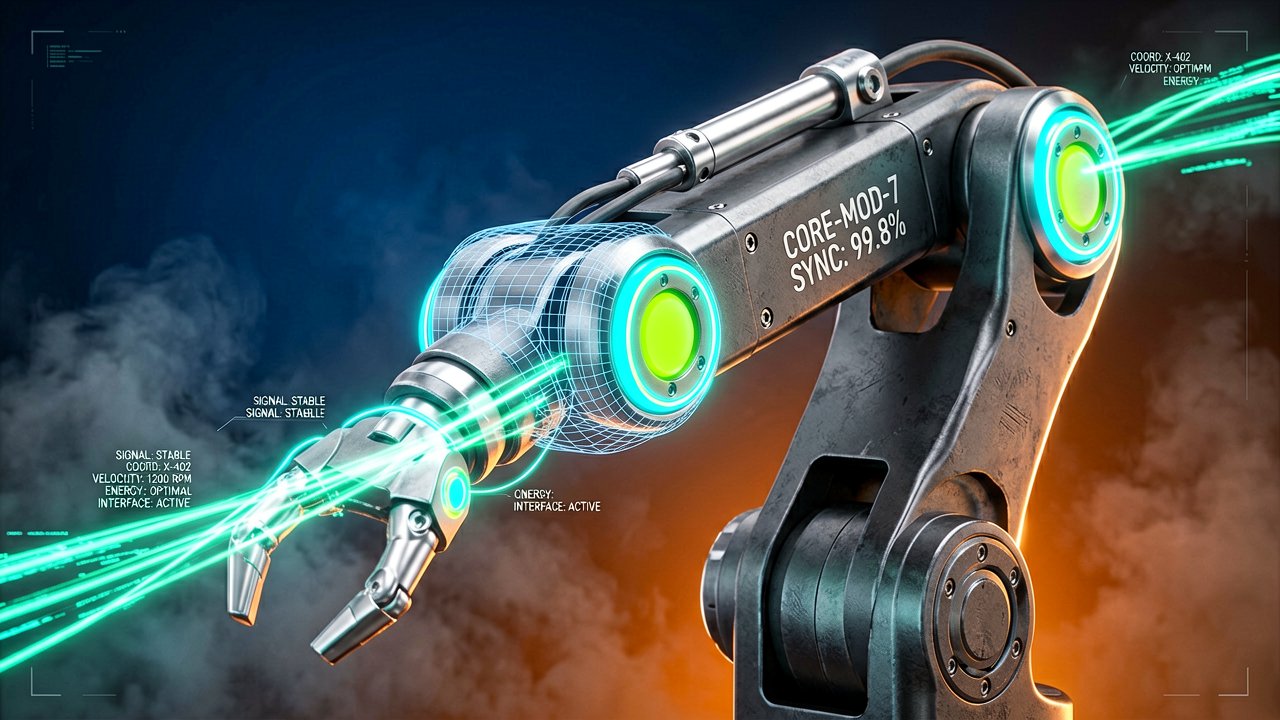
The quest for a "universal brain" for robotics has long been the holy grail of embodied AI. In late April 2026, Beijing-based startup ShengShu Technology took a massive leap toward this vision by unveiling MotuBrain. Described as a World Action Model (WAM), this system doesn't just process commands; it unifies perception, reasoning, and physical execution into a single, cohesive framework. By treating video and action as continuous modalities, MotuBrain allows robots to understand the physical world as a series of evolving states rather than isolated tasks.
Built upon the same architectural foundation as the company's acclaimed ShengShu Technology Vidu video generation model, MotuBrain represents a generational shift. While traditional Vision-Language-Action (VLA) models often struggle with unseen physical motions, a WAM leverages the "physics intuition" gained from large-scale video pre-training. This allows a robot to essentially "imagine" the outcome of its actions before performing them, leading to a 2x improvement in generalization across new environments according to recent findings on arXiv.
Breaking the ‘One Robot, One Model’ Constraint
One of the most significant breakthroughs of MotuBrain is its cross-embodiment compatibility. Historically, robotic software was bespoke—finely tuned for a specific mechanical arm or humanoid frame. MotuBrain shatters this "one robot, one model" pattern by acting as a universal controller. Whether it is integrated into a bimanual humanoid or a mobile industrial arm, the model adapts its motor commands to fit the hardware, enabling a "plug-and-play" era for robotic intelligence.
This flexibility was recently put to the test on global leaderboards. MotuBrain secured the top spot on the WorldArena and RoboTwin 2.0 benchmarks, achieving an EWM score of 63.77. As reported by Pandaily, it remains the only model to exceed a 95.0 success rate in randomized, unpredictable environments. This suggests that the AI isn't just memorizing paths; it is genuinely understanding the spatial dynamics of the rooms it inhabits.

The "infinite possibilities" tagline refers to the model’s ability to handle long-horizon tasks. Most robotic systems are limited to two or three "atomic actions"—the smallest units of movement like "reach" or "grasp." MotuBrain, however, can execute sequences involving 10 or more atomic actions flawlessly. This allows for complex workflows such as flower arranging, hot pot serving, and cocktail mixing, where the robot must coordinate multiple steps and two hands simultaneously.
The Power of Predictive Re-planning
What truly separates MotuBrain from its predecessors is its capacity for "predictive re-planning." In real-world demonstrations, robots trained with this model showed a startling ability to self-correct. For instance, if a robot attempts to scoop food with a ladle and senses the scoop is empty, it recognizes the failure in real-time and retries the action automatically. This behavior emerges without specific "retry" data, stemming instead from the model’s ability to predict the physical world’s evolution.
This "mental rehearsal" capability is a direct byproduct of ShengShu’s expertise in generative video. By using video as a dense representation of how the world moves, MotuBrain can extrapolate a generalized series of actions from remarkably small datasets. Some iterations of their technology, like the earlier Vidar model, reportedly required as little as 20 minutes of training data to learn new tasks, as noted by The Robot Report.
The market has responded with significant enthusiasm. In April 2026, ShengShu announced a $293 million Series B funding round led by Alibaba Cloud. This capital injection, covered by Reuters, positions the startup as a primary challenger to global AI giants. The funding is intended to accelerate the "data flywheel" effect, where deployed robots collect real-world operational data to further refine the core model.
A Future of Embodied AI Everywhere
ShengShu isn't keeping this technology in a lab. They have already established strategic partnerships with robotics firms like Astribot and SimpleAI to deploy MotuBrain in industrial and commercial settings. The goal is to move beyond "automation"—which follows fixed paths—toward "autonomy," where machines can assist humans in domestic chores or complex manufacturing without constant supervision.
As we look toward the latter half of 2026, the distinction between digital AI and physical AI is blurring. MotuBrain proves that the same transformer architectures that gave us ChatGPT and Sora are equally capable of picking up a glass or tidying a sofa. By unifying the "seen world" with the "actions to take," ShengShu is not just building smarter robots; they are giving machines a sense of physical agency that was once the stuff of science fiction.
Ultimately, the success of MotuBrain suggests that the path to general-purpose robots lies in the fusion of generative creativity and motor control. As these models scale, the "infinite possibilities" for robotic intelligence will move from a marketing slogan to a daily reality in our homes and workplaces. The era of the "universal brain" has officially arrived, and it is powered by the predictive pulse of a world action model.
Would you like to explore the specific technical architecture of the three-stream Mixture-of-Transformers used in MotuBrain?
Inside the Engine Room: The meteoric rise of ShengShu Technology is not merely a story of clever algorithms, but a strategic masterclass in aligning generative AI with the physical world. Founded by core members of Tsinghua University’s AI research labs, the company has rapidly transitioned from a theoretical powerhouse to a commercial juggernaut. Their philosophy centers on the belief that a truly intelligent robot must possess a "pre-trained intuition" for physics—a feat they achieved by bridging the gap between their Sora-rivaling video models and robotic actuators.
The "ShengShu Model" of development relies heavily on the concept of Unified Multimodal Scaling. By utilizing a "Joint Vision-Action Transformer," the team successfully trained MotuBrain to treat pixels and motor torques as parts of the same language. This approach allows the model to absorb vast quantities of internet-scale video data to learn how objects fall, bounce, or break, and then apply that knowledge to the precise movements of a robotic gripper in a kitchen or warehouse.
The Powerhouse Backing the Breakthrough
Behind the hardware and software lies a formidable ecosystem of investors and partners. The recent influx of nearly $300 million in funding was not just a financial transaction; it was a vote of confidence from China’s tech elite. Lead investor Alibaba Cloud provides more than just capital; it offers the massive computational infrastructure required to train models with billions of parameters. This synergy ensures that MotuBrain can be updated and refined in real-time using cloud-based "digital twins" before updates are pushed to physical robots.
ShengShu’s leadership, including CEO Zhu Jun, has consistently emphasized that their goal is "Artificial General Intelligence (AGI) in the physical dimension." Unlike many Western startups that focus on pure software, ShengShu has embedded itself within the hardware supply chain. By partnering with firms like Astribot, they have gained access to high-performance humanoid bodies that serve as the perfect "vessels" for MotuBrain’s sophisticated neural networks.
The collaboration with Astribot is particularly noteworthy. While ShengShu provides the "brain," Astribot provides the "nervous system" and "muscles." Their latest humanoid model, the S1, boasts human-like speed and precision, capable of performing tasks at speeds exceeding 10 meters per second. When paired with MotuBrain’s reasoning, the S1 can perform delicate tasks like folding laundry or peeling fruit with a success rate that was previously thought to be years away.
A Strategy of Open Innovation and Real-World Stress Testing
To ensure MotuBrain remains the industry standard, ShengShu has adopted a strategy of "aggressive stress testing." They have deployed prototype systems in varied environments, from high-traffic logistics centers to simulated home environments. These deployments serve as a data-gathering exercise, where every failure becomes a learning opportunity. If a robot drops a package, the visual data is fed back into the training loop, teaching the next iteration of the model to adjust its grip pressure dynamically.
This "closed-loop" learning system is what allows the model to handle the chaotic nature of the real world. Traditional robots are often paralyzed by "the noise of reality"—the slight variations in lighting, the movement of people, or the unpredictability of soft objects. MotuBrain’s WAM architecture filters this noise by focusing on the "causal physics" of the scene, allowing it to predict that a sliding glass on a wet surface requires a different approach than one on a dry tablecloth.
Furthermore, ShengShu is fostering an ecosystem by releasing specific API subsets for researchers. By allowing the academic community to interface with MotuBrain, they are effectively crowdsourcing the solution to the "edge case" problem. This open-armed approach has helped them dominate benchmarks like WorldArena, where their model demonstrated a superior ability to navigate through cluttered, non-static environments compared to closed-source competitors.
The Road Ahead: From Lab to Living Room
The company’s roadmap for the remainder of 2026 involves a transition from industrial pilots to commercial service roles. We are beginning to see the first wave of "Motu-powered" concierges and laboratory assistants. These machines are not just programmed tools; they are autonomous agents capable of making executive decisions, such as prioritizing tasks based on urgency or asking a human for clarification when an instruction is ambiguous.
In the broader geopolitical context, ShengShu’s success marks a pivotal moment for "Embodied AI" in the East. While the West has seen incredible progress with companies like Figure and Tesla, ShengShu’s ability to integrate high-fidelity video generation directly into the action loop offers a unique competitive advantage. They have effectively turned the "video generation war" into a "robotic intelligence war," proving that the best way to move in the world is to first understand how it looks.
As the costs of these models decrease and the hardware becomes more commoditized, ShengShu is positioning itself as the "operating system" of the robotic age. The implications are staggering: a future where the barrier to entry for building a sophisticated robot is no longer the software, but simply the hardware it occupies. With MotuBrain, the "infinite possibilities" are moving closer to a universal standard for how machines interact with our reality.
Should we take a closer look at how MotuBrain handles "unseen tasks" compared to traditional reinforcement learning methods?
The Convergence of Sight and Sinew: Looking past the glossy press releases, ShengShu’s unveiling of MotuBrain signals a fundamental shift in the AI value chain: the death of the "specialized robot." For decades, the industry operated under the assumption that physical intelligence was a modular problem, where vision, logic, and motion were separate components bolted together. By treating these as a unified "World Action Model," ShengShu is essentially betting that the laws of physics can be learned as a statistical distribution of pixels. This isn't just a technical upgrade; it is a paradigm shift that commoditizes robotic hardware in favor of centralized, generative brains.
From a market perspective, this moves the goalposts for competitors like OpenAI and Tesla. If a robot can "dream" the physics of a task before executing it, the need for millions of hours of expensive, real-world trial-and-error data evaporates. MotuBrain’s ability to achieve high success rates with minimal data suggests that "synthetic experience"—where the AI trains itself in a high-fidelity video hallucination—is becoming more valuable than physical teleoperation. This creates a massive barrier to entry for firms that do not possess a top-tier generative video engine.
The Economic Displacement of the 'Single-Task' Machine
The analytical significance of "cross-embodiment" cannot be overstated. In the current industrial landscape, billions are spent on re-tooling factories for specific tasks. A model like MotuBrain, which can be ported from a robotic arm to a quadruped to a humanoid, introduces a level of flexibility that drastically lowers the Total Cost of Ownership (TCO) for automated systems. We are moving toward a "software-defined robotics" era where the mechanical frame is merely a peripheral for a cloud-based intelligence.
However, this centralization of robotic intelligence into a few "frontier models" raises serious questions about data sovereignty and safety. If a single World Action Model controls a vast fleet of service robots across different sectors, a single "hallucination" in the model’s physical reasoning could have cascading real-world consequences. Unlike a chatbot that provides a wrong answer, a WAM that miscalculates the structural integrity of a shelf or the weight of a heavy object presents a tangible physical risk.
There is also the "Data Flywheel" moat to consider. By deploying MotuBrain into the wild via partnerships with Astribot and others, ShengShu is creating a feedback loop that may be impossible to break. Every successful flower arrangement or cocktail poured in a commercial setting is a data point that further refines the model's understanding of fluid dynamics and friction. This creates a "winner-takes-most" dynamic in the embodied AI space, where the most deployed brain becomes the smartest at an exponential rate.
Geopolitical Implications of Physical AGI
Analytical eyes are also focused on the geopolitical ripple effects. ShengShu’s rapid scaling, backed by Alibaba, underscores a strategic pivot toward "Physical AGI" as a matter of national industrial policy. While the previous decade was defined by who controlled the internet's data, the next will be defined by who controls the "world model"—the digital blueprint of how the physical world functions. MotuBrain is a clear signal that this competition has moved from screens to the streets.
The choice of a Mixture-of-Transformers (MoT) architecture is also a savvy move for long-term scalability. By activating only relevant "expert" pathways for specific tasks, ShengShu can keep latency low—a critical requirement for real-time robotic response—while maintaining a massive knowledge base. This solves the "latency vs. intelligence" trade-off that has plagued previous attempts to put large language models into physical bodies.
We must also analyze the human-AI interaction element. MotuBrain’s focus on "long-horizon" tasks—multistep processes that require memory and planning—suggests that AI is moving from being a "tool" to an "agent." An agent doesn't just wait for the next command; it understands the ultimate goal. If told to "prepare a meal," a Motu-powered robot understands the sequence of washing, cutting, and cooking as a holistic world state, rather than a checklist of chores.
The Real-World Friction of Scalability
Despite the technical brilliance, the "infinite possibilities" face the very finite constraints of hardware durability and battery life. A "World Action Model" can think perfectly, but it is still limited by the torque of a motor or the wear and tear of a joint. The next bottleneck for ShengShu won't be the model's IQ, but the reliability of the "vessels" it inhabits. The real-world performance gap between a lab demo and a 24/7 industrial shift remains the final frontier for this technology.
Finally, we have to look at the "Video-to-Action" pipeline as a form of compression. ShengShu has figured out how to compress the complexity of the physical universe into a neural network. This suggests that future robots won't need to be "programmed" in the traditional sense at all. They will simply be "shown" a video of a task, and the WAM will translate those pixels into a motor plan. This effectively turns every YouTube "How-To" video into a training manual for the world's robotic fleet.
In summary, MotuBrain represents the moment generative AI stopped being a parlor trick and started having hands. The implications for labor, manufacturing, and daily life are profound. We are witnessing the birth of a technology that understands our world not through text or code, but through the same visual and physical intuition that humans spend a lifetime developing. The race for the physical world has begun, and the brain in the lead is one that knows how to imagine.
"We’ve spent decades terrified that robots would become sentient and take over the world, but it turns out they just wanted to watch enough TikTok videos to figure out how to pour a decent drink. Let’s hope the 'infinite possibilities' include a robot that finally knows how to fold a fitted sheet—because if AI can solve that, the Singularity can take the rest of the week off."```
Artūras Malašauskas is an AI Systems Integrator with 20+ years of production-grade web engineering experience. He has designed, shipped, and scaled enterprise Python/PHP systems for logistics, SaaS, and public-sector clients. For the past year, he has focused exclusively on AI integrations: deploying open-source LLMs, building generative media pipelines (image, audio, video), and engineering multi-agent workflows for real production environments. His standard: reproducibility, security, cost-efficient inference—no vaporware. He documents and evaluates emerging AI tooling, separating verified capabilities from marketing noise. Technical editor at: muza-ai.eu, ai-verslas.lt, ai-naujinos.lt Connect on LinkedIn
Comments