Precision Cleaning Hits the Mainstream: Mova V70 Ultra Complete Debuts with a €319 Early-Bird Edge
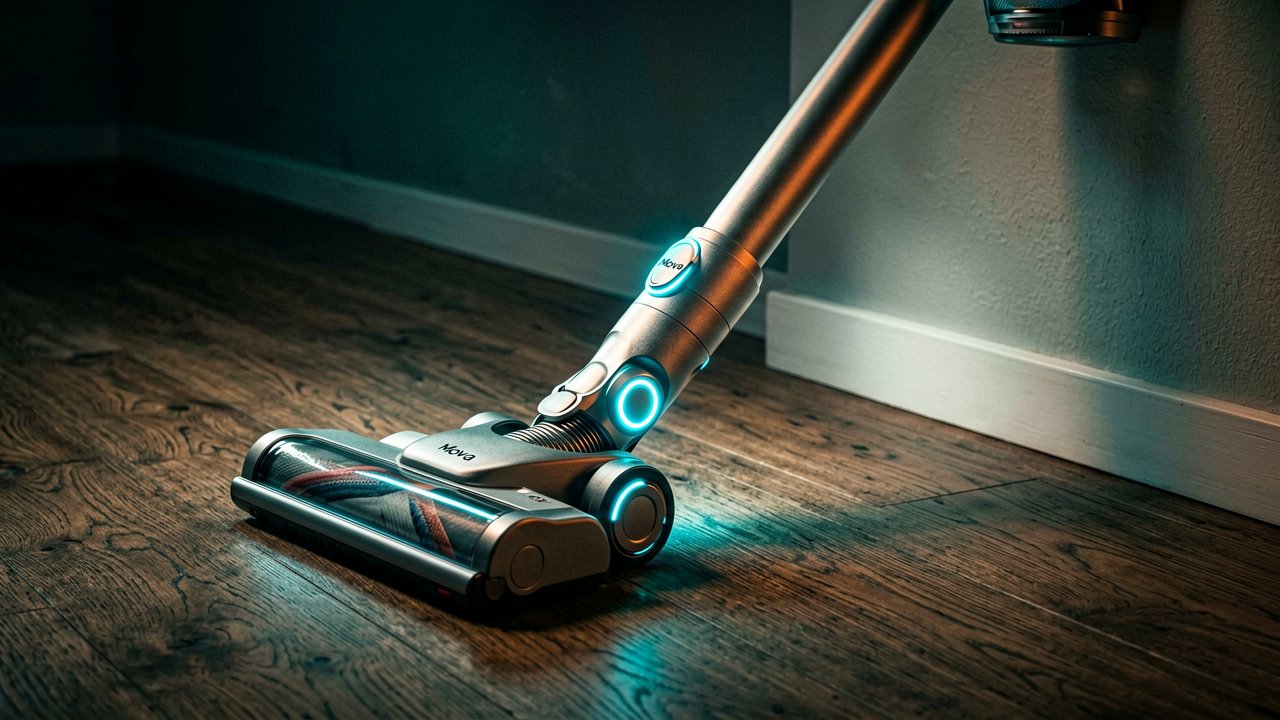
The quest for a truly hands-off home cleaning experience has long been stymied by the "last inch" problem. Even the most advanced robot vacuums frequently leave dust bunnies nestled in right-angle corners or under low-profile cabinetry. Enter the Mova V70 Ultra Complete, a new contender in the luxury cleaning space that aims to close that gap with a mechanical solution designed specifically for hard-to-reach areas.
Reported by Notebookcheck, the Mova V70 Ultra Complete is making its market entrance with an aggressive pricing strategy. To drum up early adoption, the brand is offering a staggering €319 in savings off the retail price, positioning a high-end, feature-rich machine at a price point that typically buys mid-range performance. This move signals a heating up of the competitive landscape where hardware innovation alone isn't enough; you need a sharp price to match.
Breaking the Corner Barrier
The standout hardware feature of the V70 Ultra Complete is its specialized extending arm. Most circular vacuums struggle with corners because their brushes simply cannot reach into the apex of a 90-degree angle. Mova’s solution involves a side brush and mop assembly that can physically extend outward when the onboard sensors detect an edge or corner, effectively turning a round robot into a tool capable of square-room precision.
This "Flexi-Arm" approach isn't entirely new to the industry—we’ve seen similar tech from brands like Roborock and Dreame—but Mova is betting on bringing this "Ultra" level of hardware to a broader audience. By targeting furniture legs and deep corners, the V70 promises to reduce the frequency with which homeowners need to follow up with a manual stick vacuum.

Suction Power and Surface Versatility
Under the hood, the V70 Ultra Complete doesn't skimp on raw power. Suction ratings for top-tier robots have skyrocketed recently, and Mova remains competitive here, offering high-Pascal (Pa) suction capable of pulling deep-seated debris from thick carpets. This is paired with an intelligent carpet detection system that boosts power the moment the device transitions from hardwood to rugs.
Furthermore, the vacuum features a sophisticated mopping system. Instead of merely dragging a damp cloth across the floor, the V70 utilizes dual rotating mops that apply downward pressure. This mechanical scrubbing action is significantly more effective at removing dried-on stains than static mopping systems found on entry-level models.
A Station That Does It All
The "Complete" in its name refers largely to the all-in-one docking station. Modern consumers increasingly demand a "maintenance-free" week, and Mova delivers with a base that handles everything from dust bin emptying to mop washing. After a cleaning cycle, the robot returns to the dock where its dirty water is exchanged for fresh, and the dust is sucked into a sealed bag.
Crucially, the dock includes a hot-air drying feature for the mops. According to industry insights from The Jerusalem Post, moisture-related odors and bacteria growth are the biggest complaints among robot mop owners. By drying the pads at high temperatures, the V70 mitigates these hygiene concerns entirely.
Navigation and AI Intelligence
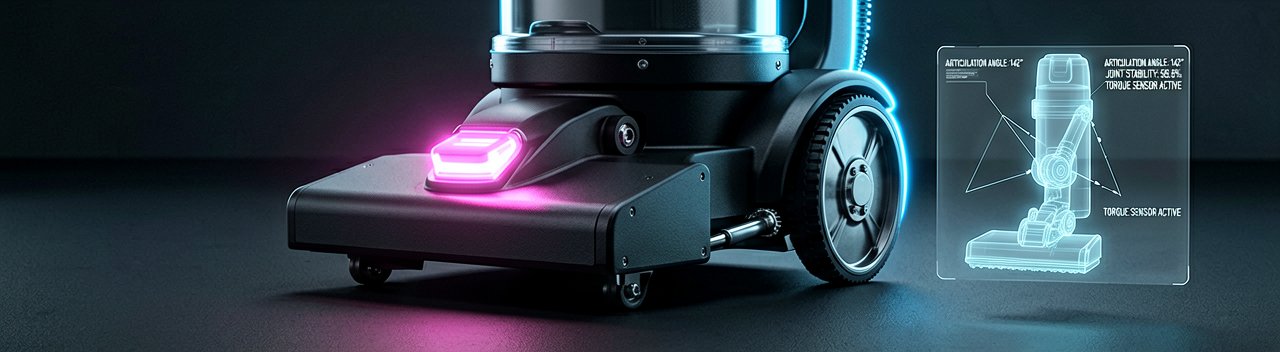
Power is nothing without control, and Mova leverages LiDAR-based navigation to map homes with millimeter precision. This allows the V70 to weave through complex floor plans without the "pinball" effect seen in older, cheaper units. The AI-driven obstacle avoidance is tuned to recognize common household items, meaning you likely won't have to pre-clear the floor of shoes or charging cables.
This level of intelligence extends to the software experience. The accompanying app allows users to set no-go zones, schedule specific room cleanings, and even adjust the moisture levels of the mops for different floor types. It's the kind of granular control that has become the hallmark of the 2026 robot vacuum generation.
The Market Impact of the Launch Offer
The €319 discount is more than just a marketing gimmick; it's a strategic strike. With competitors like the Roborock Qrevo series also targeting the high-value segment, Mova is clearly aiming for the title of "best bang for your buck." By shaving off such a significant portion of the MSRP at launch, they are making flagship-level tech accessible to the "prosumer" market.
Tech reviewers from Consumer Reports often highlight that the true value of a robot vacuum isn't just in how much it picks up, but in how much time it saves the user. With the V70’s focus on hard-to-reach areas, the goal is to eliminate that final 5% of manual cleaning that usually ruins the automation dream.
In summary, the Mova V70 Ultra Complete represents a significant step forward in the democratization of high-end home robotics. If its real-world performance matches its impressive spec sheet, the early-bird buyers taking advantage of that €319 saving might just be getting the tech deal of the season.
As the smart home market matures, the focus is shifting from "can it vacuum?" to "can it vacuum everywhere?" Mova's answer is a resounding yes, powered by an arm that reaches where others can only dream of going.
The Strategic Pivot: While the launch of the Mova V70 Ultra Complete is capturing headlines for its technical prowess, the real story lies in the shifting dynamics of the parent company and the broader industry. Mova is not merely a standalone brand; it operates within the ecosystem of Dreame Technology, a powerhouse that has rapidly climbed the ranks of the global smart appliance market. This relationship allows Mova to leverage high-end research and development while positioning itself as a more accessible, value-driven alternative to the ultra-premium segments.
The aggressive €319 discount is a calculated move designed to disrupt the dominance of established players during a critical market window. By launching with such a significant price reduction, Mova is essentially forcing a conversation about price-to-performance ratios. Historically, features like retractable mechanical arms and hot-air drying stations were reserved for "pro" models costing well over a thousand euros, but Mova is effectively moving the goalposts for what consumers should expect from a mid-tier budget.
The Dreame Connection and Manufacturing Might
Understanding Mova requires looking at its lineage. Dreame Technology, backed by significant investment from giants like Xiaomi, has mastered the art of high-speed digital motors—the "heart" of any vacuum. By utilizing the same supply chain and engineering breakthroughs as its parent company, Mova can integrate high-Pascal suction and LiDAR precision without the astronomical R&D costs typically associated with such innovations. This shared architecture is what makes the V70 Ultra’s price point sustainable rather than just a loss-leader.
This "trickle-down" technology approach is becoming the standard in the robotics industry. Much like the automotive world where luxury features in a flagship sedan eventually become standard in a hatchback, the "Flexi-Arm" technology is a prime example of rapid commoditization. Mova’s role is to act as the vanguard for this transition, bringing advanced mechanical solutions to the everyday household before they become stale or outdated.
Engineering the "Last Inch" Solution
The development of the extending side-brush and mop was born out of thousands of hours of consumer feedback. Market research consistently showed that while owners were happy with general floor cleanliness, they remained frustrated by the "halo of dust" left around chair legs and baseboards. The V70 Ultra’s engineering team focused on the kinematics of these moving parts, ensuring that the extending arm could apply consistent pressure without getting stuck or damaging delicate furniture.
This mechanical complexity introduces new challenges, specifically regarding the longevity of moving parts. To combat this, Mova has integrated high-durability actuators and sensors that recalibrate the arm's extension hundreds of times per second. It is a delicate dance between software and hardware; the robot must know exactly how far to reach without pushing itself away from the wall, a common flaw in earlier experimental prototypes from other brands.
The Docking Station Revolution
The "Ultra" designation in the V70 Complete also highlights the industry's pivot toward "Station-First" design. In the early days of robot vacuums, the dock was merely a charging brick. Today, the dock is an appliance in its own right. The V70's station manages the most unpleasant aspects of floor care—the sludge and the smells. By automating the mop-washing process with high-speed agitation and subsequent heat drying, Mova is addressing the "hygiene gap" that has plagued robot mops for years.
Beyond cleanliness, there is an environmental angle to these stations. Modern docks are becoming more efficient in their water usage, utilizing filtration systems to ensure that every drop is used effectively. While the V70 doesn't yet feature a plumbed-in water connection (a feature still reserved for the most expensive custom installs), its large-capacity tanks are designed to support a 3,000-square-foot home for several days without human intervention.
Software Ecosystem and User Experience
The software side of the V70 Ultra Complete is where the user experience is truly won or lost. Mova has opted for a clean, intuitive UI that prioritizes "one-tap" cleaning. However, for the power user, the depth of customization is surprising. Users can map multiple floors, create "virtual walls" that prevent the robot from entering a child's playroom covered in LEGOs, and even sequence the cleaning so that the kitchen is tackled last with the highest water flow.
Artificial Intelligence also plays a quieter, more observant role. The V70 doesn't just avoid obstacles; it learns from them. If it consistently encounters a rug in a specific spot, it optimizes its approach path to ensure the "Flexi-Arm" is retracted or extended at the perfect moment. This machine learning capability means that the robot actually gets more efficient at cleaning a specific home the more it is used, reducing the time spent on each cycle over several weeks.
Looking Ahead: The Competitive Landscape
As Mova expands its footprint in the European market, the pressure on competitors like iRobot and Shark is mounting. The V70 Ultra Complete represents a new breed of "challenger products" that offer 95% of the features of a premium flagship at nearly 60% of the price when discounts are applied. This democratization of tech is great for the consumer but creates a "feature arms race" among manufacturers who must now innovate faster than ever to stay relevant.
The success of this launch will likely dictate Mova's future roadmap. If the V70 Ultra Complete performs well, we can expect to see even more specialized attachments—perhaps even vertical cleaning capabilities or better integration with smart home ecosystems like Matter. For now, the focus remains on capturing the "hard-to-reach" areas of both the home and the market, one corner at a time.
The Commoditization of Sophistication: The entry of the Mova V70 Ultra Complete into the European market signifies more than just a seasonal sale; it marks a pivotal moment where high-complexity robotics transitions from a luxury novelty to a consumer expectation. By slashing over €300 from the launch price, Mova isn't just selling a vacuum; they are devaluing the "premium" barrier that has historically protected the profit margins of legacy brands. When "ultra-high" suction and mechanical edge-cleaning move into the mid-market price bracket, the industry is no longer competing on basic utility, but on the refinement of the user experience and long-term software support.
From an analytical standpoint, the V70’s "Flexi-Arm" is a hardware admission of software limitations. For years, manufacturers tried to solve corner cleaning through complex algorithms and "D-shaped" chassis designs. However, the return to a circular body with an articulating limb suggests that mechanical flexibility is a more reliable solution for the chaotic environment of a modern home than AI-driven pathfinding alone. It’s a pragmatic engineering pivot: if you can’t make the robot fit the corner, make the brush reach it.
Market Cannibalization or Expansion?
One must consider the strategic risk of such an aggressive launch. By offering flagship features at a steep discount, Mova risks cannibalizing the sales of its own parent company's higher-tier models. However, this is likely a calculated move to seize "digital real estate." In the smart home ecosystem, the first brand to map a user's home and integrate into their mobile app often wins a long-term loyalist. The data gathered from these environments—knowing where the furniture is and the frequency of cleaning—is often more valuable to a tech ecosystem than the initial margin on the hardware.
Furthermore, the timing of this launch suggests a pre-emptive strike against the upcoming "Matter" era of smart home connectivity. As cross-platform compatibility becomes the norm, hardware must stand on its own merit rather than relying on brand-locked ecosystems. Mova is betting that a high-spec, low-cost entry will secure them a seat at the table before the market reaches total saturation, where product differentiation becomes nearly impossible.
The Maintenance-Free Mirage
The push toward "all-in-one" docking stations reflects a deeper psychological trend in consumer tech: the desire for total outsourcing. We are seeing a shift where the "product" is no longer the vacuum itself, but the promise of "recovered time." However, the analytical reality is that these complex stations introduce new failure points. A station that washes, dries, and empties is a machine with pumps, heaters, and vacuums of its own, necessitating a different kind of maintenance that many consumers aren't yet prepared for.
There is also the question of "over-specing." The current race for higher Pascal (Pa) suction ratings often exceeds what is physically necessary for standard flooring. This "numbers war" is a classic symptom of a maturing market where brands use quantifiable metrics to distract from a lack of fundamental innovation. While the V70’s power is impressive, its true value lies in how it manages that power without draining the battery or creating excessive noise—engineering hurdles that are much harder to market than a high Pa number.
Supply Chain Resilience and Pricing
Mova’s ability to offer a €319 discount also highlights a sophisticated mastery of the global supply chain. In an era of fluctuating component costs, the ability to maintain such a buffer suggests that the cost of producing high-end LiDAR and brushless motors has plummeted. This creates a "race to the bottom" for price, which benefits the consumer in the short term but may lead to a consolidation of the market where only the largest conglomerates with massive economies of scale can survive.
This consolidation could lead to a duopoly or triopoly in the robot vacuum space, much like we see in the smartphone market. If Mova can successfully bridge the gap between "cheap and cheerful" and "expensive and elite," they position themselves as the "Android" of the vacuum world—functional, powerful, and accessible. The analytical takeaway is that the "luxury" label on robot vacuums is being permanently retired; autonomy is becoming a standard utility, not a status symbol.
Environmental and Longevity Concerns
Finally, the "disposable" nature of high-tech gadgets remains the elephant in the room. As these machines become more complex with moving arms and intricate base stations, the right-to-repair becomes a critical issue. Analytical observers will be watching closely to see if Mova provides long-term parts availability. If a €319 discount leads to a machine that is discarded after two years because a small actuator in the "Flexi-Arm" fails, the "savings" are purely illusory.
However, if Mova can prove durability alongside this pricing, they will have successfully disrupted one of the last remaining high-margin sectors of the home appliance industry. The V70 Ultra Complete is essentially a stress test for the market: how much "ultra" can a consumer get before the price stops being a barrier? The answer, it seems, is a lot more than it used to be.
At the rate these robots are evolving, by 2028 they won’t just be cleaning our corners; they’ll be complaining about the dust we leave behind and asking for a raise. For now, enjoy the €319 savings—just don't expect the robot to sign for the package when it arrives.
Artūras Malašauskas is an AI Systems Integrator with 20+ years of production-grade web engineering experience. He has designed, shipped, and scaled enterprise Python/PHP systems for logistics, SaaS, and public-sector clients. For the past year, he has focused exclusively on AI integrations: deploying open-source LLMs, building generative media pipelines (image, audio, video), and engineering multi-agent workflows for real production environments. His standard: reproducibility, security, cost-efficient inference—no vaporware. He documents and evaluates emerging AI tooling, separating verified capabilities from marketing noise. Technical editor at: muza-ai.eu, ai-verslas.lt, ai-naujinos.lt Connect on LinkedIn
Comments