The $55 Billion Drone Gambit: Quantum Cyber Site Charts the New Defensive Frontier
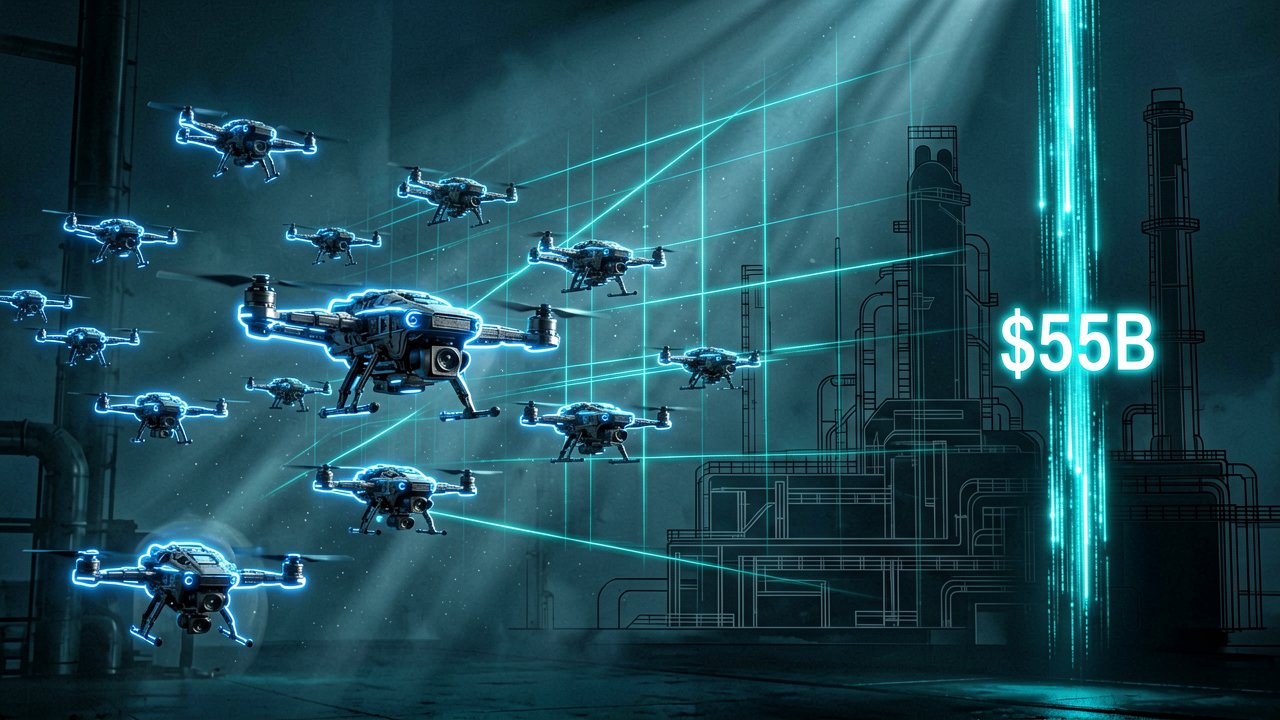
The landscape of modern warfare is shifting beneath our feet, and the latest signals from Washington suggest the ground is about to move even faster. The Trump administration has signaled a massive intent to bolster national defense through a proposed $55 billion allocation specifically targeted at unmanned systems and related technologies. This isn't just a budget increase; it’s a fundamental reimagining of how a superpower projects influence in a digital age where the sky is increasingly crowded with autonomous eyes and wings.
According to analysis from the Quantum Cyber Site, this investment aims to bridge the gap between traditional military hardware and the agile, cost-effective capabilities of modern drone fleets. The site has become a focal point for tracking how these billions might trickle down into real-world applications, emphasizing that the focus isn't solely on the drones themselves, but the encrypted networks and "quantum-ready" cybersecurity protocols needed to keep them operational under fire.
For the tech industry, this represents a "Sputnik moment" for domestic manufacturing. For years, the market has been dominated by overseas players, raising significant concerns regarding supply chain integrity and data privacy. By injecting tens of billions into the sector, the administration is effectively placing a massive bet on "Made in America" tech, hoping to catalyze a domestic industrial base that can out-innovate global competitors while ensuring every circuit board is vetted for security.
The Convergence of AI and Autonomy
The proposed $55 billion isn't just for hardware; a substantial portion is expected to flow into the software layer. We are looking at a future where drones aren't just remotely piloted, but are capable of making split-second decisions via edge computing. This push for increased autonomy is a central theme on Quantum Cyber Site, which explores how artificial intelligence will manage "swarms" of drones that can communicate with each other to overwhelm traditional defense systems.
This massive financial commitment also reflects a direct response to global conflicts where cheap, off-the-shelf drones have successfully challenged multi-million dollar assets. The Pentagon has been watching these developments closely, and the new administration's budget reflects an "adapt or get left behind" philosophy. It’s no longer enough to have the biggest jets; you need the smartest, most numerous, and most resilient autonomous systems to maintain a competitive edge.
Private sector contractors are already pivoting to meet this demand. Companies that once focused on high-end aerospace are now looking at how to mass-produce "attritable" systems—drones that are inexpensive enough to be lost in combat without causing a strategic or financial disaster. This shift toward high-volume, low-cost production is a radical departure from the traditional defense procurement model that favored decades-long development cycles for single platforms.
Cybersecurity as the Ultimate Backbone
However, with more drones comes more risk. As Quantum Cyber Site frequently points out, every autonomous unit is a potential entry point for a cyberattack. The administration’s $55 billion plan reportedly includes heavy investments in "Quantum-Resistant" encryption. The goal is to ensure that even as computing power grows, the command-and-control links between operators and their drone swarms remain impenetrable to sophisticated electronic warfare and hacking attempts.
Furthermore, the initiative is expected to boost the "Replicator" program, an ambitious effort to field thousands of autonomous systems across multiple domains within short timeframes. As noted by reports from the U.S. Department of Defense, the ability to scale technology rapidly is now considered a core pillar of national security. The $55 billion acts as the fuel for this engine, providing the necessary capital to move from prototypes to mass deployment.
Beyond the battlefield, the implications for the commercial sector are profound. The advancements in battery life, obstacle avoidance, and secure data transmission funded by the taxpayer will eventually find their way into delivery services, agricultural monitoring, and search-and-rescue operations. We are essentially watching the birth of a new economic sector, subsidized by a mandate for national defense, which could redefine the logistics industry over the next decade.
Critics, of course, raise questions about the speed of this rollout and the ethics of autonomous lethality. Yet, the momentum behind the $55 billion proposal suggests that the administration views these risks as secondary to the danger of falling behind in the global drone race. The narrative on Quantum Cyber Site suggests that the technological "genie" is out of the bottle, and the only choice left is to ensure that the U.S. holds the remote control.
In the coming months, the tech world will be watching closely as these funds are debated and eventually distributed. Whether this investment leads to a new era of American technological hegemony or serves as an expensive lesson in the difficulties of rapid scaling remains to be seen. What is certain is that the drone industry is no longer a niche hobbyist market—it is now the frontline of the world's most expensive and consequential tech race.
Ultimately, the spotlight from Quantum Cyber Site on these developments highlights a broader truth: the future of sovereignty is increasingly tied to the silicon and software flying overhead. As the Trump administration pushes for this historic $55 billion investment, the drone sector is moving from the periphery of tech news to the very center of the global stage, marking a definitive end to the era of manned-only dominance.
Strategic Synergy: The Rise of the Defense Autonomous Warfare Group
The pivot toward a $55 billion drone budget isn't just a spending hike; it’s a structural overhaul of the American military machine. At the heart of this transition is the newly formed Defense Autonomous Warfare Group (DAWG), an entity designed to absorb and "supercharge" previous initiatives like the Biden-era Replicator program. According to reports from Breaking Defense, DAWG represents a staggering 24,000% increase in funding compared to its previous iterations, signaling that the Pentagon is no longer just experimenting with drones but is committing to them as a primary pillar of national defense.
A key player in this emerging ecosystem is Quantum Cyber Site, which recently secured an exclusive IP license for BP United’s advanced sky defense platform. This technology is capable of autonomous operations over a 25-kilometer range and is designed to integrate seamlessly into a "System-of-Systems" architecture. By assembling specialized autonomous capabilities—including quantum-encrypted communications and EMP-hardened components—under a single Nasdaq-listed entity, the company is positioning itself as a central hub for the administration's "quantum-ready" defense requirements.
However, the rapid influx of capital has also brought intense scrutiny toward companies with ties to the administration. Notable among these is PowerUs (also referred to as PUIS), a Florida-based firm in which Donald Trump Jr. and Eric Trump hold ownership stakes. As reported by PBS NewsHour, the company has recently moved to sell drone interceptors to Gulf states while simultaneously securing its first major contracts with the U.S. Air Force. While company officials maintain that selections are based purely on technological merit, ethics experts have raised concerns regarding potential conflicts of interest as the first family’s business interests intersect with federal defense procurement.
Manufacturing and the Move Away from Foreign Dependence
The $55 billion injection is also intended to forcibly decouple the American drone supply chain from overseas adversaries. Currently, many U.S. systems remain reliant on components or rare-earth materials where China holds a dominant market share. The administration's plan, as highlighted by Barron's, involves funding the establishment of a robust domestic manufacturing base for armed drones. Firms like Unusual Machines, where Donald Trump Jr. serves as an advisor and shareholder, are actively acquiring smaller competitors to scale production to thousands of units per month to meet this demand.
This push for "attritable" warfare—systems cheap enough to lose in high numbers—is a response to lessons learned on modern battlefields. In recent conflicts, inexpensive off-the-shelf drones have successfully neutralized multi-million dollar assets, forcing a rethink of traditional aerospace dominance. The goal now is to field massive, AI-enabled swarms that can overwhelm enemy defenses through sheer volume and coordinated machine-speed intelligence, a strategy that the U.S. Department of Defense views as critical for potential Pacific theater operations.
Integration of these systems requires more than just hardware; it demands a radical shift in military doctrine. The Defense Autonomous Warfare Group is currently testing "orchestration tools" that allow different types of unmanned systems to communicate and execute complex intents even when traditional communications are jammed or severed. This "collaborative autonomy" is where much of the R&D budget is being funneled, as the Pentagon seeks to ensure that the U.S. can out-maneuver adversaries who have already integrated low-cost drone tech into their frontline strategies.
The Ethics and Economics of the Drone Boom
Beyond the defense sector, the sheer scale of the $55 billion allocation is acting as a catalyst for the broader drone market. Estimates from Grand View Research suggest the global drone market could reach over $182 billion by 2033, fueled in large part by the technology "trickle-down" from these massive military investments. Technologies perfected for the battlefield—such as high-endurance batteries and advanced thermal imaging—are already being adapted for civilian use in agriculture, mining, and disaster relief.
Despite the economic optimism, the human element remains a point of contention. The establishment of a new "Uncrewed Systems Combat Command," similar in stature to Space or Cyber Command, underscores that the military is preparing for a future where robots are the primary combatants. Critics argue that the speed of this rollout may outpace the development of ethical frameworks for autonomous lethality, while proponents argue that staying at the forefront of this tech race is the only way to ensure national security in an increasingly volatile world.
As the fiscal 2027 budget debates begin, the tech industry is bracing for a "gold rush" in autonomous systems. Whether through established giants or nimble newcomers backed by political heavyweights, the $55 billion signal has been received: the future of American air power will be uncrewed, interconnected, and autonomous. For sites like Quantum Cyber, the challenge now lies in translating these massive legislative signals into deployable, battlefield-ready technology that can withstand the rigors of the next generation of warfare.
Reading Between the Lines: The Industrial-Cyber Complex Takes Flight
The proposed $55 billion allocation for the Defense Autonomous Warfare Group (DAWG) represents a staggering 24,000% increase over previous years, signaling more than just a budget hike—it is a total pivot in the American fiscal doctrine of war. Analysts from Breaking Defense note that this funding leap is designed to move the military past the "exquisite" and expensive platforms of the last century toward a high-volume, "attritable" model. By prioritizing systems that are cheap enough to be lost in combat, the administration is effectively weaponizing economic scale, betting that the U.S. industrial base can out-produce any adversary in a war of robotic attrition.
From a market perspective, this investment creates a massive gravity well for capital. Established aerospace giants are now finding themselves in direct competition with nimble, software-first companies that can iterate in weeks rather than decades. The rapid rise of Quantum Cyber N.V., which recently rebranded and secured exclusive licenses for autonomous "sky defense" platforms, illustrates how small-cap entities are positioning themselves as the connective tissue for this new "System-of-Systems" architecture. Investors are increasingly looking beyond simple airframes to the underlying AI and quantum-encrypted command layers that will manage these massive swarms.
However, the sheer speed of this transition creates significant structural risks. Critics in The Hill warn that the Pentagon may be repeating historical mistakes by focusing on hardware procurement while underinvesting in the human-machine teaming infrastructure required to manage it. A $55 billion drone force is only as effective as the data networks that support it; without equivalent advancements in "quantum-resistant" encryption and secure edge computing, these vast swarms could potentially be neutralized or even hijacked by sophisticated electronic warfare, turning a multi-billion dollar asset into a liability in seconds.
The Geopolitical Ripple Effect
This massive spending signal is already triggering a global autonomous arms race. Countries like India are already significantly boosting their own defense tech budgets, with drone and anti-drone technology accounting for over 70% of new startup funding as reported by Inc42. The U.S. move toward a "drone dominance" strategy forces allies and adversaries alike to reconsider their own procurement priorities, potentially leading to a worldwide decline in manned aircraft investments in favor of unmanned, AI-driven platforms that operate at speeds humans simply cannot match.
Economically, the $55 billion acts as a massive subsidy for the domestic tech sector, particularly in the fields of robotics and advanced semiconductors. By mandating "Made in America" components to ensure supply chain security, the administration is creating a closed-loop ecosystem that could revitalize domestic manufacturing. This "patriotic procurement" strategy aims to insulate the U.S. from foreign dependencies, though it remains to be seen if the domestic industry can scale production fast enough to meet the Pentagon's ambitious "Replicator" timelines without causing massive price inflation in the civilian drone market.
The strategic shift also emphasizes the growing importance of "Counter-UAS" (Unmanned Aircraft Systems) technology. As cheap drones continue to overwhelm traditional, expensive defenses in global conflict zones, the market for interdiction and shielding technology is projected to explode. Companies that can provide reliable, low-cost "sky defense"—like the 25km-range autonomous platforms licensed by Quantum Cyber—are becoming as vital to national security as the offensive drones themselves, creating a balanced "sword and shield" market dynamic.
The Software-Defined Battlefield
Ultimately, the $55 billion isn't just buying plastic and motors; it is buying a software-defined battlefield. The administration's focus on AI-powered coordination means that future conflicts will likely be won or lost in the code. As noted by Morningstar, the integration of quantum antenna technology and accelerated AI at the coordination layer is the "signal the market needed" to treat autonomous warfare as a mature industry. This shift places a premium on cybersecurity, as the battle for the sky becomes increasingly inseparable from the battle for the network.
Furthermore, the creation of a new sub-unified command for autonomous warfare, as highlighted by Greenberg Traurig, institutionalizes this change. By elevating drones to a status similar to Special Operations or Cyber Command, the U.S. is signaling that it no longer views unmanned systems as "support" assets. They are now the "tip of the spear," and the $55 billion budget is the first installment in a long-term plan to ensure that the spear remains sharp, automated, and American-made.
As this capital begins to flow, the primary challenge for the administration will be oversight. Moving from a $225 million budget to $55 billion in a single year is a logistical feat that has few precedents. The tech industry must now prove it can handle this "Sputnik-level" investment without succumbing to the traditional pitfalls of defense procurement—bloated contracts, missed deadlines, and tech that is obsolete by the time it reaches the field. The race is on, and for the first time, the primary contestants are flying without pilots.
“In the end, $55 billion buys a lot of drones, but it also buys a lot of questions. If the future of warfare is truly autonomous, we might finally reach a point where the only thing humans have to do on the battlefield is remember where they parked the remote control—and hope the adversary didn’t change the Wi-Fi password.”
Artūras Malašauskas is an AI Systems Integrator with 20+ years of production-grade web engineering experience. He has designed, shipped, and scaled enterprise Python/PHP systems for logistics, SaaS, and public-sector clients. For the past year, he has focused exclusively on AI integrations: deploying open-source LLMs, building generative media pipelines (image, audio, video), and engineering multi-agent workflows for real production environments. His standard: reproducibility, security, cost-efficient inference—no vaporware. He documents and evaluates emerging AI tooling, separating verified capabilities from marketing noise. Technical editor at: muza-ai.eu, ai-verslas.lt, ai-naujinos.lt Connect on LinkedIn
Comments