Soapbox Launches Ditto: A Customizable Social Hub for the Open Web
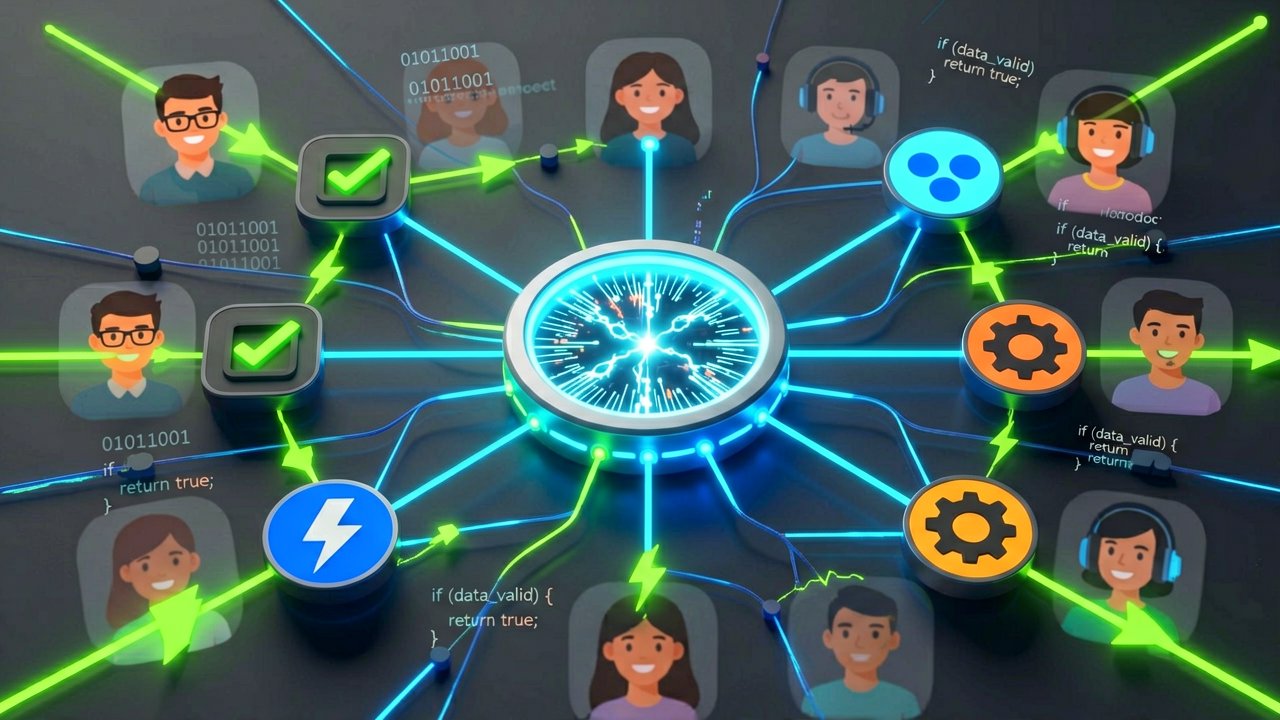
The decentralized social media landscape just got another contender. Soapbox announced the public launch of Ditto, a fully customizable social platform that aggregates feeds from Nostr, Bluesky, and Mastodon into a single interface. The app is available now on iOS, Android, and web.
According to the official press release, Ditto positions itself as a revival of the early internet's creative era. Users can customize themes, layouts, fonts, colors, and backgrounds, or browse designs created by the community. One user described it as reminiscent of MySpace, capturing the sense of expressive, personalized online identity that modern platforms have largely abandoned.
The platform's architecture is built on Nostr, where users control their own identity through cryptographic keys instead of platform-owned accounts. That means identities and social connections remain portable across compatible apps, with no single company able to revoke access or ownership. The full source code is available on GitLab under AGPL-3.0 licensing.
What makes Ditto physically different from other social apps is the tactile experience of interaction. Users send encrypted "letters" decorated with custom stationery and animated envelopes. Virtual pets called Blobbis hatch, evolve, and live alongside users throughout the app—think Tamagotchi-style companions that follow you around the feed. It's a deliberate departure from the sterile, uniform interfaces dominating social media today.

Alex Gleason, founder of Soapbox and former Head of Engineering at Truth Social, announced the launch at Bitcoin 2026 in Las Vegas. The company builds open source tools for the decentralized web, funded by grants and donations from organizations including And Other Stuff, OpenSats, and the Human Rights Foundation. No ads, no investors, no data sales.
Ditto integrates Bitcoin Lightning payments directly into the platform. Creators receive Lightning tips ("zaps") on posts and profiles—peer to peer, instant, borderless. No payment processor takes a cut. This is significant for creators who've grown tired of platform fees eating into their earnings (a problem that has plagued users for years, frankly).
The app also includes Shakespeare, a tool that lets anyone create lightweight apps and publish them directly to the Ditto network. Gleason described it as "software as a creative act, powered by AI." Users can build microapps without traditional coding barriers, then share them across the social network.
Following and interacting with people across networks like Bluesky and Mastodon happens without leaving the app. Your feed, your rules, across multiple networks. The unified experience means you're not juggling three different apps to reach your full social graph.

Soapbox's broader vision is to make online identity, communication, and creation more open, expressive, and user-controlled. The company applies the same principles that made Bitcoin unstoppable to social communication. Just as Bitcoin removed trusted intermediaries from money, Nostr removes them from speech.
Whether users actually adopt this model remains the real question. The decentralized web has struggled with mainstream adoption for years, and Ditto's success depends on whether people will trade convenience for control. The app is available now at ditto.pub, but the network effects that drive social platforms take time to build.
The technology works. The question is whether enough people care enough to use it.
Artūras Malašauskas is an AI Systems Integrator with 20+ years of production-grade web engineering experience. He has designed, shipped, and scaled enterprise Python/PHP systems for logistics, SaaS, and public-sector clients. For the past year, he has focused exclusively on AI integrations: deploying open-source LLMs, building generative media pipelines (image, audio, video), and engineering multi-agent workflows for real production environments. His standard: reproducibility, security, cost-efficient inference—no vaporware. He documents and evaluates emerging AI tooling, separating verified capabilities from marketing noise. Technical editor at: muza-ai.eu, ai-verslas.lt, ai-naujinos.lt Connect on LinkedIn
Comments