TII Launches Falcon Perception: 600M-Parameter Multimodal AI Model
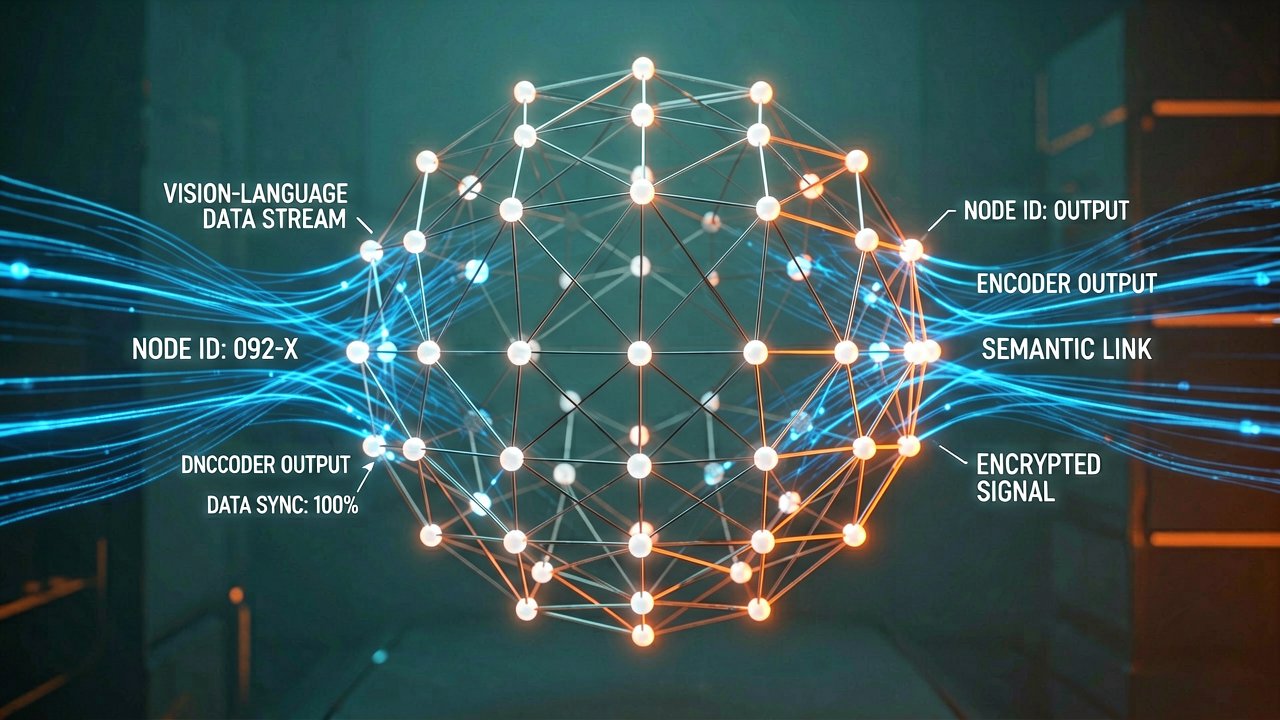
The Technology Innovation Institute has officially launched Falcon Perception, a multimodal AI model designed to process visual and textual data within a single unified architecture. The announcement, made on May 3, 2026, positions the UAE among a select group of nations developing sovereign multimodal AI capabilities at scale.
At approximately 600 million parameters, Falcon Perception delivers competitive performance against significantly larger systems. According to the official TII press release, the model matches state-of-the-art results from Meta's SAM3 on object segmentation benchmarks while operating with substantially lower computational demands.
This is not another case of throwing more compute at the problem (a strategy that has dominated AI development for years, frankly). The architecture unifies image and language processing from the first layer, eliminating the layered complexity typical of vision-language systems that rely on separate components for each modality.
Users can query images using natural language prompts. Ask the model to "identify the red car" or "count the tins of soup," and Falcon Perception locates and segments objects directly within the image, even when hundreds of items populate the scene. The physical experience involves clicking through a web interface, typing a prompt, and watching bounding boxes appear around detected objects in near real-time.

Dr. Najwa Aaraj, CEO of TII, stated the model reflects the institute's commitment to advancing AI capabilities that are both cutting-edge and practical. The goal is enabling more efficient multimodal systems deployable across real-world industries while strengthening sovereign AI infrastructure.
Performance metrics span three key areas. On the SaCO benchmark for object segmentation, Falcon Perception matches leading models. For complex visual understanding involving attributes, comparisons, and dense scenes, it outperforms competing systems. Document intelligence testing on OmniDocBench shows results approaching much larger systems including Mistral-OCR, DOTS-OCR, and Alibaba's Qwen-VL-235B.
The Abu Dhabi Media Office confirmed the launch in a separate government announcement, noting the model's role in advancing the UAE's position in global AI competition across language, vision, and robotics.
Dr. Hakim Hacid, Chief Researcher at TII's Artificial Intelligence and Digital Research Center, explained the team's goal was challenging the assumption that vision systems must rely on complex multi-stage architectures. By demonstrating a single dense transformer can handle perception tasks efficiently, they're opening the door to scalable multimodal systems.

Industrial applications include robotic systems following natural-language instructions in complex environments, automated inspection and defect detection in manufacturing, and large-scale visual data labeling for AI training. The model processes images containing hundreds of objects simultaneously without hallucination or architectural limitations.
Falcon Perception extends the Falcon family beyond language and reasoning models. It will be released to the research community as open source on Hugging Face as part of TII's ongoing commitment to open and collaborative AI development.
The broader implication is a shift in AI innovation where progress is increasingly defined not only by scale but by architectural refinement and deployability. For enterprise environments operating under strict constraints around compute availability, latency, security, and cost, such requirements can limit practical deployment of hyperscale models.
Whether enterprises actually adopt this over established alternatives remains the real question. Open source availability helps, but integration costs and workflow friction will determine real-world impact.
Artūras Malašauskas is an AI Systems Integrator with 20+ years of production-grade web engineering experience. He has designed, shipped, and scaled enterprise Python/PHP systems for logistics, SaaS, and public-sector clients. For the past year, he has focused exclusively on AI integrations: deploying open-source LLMs, building generative media pipelines (image, audio, video), and engineering multi-agent workflows for real production environments. His standard: reproducibility, security, cost-efficient inference—no vaporware. He documents and evaluates emerging AI tooling, separating verified capabilities from marketing noise. Technical editor at: muza-ai.eu, ai-verslas.lt, ai-naujinos.lt Connect on LinkedIn
Comments