Meta Launches Muse Spark AI Model Across Apps and Glasses
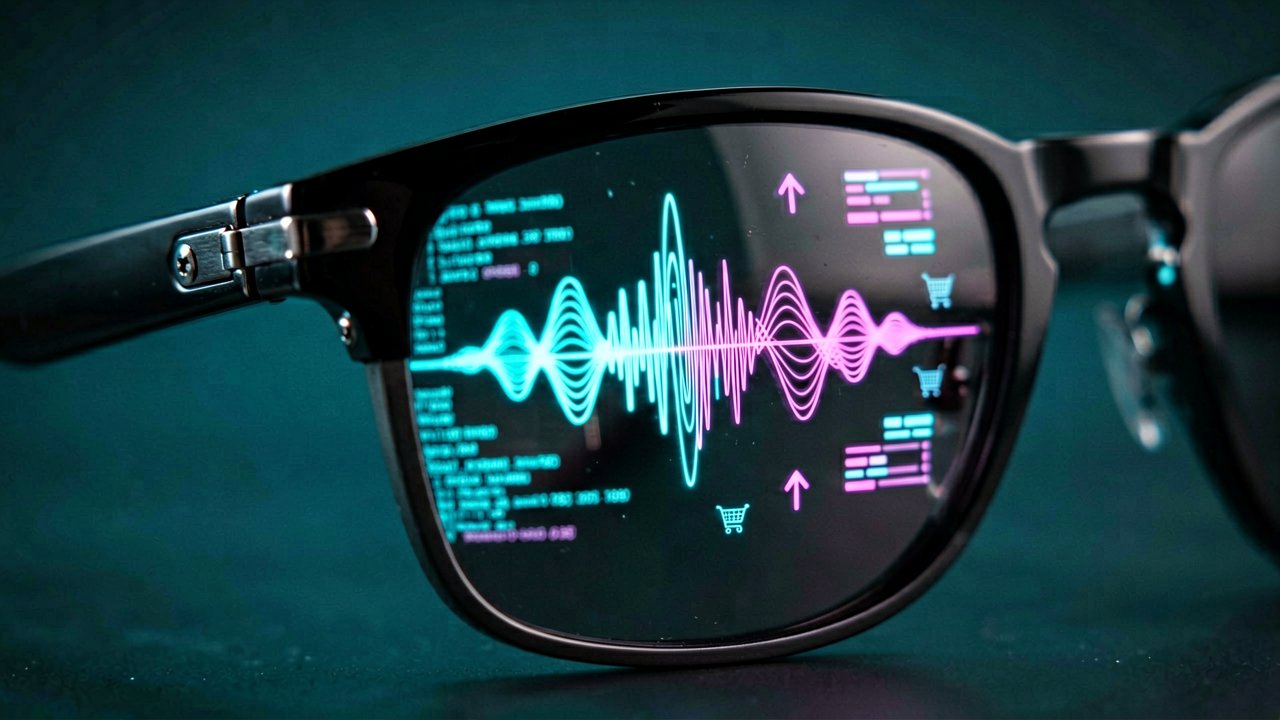
Meta has officially launched Muse Spark, the first model in its new Muse series developed by Meta Superintelligence Labs. The announcement arrived on April 8, 2026, with an update on May 12, 2026 confirming broader rollout across the company's ecosystem.
This isn't a minor patch. Meta rebuilt its entire AI stack from the ground up over nine months, creating what it calls a "deliberate and scientific approach to model scaling." The result is a natively multimodal reasoning model that handles visual information, tool use, and multi-agent orchestration.
According to Meta's official announcement, Muse Spark now powers the Meta AI assistant in the Meta AI app and meta.ai. The model achieves competitive performance in multimodal perception, reasoning, health, and agentic tasks. It's available today at meta.ai and the Meta AI app, with a private API preview opening to select users.
The physical experience matters here. In the Meta AI app, users can talk naturally with the assistant — interrupt, switch topics, or swap languages mid-conversation. Point your camera at a landmark or a household item, and the assistant responds in real time. Snap a photo of an airport snack shelf and the model identifies and ranks snacks by protein content without you squinting at labels.

Shopping mode represents another tangible shift. Users can ask Meta AI to search Facebook Marketplace listings near them alongside options from across the internet. The interface brings used and new items together in one place with a map showing where each one is located. Refine by price, style, or distance. @ a specific brand or creator to browse their public content directly and scroll through products in a new grid format.
Rollout timing varies by platform. Muse Spark is gradually rolling out on Ray-Ban Meta and Oakley Meta glasses in the US and Canada over several weeks, with Meta Ray-Ban Display coming this summer. Beyond hardware, the model is bringing intelligence to WhatsApp, Instagram, Facebook, Messenger, and Threads — appearing in search bars, group chats, posts, and more.
Two new experiences are in testing: side chats that let you tap the Meta AI icon from any group chat for a quick, private answer grounded in what your group is discussing, and @meta.ai mentions in Threads posts and replies. (This is the kind of feature that actually makes sense in a crowded chat thread, unlike most AI integrations that just add noise.)
Technical benchmarks show specific performance gains. In Contemplating mode, which orchestrates multiple agents reasoning in parallel, Muse Spark achieves 58% in Humanity's Last Exam and 38% in FrontierScience Research. The model reaches the same capabilities with over an order of magnitude less compute than Llama 4 Maverick.
Health applications received particular attention. Meta collaborated with over 1,000 physicians to curate training data enabling more factual and comprehensive responses. The model can generate interactive displays unpacking health information like nutritional content of foods or muscles activated during exercise.
Visual coding capabilities let users create custom websites and mini-games straight from a prompt. Ask Meta AI to build a dashboard for planning a surprise party, spin up a retro arcade game to chase a high score, or launch a whimsical flight simulator — then share any of them with friends.
From a business perspective, this positions Meta to compete directly with frontier models like Gemini Deep Think and GPT Pro. The multi-agent orchestration approach enables significant capability improvements in challenging tasks without requiring extreme latency.
The company is making strategic investments across the entire stack — from research and model training to infrastructure, including the Hyperion data center. This infrastructure commitment signals long-term scaling ambitions beyond the initial Muse Spark release.
Whether users actually pay for these features remains the real question. The model reaches billions of people across Meta's apps, but free access doesn't guarantee engagement. Most people will use it for quick answers and move on. The shopping integrations might drive some commerce, but that depends on whether the recommendations feel genuinely useful or just another layer of friction in an already cluttered digital experience.
Time will tell if Muse Spark becomes the personal superintelligence Meta promises or just another AI feature that fades into the background. The technology is impressive on paper, but the real test is whether it survives the daily grind of actual human use.
Artūras Malašauskas is an AI Systems Integrator with 20+ years of production-grade web engineering experience. He has designed, shipped, and scaled enterprise Python/PHP systems for logistics, SaaS, and public-sector clients. For the past year, he has focused exclusively on AI integrations: deploying open-source LLMs, building generative media pipelines (image, audio, video), and engineering multi-agent workflows for real production environments. His standard: reproducibility, security, cost-efficient inference—no vaporware. He documents and evaluates emerging AI tooling, separating verified capabilities from marketing noise. Technical editor at: muza-ai.eu, ai-verslas.lt, ai-naujinos.lt Connect on LinkedIn
Comments