iManage Launches MCP Server for AI Integration

On May 14, 2026, iManage announced the iManage MCP Server, a standardized connection that allows AI systems to access governed content without bespoke integrations or bulk data exports. The product implements the Model Context Protocol, an open standard originated by Anthropic in November 2024 and since adopted by OpenAI, Google, and Microsoft.
According to the official press release, the server enables permission-aware access to business-critical knowledge while maintaining existing security, ethical walls, and compliance controls. The announcement details that documents remain in place within iManage, negating the need for AI tools to store copies.
Neil Araujo, CEO of iManage, stated customers are not choosing one AI tool and stopping there. They are already experimenting with multiple AI systems, and the real challenge is connecting those tools to knowledge without creating new governance gaps. The MCP Server addresses this by providing a single, standardized connection between the iManage platform and any AI system.
Compatible systems include Harvey, Legora, ChatGPT, Claude, Microsoft Copilot, or a firm's own AI agents. The architectural philosophy prioritizes connectivity rather than construction; standardisation rather than semantic enrichment. This differs materially from NetDocuments, which built a typed, traversable graph with proprietary semantic substrate.

Findings from the iManage Knowledge Work Benchmark Report 2026 reveal 32% of respondents cite integration complexity as one of the biggest barriers to AI adoption. The product's value proposition is that one MCP connection replaces a proliferating list of custom API integrations. New AI systems can be added or swapped without an IT project each time (a problem that has plagued users for years, frankly).
Some care is needed in describing what is on offer here, because "open protocol" phrasing can flatten important distinctions. MCP standardises how an AI client and a data source negotiate access, authentication, and tool invocation. It does not, in itself, model legal matters, extract parties from documents, or assemble a matter overview. Those interpretive tasks remain with whatever AI sits on the client side of the connection.
The governance posture deserves serious attention, particularly given doctrinal pressure visible in cases such as the recent SDNY ruling on consumer AI use and legal privilege. Keeping privileged content inside the firm's governed environment, rather than allowing it to be shipped out to a vendor's processing infrastructure, is not a cosmetic point. It is the practical pre-condition for AI use to be defensible in the cases where defensibility will be tested.
iManage will showcase the MCP Server at ConnectLive Chicago on May 19–20 and ConnectLive London on June 9–10. A dedicated launch webinar runs May 28, titled "Your AI. Your Knowledge. Fully Governed." The event walks attendees through how the server works alongside Ask iManage as part of iManage's complete AI platform.
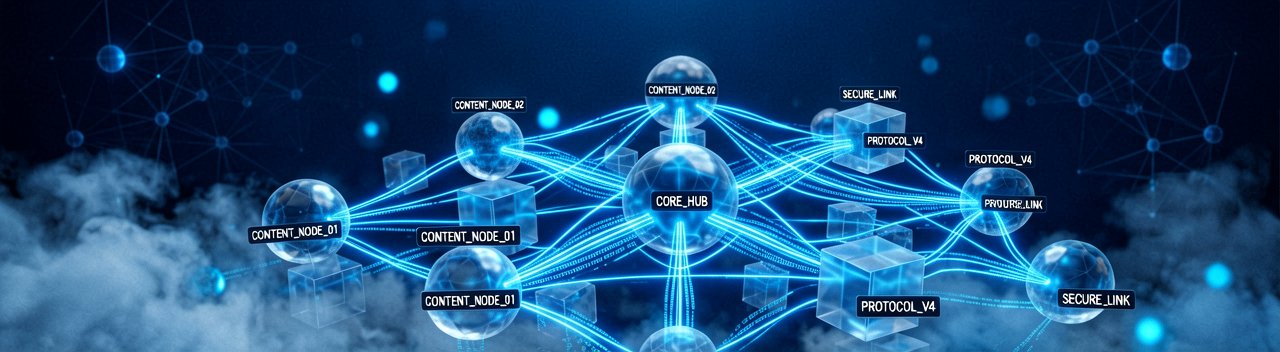
There is a more fundamental question behind both announcements that applies to either architecture. If the layer is doing probabilistic reasoning and derived semantic signals, then two generative engines work sequentially on the same source documents. Errors do not just add; they compound, and the downstream model has no way of knowing that the context it receives is already an interpretation. (This is the real technical debt nobody is talking about.)
Whether firms actually adopt this approach at scale remains the real question. The technology solves integration complexity, but it does not solve the fundamental problem of AI hallucination or the compounding-context issue. Whether users actually pay for it remains the real question, and whether their IT teams can configure it without breaking existing workflows is another matter entirely.
Artūras Malašauskas is an AI Systems Integrator with 20+ years of production-grade web engineering experience. He has designed, shipped, and scaled enterprise Python/PHP systems for logistics, SaaS, and public-sector clients. For the past year, he has focused exclusively on AI integrations: deploying open-source LLMs, building generative media pipelines (image, audio, video), and engineering multi-agent workflows for real production environments. His standard: reproducibility, security, cost-efficient inference—no vaporware. He documents and evaluates emerging AI tooling, separating verified capabilities from marketing noise. Technical editor at: muza-ai.eu, ai-verslas.lt, ai-naujinos.lt Connect on LinkedIn
Comments