DNV Launches Technical Standards for Floating Solar
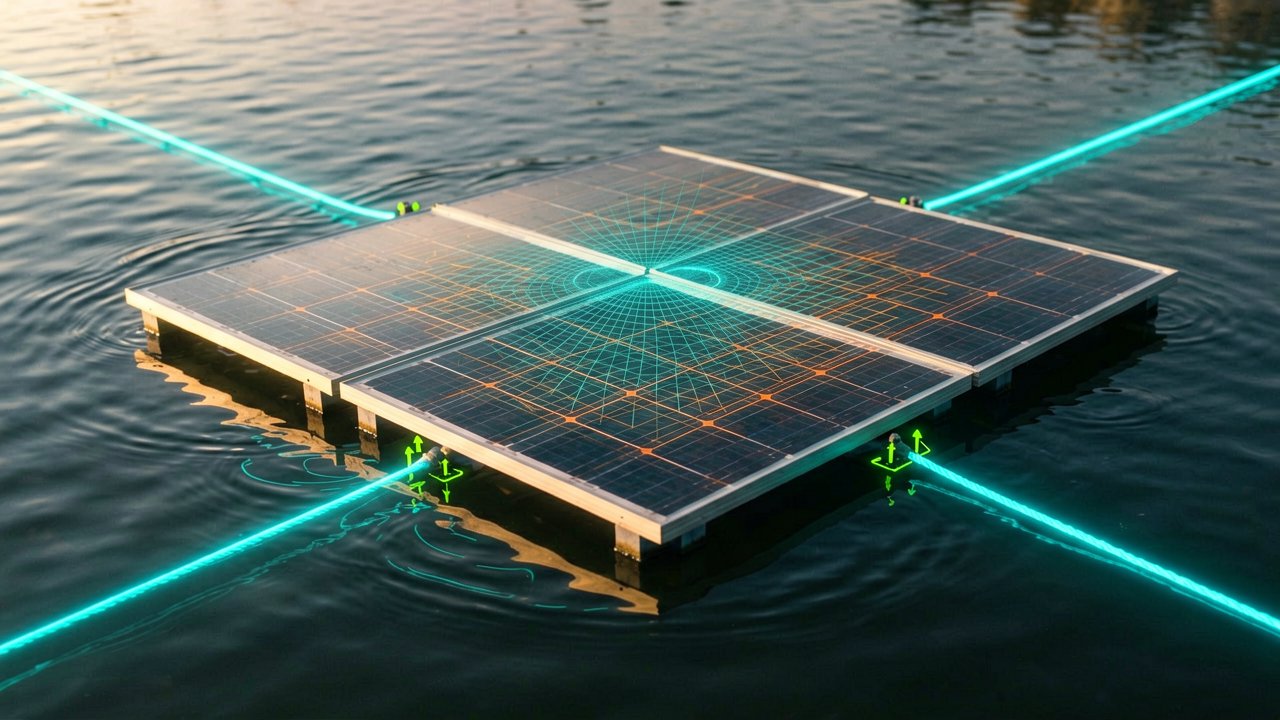
Norway-headquartered technical and safety expert DNV has published two new standards for the design and maintenance of floating solar photovoltaic (FPV) systems. The new standards — DNV-ST-C108 and DNV-ST-E309 — provide a comprehensive and aligned framework for the design, analysis, operation and risk management of FPV systems across their full life cycle, from component to system level, according to PV Tech.
The C108 standard focuses on a broad set of technical requirements for designing and operating FPV plants, covering long and short-term performance. The standard covers safety classification, design basis, material qualification, structural design, testing and corrosion protection, with particular attention to non-metallic materials and degradation due to solar irradiation. This matters because plastic floats exposed to UV radiation for decades don't just sit there — they slowly become brittle, crack, and fail in ways that are expensive to diagnose until it's too late.
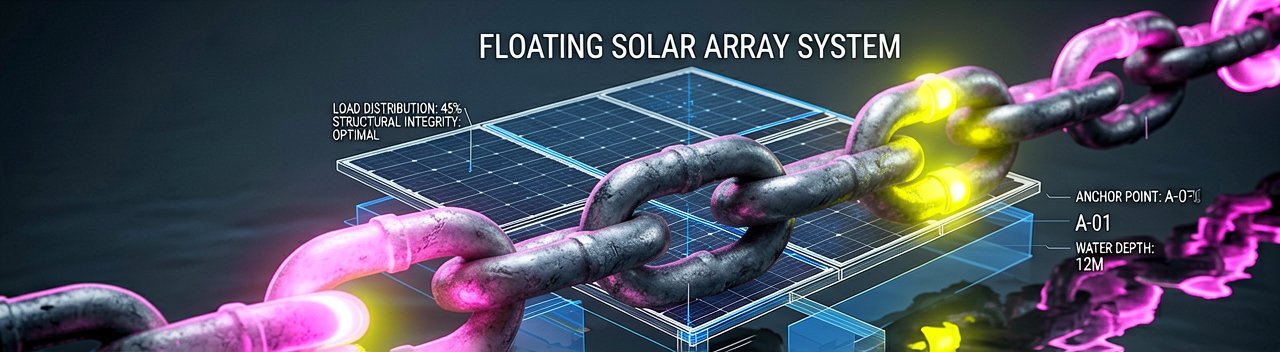
Standard E309 is focused on the mooring of FPV plants, focusing on design loads, load combinations and analysis procedures. Together, the documents build on an older framework — DNV-RP-0584 — introduced in 2021, which DNV said was the first official recommendation for FPV. This original standard is more comprehensive, covering the "design, development, operation and decommissioning" of inland or near-shore FPV systems.
DNV said the introduction of the two new standards positions the original RP standard "as complementary system-level guidance rather than a primary design-level reference." The shift reflects how the industry has matured. What started as experimental installations on reservoirs and quarries is now being deployed at gigawatt scale, where a single mooring failure can strand millions of dollars in equipment.
"Floating solar is moving from niche applications to large-scale infrastructure," said Ditlev Engel, CEO, energy systems at DNV. "These new standards are designed to help the industry manage risk, improve reliability and enable innovation while maintaining appropriate safety margins." Daniel Pardo Tovar, global lead floating solar, energy systems at DNV, added: "By creating a common technical language and a clear link between component-level requirements and system-level guidance, DNV is helping developers, owners, insurers and regulators work from the same foundation."
Independent reporting from Marine Technology News corroborates the scope and timeline of the standards launch. The outlet notes that DNV-RP-0584 has an update due in June 2026, which will likely align with the new ST standards to create a unified framework.
According to Indian research firm Global Market Insights, the FPV market is expected to grow from US$7.9 billion in 2026 to US$9.2 billion in 2035, at a compound growth rate of 1.7%. The largest region for floating solar development will be Asia, particularly Southeast Asia, with the fastest growth expected in Europe. As the sector grows, offerings have adapted. French floating solar specialist Ciel & Tierre launched a new structure in October 2025 designed for GW-scale floating solar projects.
The standards address a practical problem that has plagued the industry: inconsistent engineering practices. Without unified requirements, developers have been forced to negotiate custom specifications with insurers, regulators, and component suppliers for each project. This creates friction, delays, and cost overruns (a problem that has plagued users for years, frankly).
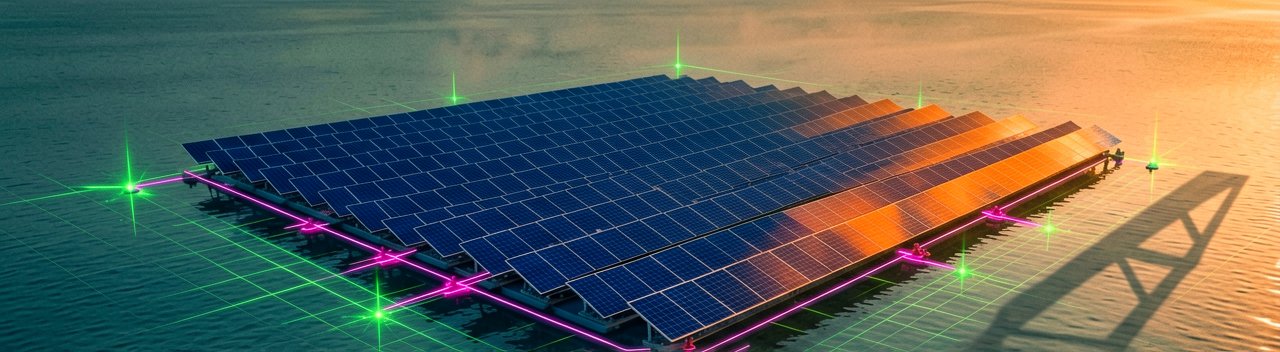
DNV-RP-0584 covers requirements, recommendations and guidelines for the design, development, operation and decommissioning of FPV systems, focusing primarily on sheltered inland and near-shore water bodies, while explicitly defining the limits of applicability for harsher offshore environments, where it is only applicable as general guidance or reference document. The new ST standards narrow the scope to specific technical domains, allowing for more granular control over structural and mooring design.
Whether developers actually adopt these standards at scale remains the real question. Standards only matter if insurers, lenders, and regulators require them. DNV has positioned itself as the gatekeeper, but adoption will depend on whether the industry accepts the cost of compliance as a necessary expense or an unnecessary barrier. Time will tell if the paperwork translates to safer, more reliable installations.
Artūras Malašauskas is an AI Systems Integrator with 20+ years of production-grade web engineering experience. He has designed, shipped, and scaled enterprise Python/PHP systems for logistics, SaaS, and public-sector clients. For the past year, he has focused exclusively on AI integrations: deploying open-source LLMs, building generative media pipelines (image, audio, video), and engineering multi-agent workflows for real production environments. His standard: reproducibility, security, cost-efficient inference—no vaporware. He documents and evaluates emerging AI tooling, separating verified capabilities from marketing noise. Technical editor at: muza-ai.eu, ai-verslas.lt, ai-naujinos.lt Connect on LinkedIn
Comments