U.S. Sugar Deploys 5 Autonomous John Deere Tractors Across 255,000 Acres
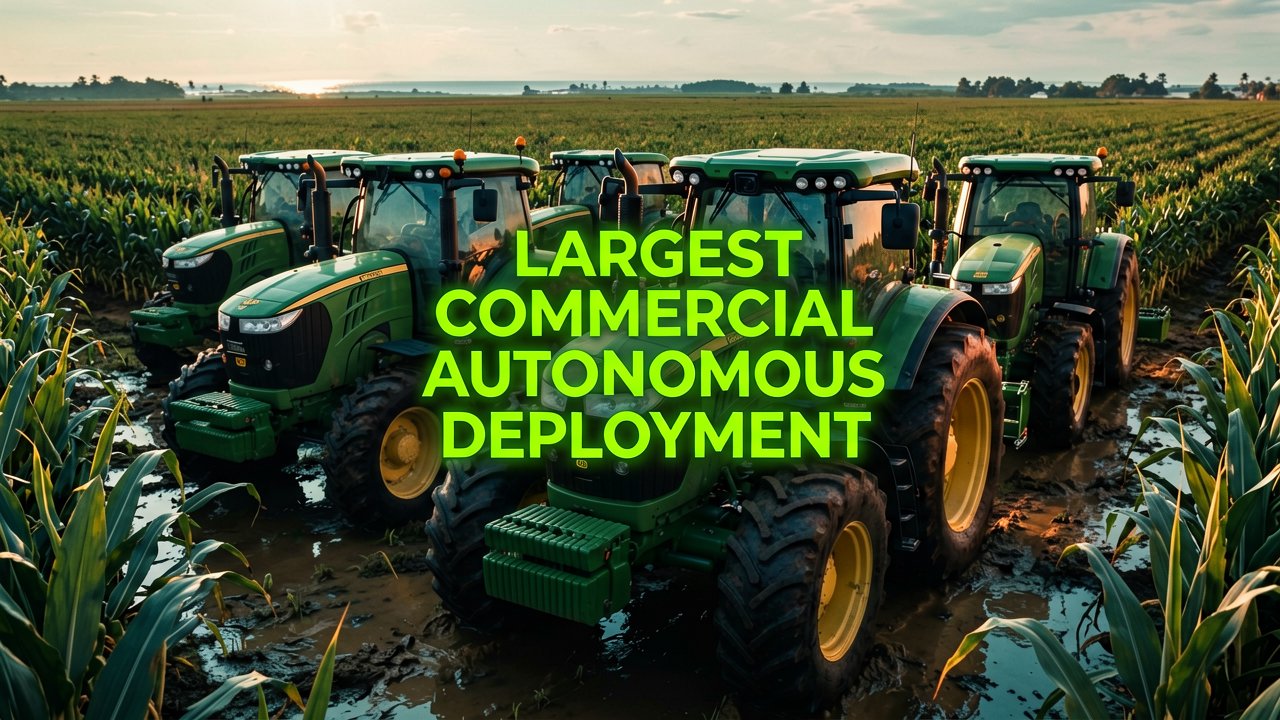
U.S. Sugar has deployed the largest commercial fleet of autonomous tractors in the American sugar industry, introducing five unmanned John Deere tractors across 255,000 acres of South Florida farmland. The announcement, made in May 2026, marks a significant shift in agricultural automation for the region's sugarcane operations.
The fleet consists of four John Deere 8R Series tractors and one 9R Series tractor, all fitted with Autonomous Solutions, Inc. (ASI) Vehicle Automation Kit (VAK) hardware. These machines operate up to 24 hours a day, seven days a week, under remote supervision from a central command station. A single operator can now oversee multiple vehicles simultaneously using ASI's Mobius autonomous fleet management platform.
According to the official press release, the technology was piloted during an 18-month research and development phase before commercial deployment. The decision to expand came after successful testing during the fall preparation season.
Ken McDuffie, president and CEO of U.S. Sugar, emphasized the company's commitment to combining innovation with traditional farming values. "By leveraging American technology to increase efficiency and maximize productivity, we are also increasing reliability in our domestic food supply while creating new, higher-skilled opportunities for our employees," McDuffie stated.
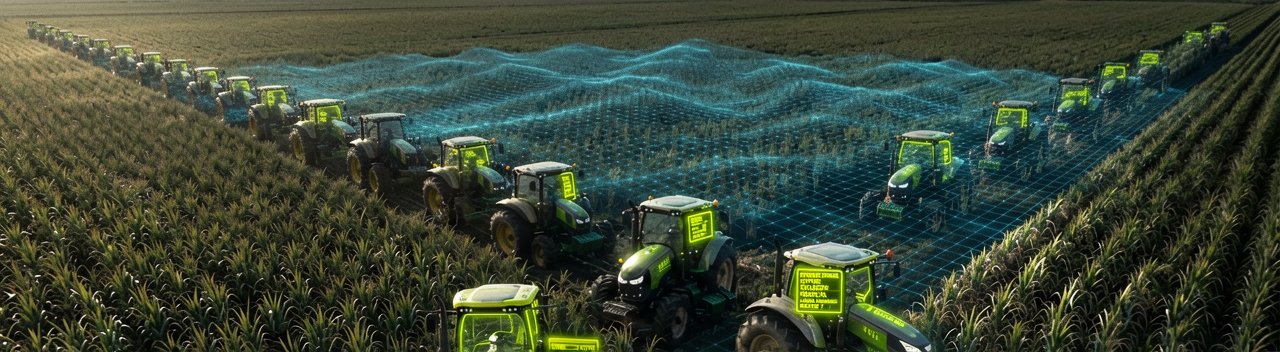
The physical reality of this deployment is stark. Instead of a farmer sitting in a cab, feeling the vibration of the engine and watching the field through glass, a single operator now monitors multiple screens from a command station. The tractors navigate sugarcane fields with precision that human hands simply cannot match consistently over long shifts (which is a relief for anyone who's ever tried to keep a straight line for six hours straight).
Everglades Equipment Group, the Florida-based John Deere distributor, supplied and supported the equipment. Mike Schlechter, president at Everglades Equipment Group, noted that pairing trusted equipment with cutting-edge autonomous systems helps growers boost productivity and reduce resource use.
ASI CEO Mel Torrie described the deployment as proof that autonomy is not a futuristic concept but a practical, scalable tool. "This deployment demonstrates that autonomy is not a futuristic concept. It is a practical, scalable tool that helps American farmers do more with less, improve safety in the field and keep pace with global demand."
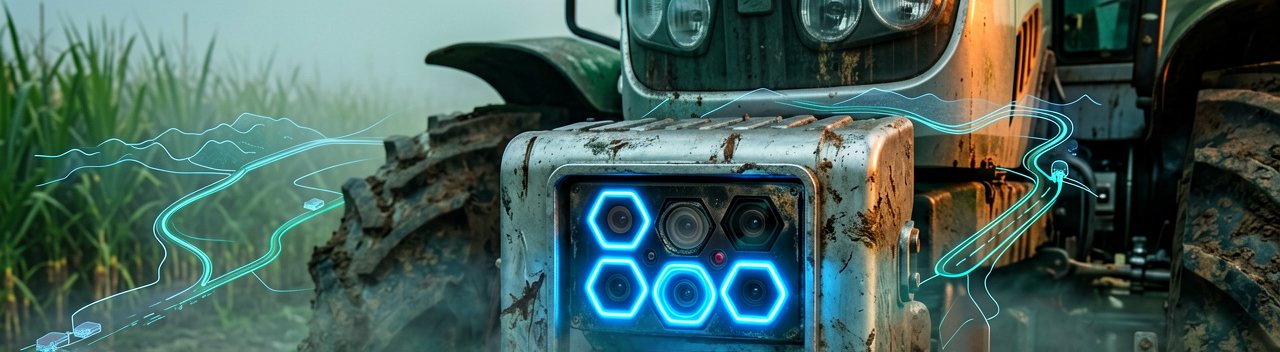
The technology integrates with the tractors' existing drive-by-wire systems, converting familiar John Deere platforms into fully autonomous workhorses. The system delivers measurable benefits across U.S. Sugar's farms, including improved accuracy, higher production, enhanced sustainability, and increased reliability in land preparation.
U.S. Sugar is working to retain all current employees through additional training and support in new roles, including autonomous tractor operations. The company is committed to hiring employees for the knowledge-based skills this state-of-the-art technology requires. This is not a replacement strategy; it's a retraining one.
Over the next decade, the technology will be deployed across U.S. Sugar's entire 255,000-acre operation, which spans nearly 400 square miles. The technology is currently used for sugarcane land preparation and cultivation, with potential expansion to sweet corn and green bean operations in the future.
Equipment Finance News corroborated the deployment details, noting the fleet operates under remote supervision with the expectation of improved efficiency, productivity, sustainability, and reliability in land preparation and cultivation.
The scale of this operation is difficult to grasp without context. U.S. Sugar's farmland is equivalent to nearly 200,000 football fields or more than 10 times the size of Miami. Managing this terrain with autonomous systems represents a fundamental shift in how agricultural land is worked.
U.S. Sugar, founded in 1931 by Charles Stewart Mott, operates a sugar refinery in Savannah, Georgia and provides 2,000 jobs across Highlands, Glades, Hendry, Palm Beach, and Martin counties in Florida. The company also operates a 300-mile railroad to support its operations.
Whether this deployment becomes a model for the broader agricultural industry remains to be seen. The technology works, the company says. The real question is whether other growers can afford the investment and whether the workforce can adapt quickly enough to make it worthwhile.
The machines run. The fields get worked. Whether the economics work out for everyone else in the industry is a different story entirely.
Artūras Malašauskas is an AI Systems Integrator with 20+ years of production-grade web engineering experience. He has designed, shipped, and scaled enterprise Python/PHP systems for logistics, SaaS, and public-sector clients. For the past year, he has focused exclusively on AI integrations: deploying open-source LLMs, building generative media pipelines (image, audio, video), and engineering multi-agent workflows for real production environments. His standard: reproducibility, security, cost-efficient inference—no vaporware. He documents and evaluates emerging AI tooling, separating verified capabilities from marketing noise. Technical editor at: muza-ai.eu, ai-verslas.lt, ai-naujinos.lt Connect on LinkedIn
Comments